This chapter presents structured conversations as a practical way for software teams to uncover the behavior of a feature before building it. Using a pizza-delivery application as the example, the team gathers in a short requirement workshop to clarify a story about changing a delivery address after an order is placed. Rather than treating BDD as a rigid template exercise, they use collaboration, discussion, and concrete examples to expose hidden assumptions and refine what the story really means.
The main technique described is Example Mapping, where different colored cards are used to capture stories, rules, examples, and unanswered questions. As the team explores the address-change story, they build examples for the happy path, discover ambiguities in terms like “in preparation” versus “picked up,” and identify edge cases that require further thought. When they encounter questions they cannot answer, they record them explicitly so the discussion stays productive instead of getting stuck. In this way, the workshop becomes a deliberate discovery process that turns vague requirements into shared understanding.
The chapter concludes by explaining what makes a structured conversation effective: it must be collaborative, include diverse perspectives, stay short, focus progressively on what is being learned, and end with consensus. The goal is not to produce perfect documentation, but to agree on concrete behavior, surface important unknowns, and make the knowledge visible to the whole team. Example Mapping is presented as a simple, low-tech method that supports these goals and helps teams reach clear agreement quickly while preserving the detail needed for later development and testing.
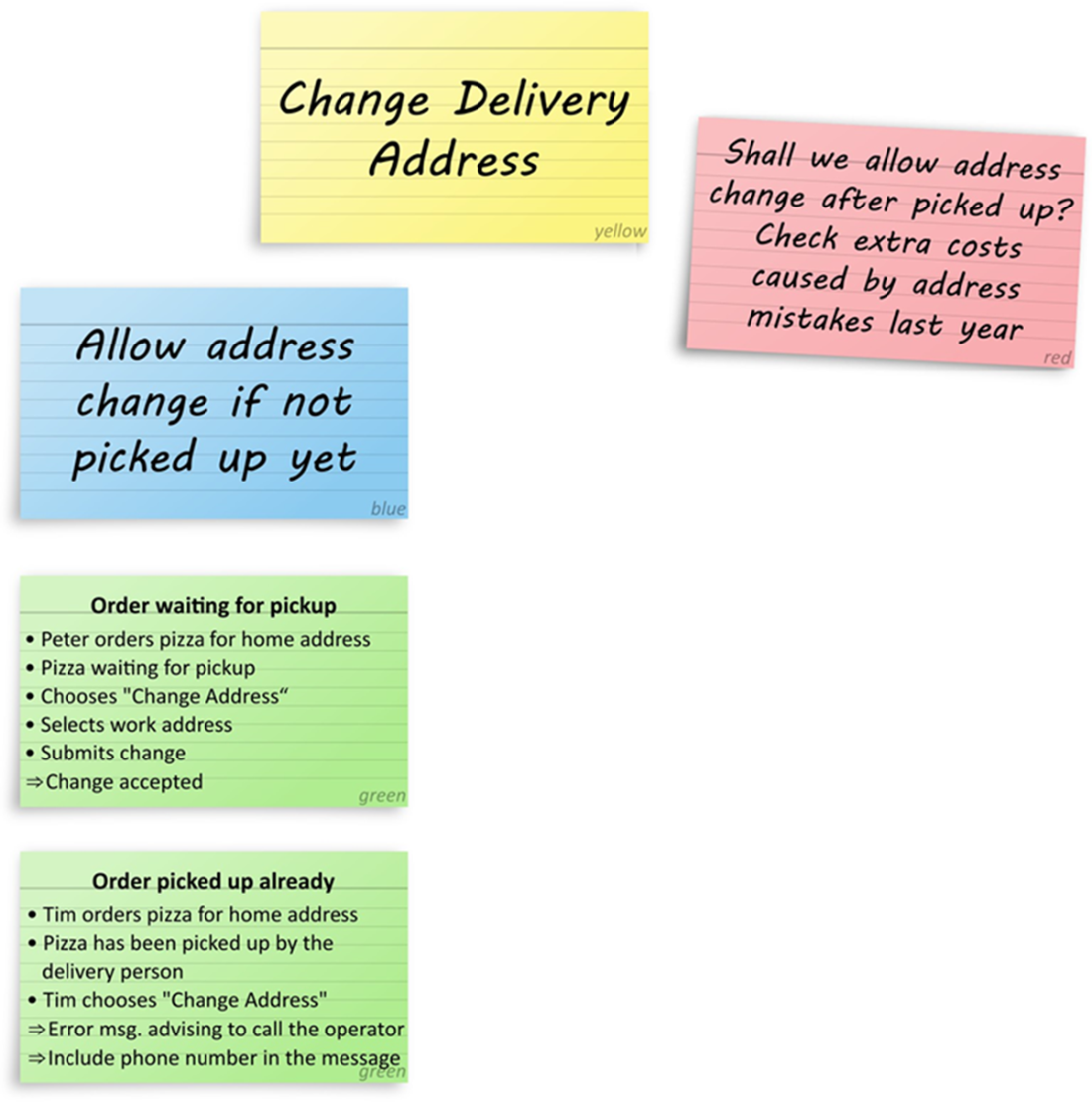
Story card on the table
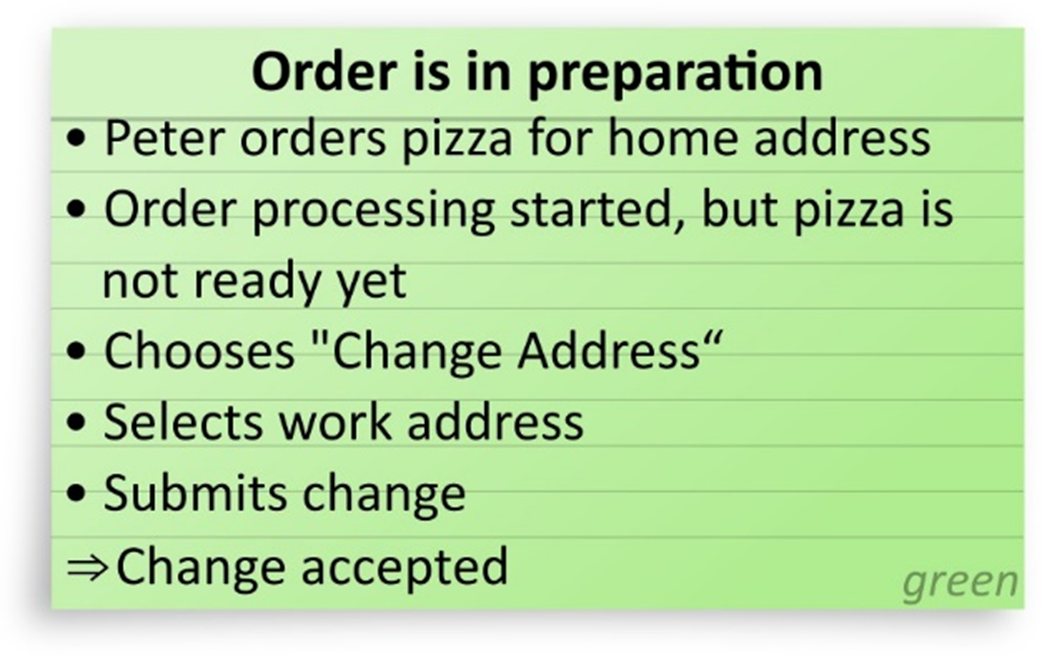
The first example card
State diagram of pizza ordering and delivery process to clarify the terminology that will be used in rules and examples
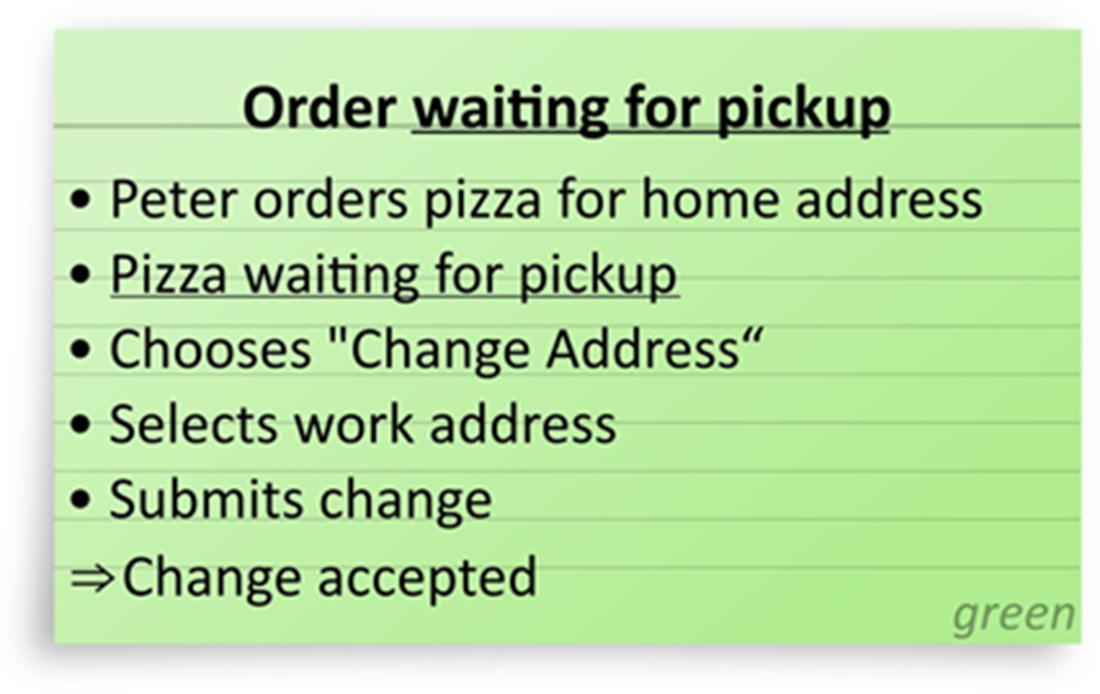
The corrected example card (changes underlined)
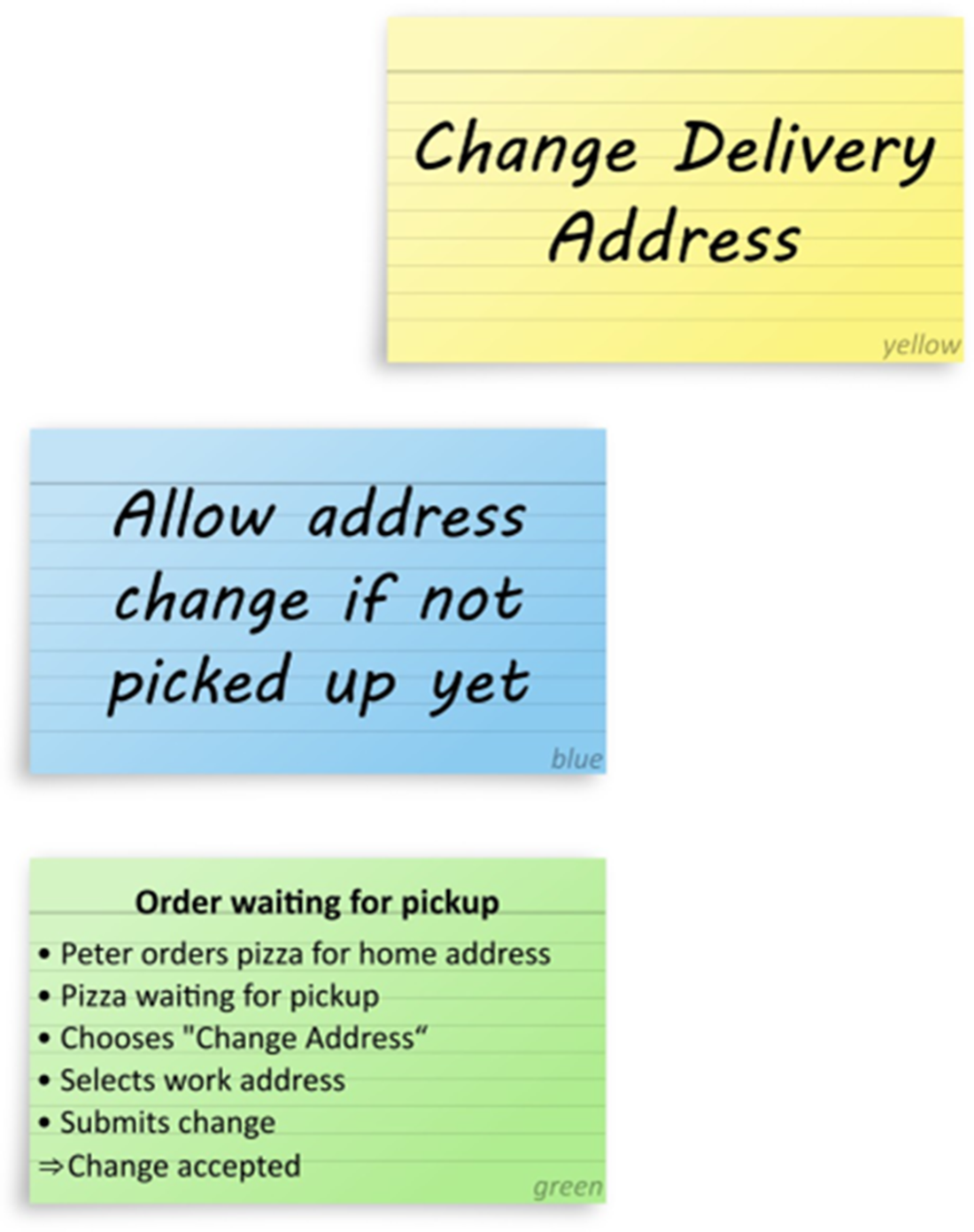
First rule in the example map
The second example card
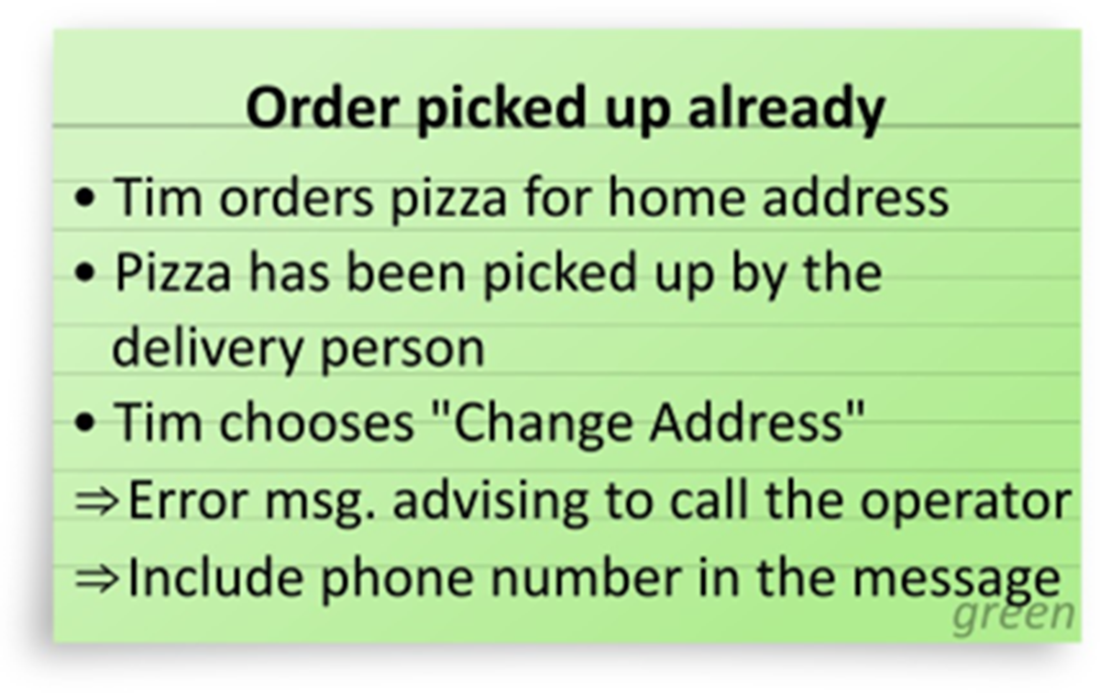
A counter example and a question
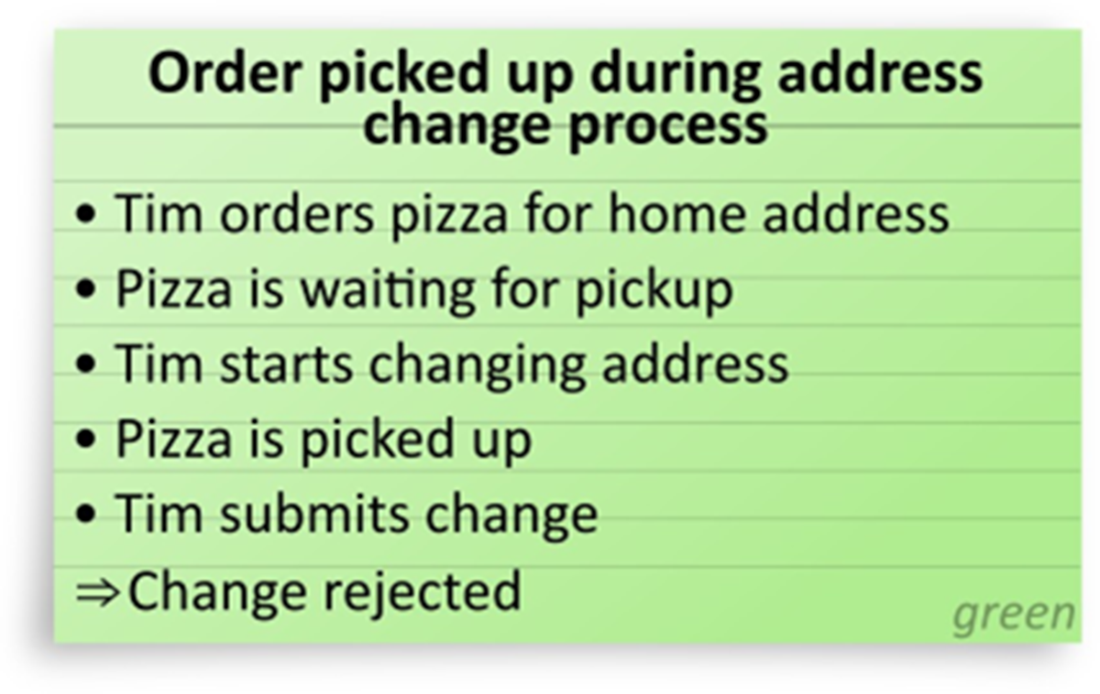
The third example card
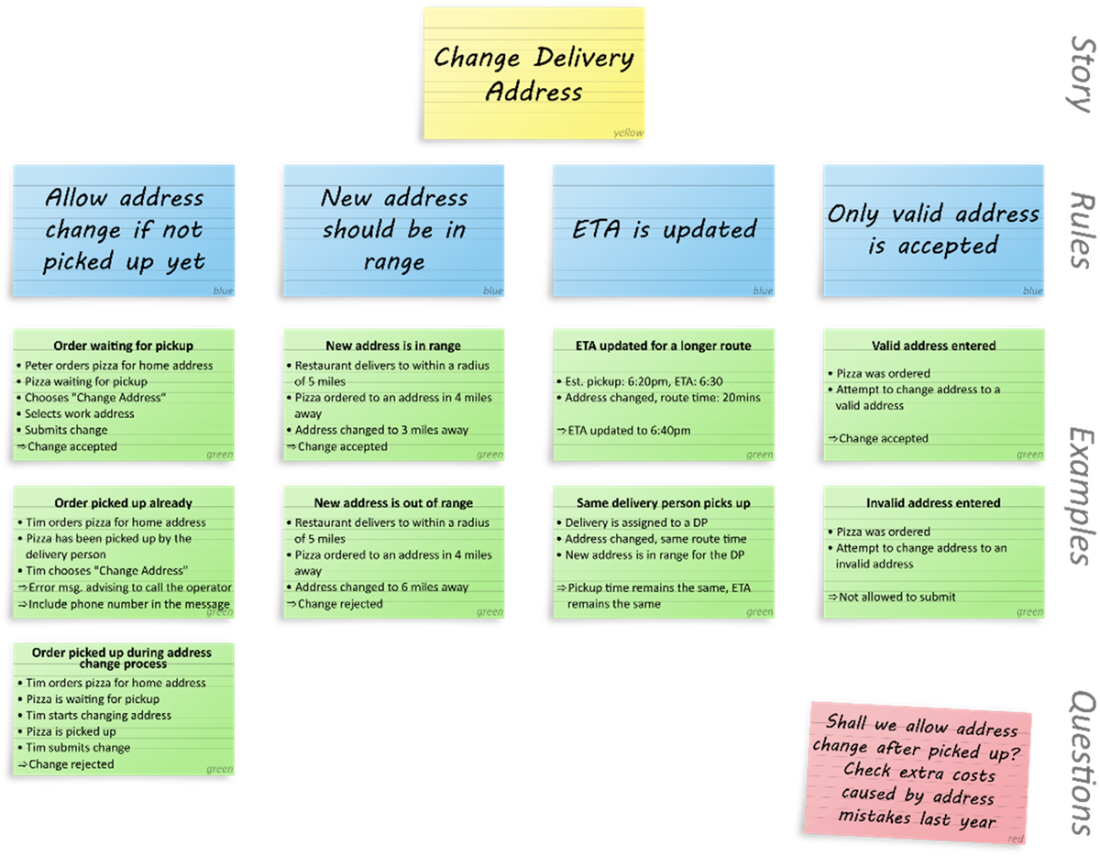
The final example map
Summary
Requirements workshops are a collaborative meeting where the team develops a shared understanding of a user story. This often requires the team to develop unambiguous terminology for capturing their examples.
The goal of a requirement workshop is deliberate discovery – the act of learning all about a user story before writing any code or tests.
An effective way to conduct a requirements workshop is to use a technique called Example Mapping.
Each rule in an example map is illustrated by one or more concrete examples of the rule in action.
The term Rule is synonymous with Acceptance criterion and requirement.
Example Mapping is one way to conduct a structured conversation.
Structured conversations are collaborative, bringing diverse perspectives together. They should be short, fast-moving workshops – leading to consensus among the participants.
FAQ
What is the main purpose of a structured conversation in BDD?A structured conversation helps the team explore a user story, understand its scope, and agree on concrete examples that describe the expected behavior unambiguously.What is Example Mapping?Example Mapping is a simple, low-tech technique for running requirement workshops by capturing user stories, rules, examples, and questions on colored cards to guide the discussion.What do the different card colors represent in Example Mapping?Yellow cards represent user stories, blue cards represent rules or acceptance criteria, green cards represent concrete examples, and red cards represent questions or assumptions that need follow-up.Why are concrete examples so important in a requirements workshop?Concrete examples help the team challenge assumptions, uncover ambiguities, and reach a shared understanding of how the system should behave in specific situations.What is meant by deliberate discovery?Deliberate discovery is the intentional learning that happens during a requirement workshop, where the team explores unknowns early instead of discovering them later during development.Why should requirement workshops be short and frequent?Short workshops reduce fatigue, lower cost, make scheduling easier, allow different attendees to participate over time, and help the team address unanswered questions sooner.Why does the chapter emphasize diverse perspectives in the workshop?Diverse perspectives from business, development, and test help the team challenge requirements early, uncover edge cases, and evaluate both business value and technical or testing implications.What role does a facilitator play in a structured conversation?The facilitator keeps the meeting moving, ensures the discussion is captured on cards, and helps everyone agree on how the requirements and examples are recorded.How does Example Mapping help with unambiguous terminology?By discussing examples, states, and rules together, the team discovers and resolves confusing or overlapping terms so everyone uses the same meaning consistently.What does consensus mean in the context of structured conversations?Consensus means the team agrees that the captured output is correct, the story is sufficiently understood, remaining questions are visible, and responsibility for answering them is clear.
pro $24.99 per month
access to all Manning books, MEAPs, liveVideos, liveProjects, and audiobooks!



 Effective Behavior-Driven Development ebook for free
