5 Modeling reality
This chapter shows how a digital twin advances from collecting raw measurements to modeling and reasoning about the real world. It argues that numbers only become useful when enriched with meaning—context that lets systems interpret what readings represent, how they relate, and what they imply. Using the data–information–knowledge–wisdom progression, it frames the core challenge as knowledge engineering: capturing human expertise and tacit know‑how so a twin can apply it consistently. Central to this is encoding four kinds of context—spatial, temporal, relational, and physical—so that identical readings can be interpreted correctly depending on where they come from, what they’re connected to, and how they behave over time.
The chapter then details how to construct this model of reality. It covers practical contextualization via entity matching and similarity techniques to connect fragmented identifiers across systems. It introduces ontologies as blueprints that define concepts, properties, relationships, and rules, and discusses trade‑offs between adopting, extending, or creating one (with DTDL exemplifying a machine‑readable approach). Knowledge graphs implement these ontologies, turning data into an interconnected, queryable structure; the text explains labeled property graphs and alternative representations (RDF/OWL/NGSI‑LD), and shows how graph traversals surface insights. With this foundation, generative AI can be grounded in the twin’s domain context to avoid hallucination and deliver specialized diagnostics, recommendations, and predictions.
Finally, the chapter addresses making the model usable and interoperable. It proposes a tiered standards strategy—from protocols and schemas to domain and ISO frameworks—along with a pragmatic cost–benefit assessment, and highlights the Asset Administration Shell for exchanging asset knowledge across lifecycles. To serve the model, it advocates context‑aware APIs that use the knowledge graph as a semantic router, orchestrating queries to underlying stores. It compares REST, OData, and GraphQL for graph‑shaped data access and shows how a schema aligned to an ontology enables precise, efficient queries (for example, aggregating measurements for all devices serving specific spaces). The result is a twin that not only mirrors reality but also delivers timely, actionable intelligence through standardized, scalable interfaces.
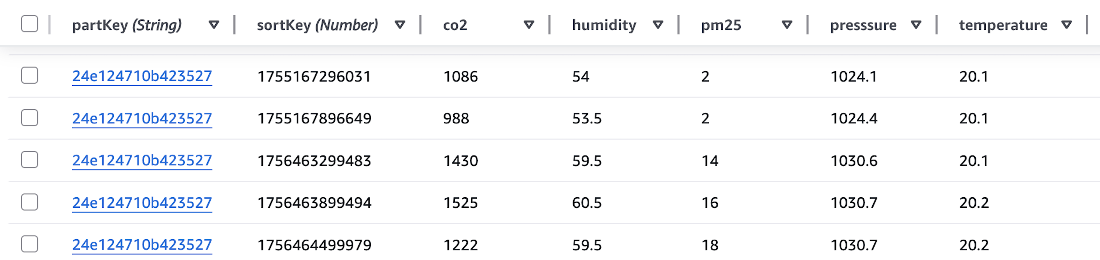
An example of raw data without context from sensors in my home digital twin. Without knowing what the data is related to, I cannot use it to make any meaningful decisions.
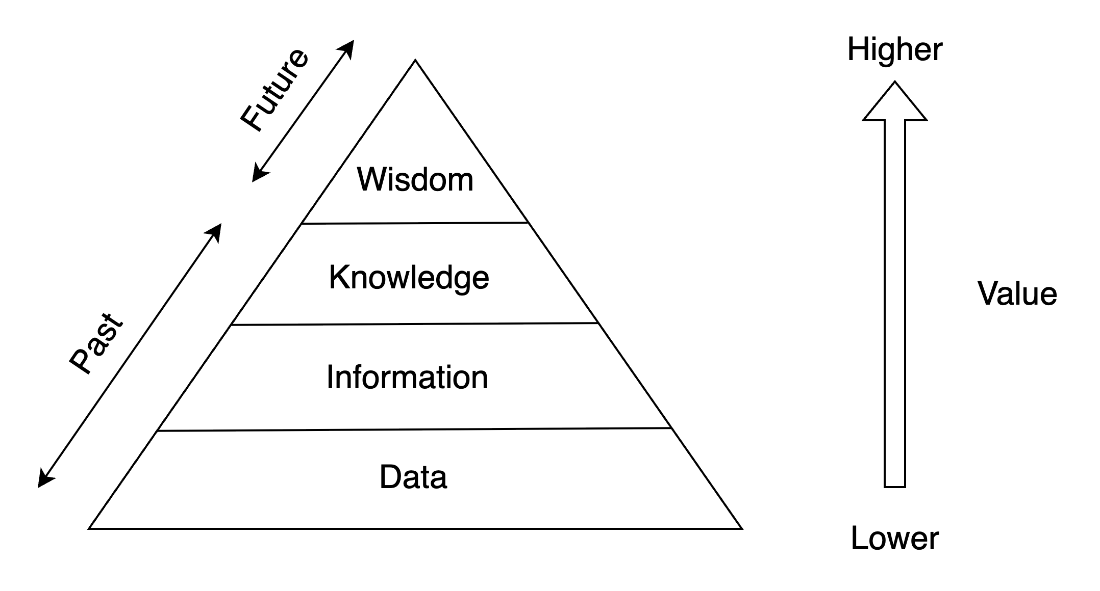
Ackoff’s pyramid showing how valuable knowledge and wisdom are less available than lower value data and information.
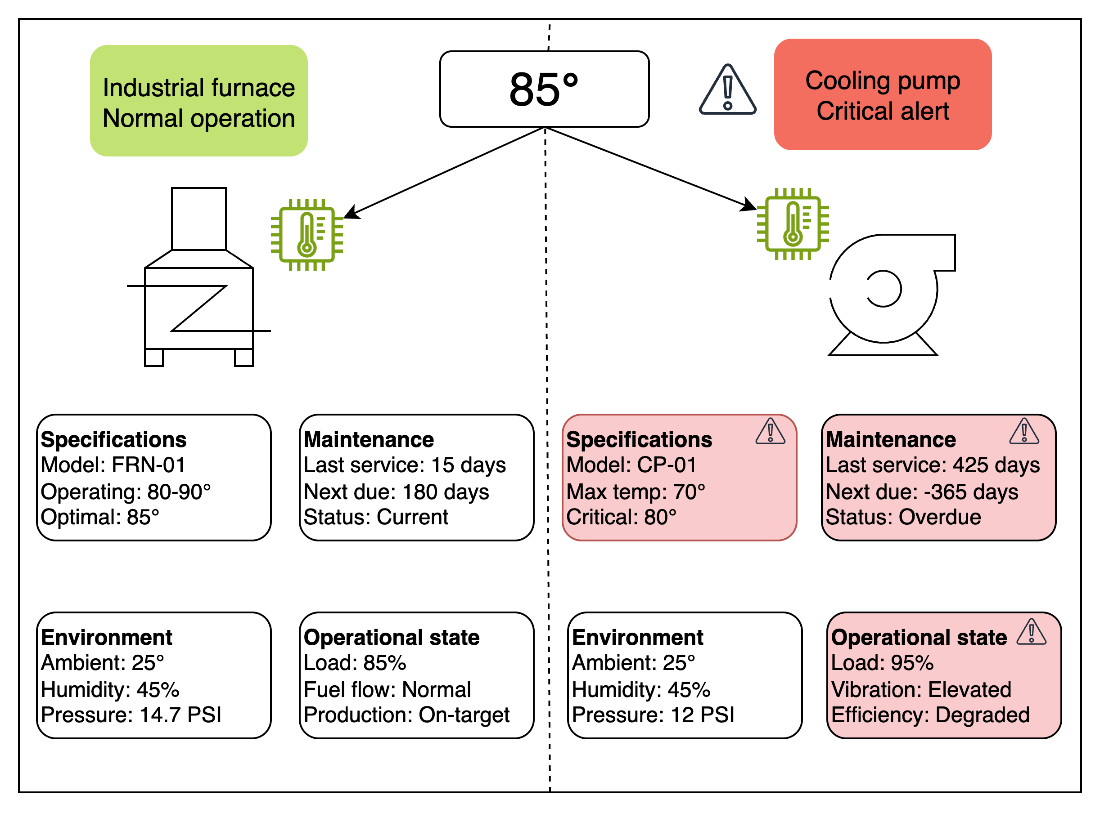
The importance of context in interpreting raw data and transforming it into information and knowledge.
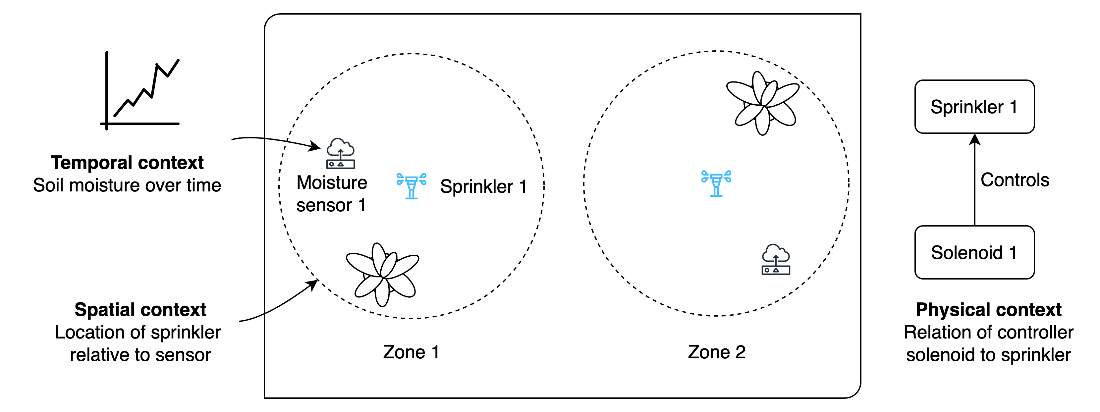
An example of how raw data produced by a moisture sensor in my garden can be contextualized with temporal, spatial, physical, and relationship context.
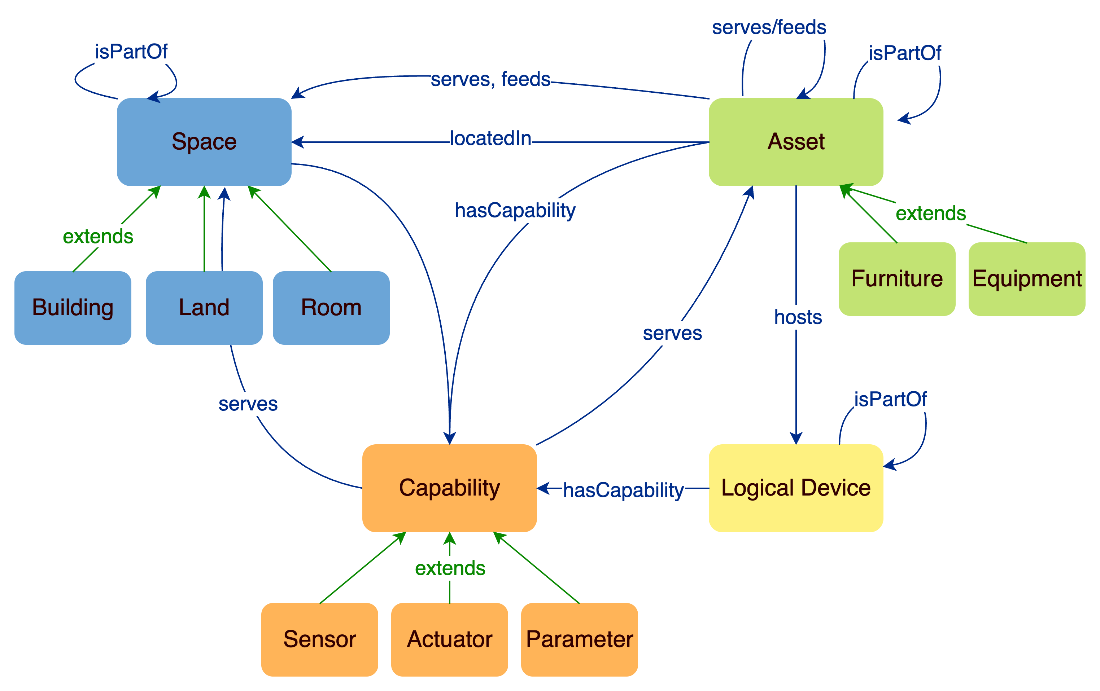
The main concepts and relationships in the DTDL implementation of the RealEstateCore ontology provided by Microsoft ( https://github.com/Azure/opendigitaltwins-building). © Microsoft Corporation, licensed under MIT license. https://opensource.org/license/mit.
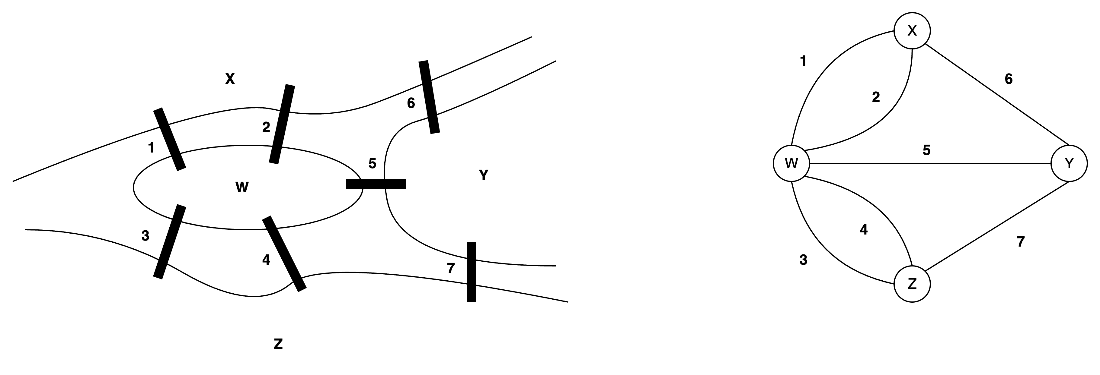
Euler’s '7 Bridges of Königsberg' problem that was the origin of graph theory. He proved it was not possible to cross each of the 7 bridges connecting the two islands in the city (shown to the left) once and only once. The abstract representation of the seven bridges, two islands, and the shore either side of the river as nodes connected by edges is shown to the right.
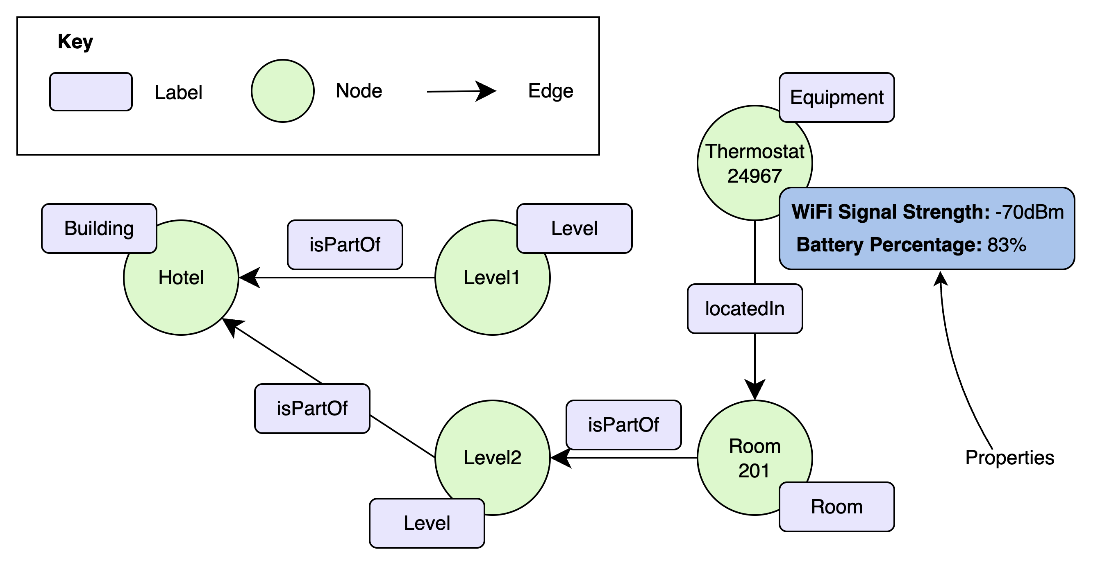
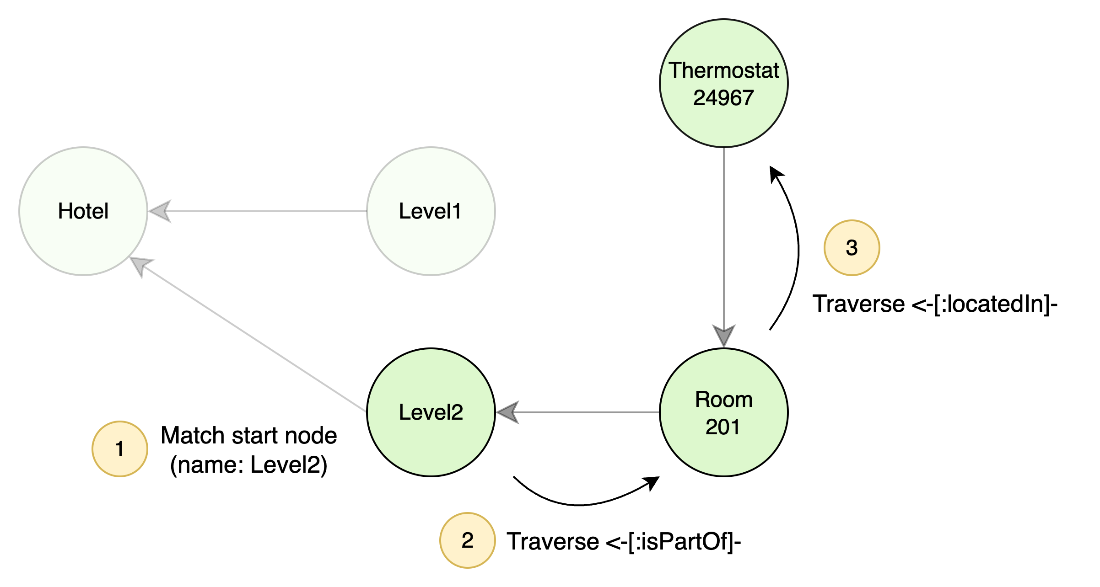
An example of a knowledge graph represented as a labeled property graph showing labels on both nodes and edges, and key, value pair properties against a node. This fragment represents a thermostat located in a room on the second floor of a hotel.
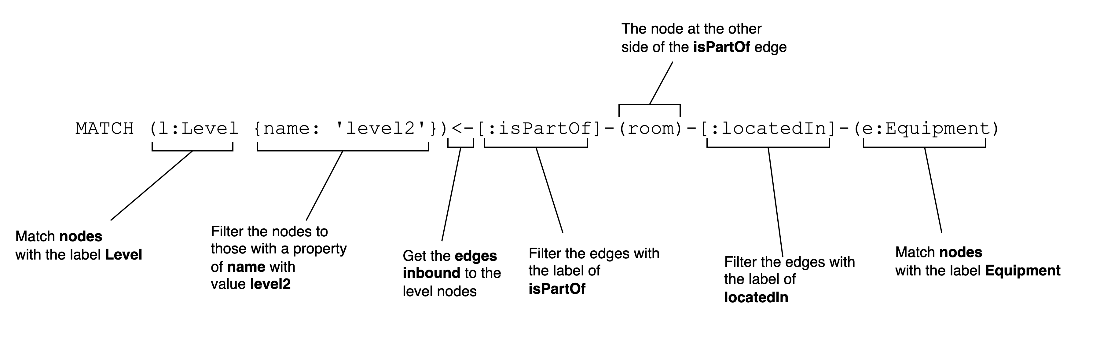
An example traversal that identifies a starting node, and follows edges to gather information.
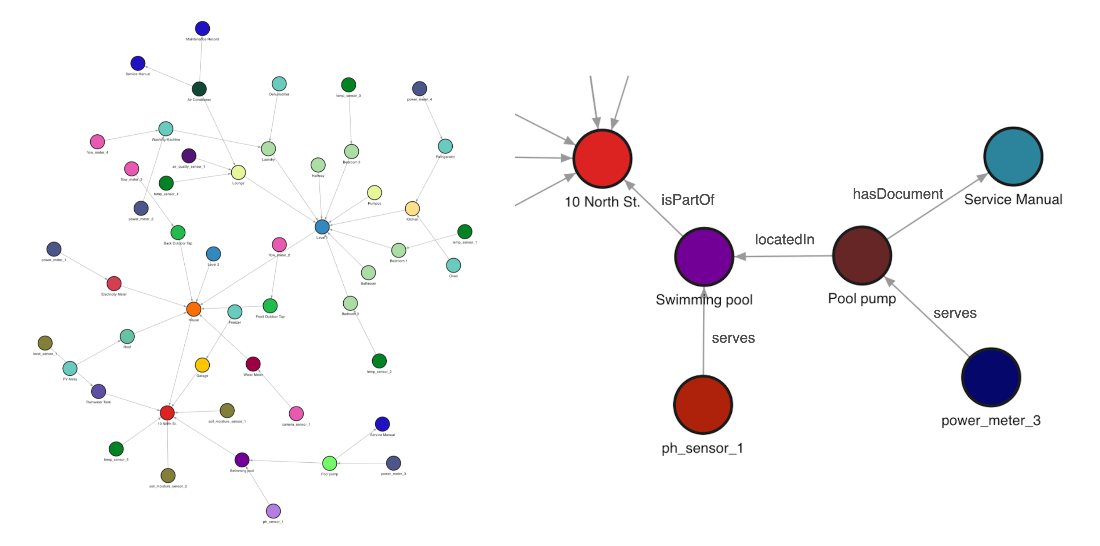
The complete knowledge graph of my home shown at left, with the detail of the relationships between the swimming pool, pump, related sensors and documents shown at right.
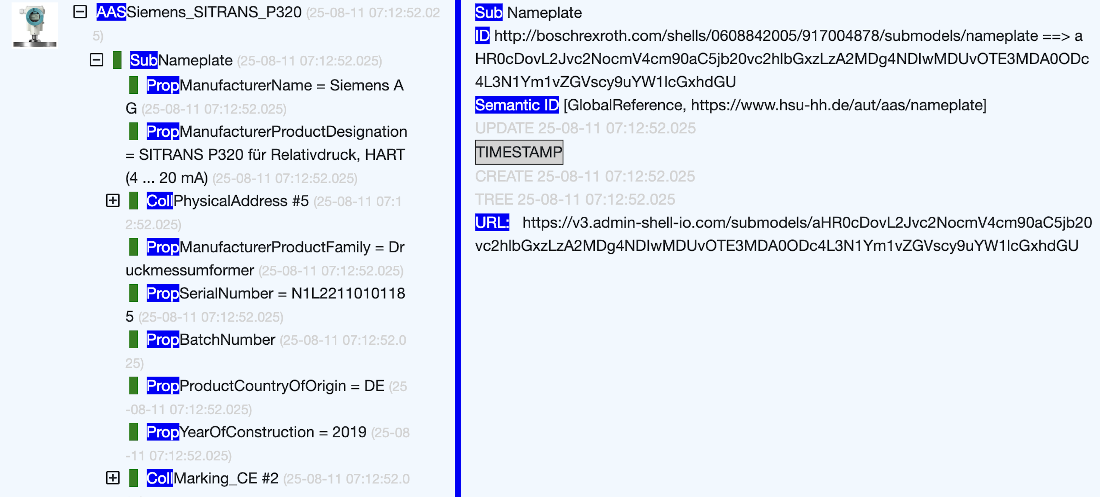
An example of an AAS record for a Siemens pressure gauge, available from the IDTA AAS server at https://v3.admin-shell-io.com/. Licensed under the Apache License, Version 2.0 http://www.apache.org/licenses/LICENSE-2.0.
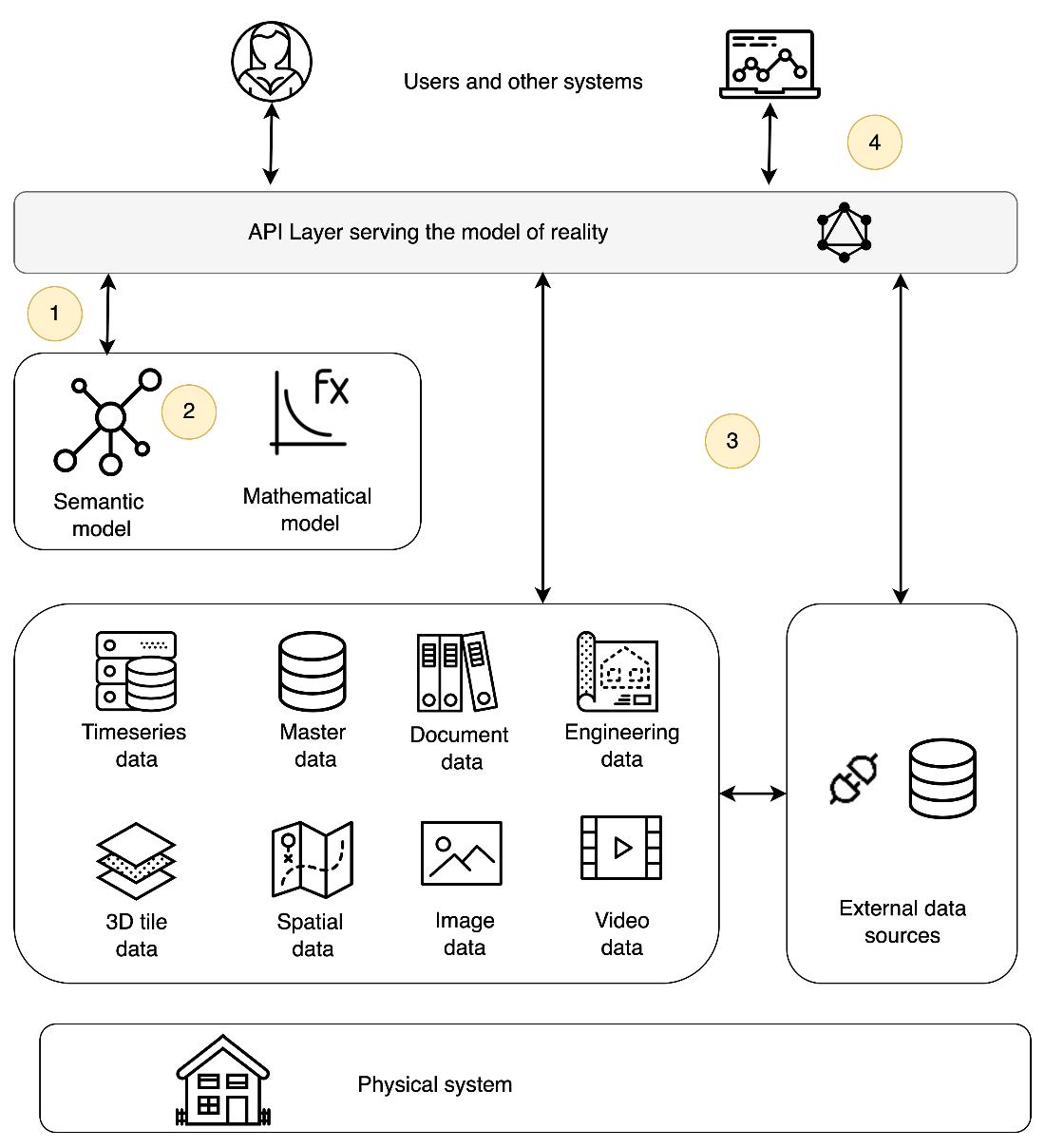
The knowledge graph provides a semantic model to the API layer that it uses to understand what data stores to query, both internal and external to the digital twin, constructing a model to return to the client.
Summary
- A model of the reality of the physical world is at the heart of a digital twin.
- The wide variety of data that a digital twin acquires and stores needs to be turned into information, which is the basis of higher level understanding of the physical system it represents.
- Contextualization is the process of linking related data together to create information and knowledge.
- Ontologies provide formal semantic definitions of models of reality.
- Knowledge graphs provide a powerful mechanism for modeling the real world based on an ontology.
- There are a range of efforts underway by various bodies to formalize standards related to digital twins as models of reality.
- The model of reality maintained within a digital twin must be served to consumers via an API layer that mediates between the semantic model, and raw data stores.

 Digital Twins in Action ebook for free
