6 Tools and Guardrails: Enabling safe, managed AI actions
The chapter explains why AI systems need to move beyond generating text and safely take real actions through tools. Once an assistant can book appointments, verify insurance, or trigger external workflows, mistakes can have operational and financial consequences, so tool use must be managed as a platform capability rather than left to each application team. The core idea is to separate application logic from tool discovery, credentials, execution, and safety controls.
It describes a Tool Service that centrally registers tools, supports discovery by namespace or capability, enforces versioning, and executes calls through adapters while keeping credentials isolated. Tools are defined with both model-facing schemas and operational metadata such as idempotency, side effects, latency, and rate limits, so the platform can decide when retries are safe and when confirmation is needed. The chapter also shows how emerging standards like MCP fit in by standardizing integration while the platform still handles ownership, policy enforcement, and multiplexing so many applications can share the same external connections.
The second major theme is guardrails as execution policies, not just content filters. The platform checks input for prompt injection and off-topic requests, validates tool arguments, blocks unsafe or inconsistent action sequences, requires human approval for high-stakes actions, and filters outputs for sensitive or unverified content. These policies are declared centrally, rolled out safely with shadow and canary modes, and paired with metrics and audit trails so developers, operations, and compliance teams can see what happened, tune behavior, and maintain trust at scale.
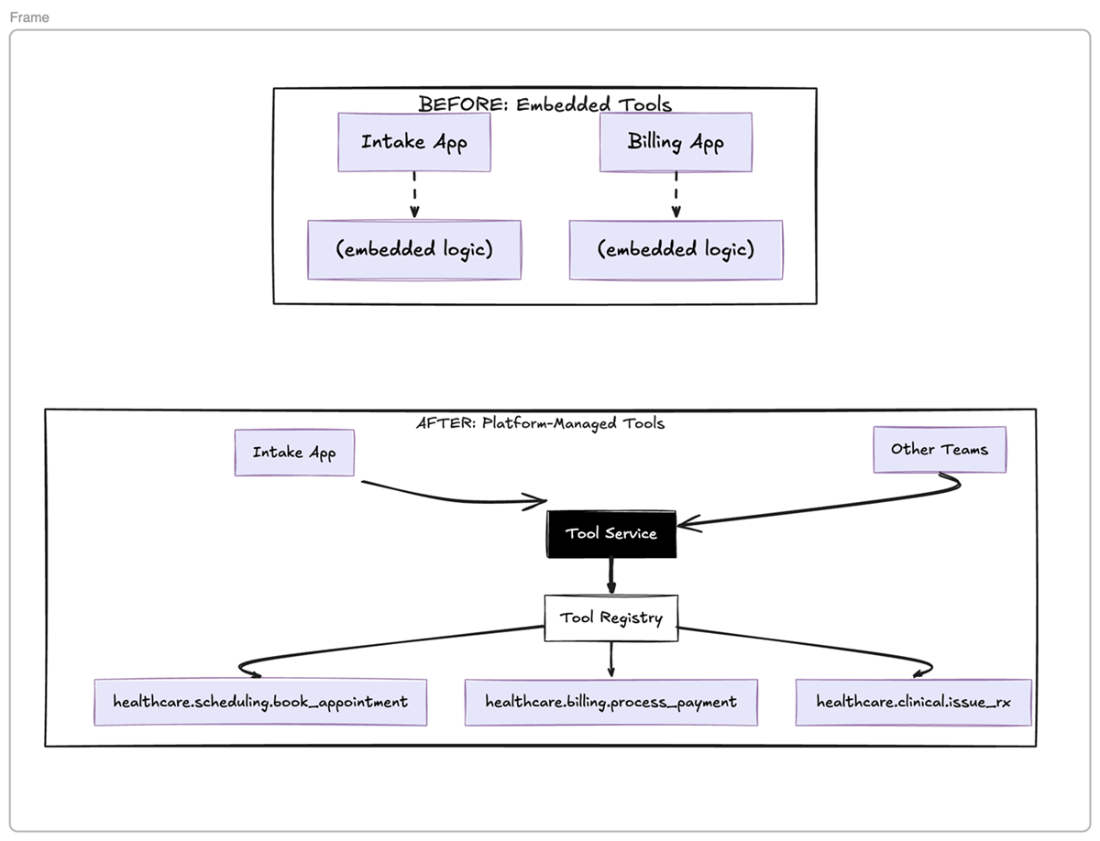
Moving from tools embedded in applications to tools managed by the platform enables sharing, governance, and centralized security. Platform-managed tools have identity and lifecycle. A tool isn't just a function signature it's an entity with a unique name, version history, owner, and access policy. When Sarah registers healthcare.scheduling.book_appointment, that tool exists independently of any application that uses it. Other teams can discover it, request access to it, and build their own applications on top of it.
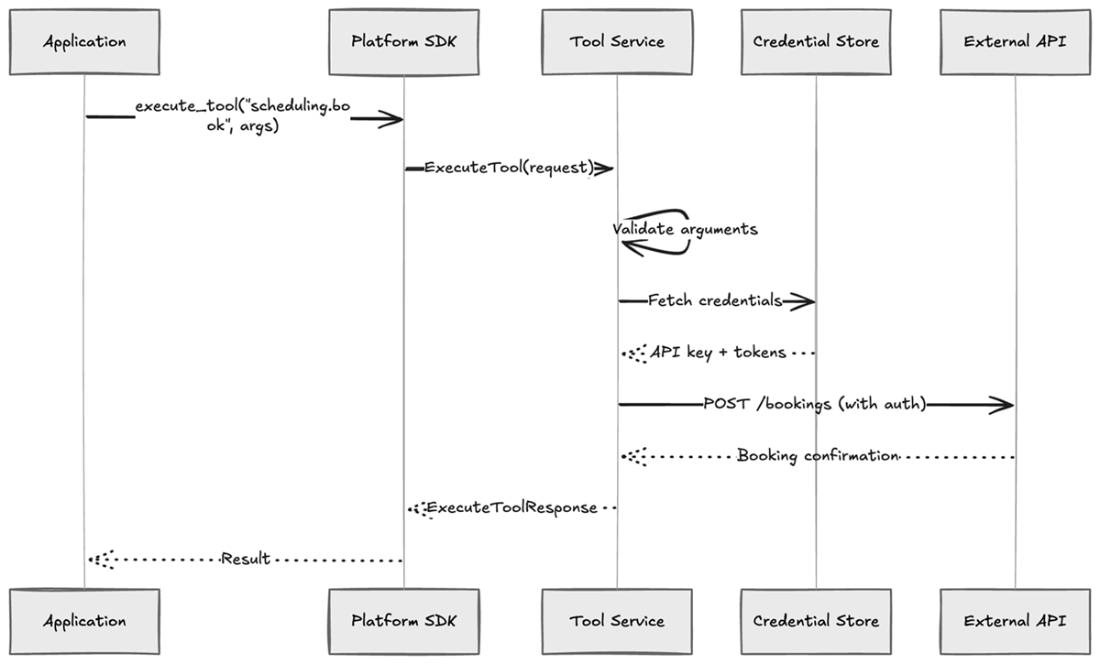
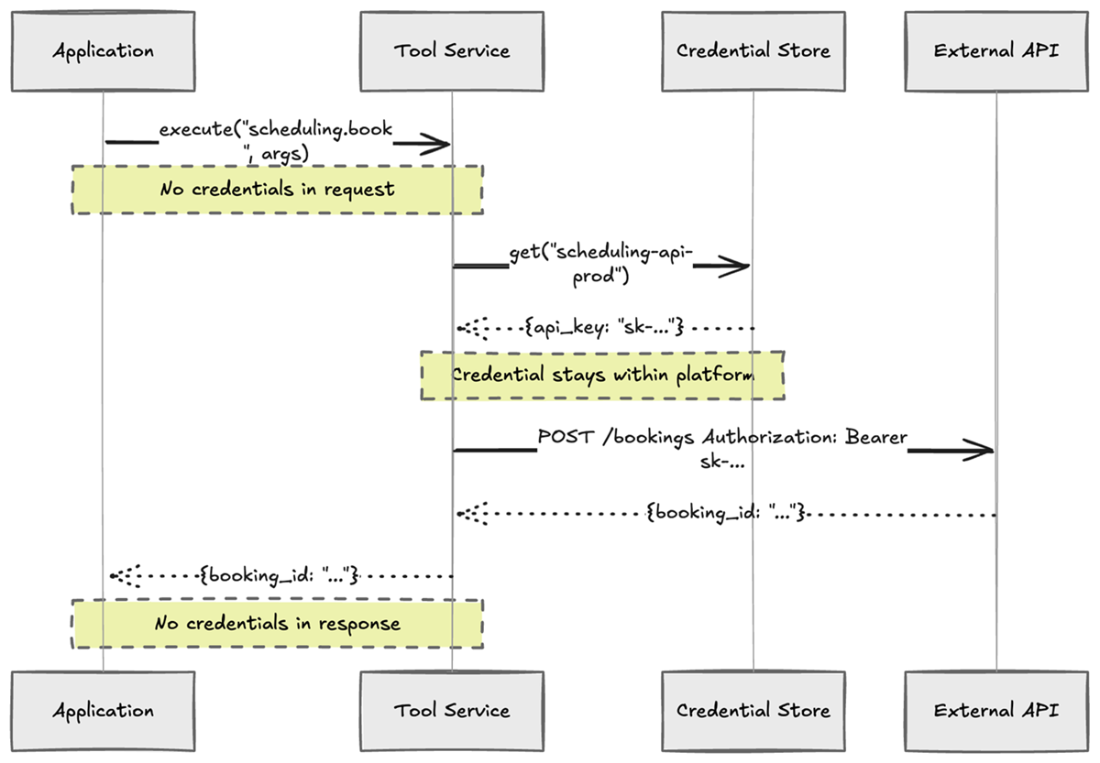
The platform-managed tool execution flow isolates application code from infrastructure complexity.Instead of the application directly calling external APIs, it delegates the request to the Tool Service via the SDK. This architecture allows the platform to act as a secure intermediary that performs three critical functions: (1) Validation, ensuring arguments match the schema before execution; (2) Credential Injection, retrieving sensitive keys from the secure store so they never appear in application code or logs; and (3) Execution Management, handling the actual HTTP request and response standardization. This ensures that safety policies are enforced and secrets remain isolated within the platform's trust boundary.
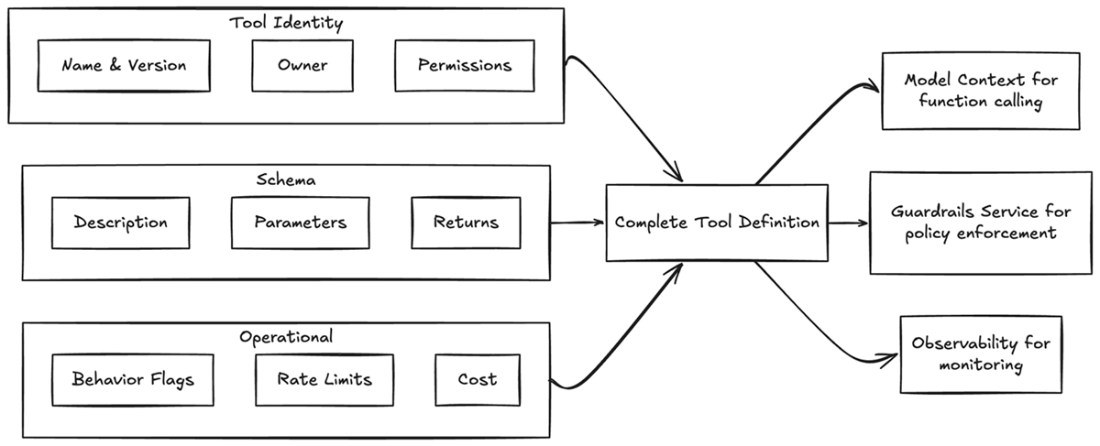
The three layers of a tool definition serve different consumers. Identity (name, version, owner) supports registry operations and access control. Schema (description, parameters, returns) is what models see during function calling. Operational metadata (behavior, rate limits, cost) informs guardrails, execution safety, and billing attribution.
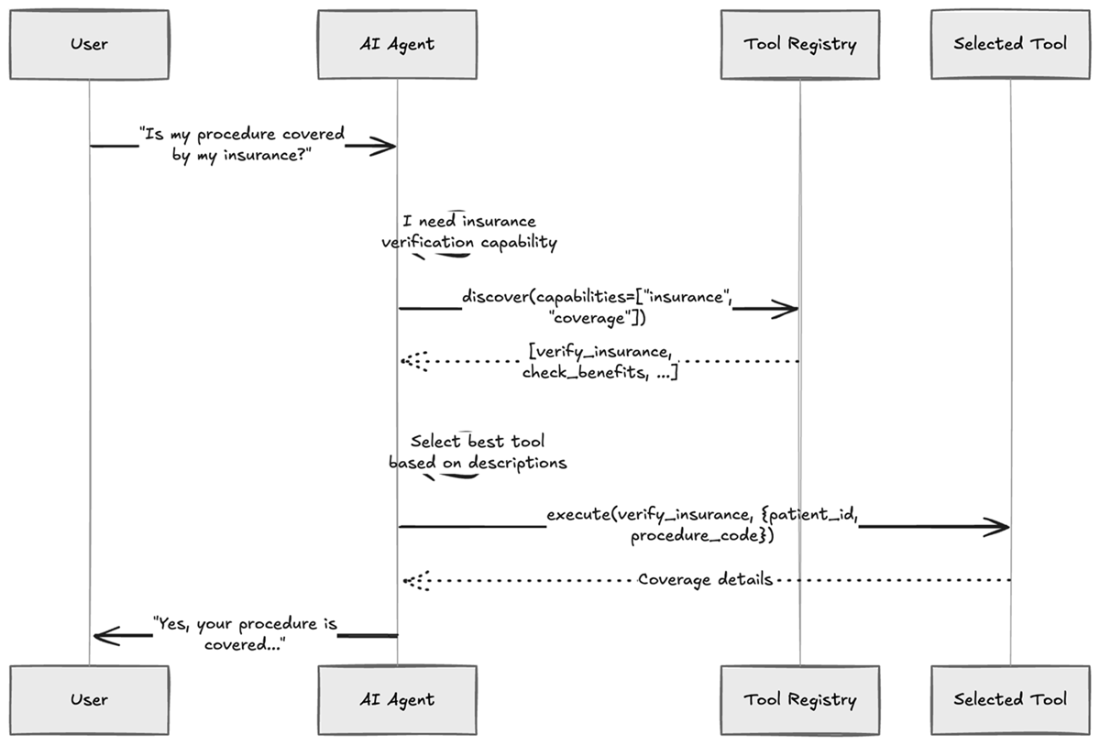
Capability-based discovery empowers AI agents to dynamically find and execute tools without relying on hardcoded integrations. When a user submits a complex request, the model first reasons about the specific capabilities required to fulfill it. Instead of failing if a specific tool isn't already in its context, the agent queries the Tool Registry using semantic parameters (such as capabilities=["insurance", "coverage"]). After the registry returns a list of candidate tools, the model evaluates their detailed descriptions to independently select the best fit for the task. Finally, the agent executes the chosen tool with the extracted arguments and synthesizes the returned external data into a seamless response for the user. This pattern shifts the system from brittle, static function calling to flexible, autonomous problem-solving
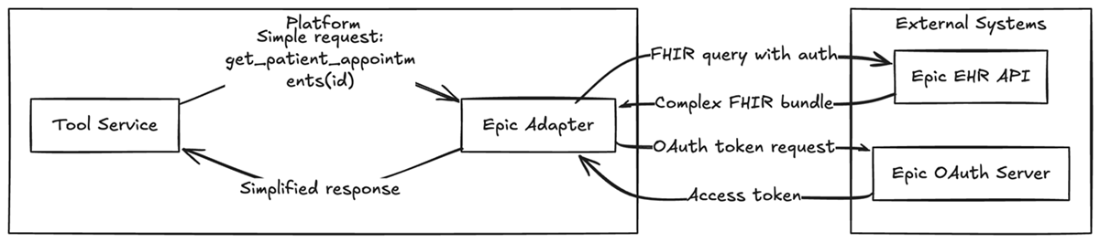
The Adapter pattern encapsulates external complexity and handles API translation. To prevent application logic from becoming tightly coupled to complex external systems, the Epic Adapter acts as an intelligent intermediary. It accepts simplified tool requests from the Tool Service and manages the heavy lifting of external communication. This includes securely requesting and managing access tokens from the Epic OAuth Server, formatting authenticated FHIR queries for the Epic EHR API, and subsequently parsing the complex, deeply nested FHIR bundle into a clean, simplified dictionary response that the AI model can easily process.
Secure credential isolation and injection flow. When an application requests a tool execution, it passes only the operational arguments, remaining completely decoupled from the underlying authentication mechanisms. The Tool Service independently fetches the necessary API keys from the isolated Credential Store using the registered reference name. It then injects these secrets directly into the outbound HTTP request to the External API. Crucially, the external system's response is sanitized before being returned, ensuring that at no point do sensitive credentials traverse the application layer, appear in the Platform SDK, or leak into system logs..
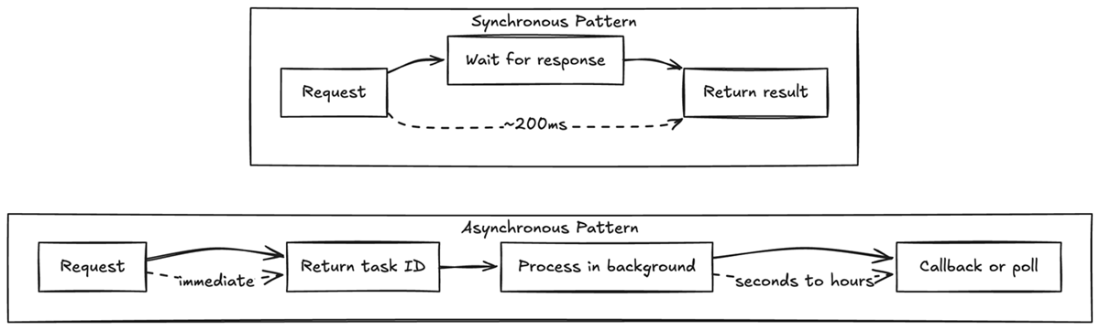
Synchronous and asynchronous execution patterns manage the unpredictable latency of external integrations. For fast, predictable operations, the Synchronous Pattern allows the Tool Service to block the request, wait for external processing, and return the result directly to the application. Conversely, for slow or complex operations, such as insurance verification, the Asynchronous Pattern prevents the AI conversation from stalling. The platform immediately returns a task ID while processing the request in the background, allowing the application to use callbacks or polling to retrieve the result once completed. This dual-pattern approach ensures the AI assistant remains responsive and maintains a seamless user experience, regardless of backend system delays.
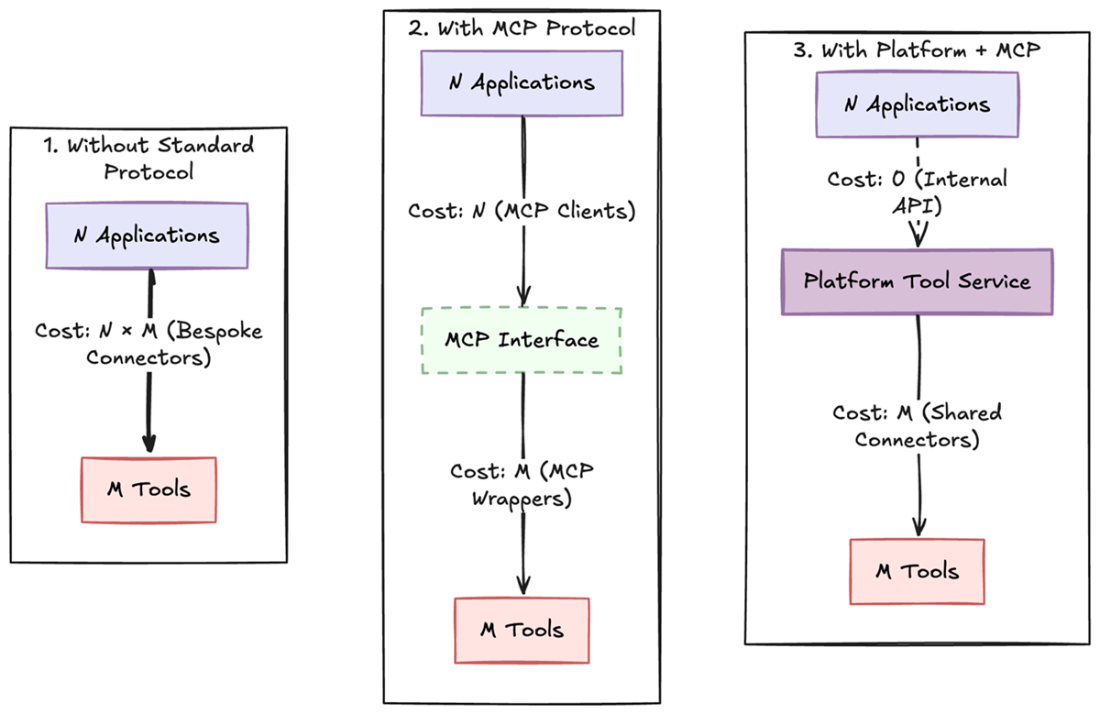
The integration cost progression. Without a standard protocol (left), each AI application needs custom code for each external tool, creating a multiplicative and unscalable N × M cost. With the Model Context Protocol (center), the ecosystem standardizes, reducing the integration burden to an additive N + M requirement. By introducing a platform architecture (right), the Tool Service acts as the single, universal MCP client for all applications. This abstracts the complexity away from application developers entirely, reducing the organization's integration cost to just M: one connection per tool, securely shared across every application.
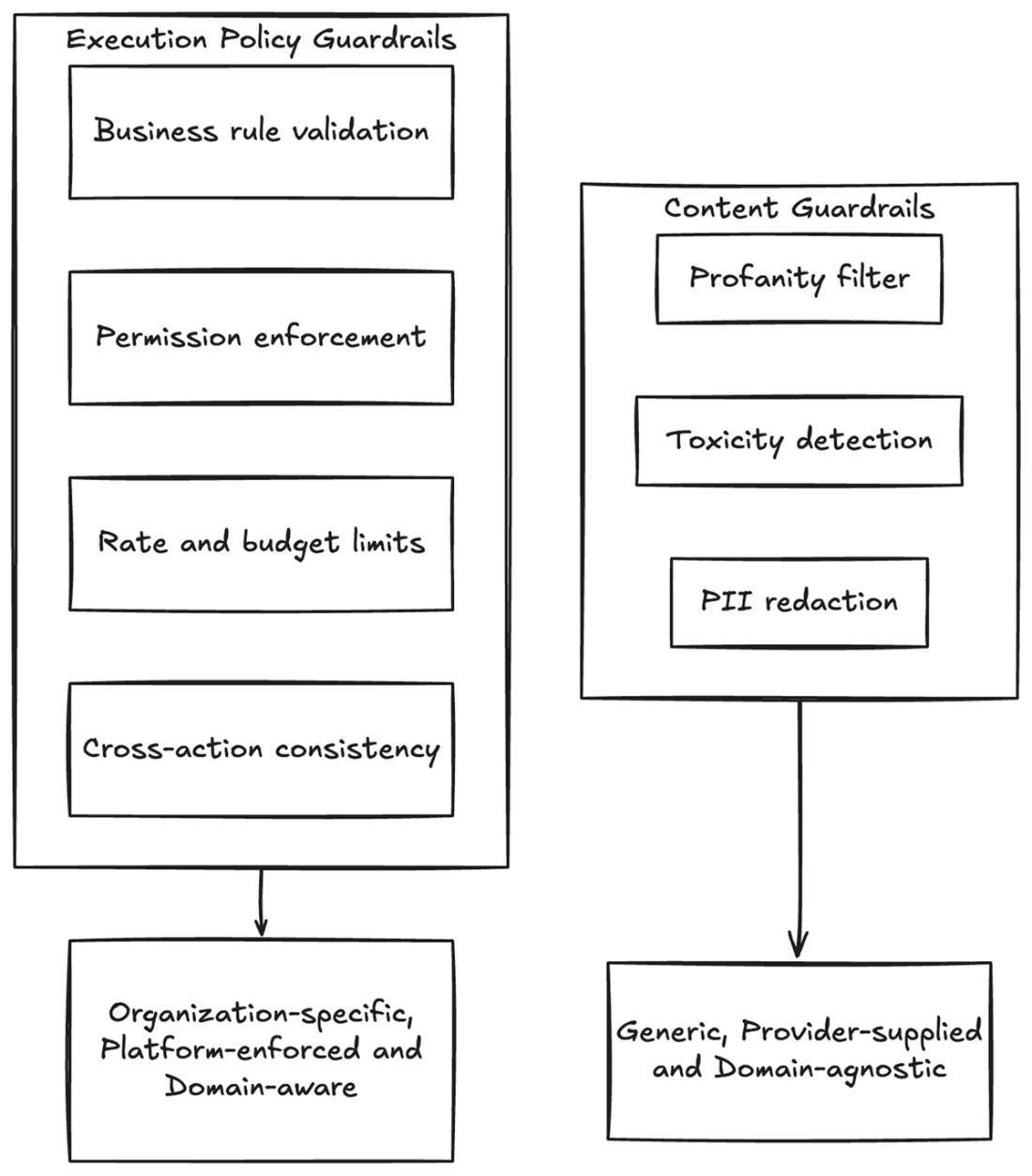
Execution policy guardrails control what the system does, and content guardrails filter what the model says. Both are necessary, but only execution policies can enforce business-specific rules.
The five-point inspection model establishes a defense-in-depth architecture for AI interactions. This multi-layered approach ensures comprehensive policy enforcement at every stage of the request lifecycle:(1) Input Validation intercepts malicious prompt injections or off-topic user messages before they reach the model. (2) Pre-Execution Policy evaluates the model's intended tool calls against session state and business rules (e.g., verifying prerequisites are met before booking). (3) Argument Validation ensures the specific parameters sent to external APIs strictly adhere to domain constraints and schemas.(4) External Response Filtering sanitizes sensitive raw data or handles errors returning from external systems before they are incorporated into the AI's context. (5) Output Filtering serves as the final, holistic gate to catch hallucinations, redact PII, and enforce brand safety before the assembled response is delivered to the user.

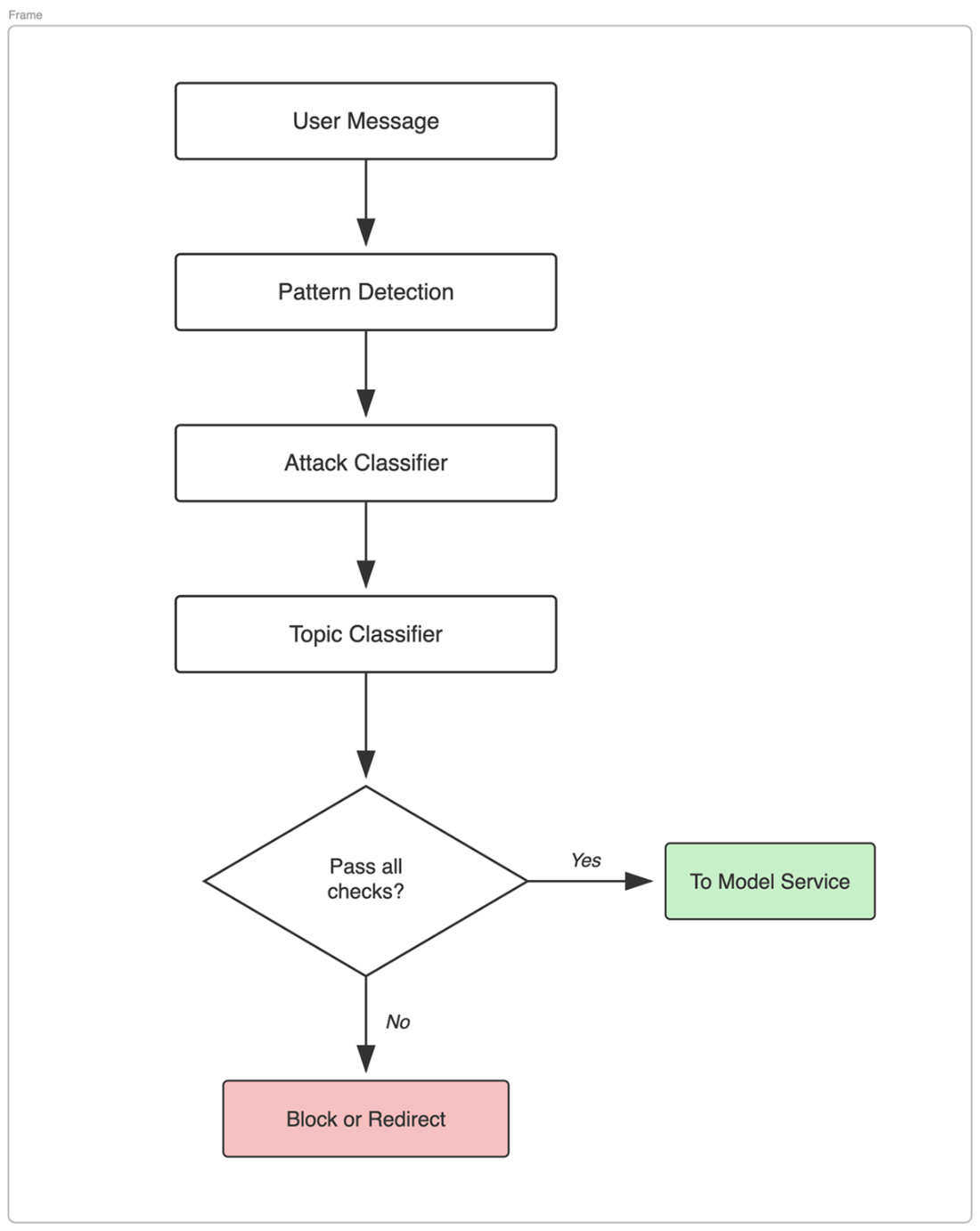
Input guardrails apply multiple detection layers. A message must pass pattern matching, attack classification, and topic validation before reaching the model.
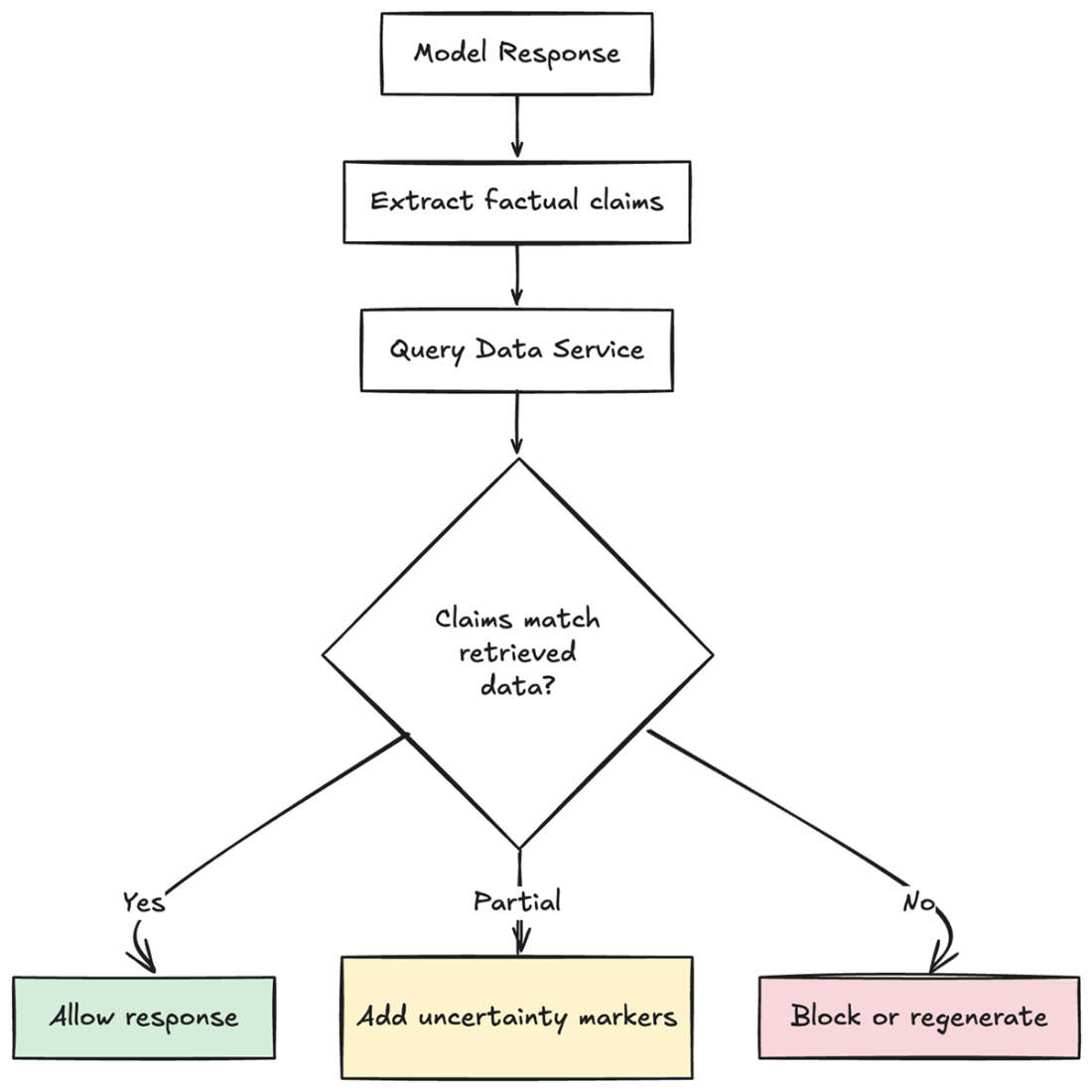
Factual grounding validates claims in the response against authoritative data sources. Unverifiable claims can be blocked, flagged, or annotated with uncertainty.
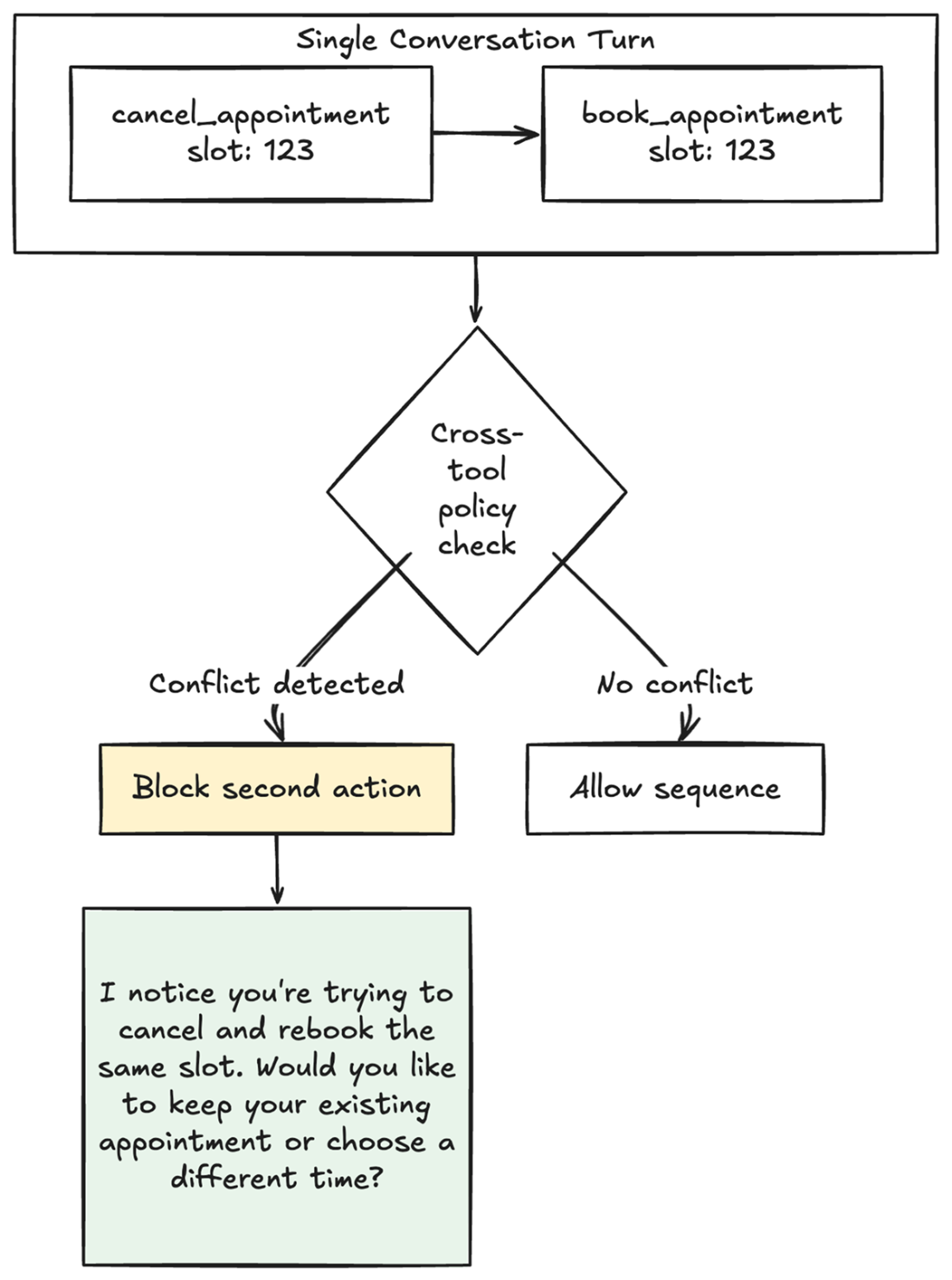
Cross-tool policies detect logically inconsistent action sequences and intervene with clarifying questions rather than executing conflicting operations. In this scenario, the AI model attempts to both cancel and rebook the exact same appointment slot within a single conversational turn. Rather than blindly passing these conflicting commands to the underlying scheduling API, which could result in a race condition or a permanently lost booking, the Guardrails Service intercepts the sequence. It blocks the contradictory second action and instead prompts the user to clarify their intent, ensuring a graceful recovery and maintaining data integrity.
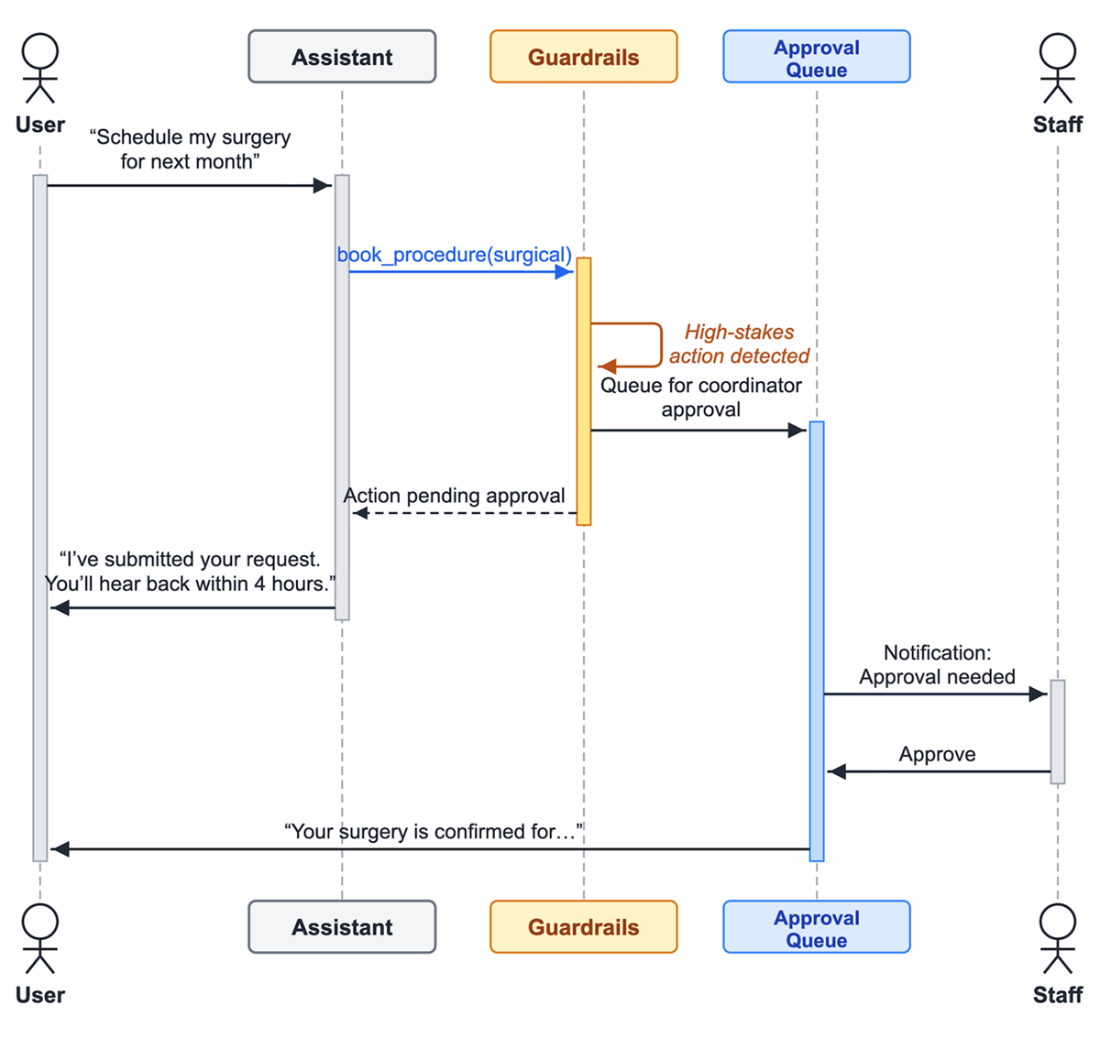
Human-in-the-loop gates pause high-stakes actions for manual approval, bridging automated AI interactions with mandatory human oversight. When the AI assistant attempts to execute a highly consequential action, such as scheduling a surgical procedure, the Guardrails Service intercepts the request before it reaches the external system. The platform safely queues the action and notifies the appropriate clinical staff for review. Crucially, the AI does not leave the patient waiting in silence; it immediately provides an asynchronous acknowledgment, setting clear expectations for when the manual review will be completed and the workflow will resume..
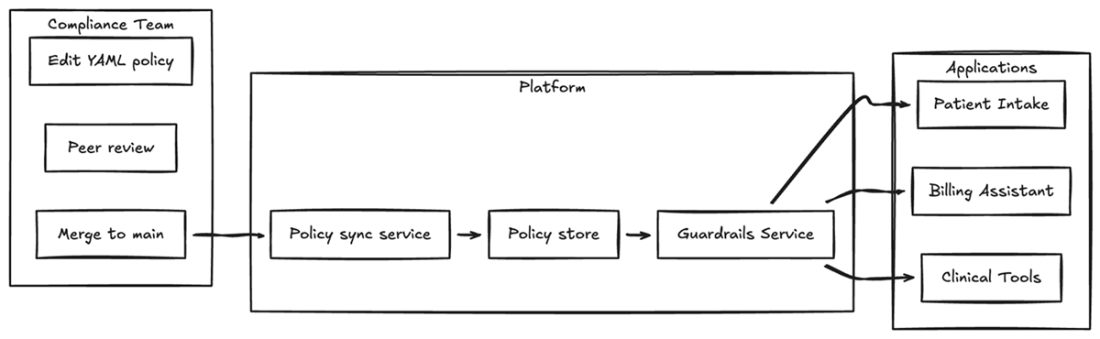
Declarative policy configuration enforces a strict separation of concerns between governance and application development. Rather than embedding security checks in application code, the Compliance Team independently manages governance rules as readable YAML files. Once these changes undergo peer review and are merged into the main repository, the platform's internal Policy Sync Service automatically propagates them to the centralized Guardrails Service. This architecture ensures that updated constraints are instantly and uniformly enforced across all active applications—such as Patient Intake or Billing Assistants—without requiring developers to modify application code or orchestrate coordinated redeployments.
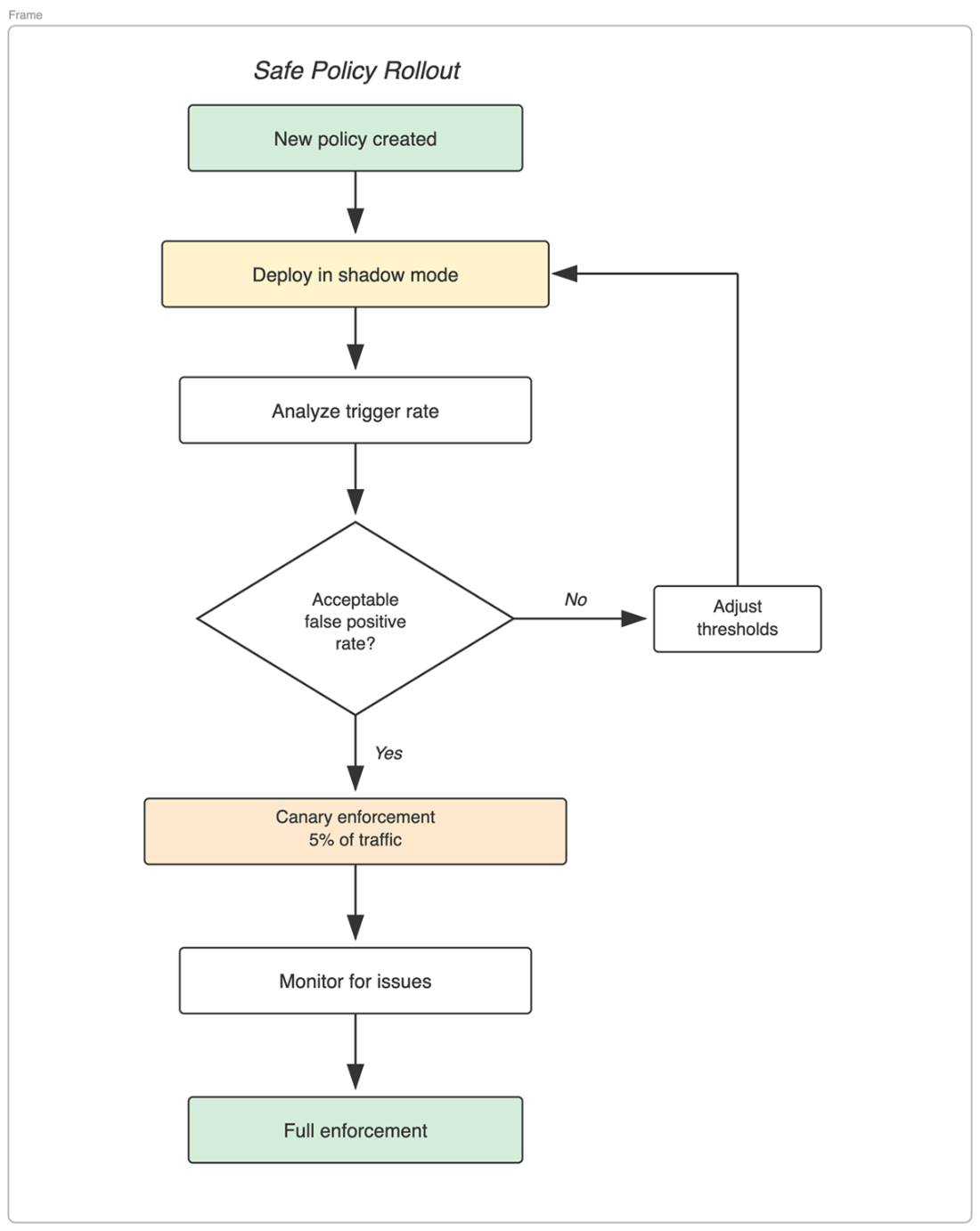
Safe policy rollout minimizes blast radius through progressive, data-driven enforcement. To prevent a misconfigured guardrail from simultaneously breaking all applications, new policies are first deployed in shadow mode. In this stage, the platform evaluates requests and logs what actions would have been blocked without actually interrupting live traffic, allowing teams to analyze the trigger rate and adjust thresholds if the false-positive rate is unacceptable. Once the metrics are validated, the policy advances to a canary stage, enforcing the rules on a small sample of traffic (e.g., 5%), to monitor for edge cases before finally proceeding to full, system-wide enforcement.
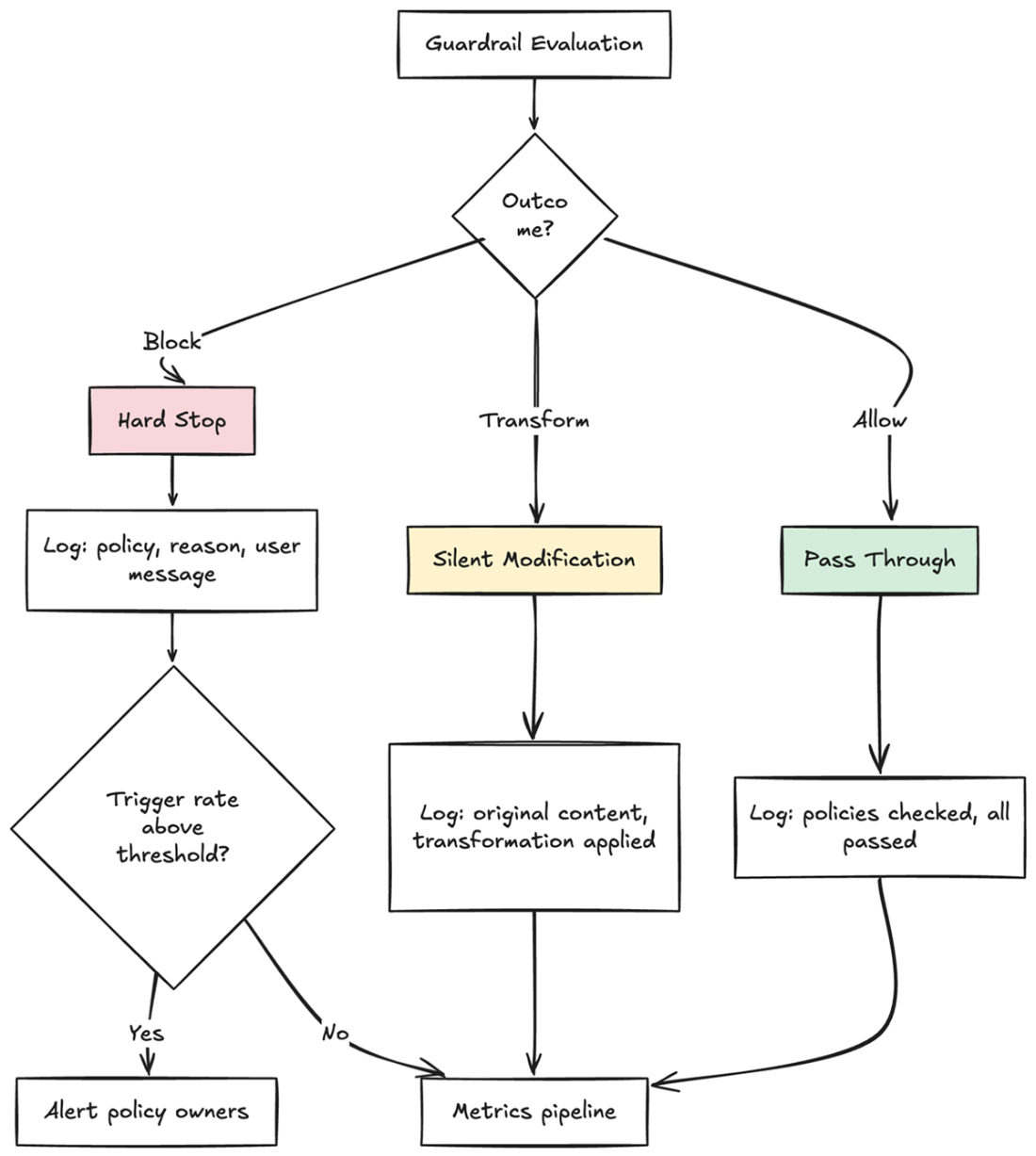
Comprehensive observability captures every guardrail evaluation to make safety decisions measurable and auditable. The platform generates a record for every interaction, regardless of the final outcome. If a request is explicitly blocked ("Hard Stop"), the system logs the exact policy, reason, and user message; if the rate of these blocks exceeds normal thresholds, it automatically alerts policy owners to investigate. For "Silent Modifications", where the system redacts or transforms content without interrupting the user—the logs safely capture both the original and modified text to enable compliance auditing and debugging. Finally, even fully permitted requests ("Pass Through") generate records confirming that all policies were checked and passed. Ultimately, all three paths feed into a centralized metrics pipeline used to tune policies and monitor system health.
Summary
- Tools are platform-managed capabilities rather than JSON blobs embedded in application code. The platform handles registration, discovery, credential management, and execution while applications declare intent.
- The Tool Service contract provides four operations: Register (add tools to inventory), Discover (find tools by namespace or capability), Execute (run tools with automatic credential injection), and Validate (check arguments before execution).
- Tool metadata extends beyond function signatures to include rate limits, idempotency declarations, cost information, and side-effect documentation. This metadata enables intelligent policy evaluation and execution safeguards.
- The Tool Registry organizes capabilities through hierarchical namespacing with version control that allows tools to evolve without breaking existing applications.
- Adapters wrap external complexity, translating between simple platform interfaces and complex external APIs. Credential isolation ensures secrets never appear in application code or logs.
- The Model Context Protocol (MCP) standardizes the wire protocol for tool communication, while the platform provides organizational capabilities above the protocol layer: credential management, policy enforcement, rate limiting, audit trails, and version governance.
- Execution patterns handle synchronous operations for fast tools and asynchronous patterns for long-running tasks, with timeout and retry policies configured at the tool level.
- Tool execution isolation prevents cascading failures through per-invocation resource limits (timeout, memory, response size) and circuit breakers that temporarily disable consistently failing tools, following the closed → open → half-open state machine pattern.
- Guardrails are execution policies, not just content filters. They enforce business logic, permissions, and regulatory requirements that no external moderation API can know.
- Five inspection points define where guardrails evaluate requests: input validation, pre-tool policy checks, argument validation, external response filtering, and output filtering.
- Input guardrails protect the system through prompt injection detection, topic classification, and schema validation. Output guardrails protect users through PII redaction, hallucination detection, and factual grounding.
- Behavioral guardrails control actions through session-level permissions, cross-tool consistency checks, and human-in-the-loop approval gates for high-stakes operations.
- Declarative policies separate application logic from safety constraints. Compliance teams edit YAML configurations; developers handle guardrail violation errors. Neither needs to understand the other's domain.
- Safe rollout through shadow mode evaluation, canary enforcement, and automatic rollback prevents new policies from causing widespread failures.
- Observability makes safety visible through structured logs, operational metrics, and compliance-ready audit trails that document every action proposed and every decision made

 Designing AI Systems ebook for free
