Overview

9 Governance: Constraints that enable freedom

```html

Governance in this chapter is presented as the set of constraints that make agent autonomy usable rather than dangerous. Once an agent can edit files, call APIs, send messages, or delegate work, the central issue is no longer whether it can act, but what it is allowed to do, what evidence must accompany that choice, and where the hard limits remain. The chapter argues that safety is a system property, so clear boundaries, not vague trust, are what let organizations delegate work while still staying accountable.

The chapter organizes governance into four complementary patterns. Approval Gate routes proposals into deny, allow, or human review based on risk and policy; Blast Radius Control limits the damage a mistaken or compromised action can cause through capability restrictions, sandboxing, and quantitative ceilings; Progressive Commitment earns or withdraws autonomy through staged verification and observed results over time; and the Observability Harness preserves the trace, metrics, decisions, and outcome evidence needed to reconstruct and audit what happened. Together, these patterns turn autonomy into something graduated, measurable, and reversible where possible.

The practical lesson is that governance should be designed into the agent lifecycle, not added as a final checkbox. The chapter shows how these controls can be composed in a production-style system, using Argus as an example of a reviewer upgraded into a governed agent with routing, containment, trust escalation, and evidence capture. It also connects these mechanisms to operational and regulatory concerns, emphasizing that organizations need a control plane, durable records, and human sovereignty for critical, sensitive, or insufficiently evidenced actions.

```
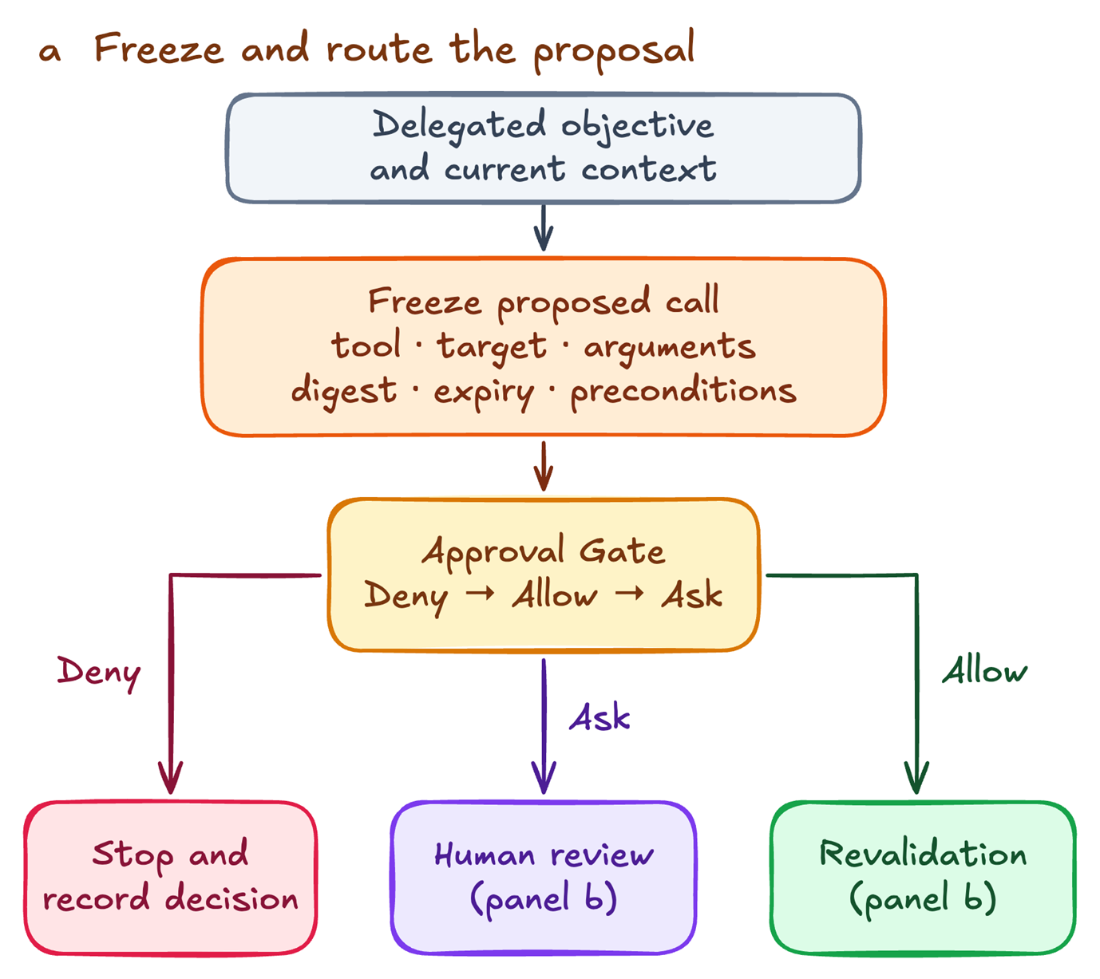
Approval Gate. Part A: route the frozen proposal to deny, allow, or human review.
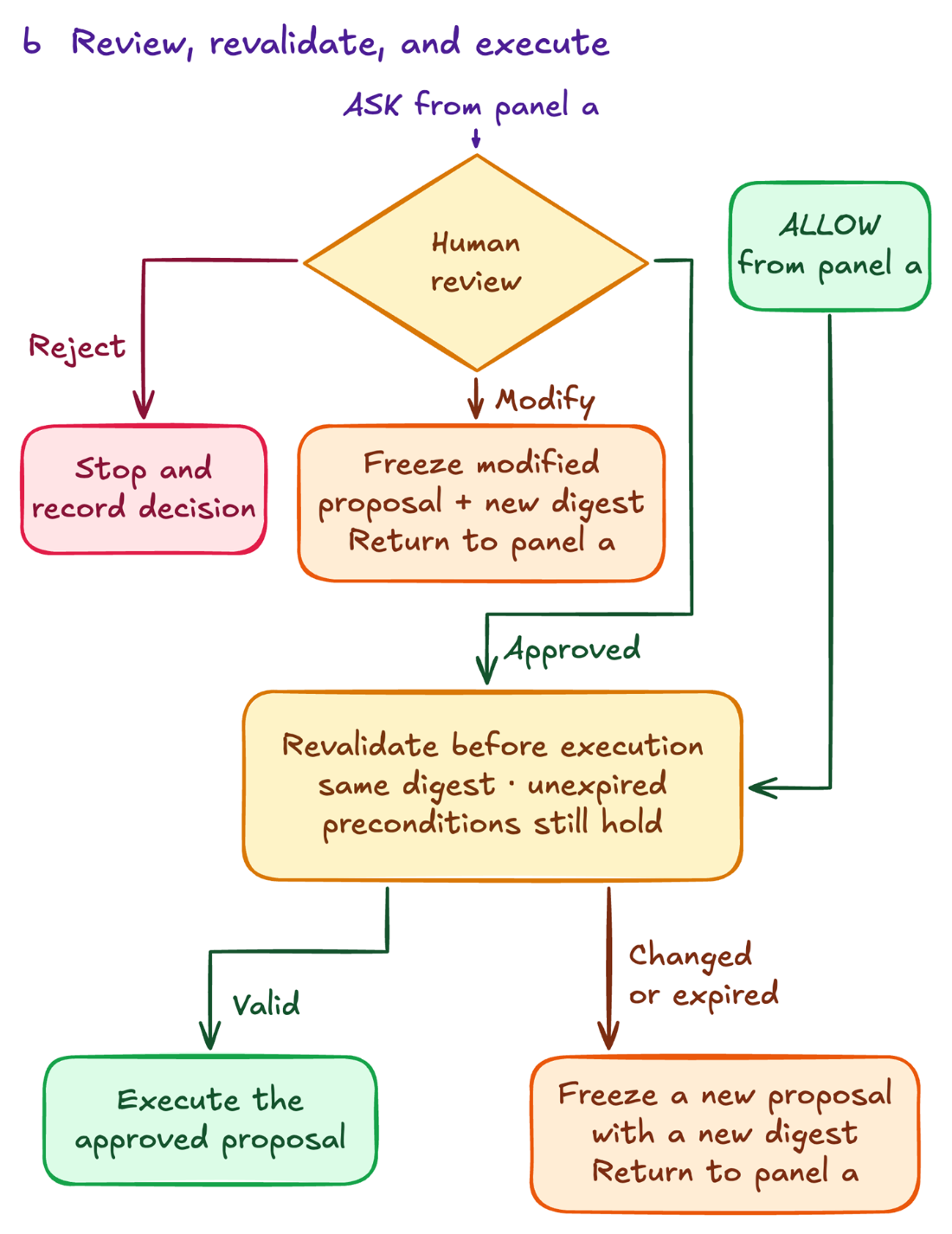
(continued) Part B: review and revalidate before execution. Changed proposals return to part A.
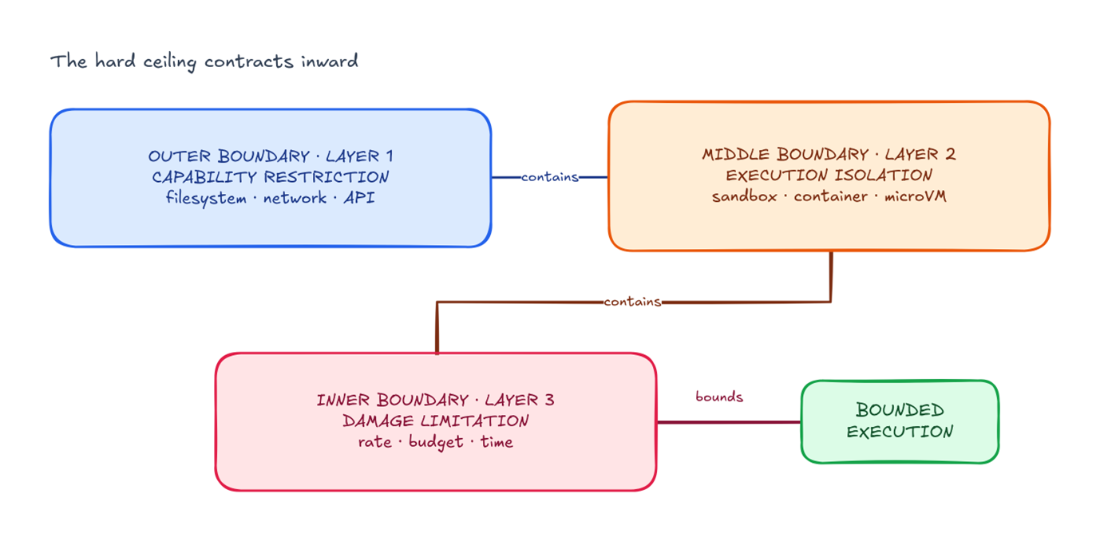
Three-layer blast radius control. Nested containment from broad capability restriction to fine-grained damage limitation.
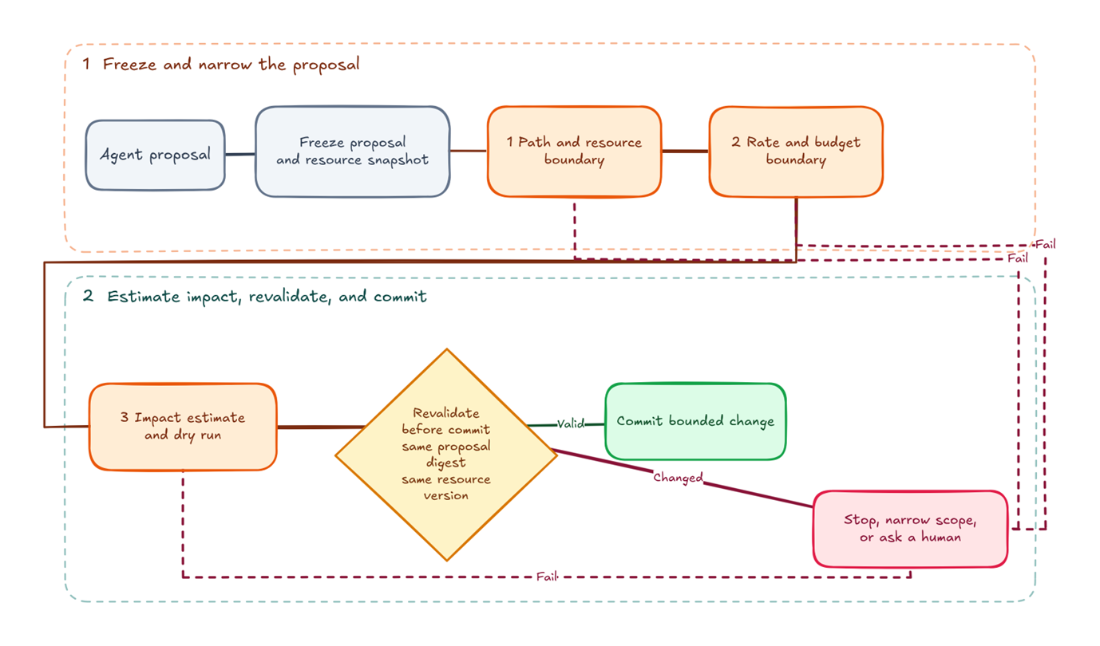
Progressive Commitment. Freeze the proposal, stage cheaper checks, and revalidate the same proposal before commit.
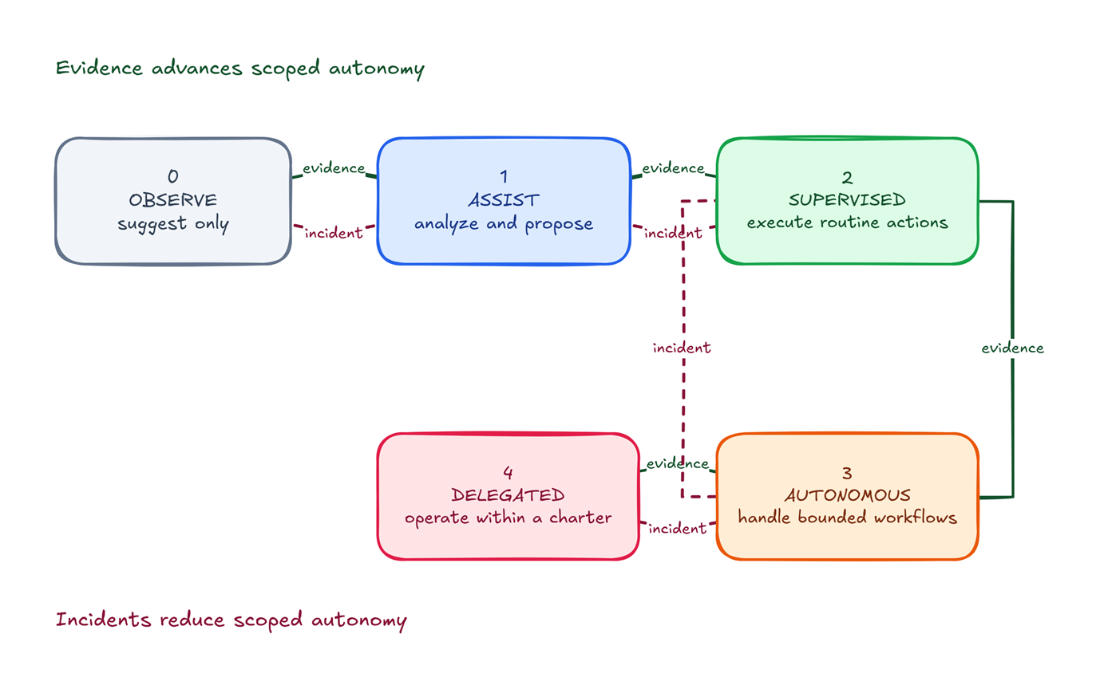
The trust ladder. Each level requires demonstrated reliability before escalation.
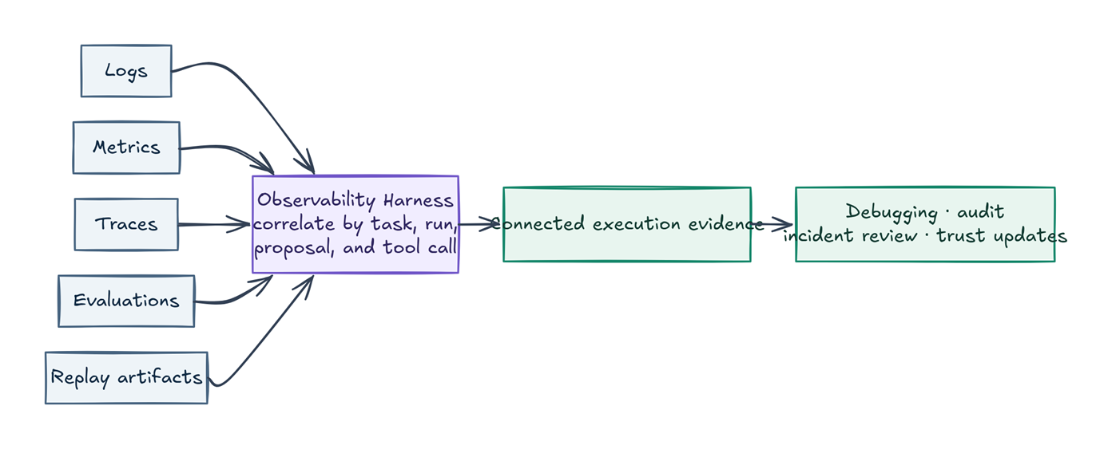
The Observability Harness. A coordinating orchestrator correlates logs, metrics, traces, evaluations, and replay artifacts within one trace boundary.
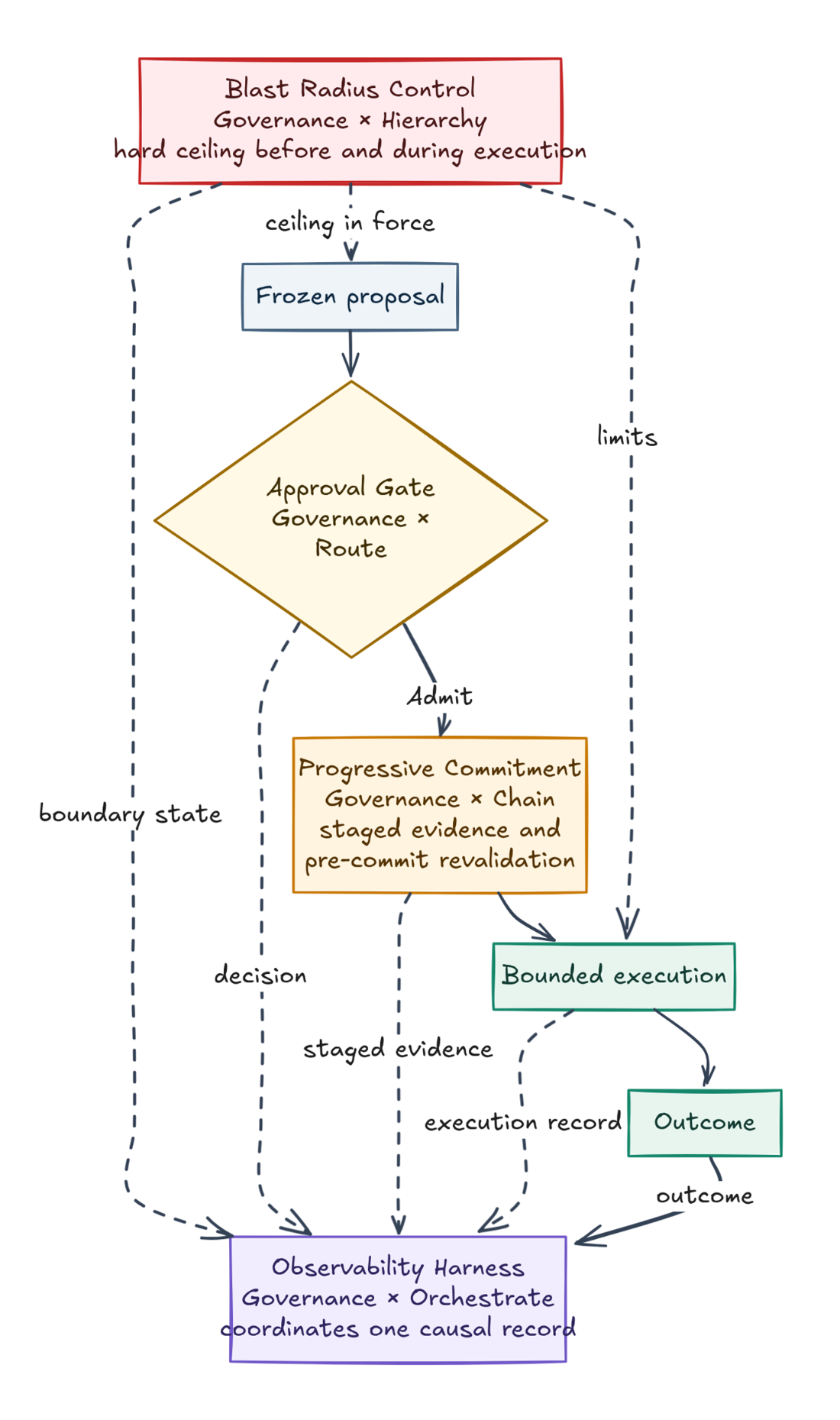
The governance pipeline. Four patterns coordinate one action from proposal to recorded outcome.
Summary

  • Governance begins when a person or organization delegates choices to an agent but retains responsibility for their effects. Clear boundaries can create more room to act: once an organization knows what may proceed, what must stop, and how far a mistake can spread, it can delegate work that would otherwise remain manual.
  • Autonomy is a degree, not a switch. Table 9.1's levels 0–4 describe operating arrangements, and level 5 marks a research horizon. Levels 1–3 are the practical deployment range.
  • Approval Gate (Governance × Route) inspects the concrete proposal along with the caller's credentials, then routes it to allow, deny, or ask.
  • Blast Radius Control (Governance × Hierarchy) assumes an authorized action can still be wrong and limits the largest effect before anyone can react.
  • Progressive Commitment (Governance × Chain) expands and contracts autonomy from observed evidence while keeping a hard ceiling around every level.
  • Observability Harness (Governance × Orchestrate) coordinates the evidence needed to reconstruct a run, change trust, and assign responsibility.
  • The four patterns answer different questions about the same action. Approval Gate routes the proposal; Blast Radius Control enforces the hard ceiling; Progressive Commitment stages commitment as evidence accumulates; Observability Harness connects decisions, execution, and observed outcomes in one causal record.
  • No single pattern proves compliance. Laws, standards, and governance frameworks impose or recommend different obligations; the engineering question is what evidence an organization can produce for the ones it claims to satisfy. That evidence includes agent registry entries, policy versions, approval records, execution traces, incident history, and the basis for changes in autonomy.

FAQ

```html
What is governance in AI agents, and why does it come after capability?Governance is the layer that controls what an agent is allowed to do once it can act in the world. It comes after capability because each new skill—like editing files, calling APIs, or delegating work—creates more ways for mistakes to escape the model and affect external systems. Governance sets the boundary, evidence requirements, and accountability needed to make that autonomy safe.
What does the chapter mean by “constraints enable freedom”?Constraints can create more useful autonomy by reducing uncertainty about what is allowed. When an agent has clear boundaries, it can act more often without asking for permission on every small step. The same boundary also prevents drift, so the system can delegate more work while keeping risk under control.
What is an Approval Gate?An Approval Gate is a governance pattern that decides whether a proposed action may proceed, must be denied, or needs human review. It routes actions based on risk, reversibility, and policy rules. The idea is to avoid both approval fatigue and dangerous unchecked actions.
How does the Approval Gate classify risk?Risk classification starts with the action’s impact and reversibility, not just the tool name. Low-impact, reversible actions may be auto-allowed, while high-impact or irreversible actions usually require review. The gate can also apply explicit deny and allow rules before falling back to a human review path.
What is Blast Radius Control?Blast Radius Control limits how much damage an approved or compromised action can cause. It uses nested containment layers such as capability restriction, execution isolation, and damage limitation. The goal is to keep a wrong decision from becoming a large incident.
Why is sandboxing not enough on its own?A sandbox limits where code runs and what technical resources it can reach, but it does not decide whether a specific business action is appropriate. It cannot, by itself, determine whether a customer should get a coupon, a record should be changed, or a message should be sent. That is why sandboxing must be combined with policy and approval controls.
What is Progressive Commitment?Progressive Commitment is the pattern of earning trust through staged verification and observed outcomes. An agent proves itself with cheaper, reversible actions before being allowed to make more consequential commitments. Over time, trust can increase or decrease based on evidence from real tasks.
What are the human sovereignty triggers in this chapter?Even trusted agents must defer to humans for critical operations, insufficient evidence, and ethically sensitive actions. Examples include large financial amounts, irreversible data changes, privacy-sensitive actions, or compliance-heavy decisions. These triggers remain in force regardless of trust level.
What is an Observability Harness?An Observability Harness is the evidence layer that makes agent actions reconstructable and attributable. It connects logs, metrics, traces, evaluations, and replay artifacts so an incident can be debugged or audited later. The point is to preserve the causal record of what happened, not just the final outcome.
How do the four governance patterns work together in a production agent?Approval Gate decides whether a proposal may proceed, Blast Radius Control limits the worst possible damage, Progressive Commitment adjusts autonomy based on evidence, and the Observability Harness records what happened. Together, they create a governed control plane for agent actions. In Argus, these patterns turn a capable reviewer into a production system with boundaries, accountability, and auditability.
```

pro $24.99 per month

  • access to all Manning books, MEAPs, liveVideos, liveProjects, and audiobooks!
  • choose one free eBook per month to keep
  • exclusive 50% discount on all purchases
  • renews monthly, pause or cancel renewal anytime

lite $19.99 per month

  • access to all Manning books, including MEAPs!

team

5, 10 or 20 seats+ for your team - learn more


choose your plan

team

monthly
annual
$49.99
$499.99
only $41.67 per month
  • five seats for your team
  • access to all Manning books, MEAPs, liveVideos, liveProjects, and audiobooks!
  • choose another free product every time you renew
  • choose twelve free products per year
  • exclusive 50% discount on all purchases
  • renews monthly, pause or cancel renewal anytime
  • renews annually, pause or cancel renewal anytime
  • Designing AI Agents ebook for free
