12 Integration Testing
Integration tests are presented as essential for checking how software behaves when it interacts with real external systems such as databases, queues, files, and services. Unlike unit tests, they are allowed to perform I/O and often look similar to familiar arrange-act-assert tests, but they can also take more fluid forms where actions and assertions are interleaved. The main challenge is that these tests exercise behavior outside direct control, so they must cope with unreliable networks, outages, race conditions, and other real-world failures.
A central theme is that integration tests should be driven by data, not hidden assumptions. The text argues against hard-coded fixtures with unclear origins and instead recommends generating test inputs directly in the test so the setup, behavior, and assertions are all visible and understandable. This makes tests more maintainable, easier to scale, and better at expressing what matters. The chapter also shows how to use algebraic thinking to model external constraints precisely, translating business rules into clear properties that can be verified against the real dependency.
The chapter further emphasizes testing under realistic conditions, including concurrency and failure. Sequential tests may miss bugs that only appear under load, so the author recommends hammering the system with parallel activity to expose race conditions and gaps. Finally, reliability depends on isolation: each test should have its own clean infrastructure, ideally provisioned on demand and named so that leftover resources can be cleaned up safely even after failures. Because integration suites are expensive and prone to overlap as systems grow, redundant tests should be pruned regularly so the suite stays lean, trustworthy, and focused on real value.
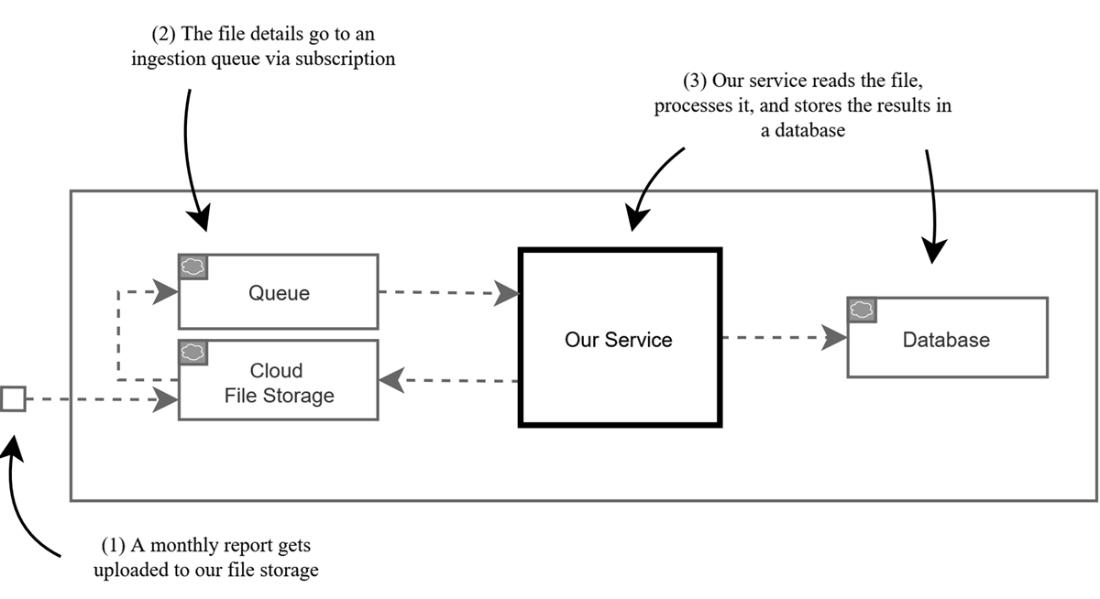
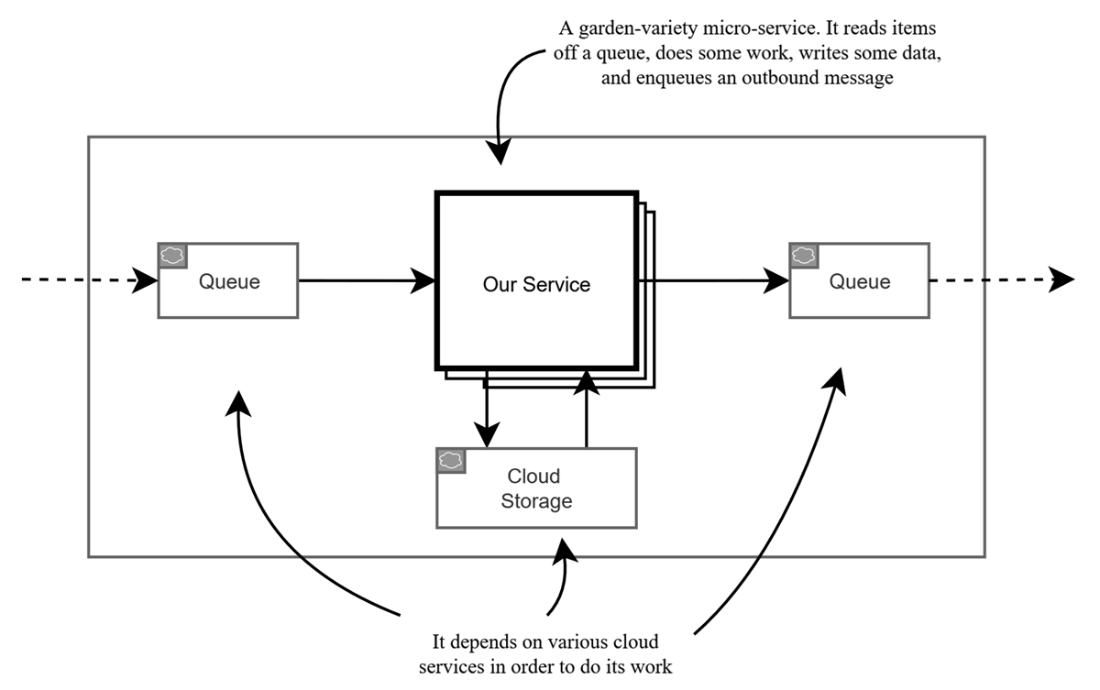
a small service
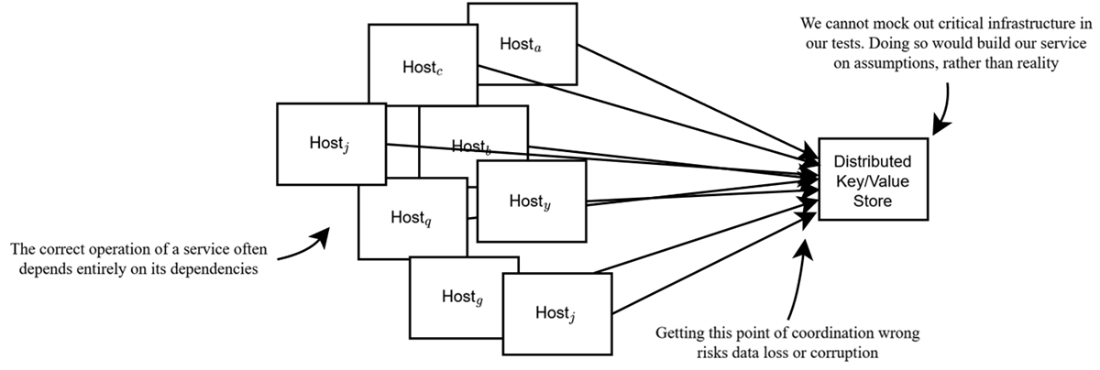
The correct operation of a service often depends heavily on its dependencies
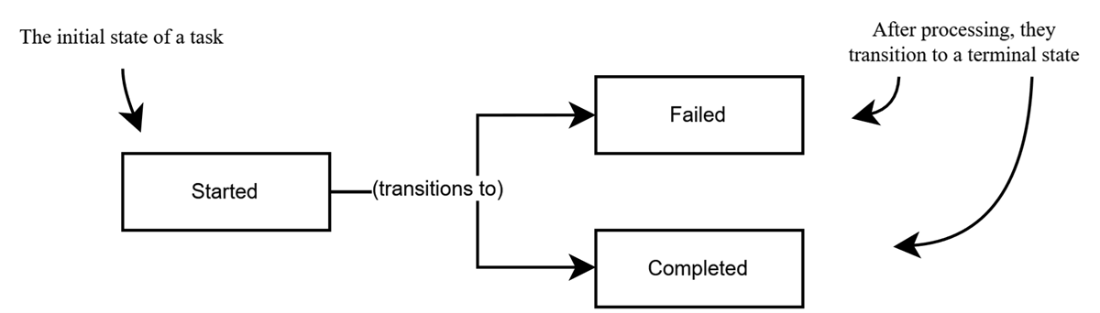
Visualizing the lifecycle as a simple state machine
Encoding state transitions as an ordering
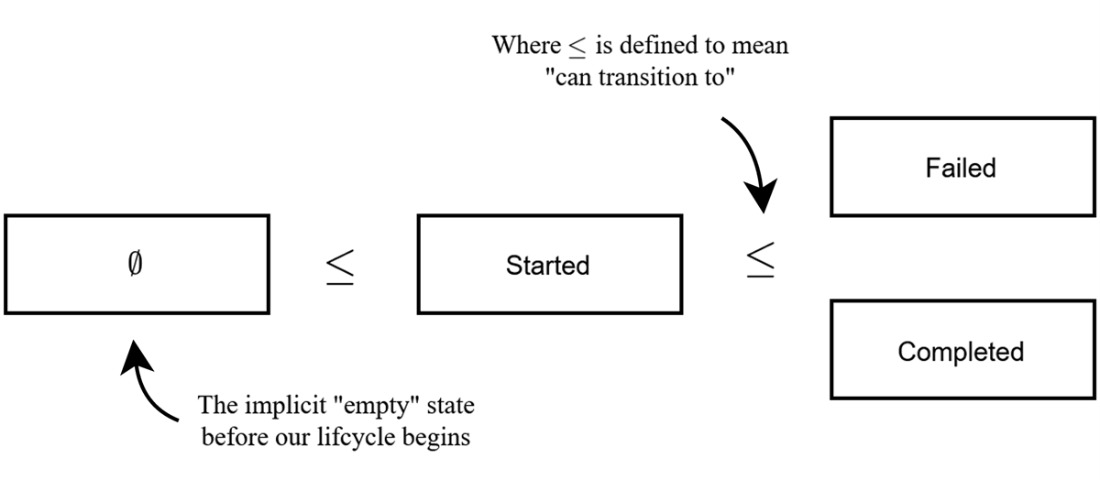
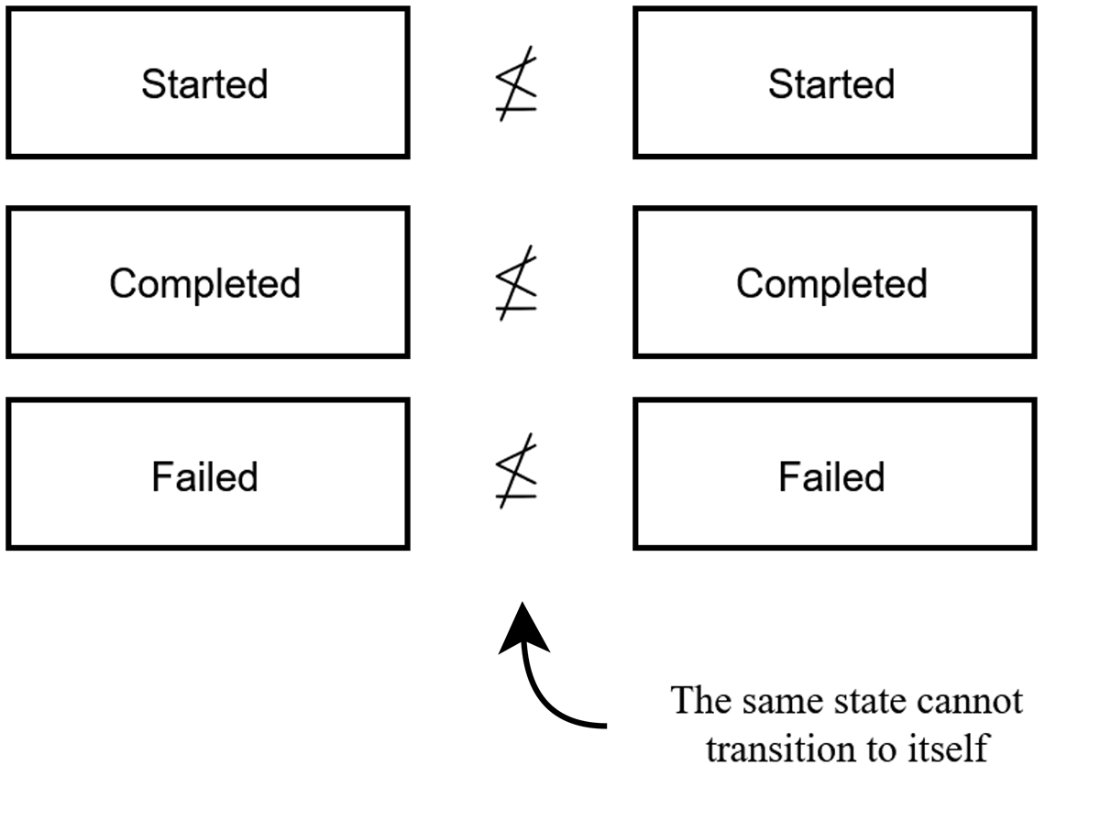
States are irreflexive. They cannot transition to themselves
An example microservice
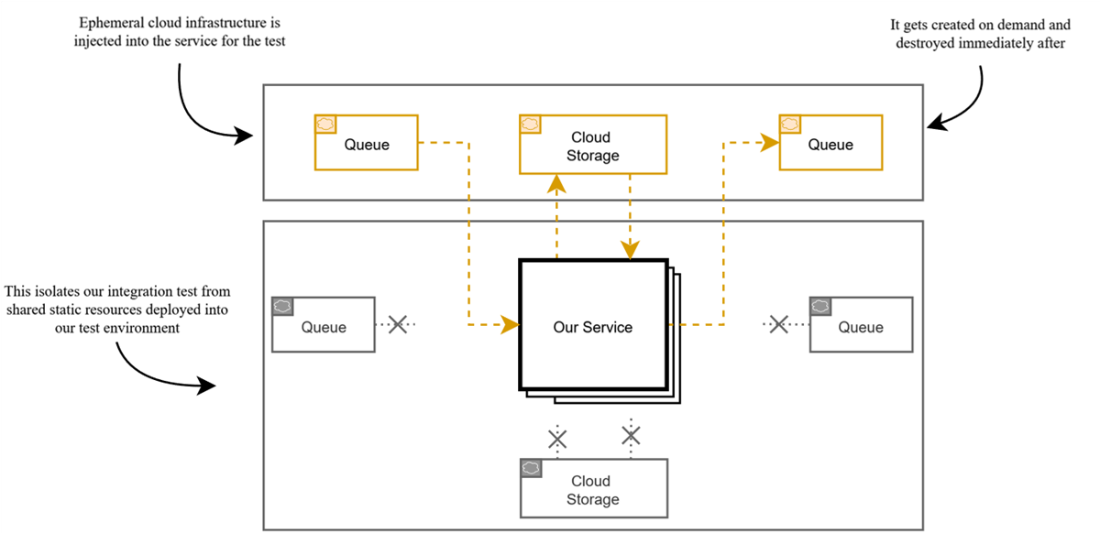
Injecting our own on-demand infrastructure
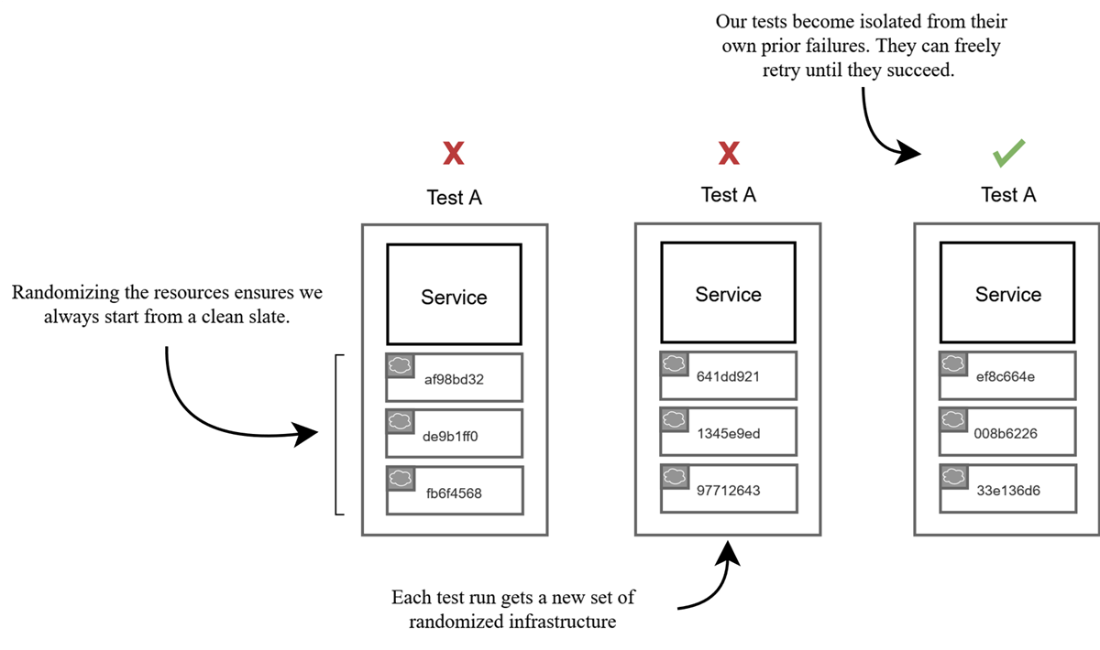
Isolation between tests yields a robust, reliable test suite
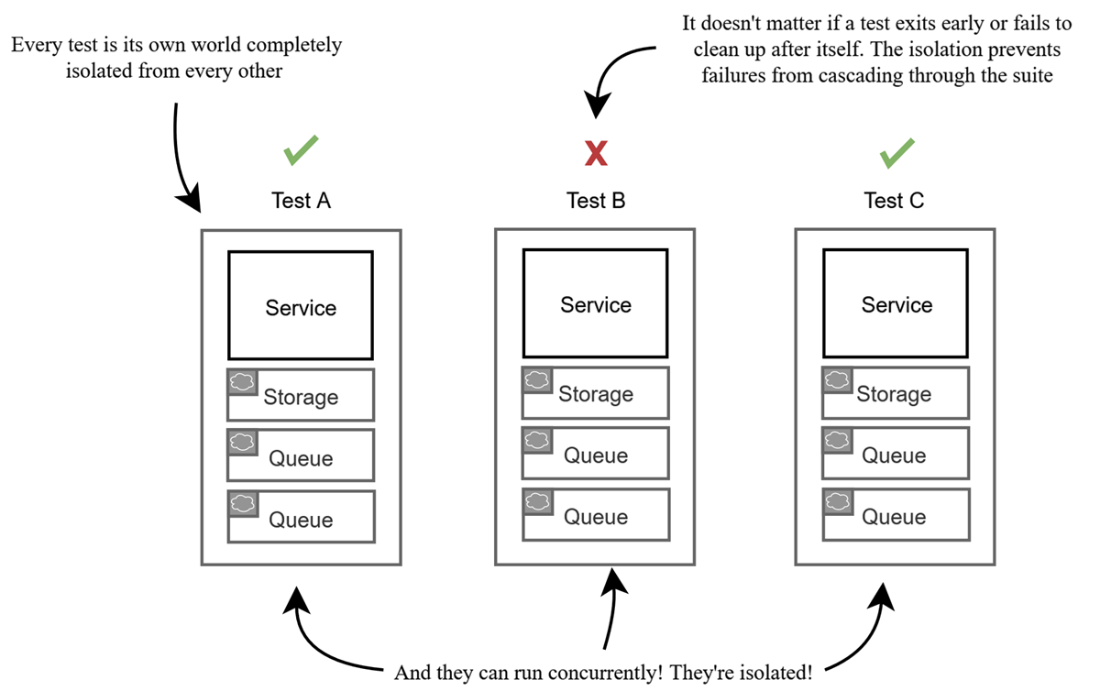
Randomizing the infrastructure gives isolation from prior failures
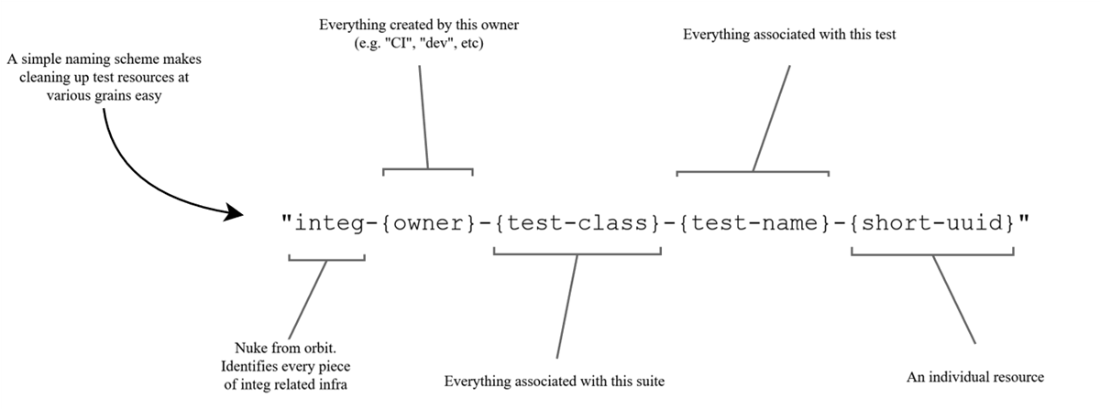
A naming scheme that allows cleanup up resources at various grains
Summary
- Drive your integration tests with data
- Show what’s under test in the test
- There is no single integration test shape.
- “Arrange, Act, Assert” is just one of many approaches
- It’s common for integration tests to follow a looser “assert as you go” style
- Give a throughline from initial conditions to assertions
- Mocking is valuable, but risks masking the true behavior of our dependencies
- Use algebraic laws to verify your external systems and integrations
- Always be on the hunt for when your problem is just an ordering in disguise
- Embrace messy concurrent tests. They have a way of shaking loose bugs that are hard to catch with traditional methods.
- The integration tests you need at the beginning of the projects are not the ones you’ll need when it’s mature
- Prune redundant tests!
- Integration tests suites must be built with resiliency to failures in mind
- Networks are unstable. Services go down. Your test suite must handle this reality
- Spin up your infrastructure on demand. It sounds silly until you start doing it.
- Use name-spacing to isolate tests and provide scoped cleanup
- See ya!
FAQ
What is an integration test in this chapter’s definition?
An integration test is any test that is allowed to perform I/O. That makes it broader than a unit test and means it can interact with real dependencies like databases, queues, files, or services.
How are integration tests different from unit tests?
Integration tests talk to real dependencies instead of mocks. Because of that, they test how your code behaves in the presence of external systems, which makes them more realistic but also more difficult and fragile.
Why does the chapter recommend driving integration tests with data?
Because data makes the causal relationship between inputs and outputs visible in the test itself. It avoids hiding important setup in external files or fixtures and makes the test easier to understand, extend, and debug.
What is wrong with hard-coded files in integration tests?
Hard-coded files hide provenance and meaning. When a test fails, it can be unclear where the file came from, whether its contents matter, or how to reproduce the issue. Generating the file in the test makes the relevant data explicit.
What does it mean to impose algebraic properties on dependencies?
It means translating business rules into clear mathematical or ordering properties that can be verified against the real dependency. In the chapter, state transitions are modeled as an ordering so the database behavior can be checked precisely.
Why model state transitions as an ordering?
Because it gives a clean way to express rules like “empty can transition to anything,” “states cannot update themselves,” and “terminal states cannot transition onward.” That makes the expected behavior easier to test and reason about.
Why are concurrent integration tests useful?
They expose bugs that only appear under load or contention, such as race conditions and gaps in sequences. The chapter emphasizes that real systems are concurrent and messy, so tests should sometimes try to break the software rather than only prove idealized behavior.
Why should redundant integration tests be removed?
Integration test suites evolve over time. Lower-level tests often become covered by higher-level tests, so keeping them can add cost, runtime, and flakiness without much value. The chapter recommends pruning tests that no longer pull their weight.
What is the most important property for reliable integration tests?
Isolation. Each test should start from a clean slate, not depend on other tests, and not fight over shared infrastructure. Isolation prevents flaky interactions and makes failures easier to trust and diagnose.
How can isolation be achieved in integration tests?
Spin up infrastructure on demand, use unique randomized names for resources, and tear everything down afterward. The chapter also suggests tiered naming schemes so stale resources can still be cleaned up at different levels.

 Data-Oriented Programming in Java ebook for free
