Overview

9 Incident management and recovery

This chapter presents incident management as a core pillar of cybersecurity, emphasizing swift, accurate response to minimize impact and preserve business continuity. It frames incident handling as a systematic, repeatable program that blends proactive and reactive measures: anticipating threats with controls, hunting, access governance, and continuous assessment, while also preparing for rapid containment, investigation, remediation, and recovery when events occur. A hybrid, automation-forward posture—using anomaly detection, EDR, and deception—reduces dwell time and sharpens decision-making. The chapter also stresses disciplined change management to prevent introducing vulnerabilities, and clarifies the difference between confirmed breaches and potential exposures uncovered through assessment.

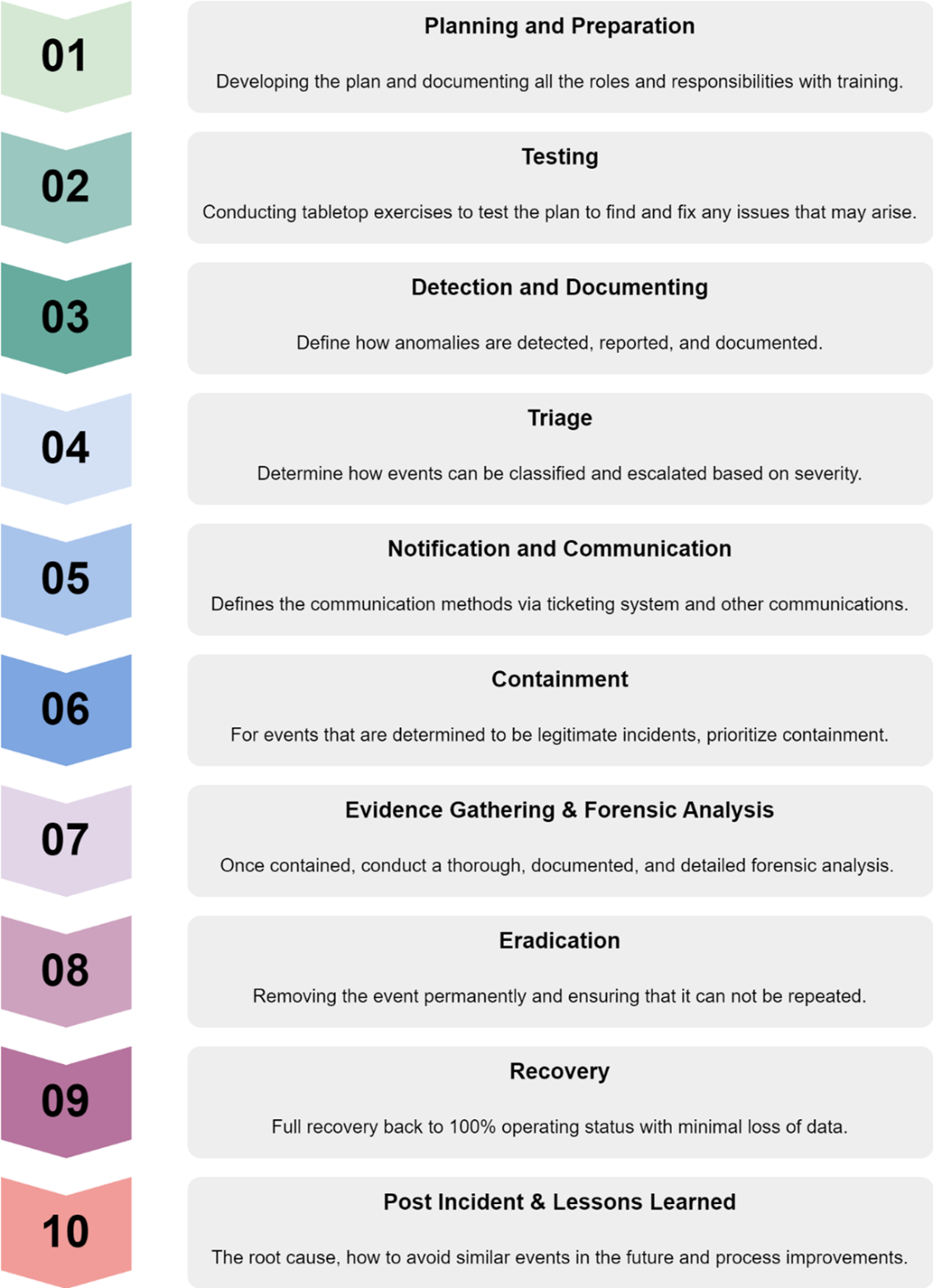
Guidance is organized around a comprehensive incident response plan that progresses through ten critical steps: planning and preparation; testing; detection and documentation; triage and analysis; notification and communication; containment; evidence gathering and forensic analysis; eradication; recovery; and post-incident improvement. Preparation includes scoping to critical functions, forming a cross-functional response team with resilient communications, and establishing clear internal and external communication protocols. Testing through realistic tabletop exercises drives readiness and reveals gaps. Detection is paired with rigorous documentation and chain of custody, severity models guide prioritization, and triage leverages logs, network telemetry, forensics, and root cause analysis to reconstruct timelines and scope. Containment spans immediate isolation through longer-term hardening; forensics preserves the scene via disk and memory imaging and network analysis; eradication removes artifacts and addresses root vulnerabilities; and recovery restores operations with transparent stakeholder updates and validation.

Measurement underpins continuous improvement. The chapter introduces practical metrics for each phase: tabletop effectiveness (procedure adherence, gaps, training outcomes); detection and identification (incident detection time, MTTD, MTTI); analysis quality (false positive rate, root cause analysis time, incident reoccurrence); response performance (MTTC, MTTR, success rates); and communication (time to notify, stakeholder satisfaction, compliance reporting). Case examples show how tuning controls, refining workflows, and strengthening communication reduce detection/containment times, cut false positives, and lower recurrence. Thorough documentation and post-incident reviews feed lessons back into the living IRP, while preventive strategies such as network segmentation and carefully managed honeypots further limit blast radius and enhance organizational resilience.

Steps to develop a comprehensive incident response plan.
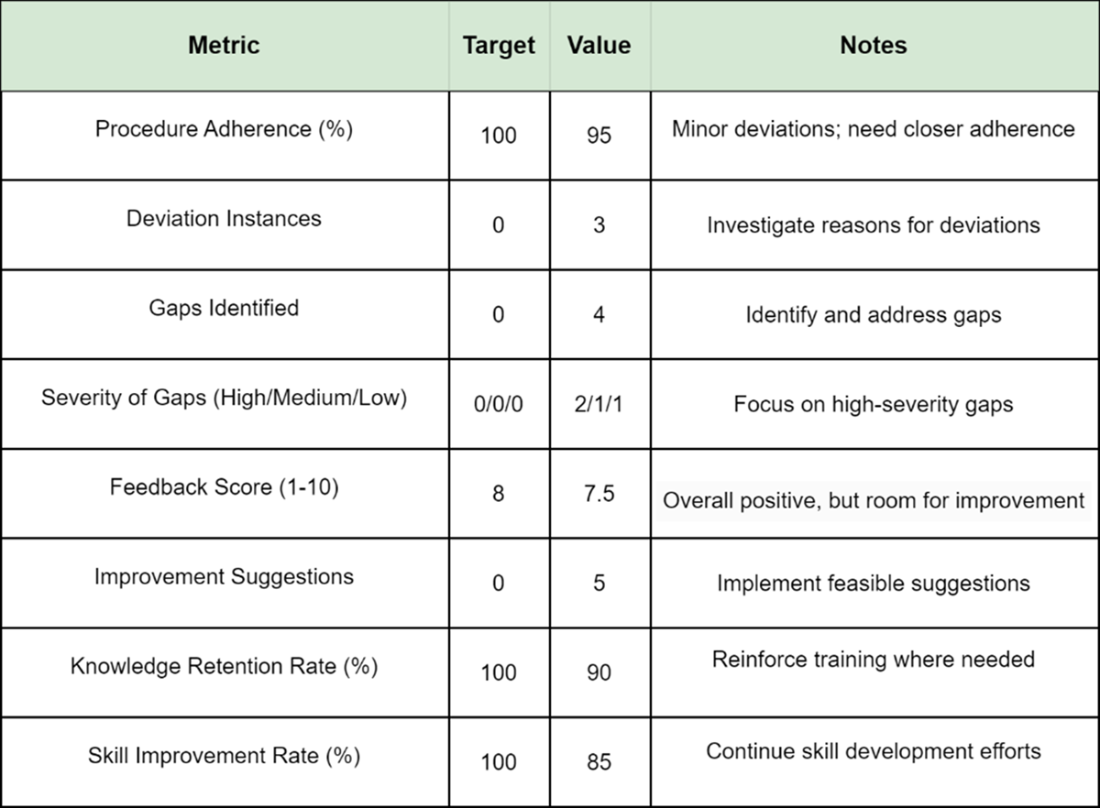
Tabletop exercise example metrics table with target values, actual values, and corrective actions based on metrics.
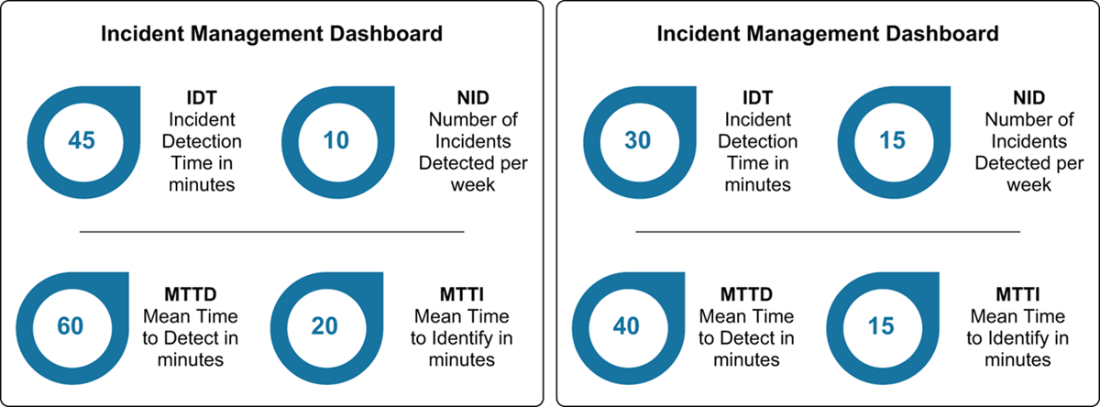
On the left, the SecureNet Inc. incident management dashboard before implementing the enhanced incident response plan and introducing the 10-step IRP framework. On the right, the incident management dashboard after implementing the enhanced incident response plan and introducing the 10-step IRP framework.
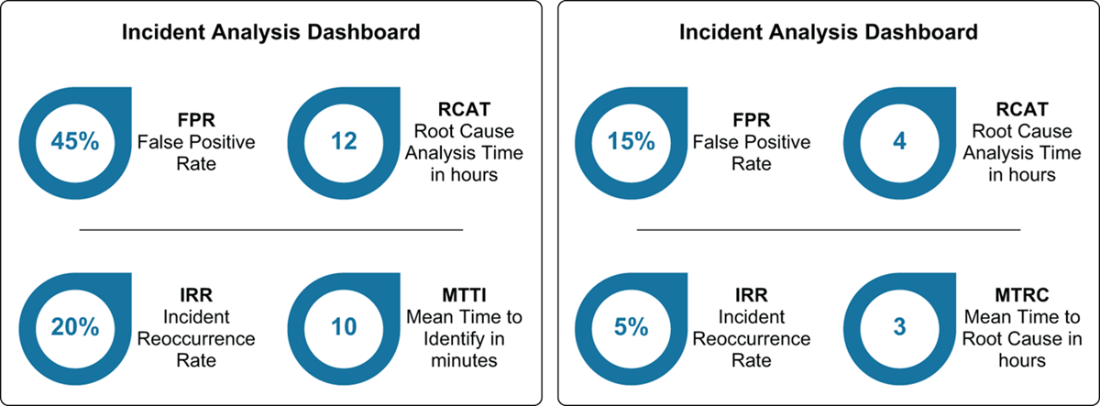
The left shows SecureTech's incident analysis dashboard before improving their incident management process. The right shows the incident analysis dashboard after improvements in their incident management process.
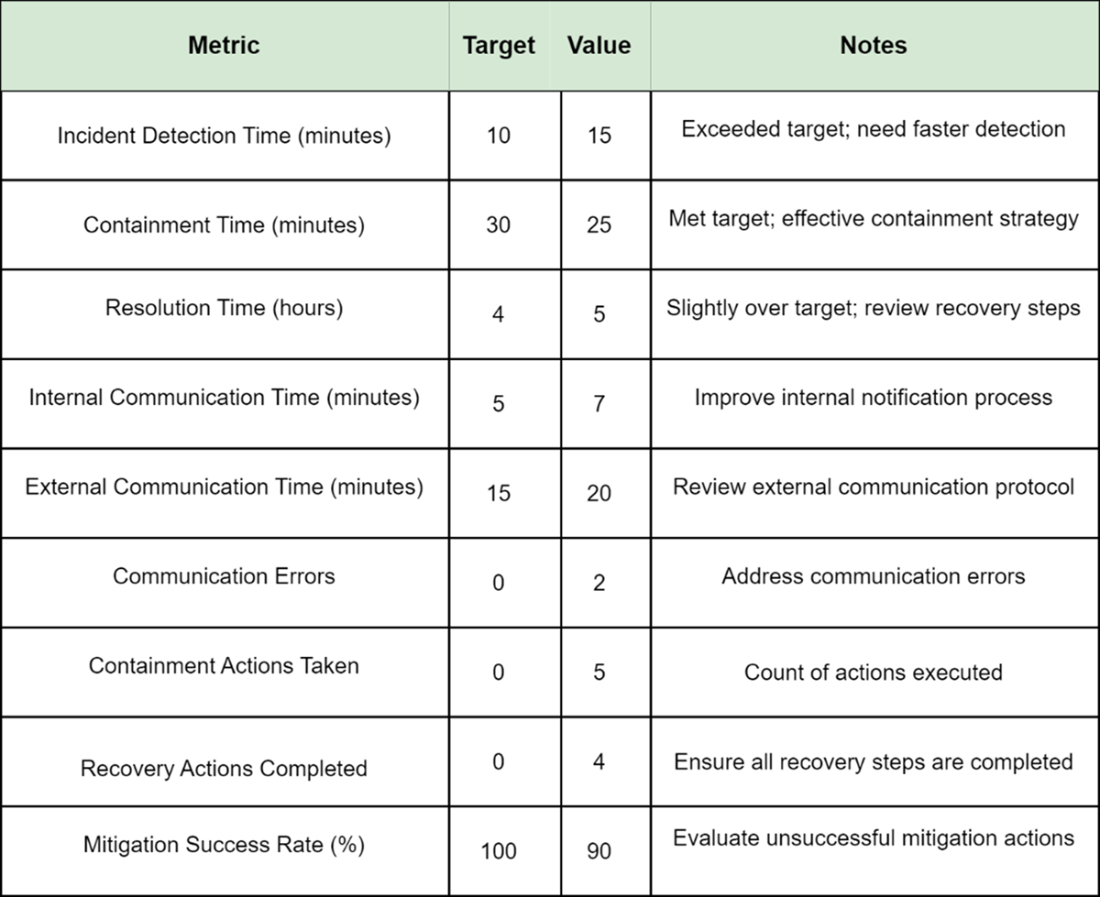
Incident metrics table showing an example of target, values, and notes that would govern corrective actions.
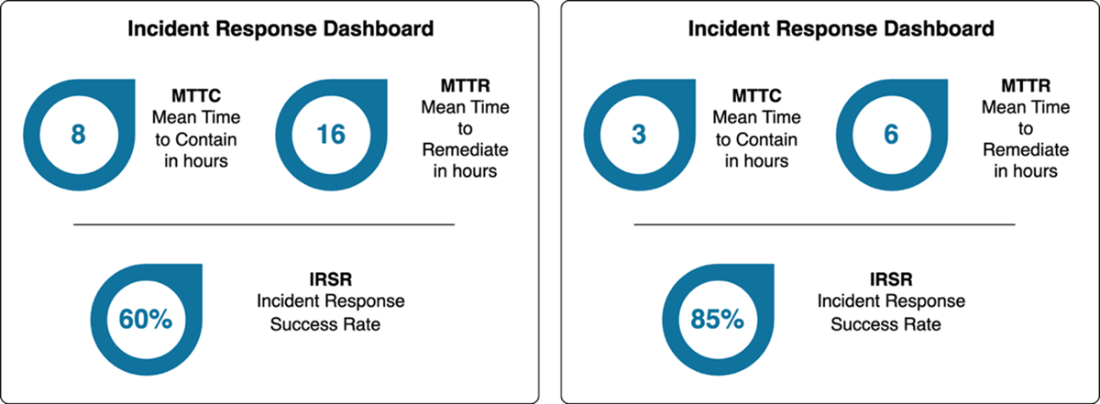
On the left, CyberSecure Solutions' incident response dashboard is shown before implementing incident response strategies and process improvements. After implementing these strategies and process improvements, the right shows the incident response dashboard.
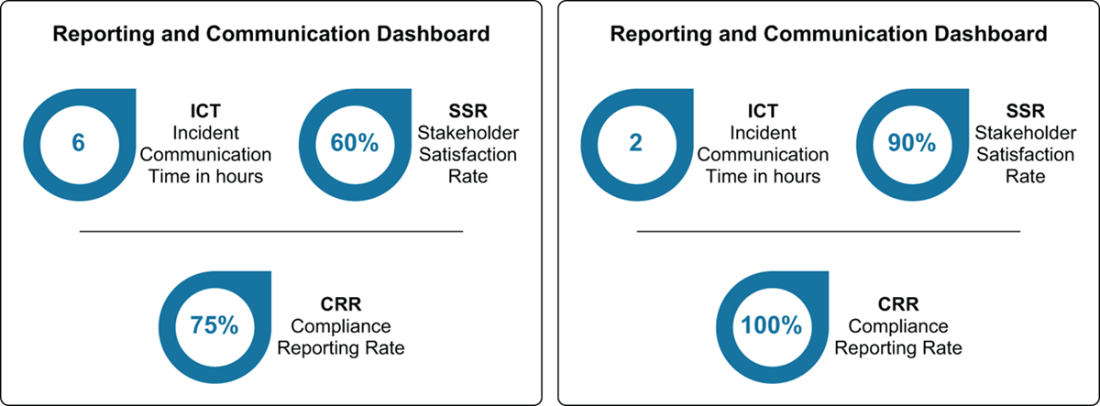
On the left shows XYZ Healthcare reporting and communication metrics before implementing improvements in their process improvement plan. On the right are the reporting and communication metrics after implementing improvements in their process improvement plan.
Summary

  • Effective incident management involves planning, preparation, and detailed incident identification and logging.
  • Thorough incident analysis identifies the root cause and aids in preventing future occurrences.
  • Prompt and clear communication during incidents ensures that all stakeholders are informed and regulatory requirements are met.
  • Containment strategies help in isolating and mitigating the impact of incidents quickly.
  • Evidence gathering and forensic analysis are critical for understanding incidents and preparing for legal or regulatory actions.
  • Eradication focuses on removing the cause of the incident and preventing recurrence.
  • A well-executed recovery plan restores normal operations and minimizes downtime.
  • Continuous monitoring and improvement through metrics are essential for maintaining a robust incident response framework.

FAQ

What is incident management and why is it critical?Incident management is a systematic approach to detecting, responding to, and recovering from cybersecurity incidents with the goal of minimizing impact and maintaining business continuity. A well-defined, tested plan reduces dwell time, limits damage, and safeguards critical assets.
What makes an effective Incident Response Plan (IRP), and why must it be a living document?An effective IRP clearly defines roles and responsibilities, identifies critical assets, and establishes internal and external communication channels. It must be regularly reviewed, tested, and updated to reflect evolving threats, organizational changes, and lessons learned, and it should be integrated into daily workflows with periodic exercises to ensure usability.
How should we test our IRP (tabletop exercises)?Test at least annually using facilitator-led tabletop exercises that: - Define objectives - Develop realistic, escalating scenarios (e.g., ransomware, data breach) - Assemble the full incident response team and stakeholders - Facilitate discussion and decision-making - Document actions and gaps - Debrief, analyze results, and assign action plans - Repeat and refine over time Executive participation (e.g., CEO) is strongly recommended.
What must be documented when an incident is detected?Create an immutable incident log capturing: - Date/time and a unique incident identifier - Source of detection (e.g., IDS, SIEM, firewall) - Description, affected systems, initial impact/severity - Severity tag (3-tier or 5-tier model) - Chain of custody for every update (who, when, what changed) This supports analysis, auditability, and legal/regulatory needs.
How do incident severity models work, and when should severity change?Three-tier (Low/Medium/High) and five-tier (Informational/Low/Medium/High/Critical) models prioritize response based on impact and urgency. Severity should be adjusted as new information emerges—escalate if scope or damage increases; downgrade if impact proves limited.
What methods and tools enable effective incident triage and analysis?Core practices include: - Data collection and correlation (logs, alerts, network traffic) - Timeline reconstruction and impact assessment - Root cause analysis (e.g., 5 Whys) and corrective actions Helpful tools include SIEM and FIM (e.g., Wazuh), Elastic Stack, network analysis (Wireshark, Zeek, Suricata), malware rules (YARA), and forensics suites (Autopsy, The Sleuth Kit).
How should notification and communication be managed during an incident?Notify early with clear, non-jargon summaries of what happened, what’s impacted, and what’s being done. Provide regular updates as facts evolve. Use pre-established, tested channels and maintain current contact lists. Follow legal/regulatory reporting requirements, and conduct a post-incident communication review to improve.
What are effective containment strategies for validated incidents?Use short-term containment (isolate systems, block IPs, disable accounts, stop malicious processes) to halt spread, then long-term containment (patching, reconfiguration, stronger access controls) to address root causes. Preventive measures include network segmentation and carefully managed honeypots. Document all actions and keep stakeholders informed.
How do evidence gathering and forensic analysis differ from routine analysis?Forensics prioritizes preserving the scene and evidence integrity (chain of custody). It often includes disk imaging, memory capture, and network forensics to uncover deleted/volatile data and attacker movement. These advanced methods support accurate root cause findings and potential legal proceedings.
Which metrics should we track for detection, response, recovery, and communication?Key measures include: - Detection/identification: Incident Detection Time (IDT), number of incidents, Mean Time to Detect (MTTD-I), Mean Time to Identify (MTTI-I), tuning via FAR/FRR - Response: Mean Time to Contain (MTTC-I), Mean Time to Remediate (MTTR-I), Incident Response Success Rate (IRSR-I) - Communication: Incident Communication Time (ICT), Stakeholder Satisfaction Rate (SSR), Compliance Reporting Rate (CRR) Use these to find bottlenecks, demonstrate improvements, and guide continuous IRP updates.

pro $24.99 per month

  • access to all Manning books, MEAPs, liveVideos, liveProjects, and audiobooks!
  • choose one free eBook per month to keep
  • exclusive 50% discount on all purchases
  • renews monthly, pause or cancel renewal anytime

lite $19.99 per month

  • access to all Manning books, including MEAPs!

team

5, 10 or 20 seats+ for your team - learn more


choose your plan

team

monthly
annual
$49.99
$499.99
only $41.67 per month
  • five seats for your team
  • access to all Manning books, MEAPs, liveVideos, liveProjects, and audiobooks!
  • choose another free product every time you renew
  • choose twelve free products per year
  • exclusive 50% discount on all purchases
  • renews monthly, pause or cancel renewal anytime
  • renews annually, pause or cancel renewal anytime
  • Data-Driven Cybersecurity ebook for free

choose your plan

team

monthly
annual
$49.99
$499.99
only $41.67 per month
  • five seats for your team
  • access to all Manning books, MEAPs, liveVideos, liveProjects, and audiobooks!
  • choose another free product every time you renew
  • choose twelve free products per year
  • exclusive 50% discount on all purchases
  • renews monthly, pause or cancel renewal anytime
  • renews annually, pause or cancel renewal anytime
  • Data-Driven Cybersecurity ebook for free