3 Implementing a security metrics program
Implementing an effective security program requires continuous, data-driven measurement rather than one-time controls. This chapter explains how a structured metrics program turns security activity into actionable insights that align with business objectives, reveal weaknesses, justify investments, and communicate clearly to technical and executive stakeholders. With intentional goals, meaningful measures, and built-in feedback loops, organizations can track performance, improve security maturity, and stay agile as threats and priorities evolve.
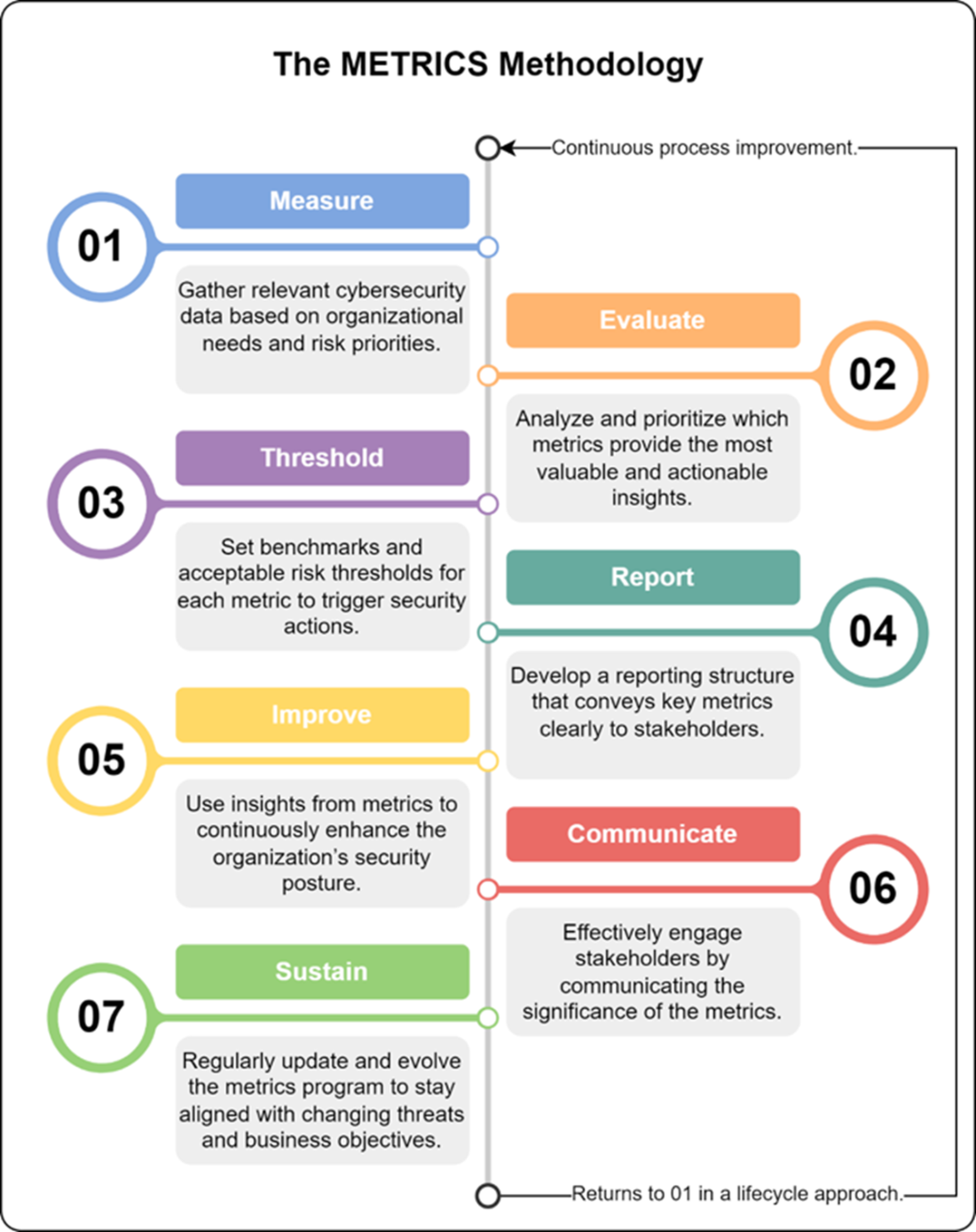
The chapter introduces a practical, repeatable approach via the METRICS methodology: Measure relevant data from controls, incidents, and systems; Evaluate what is most valuable and actionable, aligned to frameworks and business risk; set Thresholds that define acceptable risk and trigger action; Report clearly to varied audiences with concise, decision-ready views; Improve by comparing against baselines and KPIs to drive targeted changes; Communicate consistently across roles to sustain buy-in; and Sustain the program through periodic reassessment as threats, technology, and regulations change. Together, these steps embed continuous improvement into day-to-day security operations.
It also covers building focused dashboards that provide real-time visibility and role-appropriate views—from executive summaries to analyst-level detail—supported by reliable collection, automation, and integration. Organizations can combine open-source and commercial platforms with scripting to streamline data capture and visualization at scale. Finally, the chapter highlights common pitfalls and how to avoid them: balance quantitative metrics with qualitative context, tie measures directly to business goals and risk appetite, and prevent stagnation through recurring reviews, adaptive thresholds, and iterative refinement.
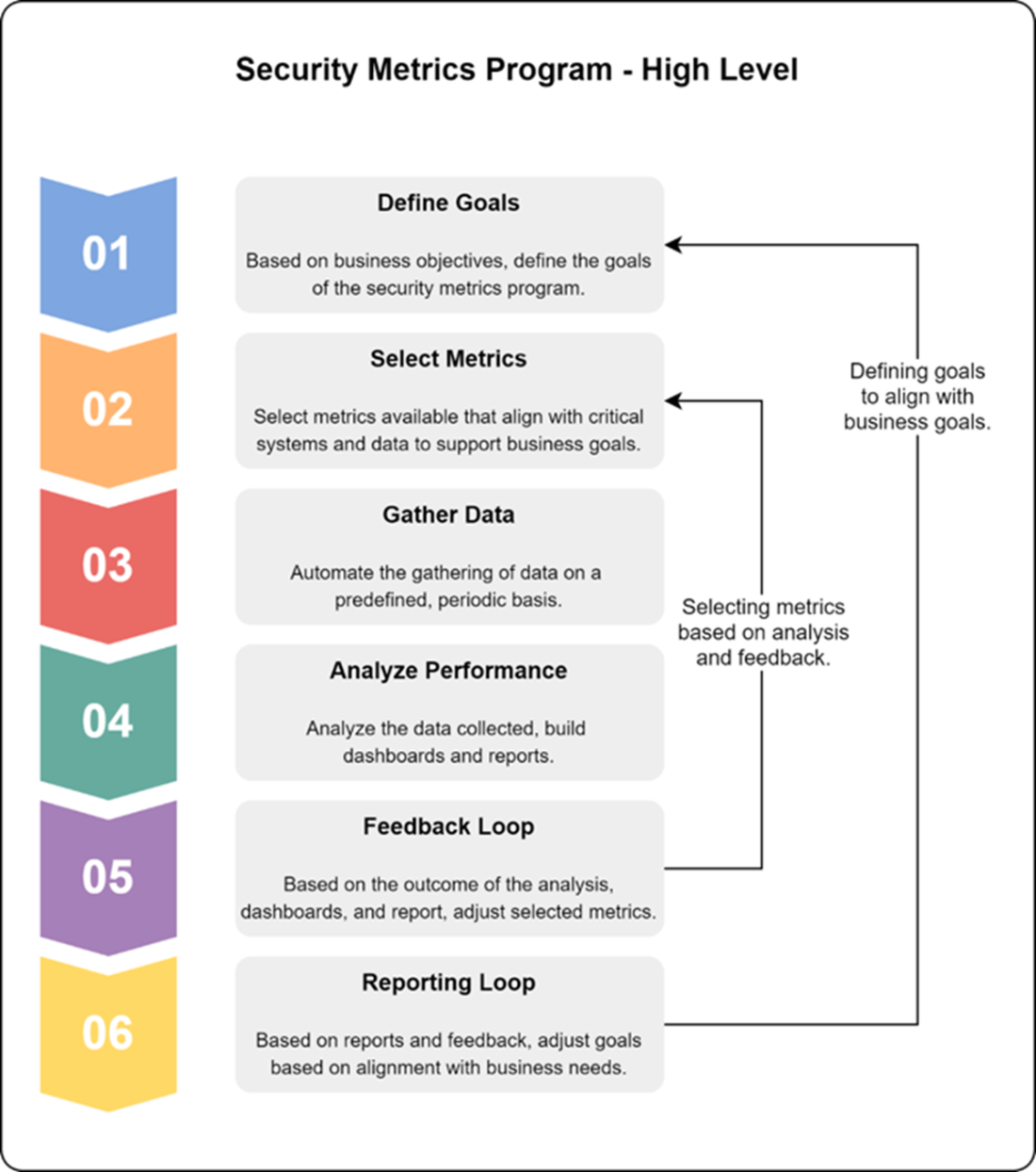
Security metrics program at a high level showing key feedback loops.
The METRICS methodology for designing, implementing, and sustaining a security metrics program.
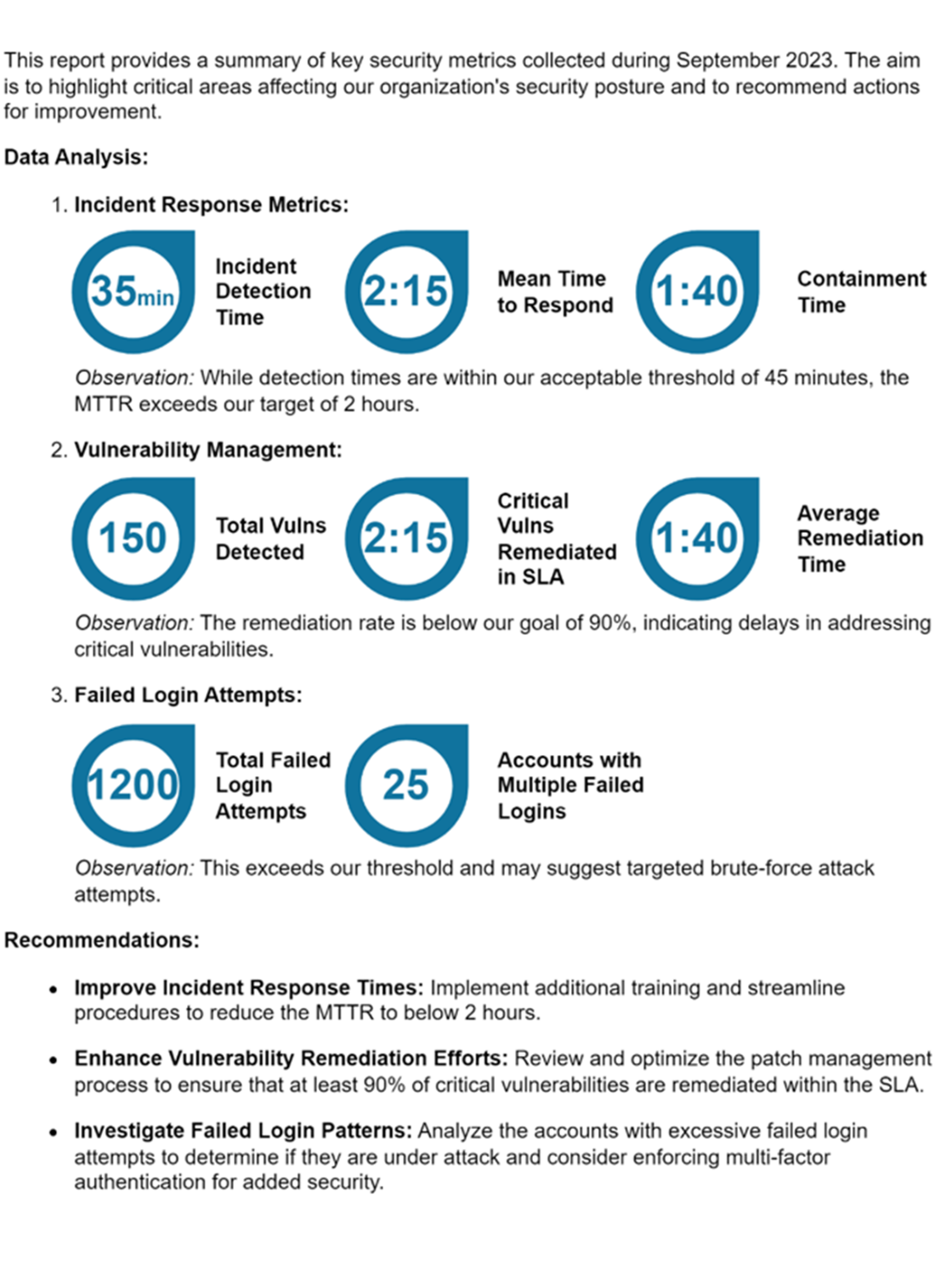
Example report showing some graphics that can be used to help drive the store behind the metrics.
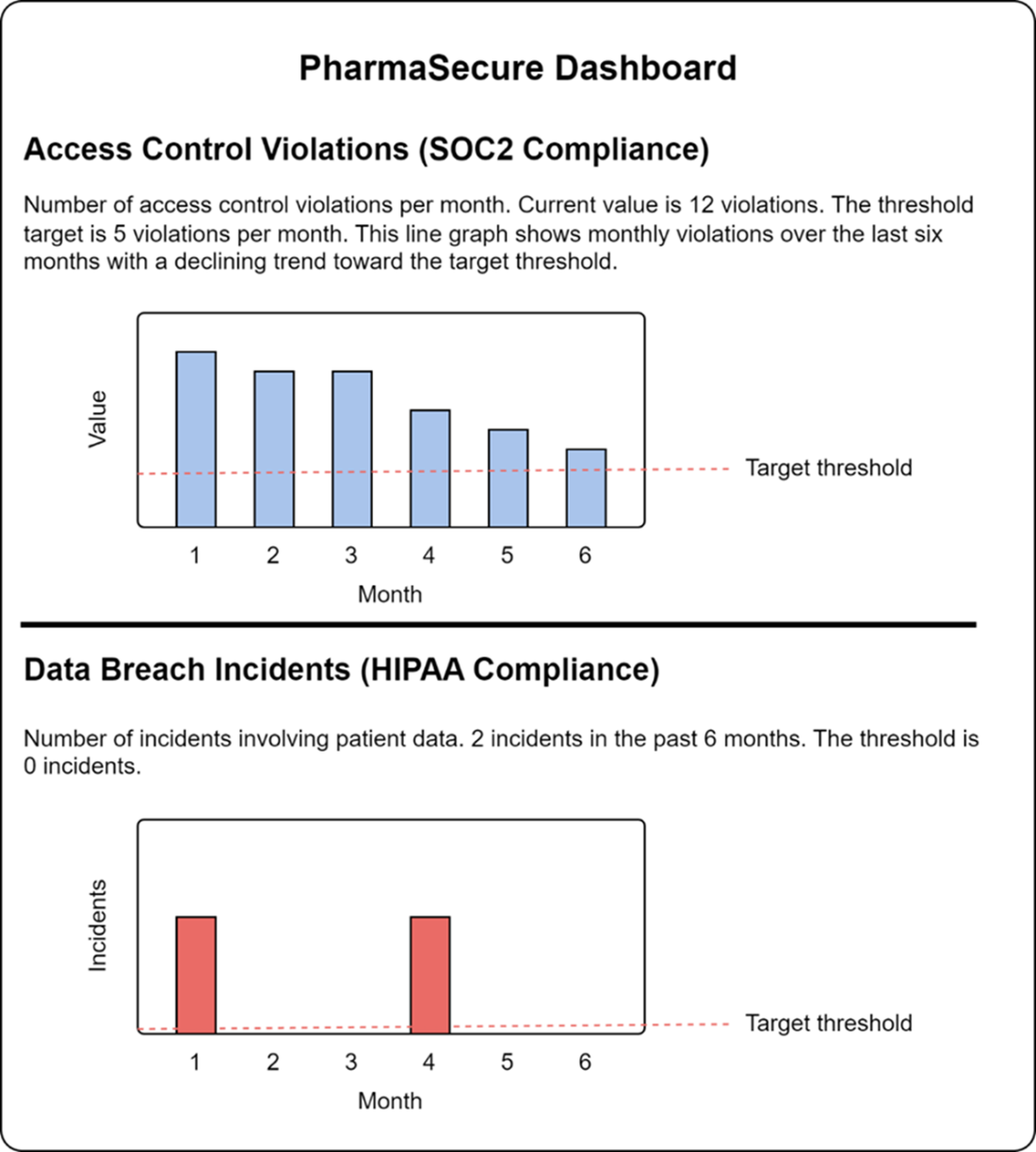
PharmaSecure example dashboard showing two metrics, access violations and data breach incidents.
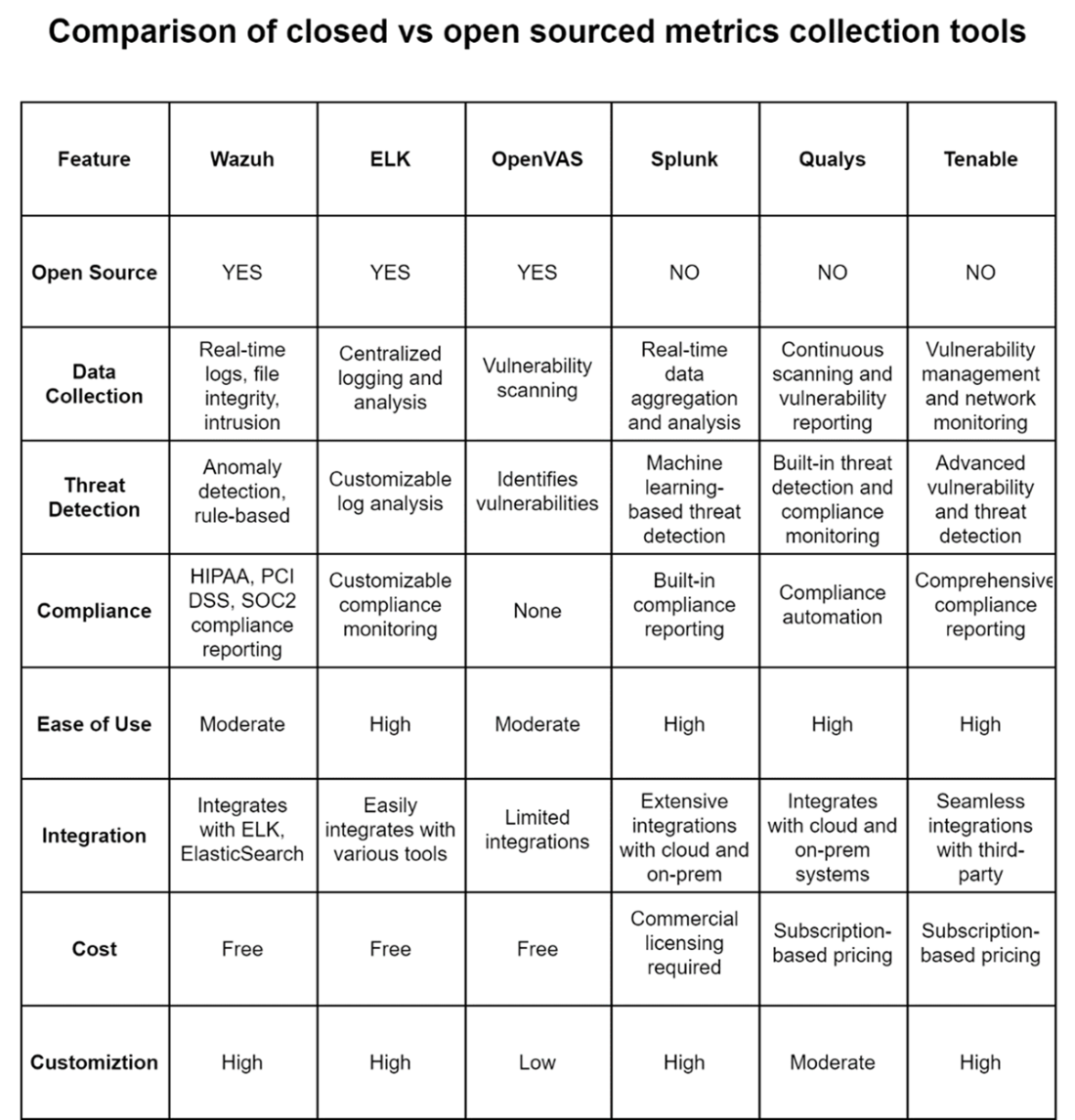
Comparison of open-source solutions vs commercial solutions for metrics collection at the time of this writing.
Summary
- A structured metrics program is crucial for aligning security performance with business goals and improving decision-making.
- The METRICS methodology provides a framework for designing a comprehensive cybersecurity metrics program focused on measurable and actionable data. Measure, Evaluate, Threshold, Report, Improve, Communicate, and Sustain.
- A well-designed dashboard must include clear, relevant metrics tailored to the needs of different stakeholders, from security teams to executive leadership.
- Various open-source and commercial tools are available for effective metrics collection, monitoring, and analysis, each offering unique benefits.
- Continuous improvement is essential in a metrics program to ensure evolving threats are addressed and security posture remains robust.
FAQ
What is a cybersecurity metrics program and why does my organization need one?
A cybersecurity metrics program is a structured approach to measuring the effectiveness of security controls and processes. It helps identify weaknesses, track improvements, align security with business goals, and communicate performance to stakeholders. By turning security efforts into measurable indicators, you can justify investments, optimize resources, and improve response strategies.
What is the METRICS methodology?
METRICS is a step-by-step framework for building and maintaining a security metrics program: Measure, Evaluate, Threshold, Report, Improve, Communicate, Sustain. It guides you from selecting the right data to continuous improvement and long-term program upkeep, ensuring alignment with business objectives.
How do I decide which security metrics to measure?
Start by defining business-aligned goals (e.g., reduce successful attacks, improve response times, meet compliance). Select metrics that are meaningful, actionable, and tied to critical assets and risks. Favor metrics that support trend analysis and benchmarking, such as mean time to respond (MTTR), incident detection times, or vulnerabilities remediated within an SLA, rather than raw counts alone.
What data sources should I use in the Measure step?
Leverage logs and alerts from security tools (firewalls, IDS/IPS, AV), incident/ticketing systems, network and system logs, and aggregated platforms like SIEM/SOAR. Choose sources that directly support your objectives to avoid wasting effort on low-value data.
How should I set thresholds for my metrics?
Define thresholds that indicate acceptable risk based on risk appetite, regulatory requirements, historical data, and business impact. Use adaptable thresholds and revisit them regularly. Example: trigger alerts for 10 failed logins in 10 minutes or require 95% patch compliance within 30 days. The chapter references ATLAS (Alert Threshold Lifecycle Assessment System) as a structured way to define, monitor, and adjust thresholds over time.
How should I report metrics to different audiences?
Tailor reports to the audience’s needs and language. Technical teams need detailed, operational data; executives and boards need high-level risk, trends, and business impact. Use clear visuals (charts, graphs, heat maps, dashboard screenshots), keep reports concise, and segment by business unit or function when helpful.
What makes an effective security metrics dashboard?
Prioritize clarity, relevance, and accessibility. Include only purposeful metrics and use simple visuals (bar, line, pie charts). Provide role-based views: CISOs/boards get high-level risk and compliance; SOC/IR teams get real-time alerts and detailed threat breakdowns. Aim for a “single pane of glass” where feasible, without overloading any one screen.
Which tools can I use for metrics collection and visualization?
Open-source: Wazuh (threat detection, compliance), ELK Stack (Elasticsearch, Logstash, Kibana for log aggregation and dashboards), OpenVAS (vulnerability scanning). Commercial: Splunk (analytics, dashboards), Qualys (cloud-based vulnerability/compliance), Tenable/Nessus (vulnerability management and risk analysis). Choose based on budget, support needs, integration, and in-house expertise.
How can scripting help automate metrics collection?
Scripting streamlines data gathering and processing across diverse systems. Examples: Python (e.g., psutil for system metrics; APIs for tool integration), Bash (log parsing, CPU/disk checks on Linux), PowerShell (Windows performance, AD queries). Scripts can trigger scans, enrich tickets, feed SIEMs, or update dashboards automatically.
What are common pitfalls in metrics programs and how do we avoid them?
- Over-reliance on quantitative metrics: Pair numbers with qualitative insights (e.g., post-incident interviews) for context.
- Misalignment with business goals: Tie metrics to risk appetite and strategic objectives (e.g., protect customer data, regulatory compliance).
- Stagnation: Review and refresh metrics, thresholds, and reports on a regular cadence (e.g., quarterly/biannually) and after major incidents or tech changes.

 Data-Driven Cybersecurity ebook for free
