This chapter presents a high-level, practical tour of how artificial intelligence and machine learning enhance modern cybersecurity. It distinguishes traditional, data-driven AI from generative approaches and focuses on using historical and streaming data to detect, anticipate, and respond to threats. Readers are guided to implement models with common Python tools (e.g., notebooks, scikit-learn, pandas, visualization libraries) and are encouraged to evaluate systems rigorously so results are reliable, actionable, and aligned with risk management objectives.
The material spans key algorithms and their security use cases: unsupervised clustering with DBSCAN for anomaly discovery; supervised classification with Random Forests and SVMs for detecting phishing, malware, or suspicious logins; anomaly detection with Isolation Forest and autoencoders; and NLP pipelines using TF-IDF with linear models to triage threat intelligence at scale. It also introduces deep learning for malware classification, network and sequence analysis (e.g., CNNs, RNNs/LSTMs), user behavior analytics, and reinforcement learning for adaptive incident response. Throughout, concrete, code-driven exercises with synthetic datasets show how to prepare data, train models, and interpret outcomes in realistic security scenarios.
A consistent theme is measurement and interpretation: using accuracy, precision, recall, F1 scores, and confusion matrices to understand trade-offs, spot overfitting, and judge real-world readiness. The chapter emphasizes careful parameter tuning (such as DBSCAN eps and min_samples), threshold selection for anomaly detectors, and validation on diverse or live data to ensure generalization. By combining hands-on implementation with evaluation best practices, the chapter equips security professionals to integrate ML into operations, prioritize investigations, and continually refine models based on their capabilities and limitations.
Artificial intelligence definitions in relationship with one another.
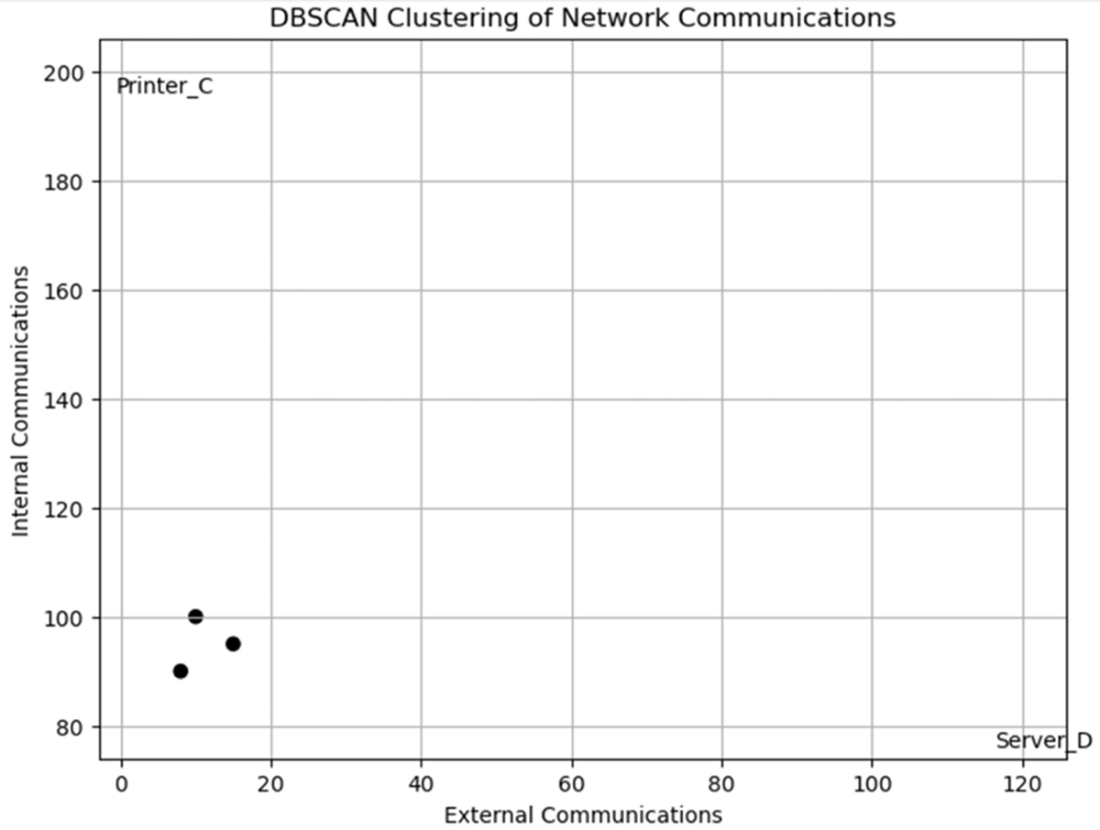
DBSCAN clustering of network devices showing outliers for Printer_C and Server_D
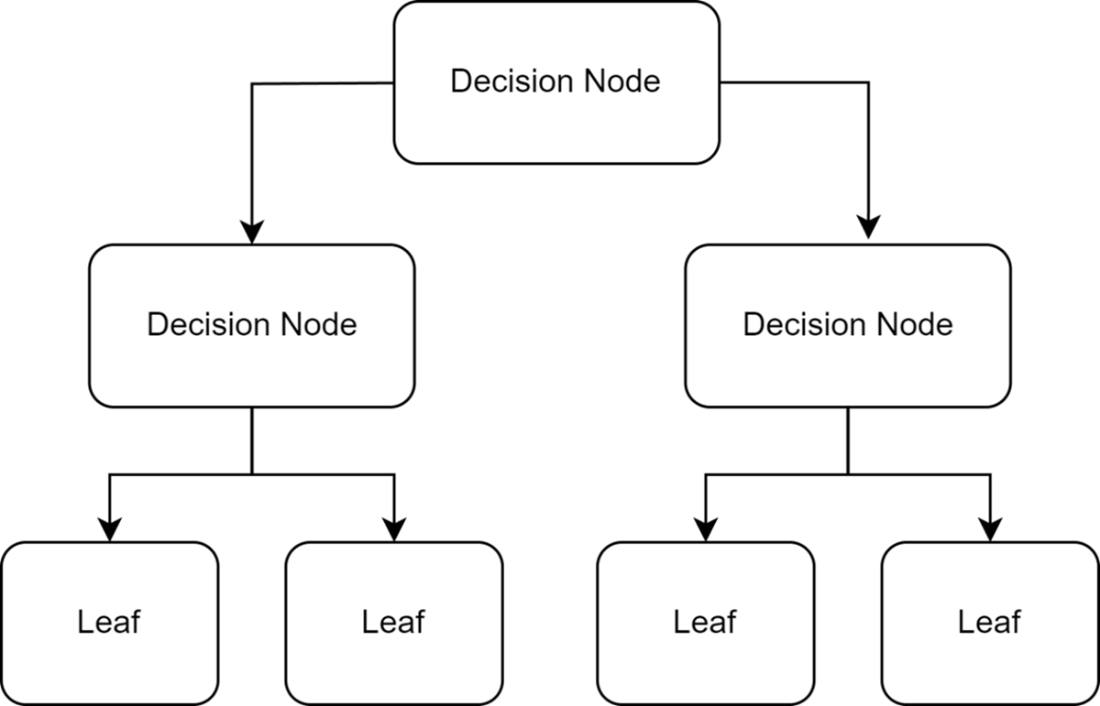
Elements of a decision tree.
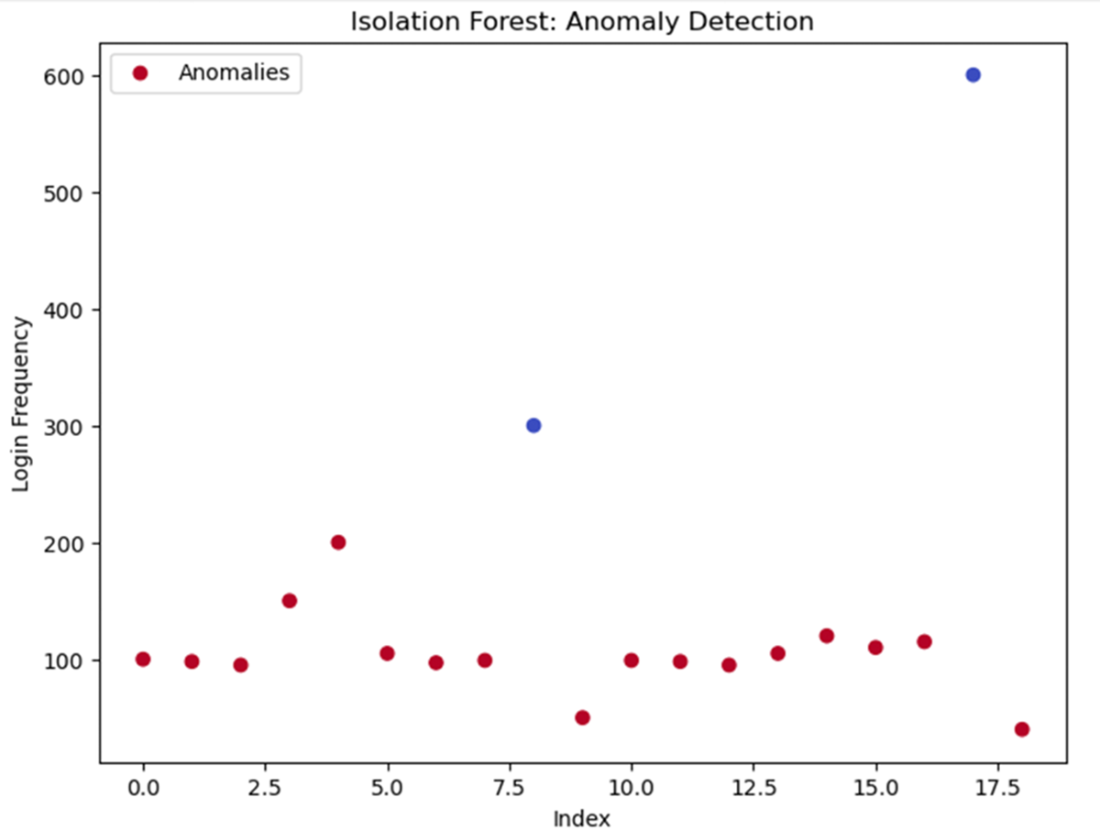
Isolation forest anomaly detection output.
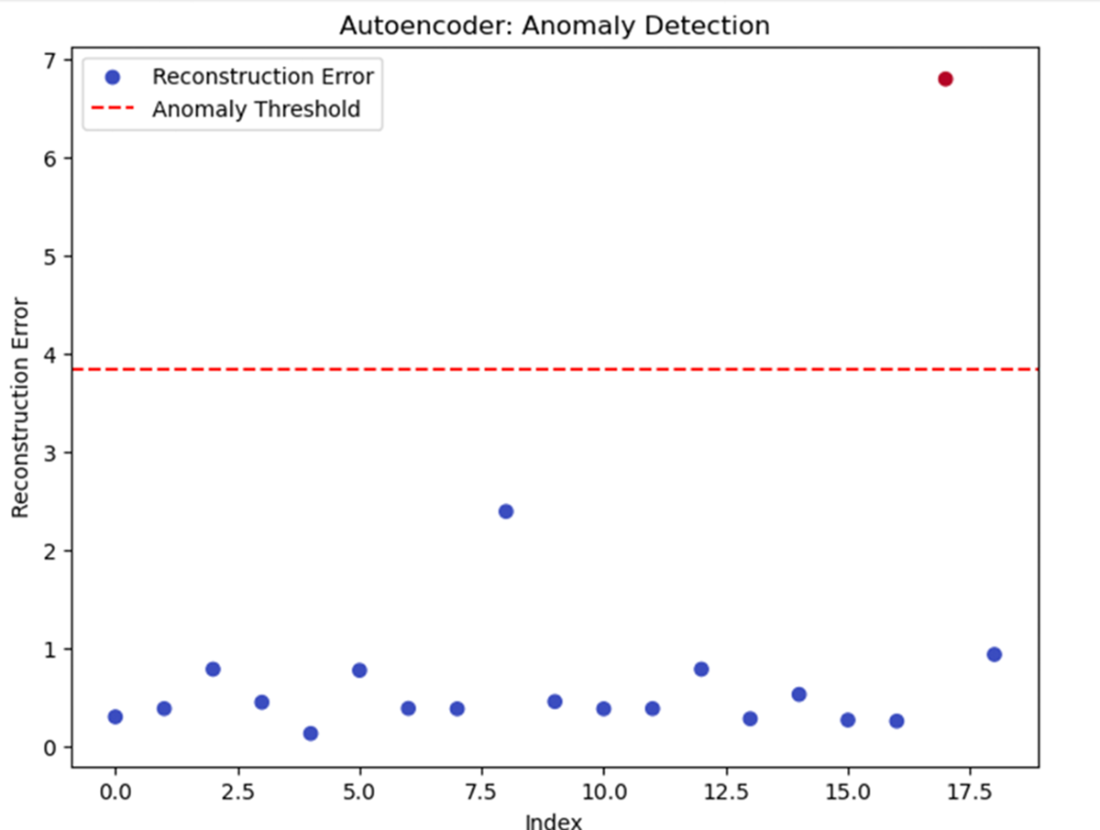
Autoencoder anomaly detction.
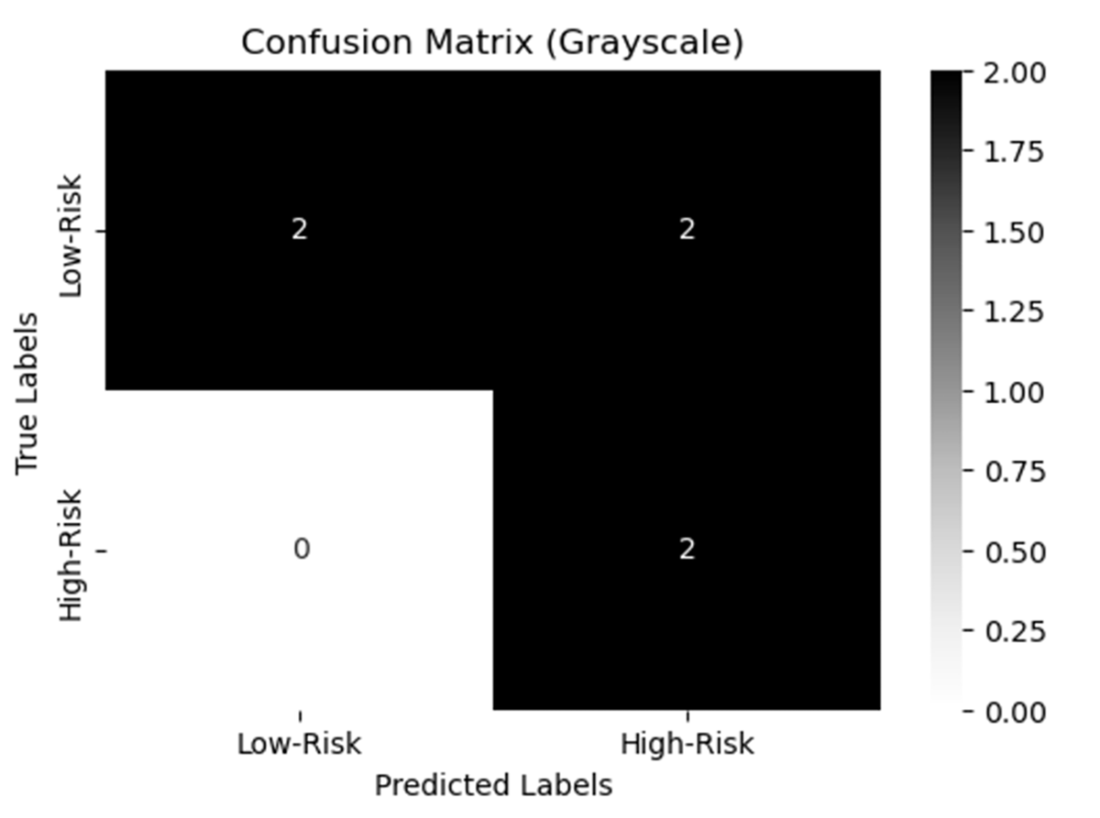
TF-IDF and logistic regression NLP model identifying high-risk and low-risk articles.
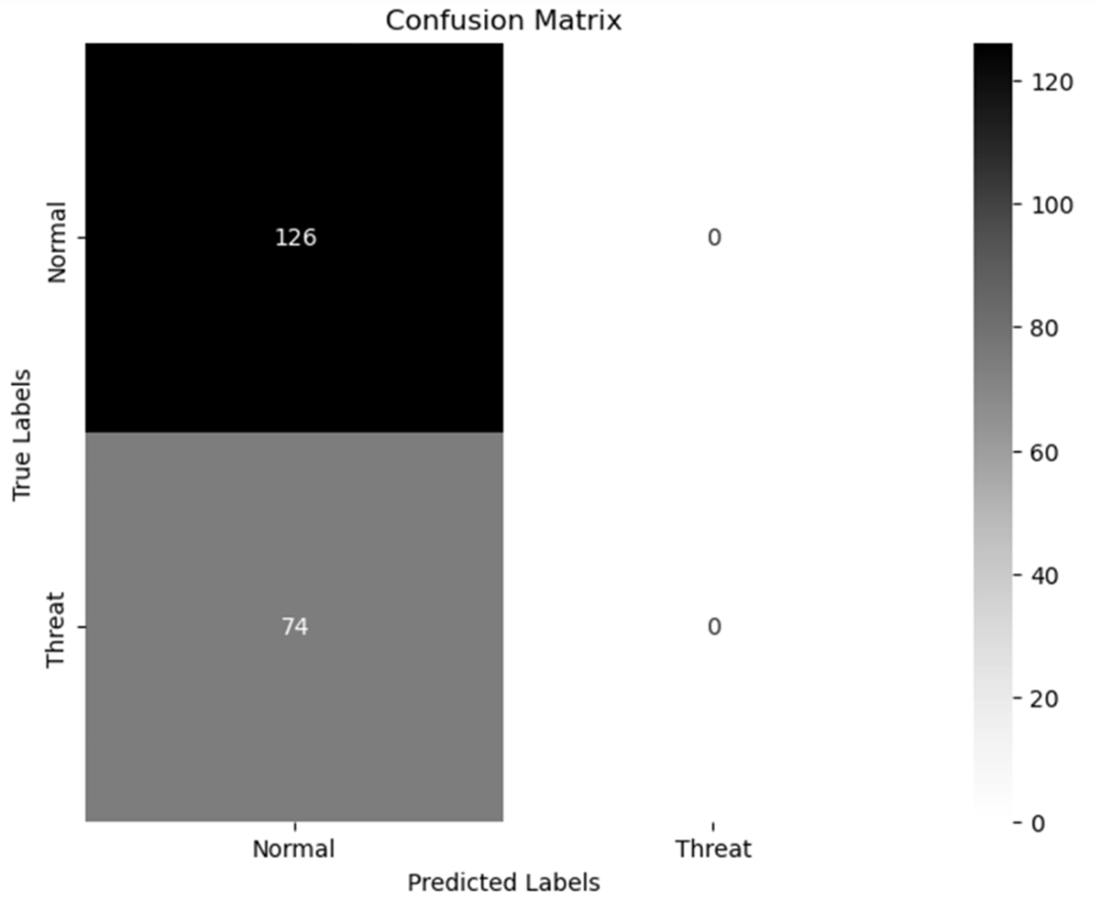
Classification report and confusion matrix heatmap using deep learning
Summary
Artificial intelligence and machine learning automate data analysis in cybersecurity, enhancing threat detection and response capabilities.
Clustering algorithms like DBSCAN group similar behaviors to identify potential threats and anomalies in network data.
Random Forest and Support Vector Machines classify network activity, helping to distinguish safe behavior from suspicious patterns for automated threat identification.
Isolation Forest and Autoencoders detect anomalies by isolating outliers and reconstructing normal behavior, flagging unusual activity that may indicate a threat.
Natural Language Processing (NLP) processes unstructured data, extracting valuable insights from logs and threat reports for improved situational awareness.
Deep learning models identify complex patterns, enabling the detection of network-based attacks by analyzing high-dimensional data.
Reinforcement learning automates incident response by selecting the best actions based on past security outcomes.
FAQ
What tools and libraries do I need to run the exercises in this chapter?Use Jupyter Notebook with Python and the following libraries: scikit-learn, pandas, matplotlib (and seaborn for some plots). Deep learning and autoencoder examples use TensorFlow/Keras. The chapter’s code, sample data, and setup instructions are in the GitHub repository: https://github.com/Mariano215/Security_Metrics. Ensure internet access to install dependencies.How does this chapter distinguish traditional AI from generative AI, and why does it matter?Traditional AI in this chapter refers to machine learning and predictive analytics that learn from existing data to detect patterns, classify events, and flag anomalies. Generative AI (e.g., ChatGPT) creates new content and is discussed in the next chapter. The distinction matters because security use cases here rely on data-driven models (classification, clustering, anomaly detection) rather than content generation.What is DBSCAN and why is it useful for threat detection?DBSCAN is an unsupervised, density-based clustering algorithm that groups closely packed points and labels sparse points as noise (outliers). It does not require the number of clusters in advance and handles irregular cluster shapes, making it effective for spotting anomalous devices or traffic patterns that may indicate threats.How do the eps and min_samples parameters affect DBSCAN anomaly detection?- eps sets the neighborhood radius; smaller values make clusters tighter and increase outliers, larger values merge clusters and reduce outliers.
- min_samples sets the minimum points needed to form a dense region; higher values demand stronger evidence for a cluster.
Tuning both controls sensitivity to anomalies and should be guided by domain knowledge and exploratory plots.When should I use Random Forest vs SVM for security classification tasks?- Random Forest: robust to nonlinearities and mixed features, often strong out-of-the-box. Watch for overfitting, especially with synthetic or small datasets.
- SVM: effective in high-dimensional spaces and with limited data; linear kernels are simpler and can generalize well.
Choose via cross-validation and compare metrics (precision/recall/F1) on realistic test data.How do Isolation Forests and Autoencoders detect anomalies in security data?Isolation Forest isolates points that are easier to separate, flagging them as anomalies (set contamination to control expected anomaly rate). Autoencoders learn to reconstruct “normal” data; high reconstruction error indicates anomalies. Both benefit from feature scaling and provide visual diagnostics (scores or error plots) to set thresholds.How can NLP help prioritize threat intelligence?NLP can extract keywords and patterns from large volumes of reports, blogs, and feeds to classify items (e.g., high vs low risk). A practical baseline is TF-IDF features with Logistic Regression, evaluated using precision, recall, F1, and a confusion matrix to understand misclassifications and refine filters.Which deep learning models are useful in cybersecurity and for what tasks?- CNNs: classify malware or binaries (e.g., treating code as images/patterns).
- RNNs/LSTMs: analyze sequences in logs or traffic to detect malicious behavior over time.
- Feed-forward networks: classify traffic features.
Ensure proper preprocessing, sufficient data, and evaluate with confusion matrices and class-sensitive metrics.How should I evaluate AI performance for cybersecurity and avoid common pitfalls?Use precision, recall, F1, and confusion matrices (accuracy alone can mislead with class imbalance). Validate on diverse, representative data to check generalization. Watch for overfitting (e.g., suspiciously perfect accuracy), tune thresholds to match risk tolerance, and consider costs of false positives vs false negatives.What role can reinforcement learning play in automated incident response?RL (e.g., Q-learning) learns a policy mapping states (normal/suspicious/attack) to actions (quarantine/block/escalate) by maximizing cumulative reward. Proper reward design drives desired behavior (e.g., fast mitigation, minimal disruption). Start in simulation, then carefully validate before production due to sim-to-real gaps.
pro $24.99 per month
access to all Manning books, MEAPs, liveVideos, liveProjects, and audiobooks!


 Data-Driven Cybersecurity ebook for free
