This chapter argues that developers must move beyond symptom-fixing and learn to think in root causes. Quick restarts, retries, null checks, and timeouts may stop the immediate pain, but they rarely teach anything or prevent recurrence. The chapter frames effective problem solving as asking what allowed the failure and what would make it impossible to happen again, using evidence from logs, traces, metrics, and reproducible behavior rather than assumptions.
To do that, it introduces a practical Lean toolkit: 5 Whys to trace a chain of cause and effect, fishbone diagrams to force broad exploration of possible sources, Pareto analysis to prioritize the biggest contributors, and Is/Is Not analysis to isolate boundaries in intermittent or environment-specific failures. These tools work best together as a disciplined root cause analysis process: first narrow the field, then follow the evidence, then verify the true source of the issue. The chapter also emphasizes debugging at the real system boundary—the gemba—so fixes are based on observed behavior rather than desk-side theories or stack traces alone.
The chapter closes by distinguishing durable countermeasures from quick fixes. A real solution usually combines immediate correction, prevention through standard work or automated checks, and detection through observability, so the defect cannot simply reappear in another form. It warns that AI-generated patches often mask symptoms instead of removing causes, so human diagnosis should come first and AI should assist only after the analysis is complete. Finally, it presents A3 reports as a concise, blameless way to communicate the problem, root cause, countermeasures, and follow-up, helping teams build organizational memory and reduce recurring failures across code, process, and even external dependencies.
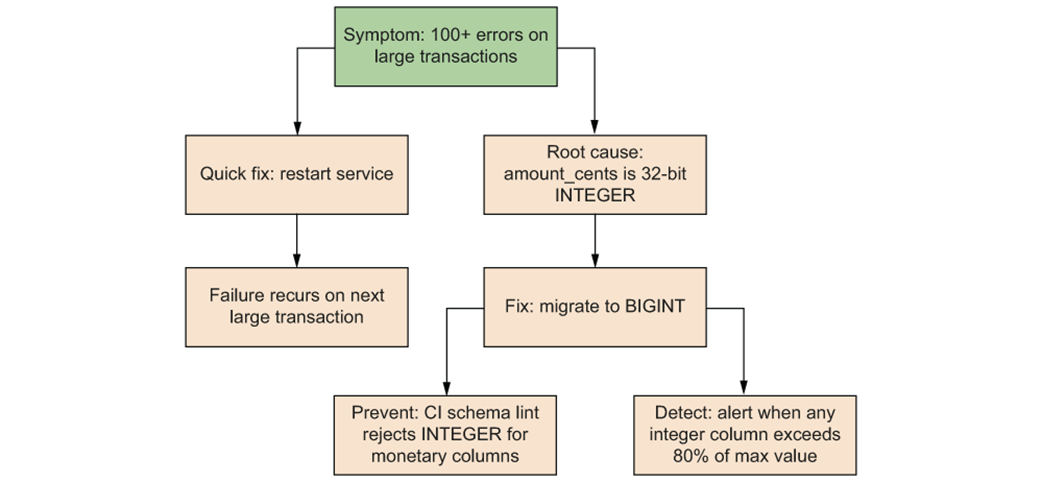
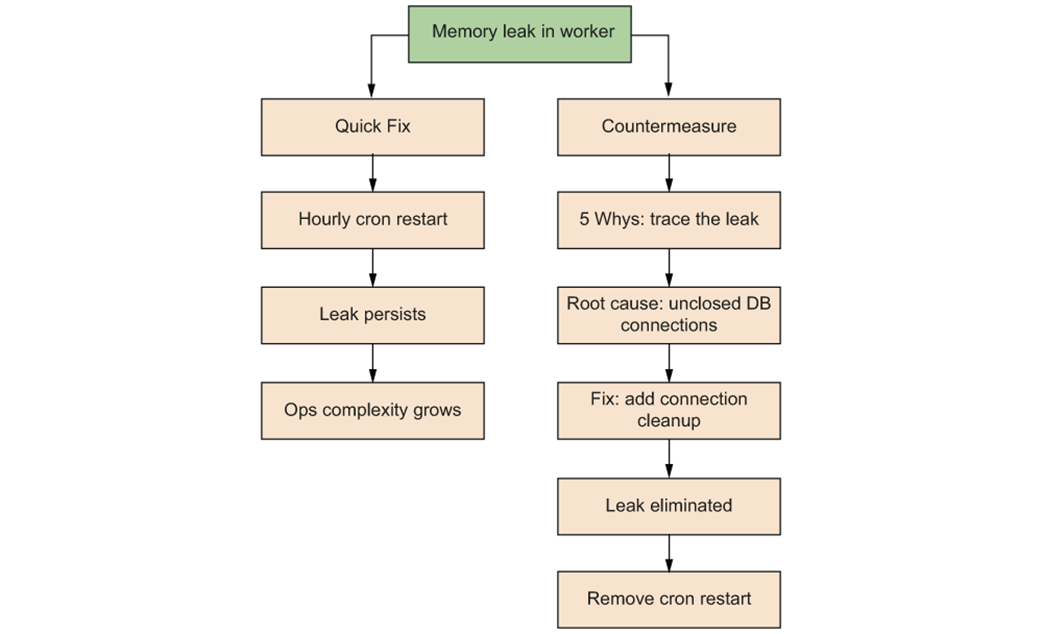
Root cause decision-making approach contrasted with quick fixing.
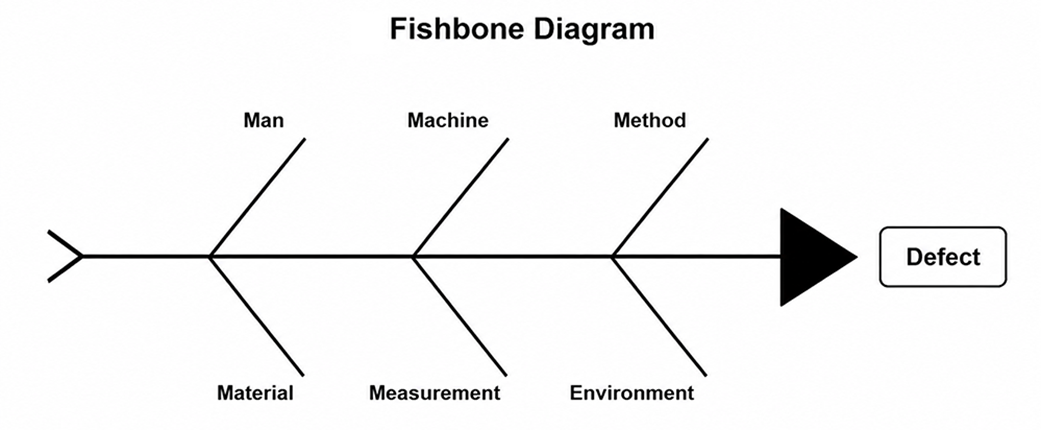
Traditional fishbone diagram following the 6M method.
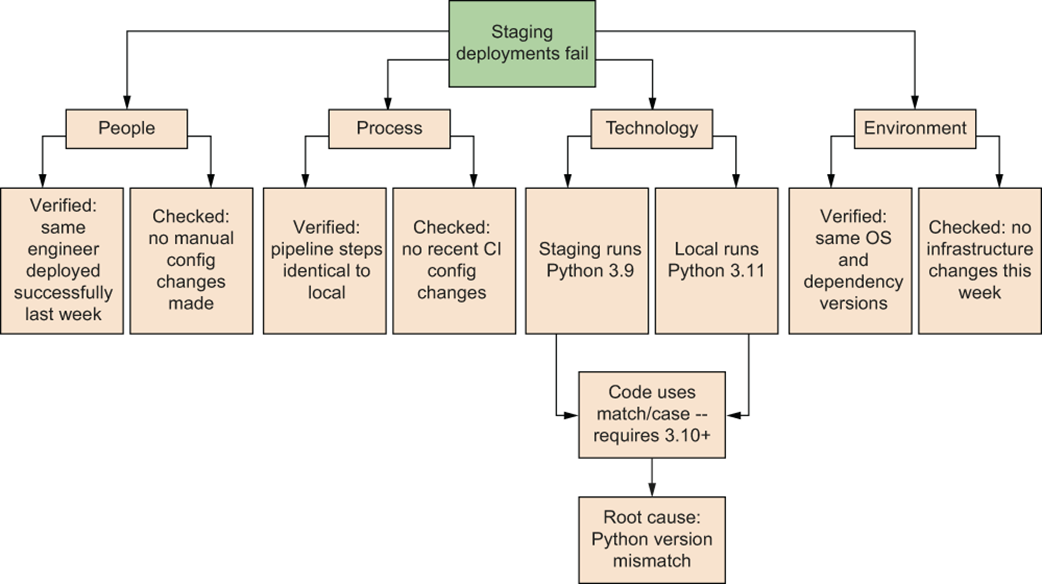
Applying the fishbone to a software deployment failure. Each branch records what was checked and by whom. Eliminating People, Process, and Environment narrows the cause.
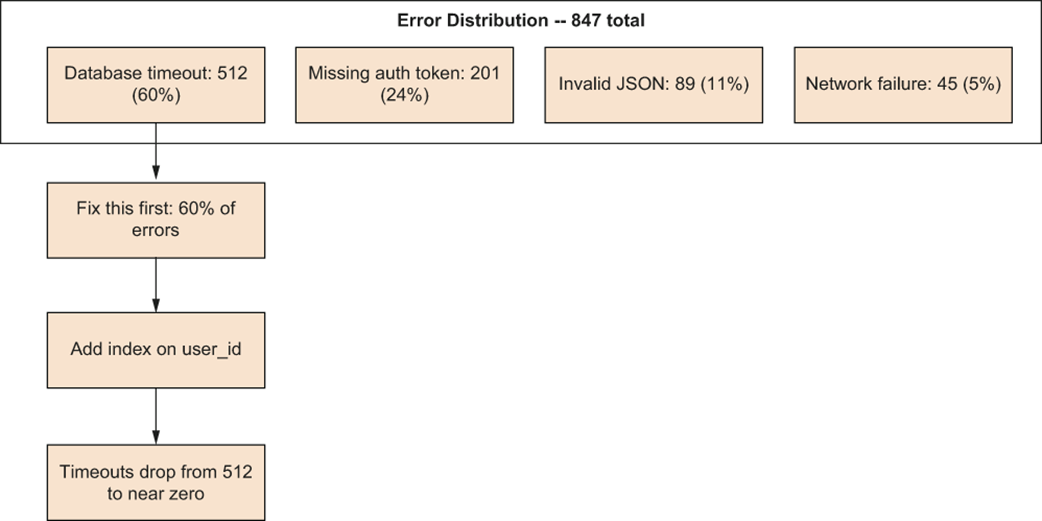
Pareto analysis ranks errors by frequency. Database timeouts account for 60% of all failures.
A quick fix adds operational complexity. The countermeasure eliminates the leak and removes the cron job, leaving the system simpler than before.
Summary
Root cause fixes eliminate failures; symptom fixes defer them.
5 Whys chains each answer into the next question until assumptions surface.
Fishbone diagrams branch causes across categories you would skip.
Pareto ranks failures by frequency, so you fix the dominant one first.
Is/Is Not contrasts where a failure appears with where it does not.
Combine the tools: narrow, trace, check blind spots, and confirm priority.
Countermeasures go beyond code, standard work, and process changes to make fixes durable.
A3 reports turn RCA into a record for escalations, investment, and customers.
FAQ
```html
What is root cause thinking in software development?Root cause thinking is the discipline of looking past the immediate symptom to find the underlying cause of a failure, then making a change that prevents the problem from recurring. It is not just fixing what broke; it is changing the system so the failure becomes impossible or is caught before it reaches users.Why is restarting a service or adding a quick patch often not enough?Because those actions may stop the symptom temporarily without teaching the team anything or removing the underlying fault. If the real cause remains in place, the same incident will likely happen again, creating endless rework and repeat alerts.What are the two key questions root cause thinking asks?First: what allowed this failure? Second: what would prevent it from ever recurring? Together, these questions push you from a symptom fix toward a durable countermeasure.What is the difference between a quick fix and a countermeasure?A quick fix restores function but leaves the underlying problem intact, often by hiding the failure or reducing its visibility. A countermeasure changes the system so the failure is prevented, contained, or detected early. Good countermeasures usually include fix, prevent, and detect layers.How do the 5 Whys help uncover the real cause?The 5 Whys works by repeatedly asking “why” until you reach something you can change. Each answer must be backed by evidence, such as logs, metrics, traces, or a reproducible test. This strips away assumptions and reveals the chain leading to the root cause.When should you use a fishbone diagram?Use a fishbone diagram when you need to explore causes broadly and avoid fixating on one likely explanation. It helps you sweep across categories such as people, process, technology, and environment so you investigate areas you might otherwise skip.What is Pareto analysis used for in debugging?Pareto analysis helps you decide what to investigate first by ranking failures by frequency or impact. It shows which small number of causes is responsible for the majority of incidents, so you can focus on the highest-return problem before drilling deeper.How does Is/Is Not analysis help with intermittent failures?It compares where the problem appears with where it does not appear, across dimensions like environment, region, platform, and timing. The gap between the two columns often points directly to the cause, especially when the bug cannot be reproduced locally.Why is going to the gemba important for debugging?Going to the gemba means observing the running system and its real behavior before forming a theory. Instead of guessing from a stack trace or code reading alone, you inspect logs, traces, metrics, and actual requests to understand what the system is truly doing.What should an A3 report include in root cause problem solving?An A3 should fit on one page and include background, current state, goal, root cause analysis, countermeasures, implementation plan, follow-up, and learnings. It communicates the problem and fix in a structured, blameless way so others can understand and trust the solution.
```
pro $24.99 per month
access to all Manning books, MEAPs, liveVideos, liveProjects, and audiobooks!

 Build High Value Software Systems ebook for free
