12 Lean operations and production
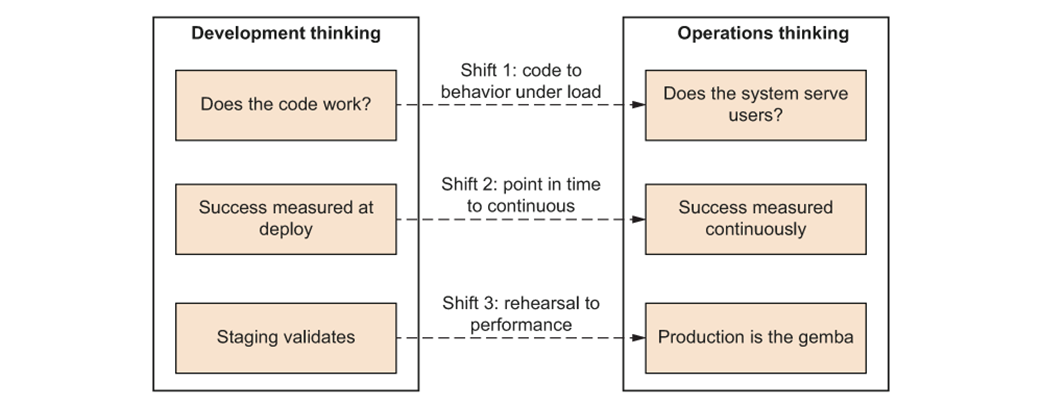
This chapter reframes operations as a different way of seeing software: not “does the code work?” but “does the system serve users well right now?” It argues that a green build and a successful deploy are only the beginning, because production is the real factory floor. The core shift is from code-focused, binary thinking to behavior-focused, continuous thinking, where stability, latency, recovery, and availability matter as much as development speed. A team needs both perspectives at once, so it can move fast without shipping defects into the live system.
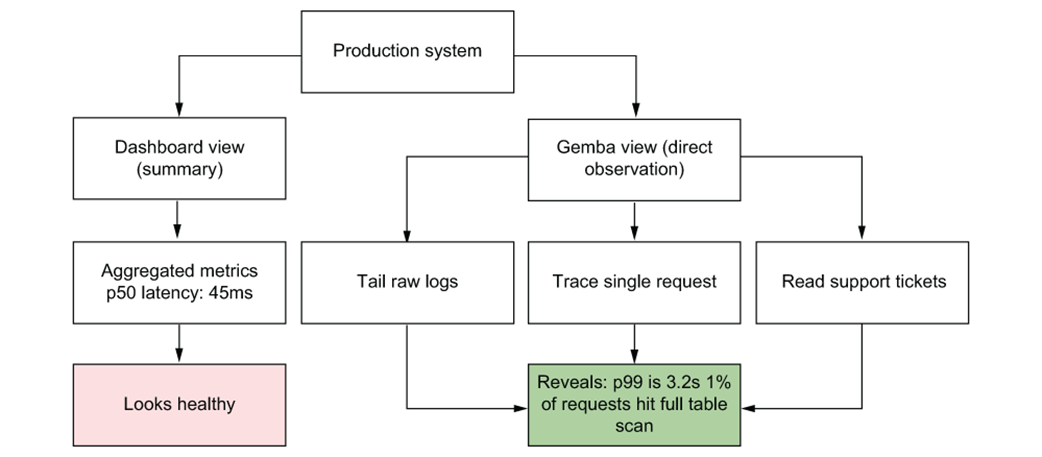
The chapter emphasizes going to the actual place where value is created: the running production system. Dashboards are useful summaries, but they can hide the outliers and silent degradations that users feel. By tailing logs, tracing a real request, and reading support tickets, teams can uncover problems that monitoring misses. When incidents are observed directly, the goal is not just detection but prevention: recurring human mistakes should be turned into constraints that make the mistake impossible, which is the practical role of mistake-proofing in operations.
From there, the chapter extends Lean tools into a production setting. Alerts should point to causes rather than symptoms, and they should be tied to defined actions so the team can stop damage quickly instead of hesitating. Standard work becomes executable runbooks and pipeline checks that enforce safe deployment and rollback. The chapter also shows how to spot uneven demand, overburden, and waste in live traffic, then apply leveling, headroom, and feedback loops to improve the system over time. Production kaizen ties it all together: observe, measure, change one thing, and measure again so incidents become sources of learning rather than recurring pain.
The three mindset shifts from development thinking to operations thinking.
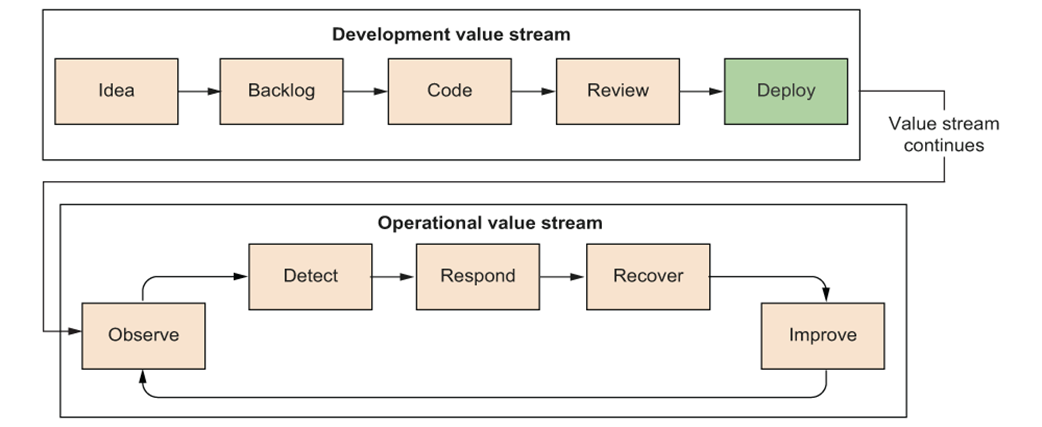
The value stream extends past deploy into the continuous operational cycle.
Dashboard summary versus gemba: direct observation reveals what aggregated metrics hide.
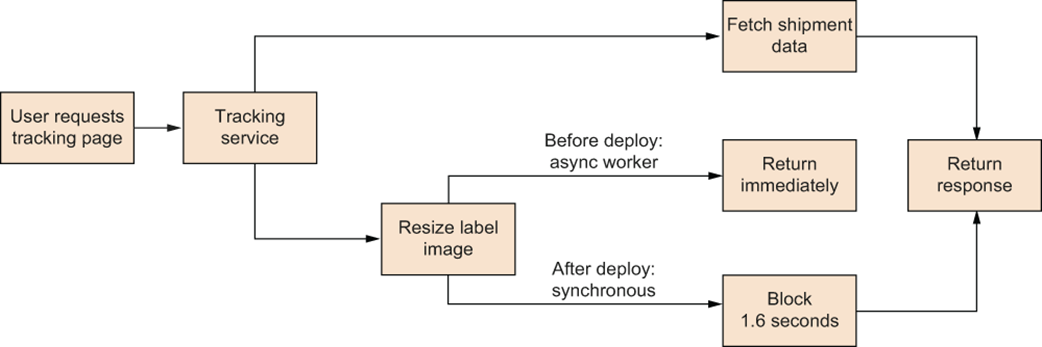
Silent degradation: synchronous image resize blocks the tracking response path.
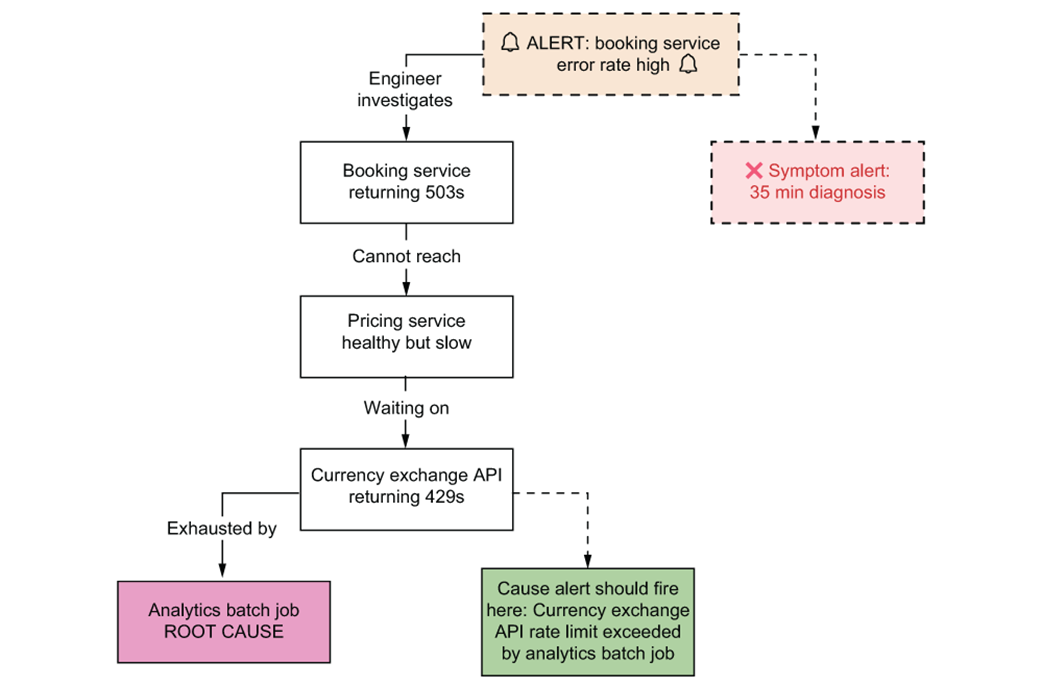
Symptom alert fires four services downstream from the actual cause.
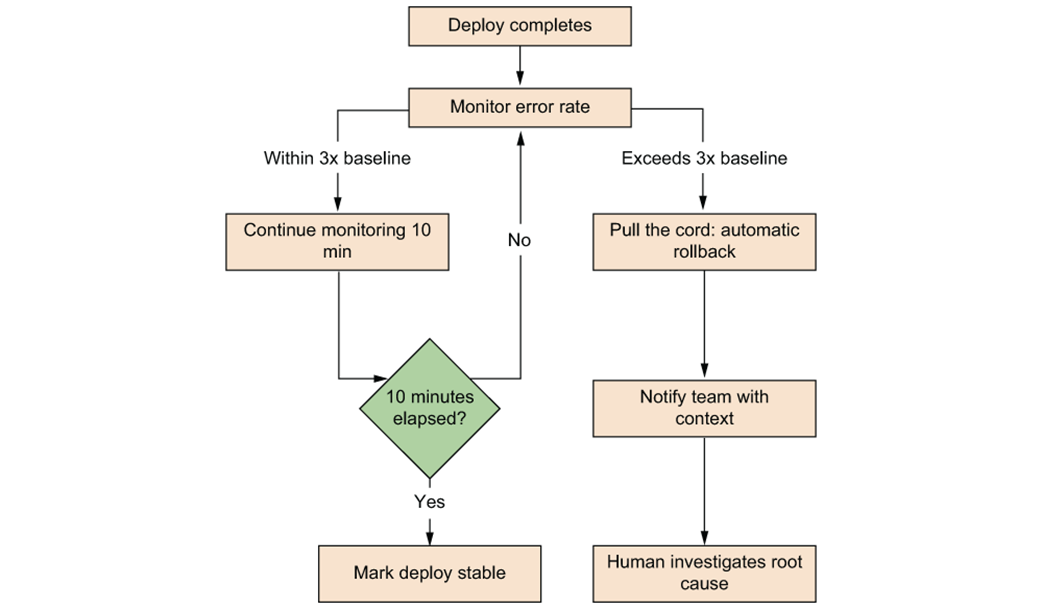
Andon in deployment: automatic detection, cord pull, and human investigation.
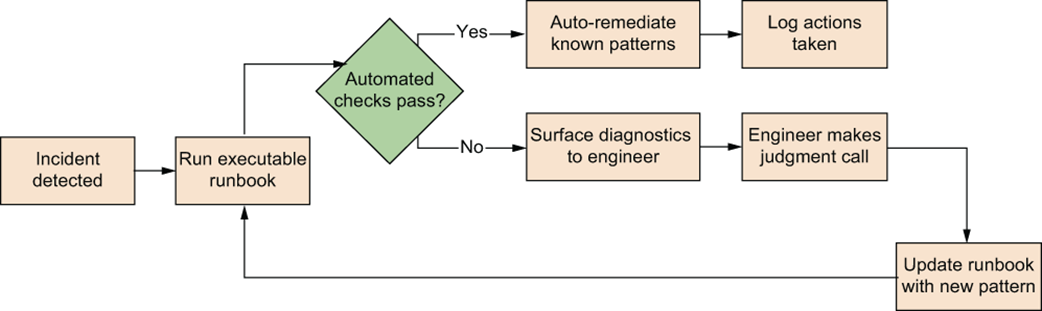
Executable runbook: automate what you can, escalate what you can't, update the runbook every time.
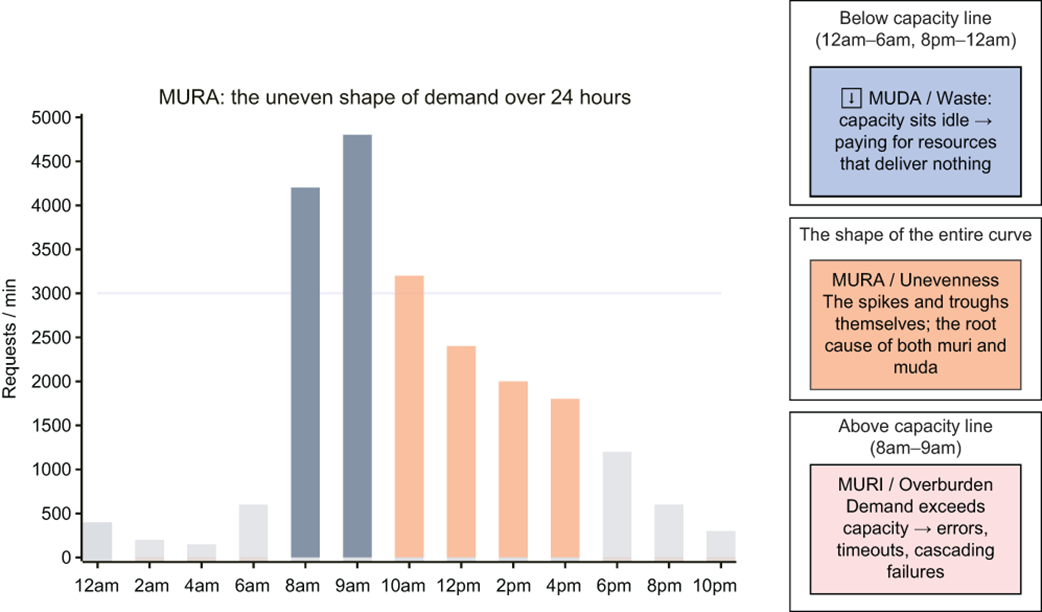
Request rate graph with annotated zones: muri, where demand exceeds capacity, muda, where capacity sits idle, and mura, the unevenness that causes both
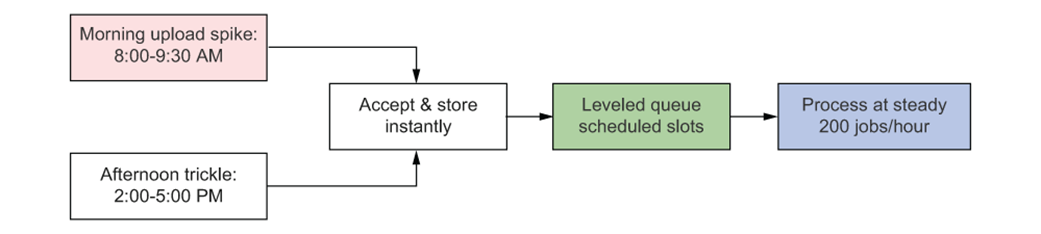
Leveled processing: variable arrival rate absorbed by the queue, constant processing rate.
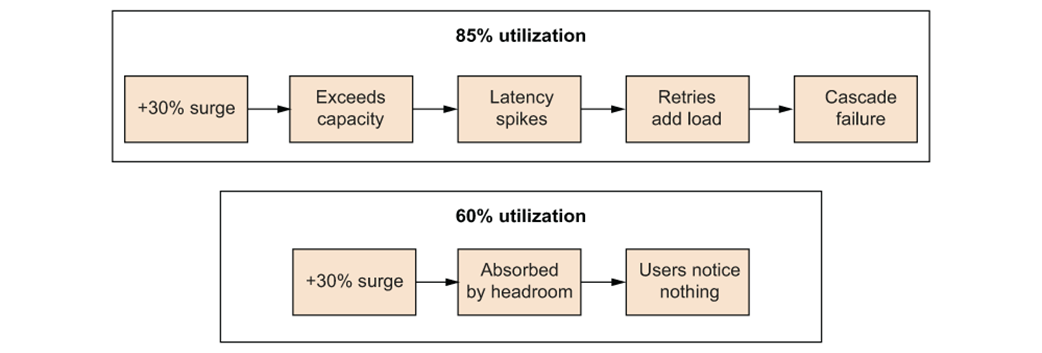
Headroom determines whether a traffic surge is absorbed or becomes a cascade.
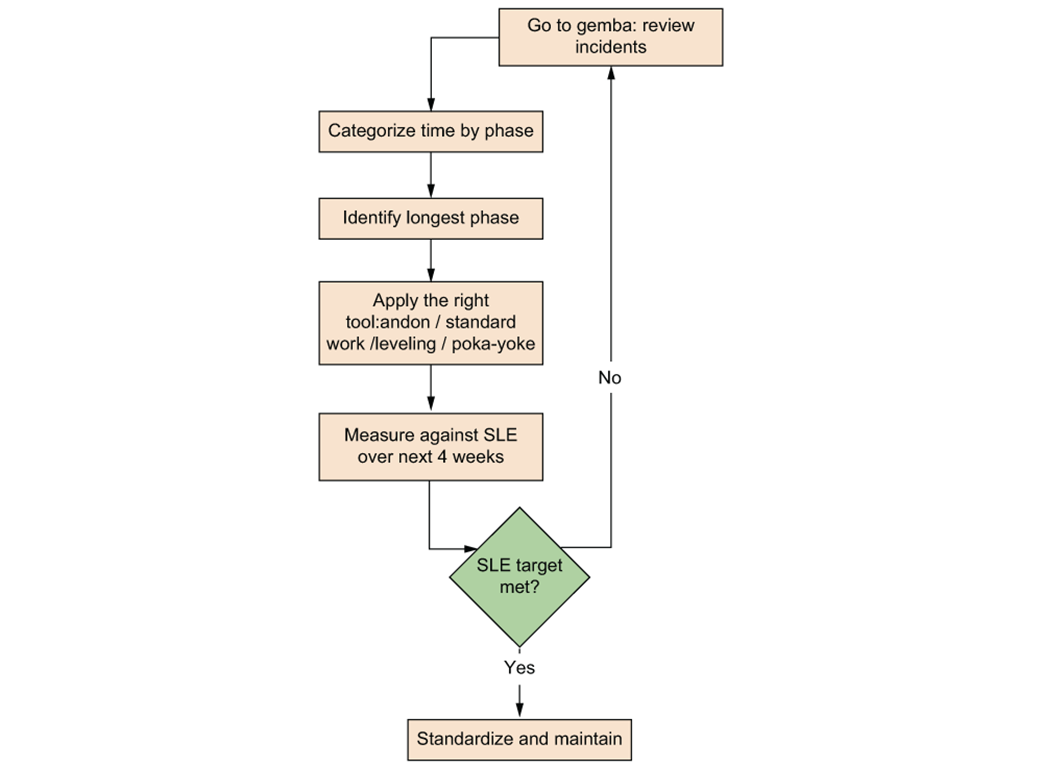
Production kaizen cycle: observe, measure, apply the right Lean tool, measure, repeat.
Summary
- Production is the gemba. Dashboards summarize. Go look at the actual system.
- Silent degradation erodes user trust without triggering a single alert. You find it by observing, not by waiting to be paged.
- Andon is signal plus stop. Alerts that point to causes give the engineer the right cord to pull. Alerts that point to symptoms start a detective chase.
- Define your andon actions before the incident: what "stop" means for each failure mode, what keeps running, and what you accept losing.
- Adopt an SLE if you lack a formal SLA. An internal reliability standard makes every breach a kaizen trigger.
- Operational standard work is executable code: runbooks that run against the real system, pipeline constraints that prevent mistakes before they ship.
- Mura creates muri during peaks and muda during troughs. Level the demand, and you address all three.
- Operational waste that flows into sprint planning is a feedback loop. Waste that stays in an ops dashboard is just information.
- Every post-incident review should produce a commit, a kaizen card, or an A3—not a wiki page.
- Production kaizen connects every tool in this chapter into one cycle. Each iteration makes one measured change and compounds.

 Build High Value Software Systems ebook for free
