11 Architectures that flow
The chapter argues that architecture is not just a technical structure but the hidden value stream of a running system: it determines how work flows, where it stalls, and where waste accumulates. Even teams with excellent coding and delivery habits can still suffer from slow, fragile systems if the architecture forces too many synchronous steps, creates shared bottlenecks, or encourages premature decomposition. To understand and improve this, the chapter applies Lean thinking at the system level, using real measurements of latency, throughput, and wait time instead of relying on intuition or isolated service metrics.
One major theme is making architectural decisions at the last responsible moment. Rather than committing early to hard-to-reverse choices like databases, message brokers, or service boundaries, teams should defer decisions until they have enough information and a real trigger forces the choice. Set-based design supports this by running short spikes across multiple options and comparing them with evidence before committing. The chapter also emphasizes the importance of tracking decisions in a log so that later incidents can be traced back to the assumptions and constraints that shaped them, turning past decisions into a source of learning rather than blame.
The chapter then shows how to diagnose and improve flow across the whole system: map the end-to-end request path, identify the actual constraint, match capacity to demand with takt time, and use pull systems and backpressure to prevent overload. It recommends stopping defects at the source with jidoka-style mechanisms such as circuit breakers, validation, and dead letter queues, while also avoiding architectural overproduction like unnecessary services, endpoints, and abstractions. Together, these practices create a system that flows more smoothly, adapts to change more safely, and stays aligned with real customer demand instead of architectural assumptions.
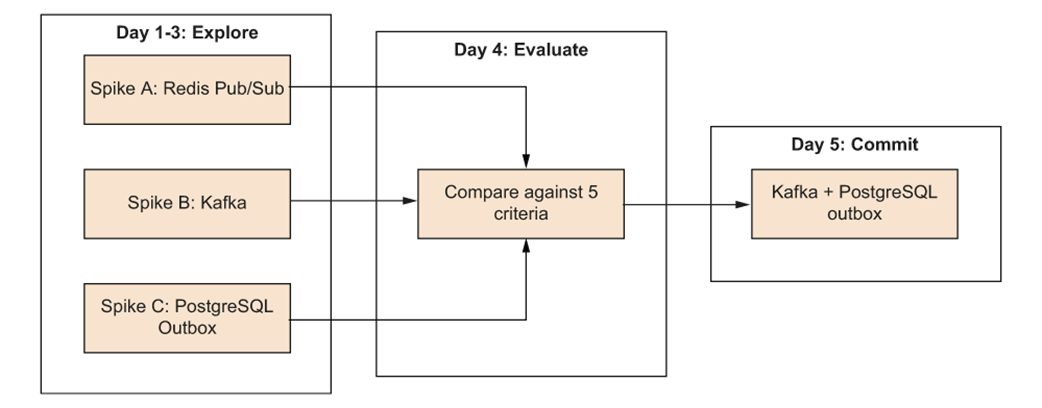
Set-based design narrows three spikes to one informed decision.
Checkout request path through six microservices.
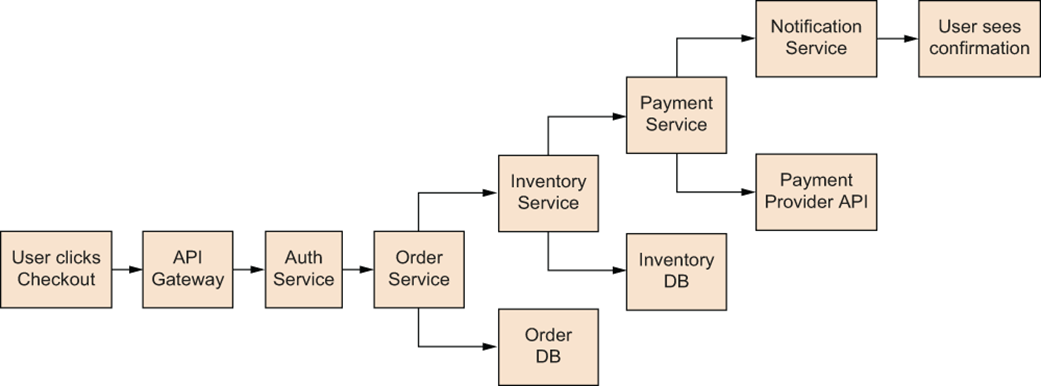
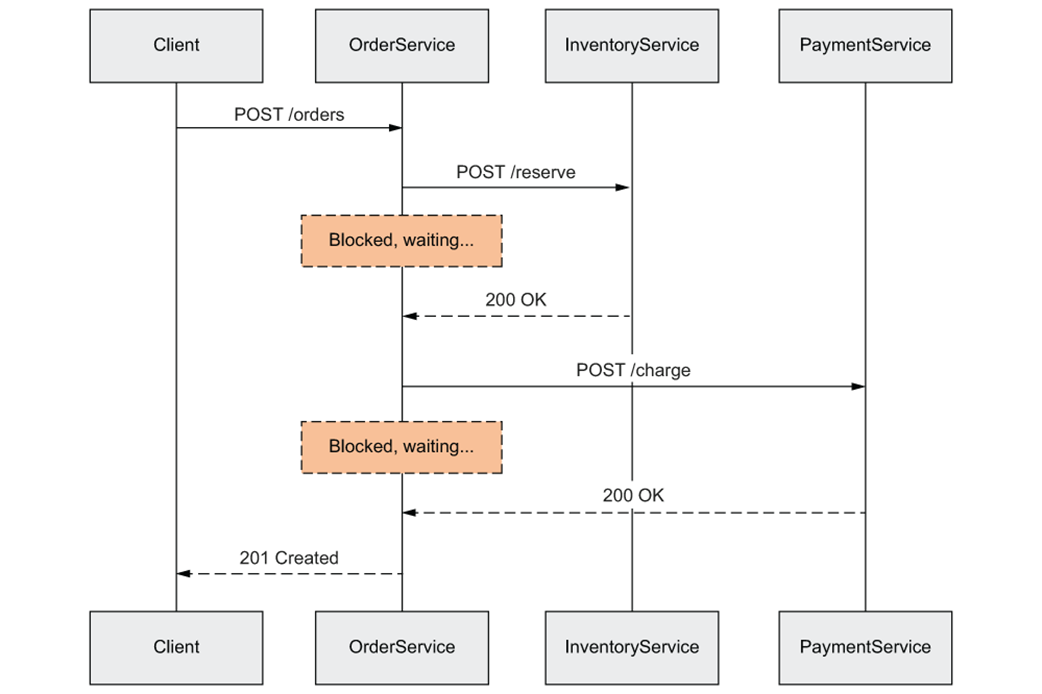
Synchronous chain, total latency is the sum of all steps.

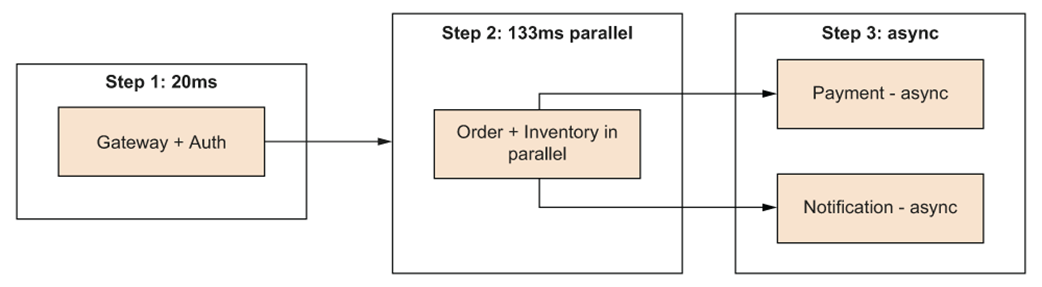
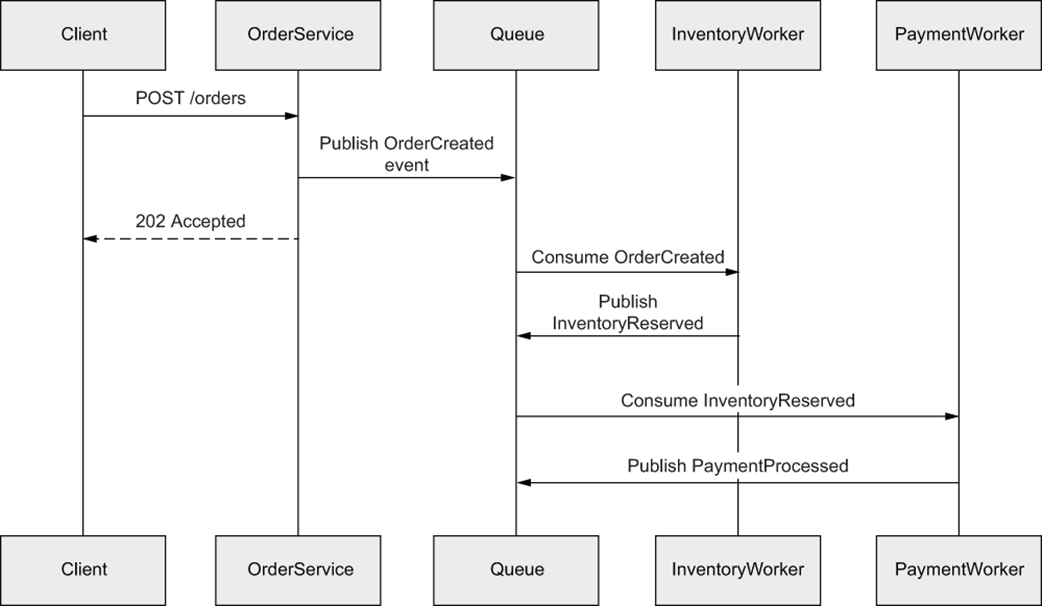
Asynchronous design, parallel steps, and async processing cut user-visible latency.
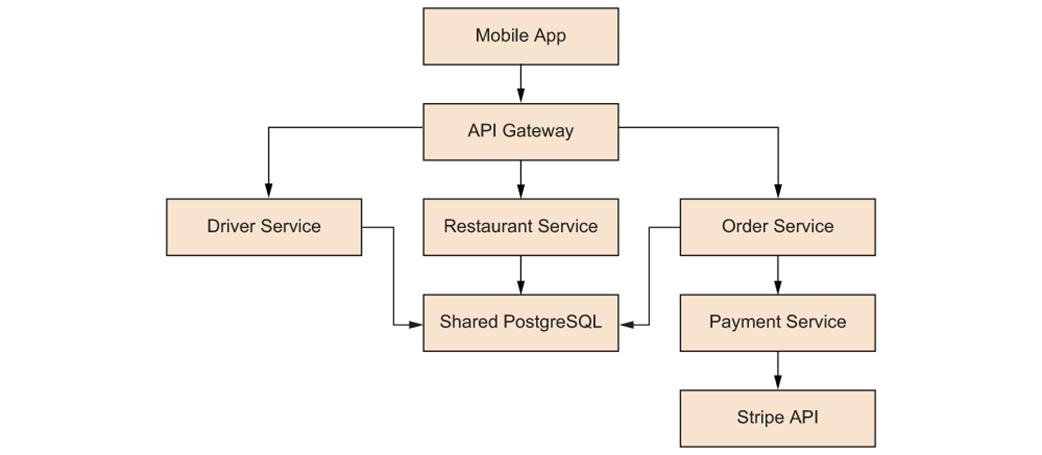
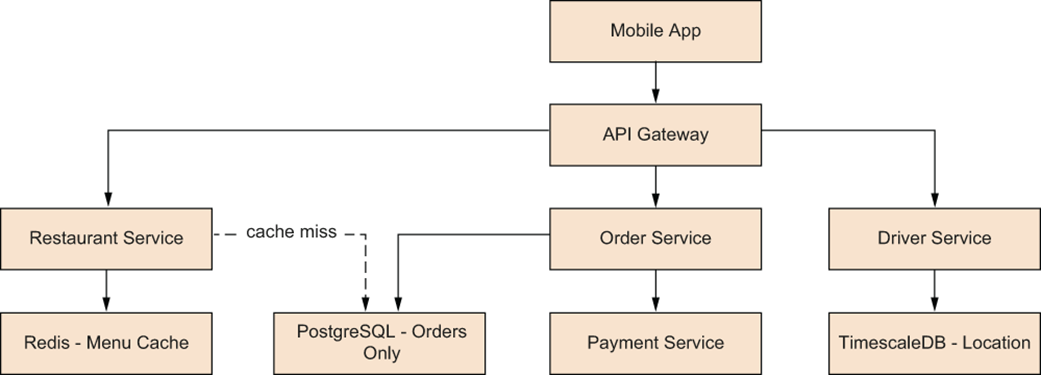
Food delivery platform with a shared database bottleneck.
After subordination, each service uses the right store for its workload.
Push architecture: each service block waits for the next.
Pull architecture, services consume from queues at their own pace.
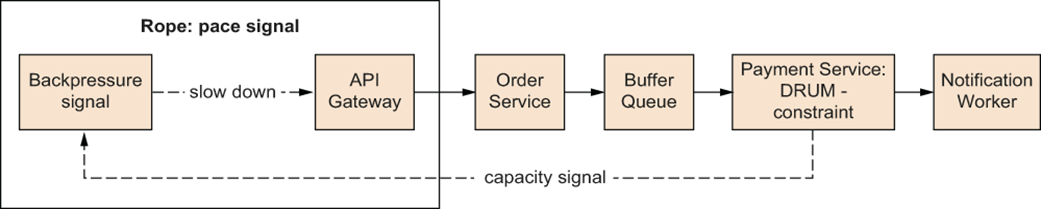
Drum buffer rope in a software architecture.
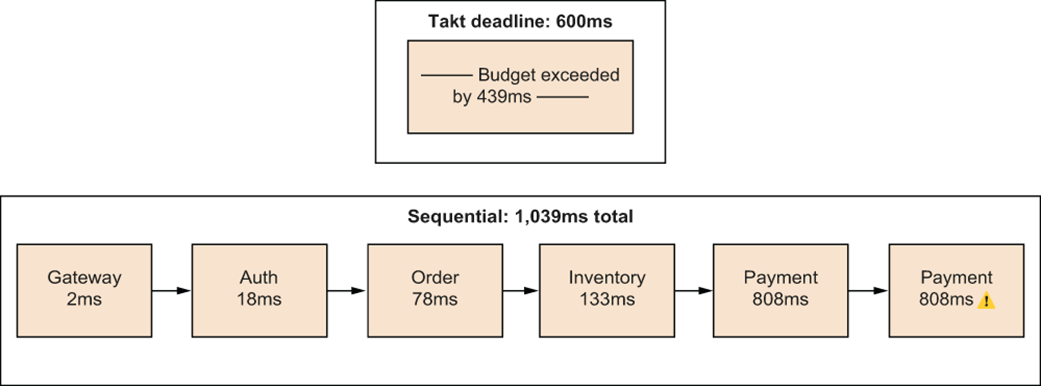
Sequential pipeline overshooting the 600ms takt budget.
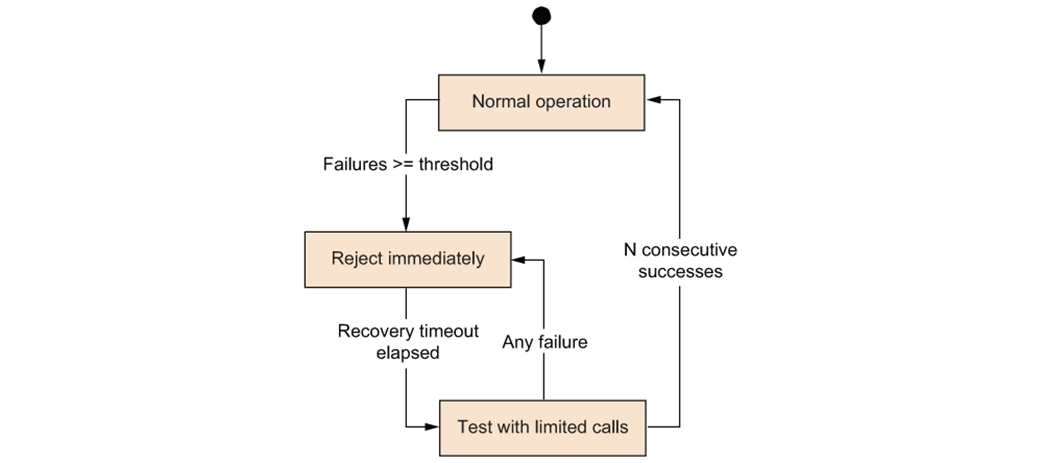
Circuit breaker state transitions.
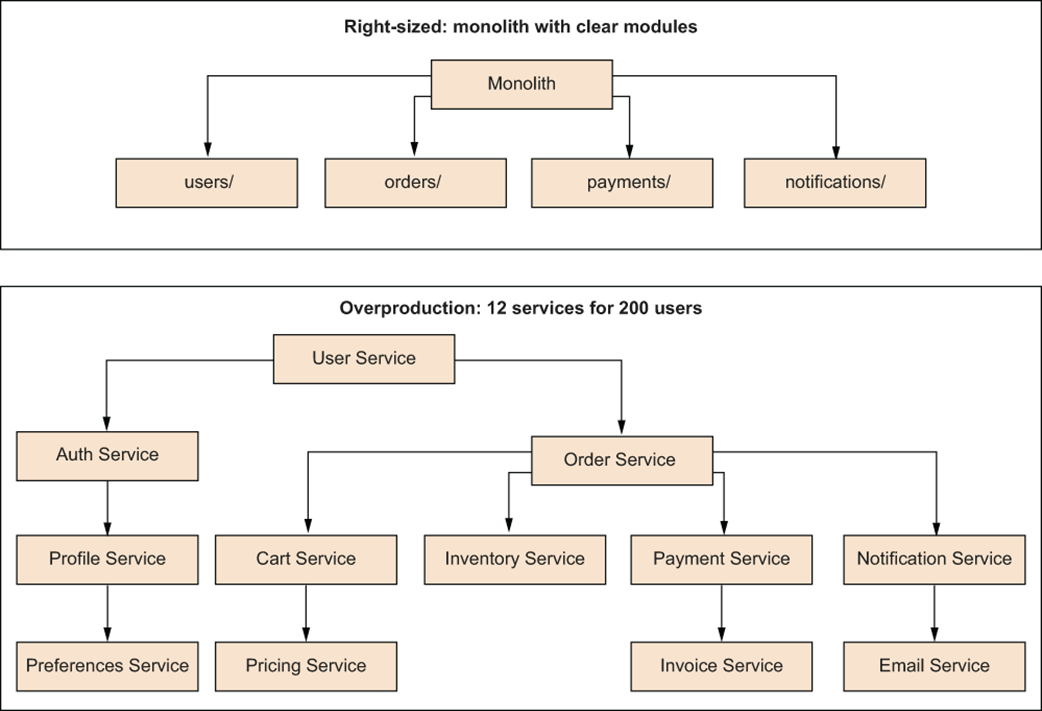
Overproduction vs right sized
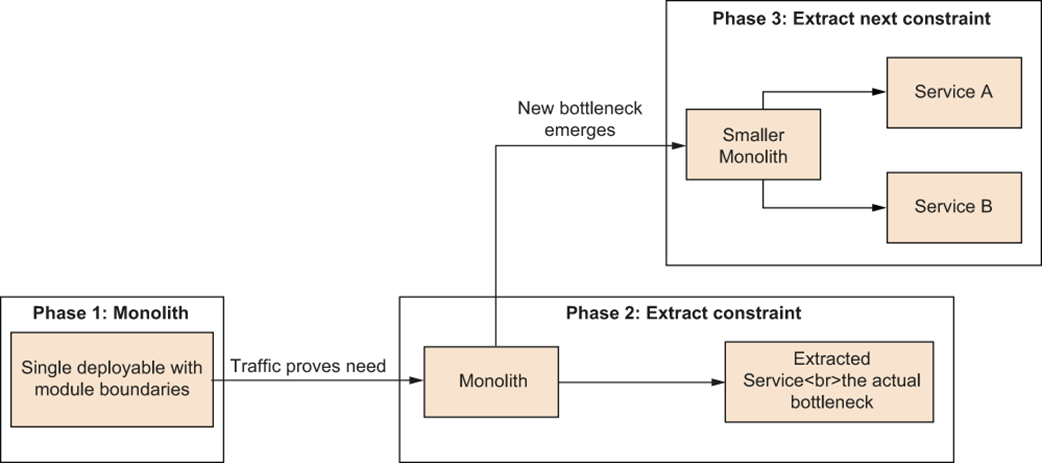
Extract services only when traffic proves the need.
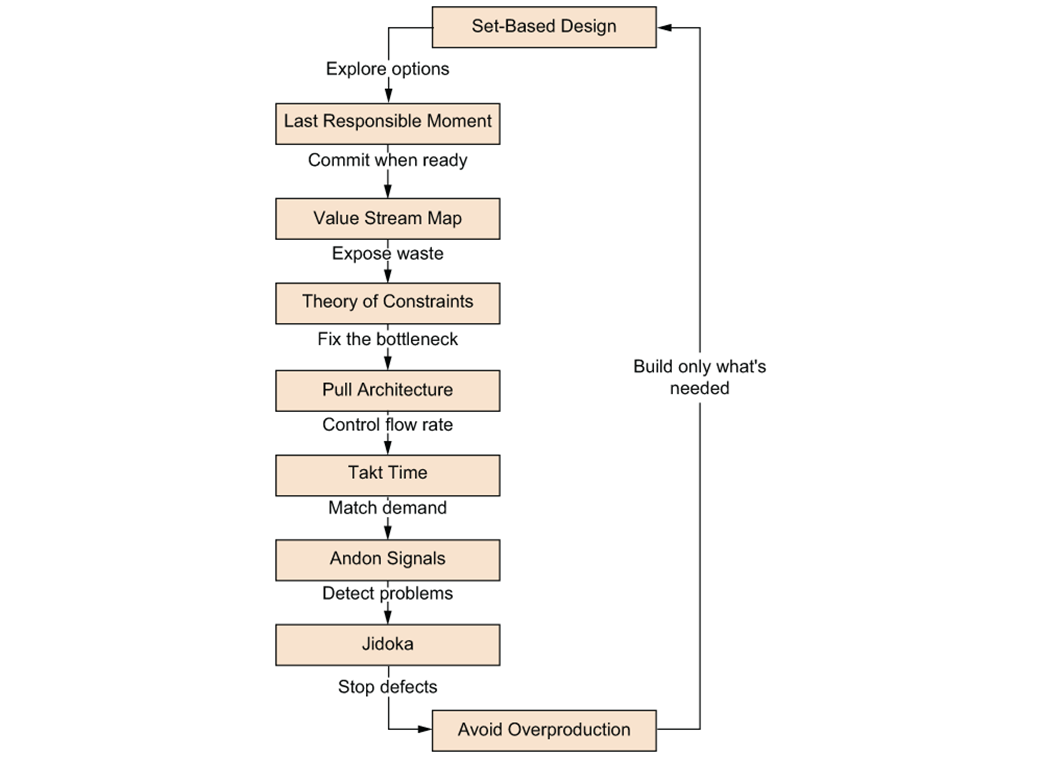
How the Lean architecture concepts connect in a continuous cycle.
Summary
- Set-based design explores multiple architectural options through parallel, time-boxed spikes rather than committing to a single approach too early. Run the experiments, collect real data, and let the results choose the direction.
- The last responsible moment is the point at which failing to decide eliminates an important option. Before that point, deferring is free because you are gathering information. After it, delay becomes waste because you are blocking progress.
- System-level value stream mapping traces a request end-to-end through every service, database, queue, and external dependency it touches. The insight is almost always the same: most latency hides between components, not inside them.
- The Theory of Constraints says every system has exactly one bottleneck that limits overall throughput. Improving anything other than that constraint is an illusion of progress. Identify it, exploit it, subordinate everything else to it, and only then elevate it.
- Pull architectures and backpressure put consumers in control of the pace. Downstream services signal when they are ready for more work, and upstream services produce nothing until that signal arrives, preventing overload and cascading failures.
- Drum-buffer-rope turns the Theory of Constraints into an operating rhythm. The drum is the constraint that sets the pace, the buffer is a cushion of work that keeps the constraint from starving, and the rope ties upstream production to the drum's beat so nothing outpaces it.
- Takt time connects architecture to business reality by dividing the available time window by customer demand. It answers a question no utilization metric can: Are we completing work at the rate customers actually need it?
- Jidoka means building components that detect problems and stop immediately rather than propagating defects downstream. Circuit breakers, dead-letter queues, and input validation at service boundaries all implement the same principle: stop the line before one bad part ruins the whole batch.
- Overproduction in architecture means building more services, endpoints, abstractions, and infrastructure than the system currently needs. Each addition carries an ongoing maintenance cost and creates drag on the flow. Build only what the data justifies, not what a hypothetical future might require.

 Build High Value Software Systems ebook for free
