Overview

1 Why Lean, why now?

Modern software teams are shipping more code than ever, but delivery is still slow, unpredictable, and frustrating because the real problem is systemic, not a lack of talent or effort. Cloud platforms, CI/CD pipelines, distributed systems, and AI-assisted coding have made it easier to produce code, but they have also shifted the bottlenecks to understanding, validation, integration, deployment, and maintenance. In this environment, extra automation can increase throughput without improving outcomes if the delivery system itself is not designed to handle the work flowing through it.

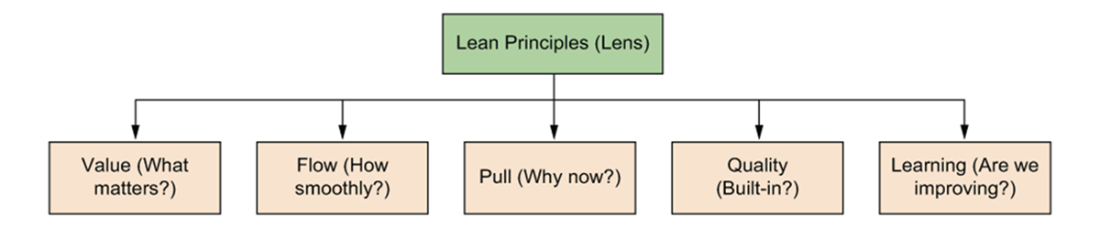
Lean is presented as a practical, developer-centered way to improve that system by focusing on value, waste, flow, pull, and continuous improvement. Instead of treating Lean as a management style or a checklist, the chapter frames it as a way to make work visible, reduce rework, expose hidden queues, and encode standards earlier so that intent is preserved as code moves toward production. The text emphasizes that AI does not remove delivery constraints; it can actually amplify waste unless teams deliberately shape standards, feedback loops, and readiness signals.

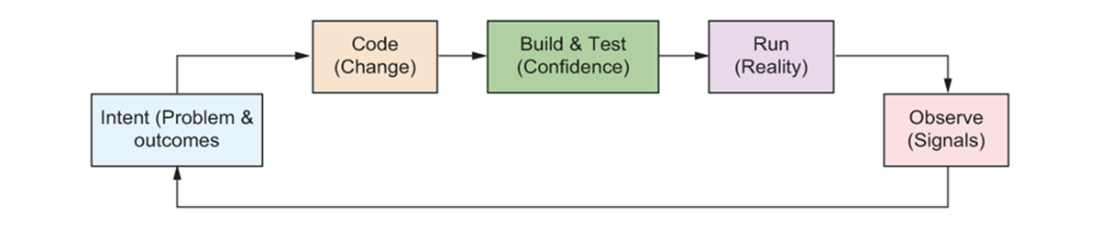
To make the ideas concrete, the chapter uses scenarios where features take far longer than expected because requirements are unclear, architectural constraints are implicit, test environments are unrealistic, or production performance is not validated soon enough. These examples are used to build a simple mental model of software delivery as a continuous loop from intent to code to build and test to run and back again through feedback. Lean thinking then becomes a set of questions for diagnosing where work stalls and a set of practices for improving the system so that value reaches users faster, with less friction, and with better learning over time.

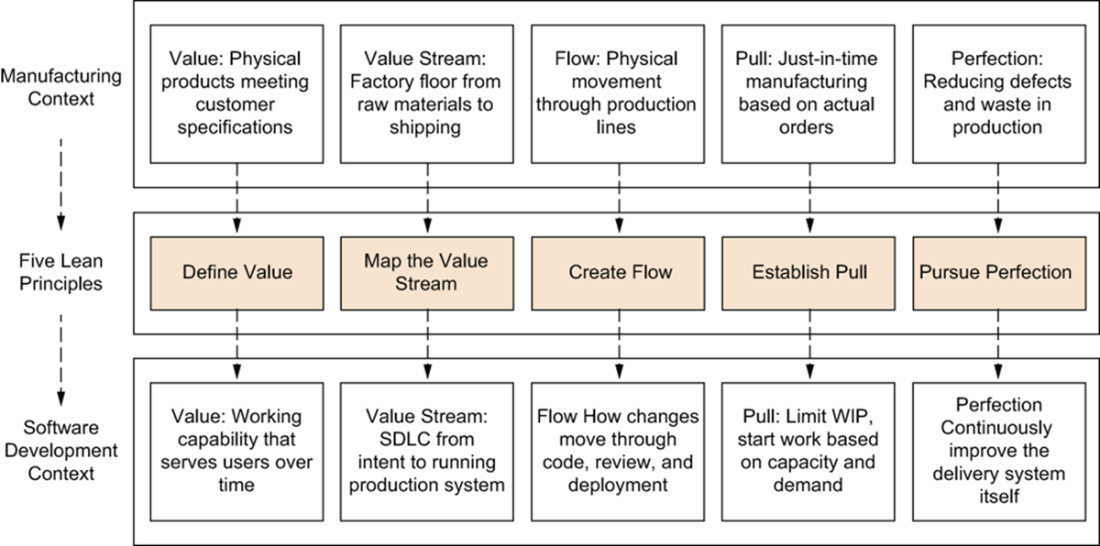
Mapping the manufacturing context to the software context for the five Lean principles.
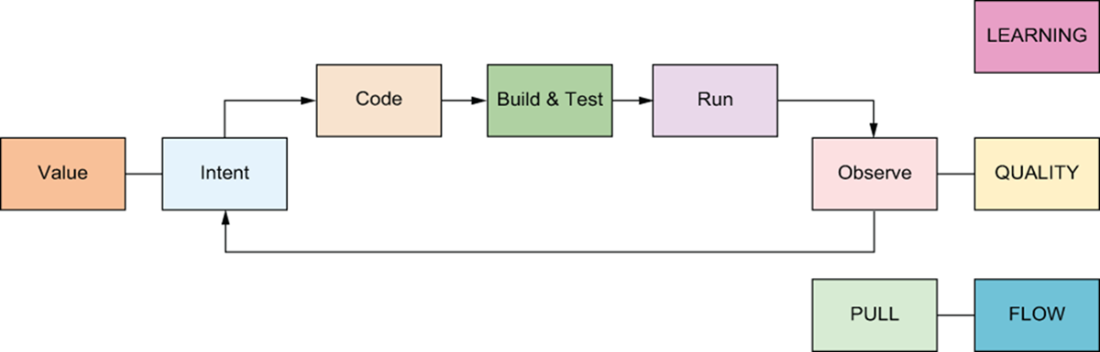
Simplified SDLC model showing the progression from intention to production.
Five Lean principles to consider in day-to-day decision making to embrace Lean thinking.
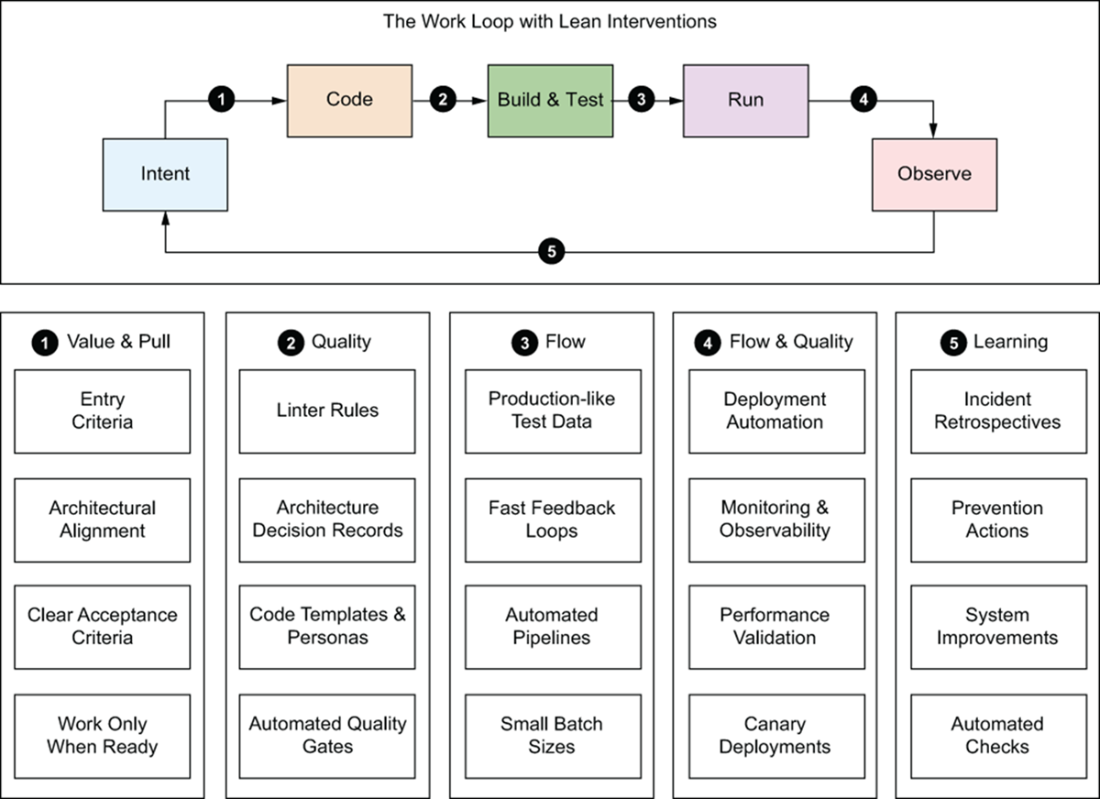
Work loop with Lean interventions, addressing specific failure modes from the notification preferences scenario.
The holistic Lean model—five Lean principles surround and influence every phase of the work loop.
Summary

  • Modern software teams face persistent friction despite powerful tools and automation.
  • AI-assisted development increases speed, but also amplifies systemic constraints and hidden waste.
  • Most delivery slowdowns are caused by system-level issues, not individual skill or effort.
  • Software delivery is a continuous loop of intent, execution, validation, and feedback.
  • Lean provides a developer-centric way to reason about value, flow, delay, and rework.
  • Lean focuses on improving the system around the code, not just the code itself.
  • A shared mental model of the delivery system enables clearer judgment, faster learning, and more reliable outcomes.

FAQ

Why is Lean relevant to modern software development now?Modern software teams can generate code faster than ever, but delivery outcomes are still slowed by hidden system problems like rework, waiting, and poor feedback loops. Lean is relevant because it helps teams understand and improve the system that moves work from idea to running software.
Does AI-assisted development remove the need for Lean thinking?No. AI lowers the cost of producing code, but it does not remove the need for validation, alignment, ownership, or feedback. In many cases, AI can increase waste if the surrounding delivery system is not designed to handle the added flow of work.
What does “Lean” mean in this chapter?Here, Lean means a developer-centric way of thinking about value, waste, and flow in software delivery. It is not presented as a management framework or a set of ceremonies, but as a practical discipline for improving how work moves through code, tools, and people.
What counts as waste in software development?Waste is any effort that consumes time, attention, or resources without improving value for the user. Examples include rework, waiting, unnecessary complexity, avoidable friction, and work that is started too early or left unfinished.
How does Lean differ from Agile?Agile emphasizes iteration and adaptability, and it was influenced by Lean. Lean in this chapter focuses more directly on making work flow visible and improving the delivery system at the point where developers actually do the work, rather than managing processes from a distance.
Why do modern software systems create persistent friction?Modern software delivery involves many tools, handoffs, checks, and environments, such as source control, pipelines, security scans, staging, and production monitoring. These layers solve real problems, but they also create queues, delays, and hidden constraints that are easy to misunderstand.
Why is code writing no longer the main constraint?Because AI and modern tooling can generate code quickly, the bigger bottlenecks are now understanding the problem, validating the solution, integrating it correctly, and maintaining it over time. In other words, the challenge has shifted from producing code to managing the delivery system around it.
What are the five Lean principles discussed in the chapter?The five principles are: define value, map the value stream, create flow, establish pull, and pursue perfection. In software, these translate into improving how ideas become running systems, reducing waste, limiting unnecessary work, and continuously improving the delivery process.
Why does the chapter emphasize making the delivery system visible?Because many delivery problems are invisible when teams focus only on code output. Making the system visible helps teams see where work waits, where it loops, where feedback arrives too late, and where constraints are unclear or missing.
What is the main lesson from the notification preferences scenario?The main lesson is that long delivery times and production problems are usually system problems, not individual failures. The feature took much longer than expected because of unclear intent, delayed feedback, inconsistent standards, and hidden constraints; Lean practices address those root causes by improving flow, quality, pull, value, and learning.

pro $24.99 per month

  • access to all Manning books, MEAPs, liveVideos, liveProjects, and audiobooks!
  • choose one free eBook per month to keep
  • exclusive 50% discount on all purchases
  • renews monthly, pause or cancel renewal anytime

lite $19.99 per month

  • access to all Manning books, including MEAPs!

team

5, 10 or 20 seats+ for your team - learn more


choose your plan

team

monthly
annual
$49.99
$499.99
only $41.67 per month
  • five seats for your team
  • access to all Manning books, MEAPs, liveVideos, liveProjects, and audiobooks!
  • choose another free product every time you renew
  • choose twelve free products per year
  • exclusive 50% discount on all purchases
  • renews monthly, pause or cancel renewal anytime
  • renews annually, pause or cancel renewal anytime
  • Build High Value Software Systems ebook for free

choose your plan

team

monthly
annual
$49.99
$499.99
only $41.67 per month
  • five seats for your team
  • access to all Manning books, MEAPs, liveVideos, liveProjects, and audiobooks!
  • choose another free product every time you renew
  • choose twelve free products per year
  • exclusive 50% discount on all purchases
  • renews monthly, pause or cancel renewal anytime
  • renews annually, pause or cancel renewal anytime
  • Build High Value Software Systems ebook for free