This chapter follows a team tasked with modernizing a tightly coupled, legacy mainframe ACH system by rebuilding core capabilities in Python while evaluating Generative AI to accelerate delivery. It provides a quick primer on the ACH network and its role in moving money between financial institutions, then sets the engineering goals: understand the Nacha file format, build a parser, and enforce quality via unit testing and agile practices. The team is encouraged to leverage tools like ChatGPT and GitHub Copilot, but under strict guardrails (no confidential code, sanitize prompts) and with a “trust but verify” mindset rooted in measurable quality and short feedback loops.
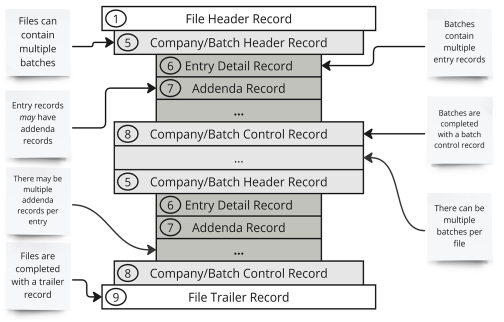
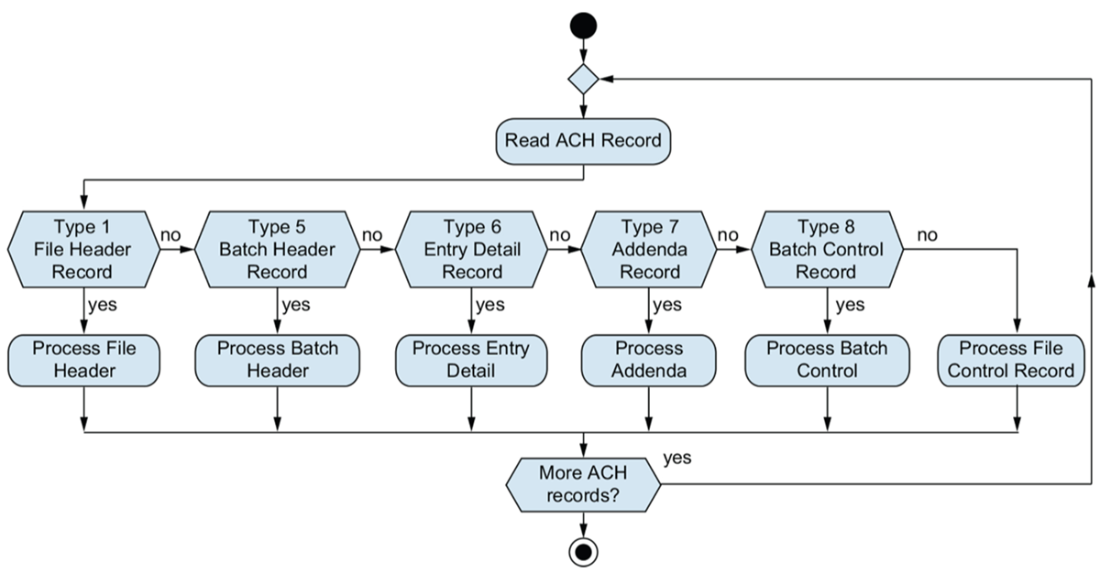
The technical core explains ACH’s fixed-width, 94-character records and the six record types that shape a file’s hierarchy: file header (1), batch header (5), entry detail (6), addenda (7), batch control (8), and file control (9). The team uses GenAI to scaffold a parser, then refactors into per-record functions for testability, uncovering common AI pitfalls (missing types, mislabels, wrong offsets). They adopt pytest to drive small, incremental steps from reading lines to validating parsed fields, and briefly show BDD for stakeholder-readable scenarios. Along the way, they formalize a project structure, reduce cognitive load with formatters and linters, and improve clarity with dispatch patterns (dictionary or match) and type hints.
Beyond the “happy path,” the chapter introduces realistic failure modes and validations: enforcing record length, ensuring ascending trace numbers within batches, honoring addenda flags, and using control records for counts and totals. The parser accumulates errors rather than failing fast, supporting clearer diagnostics and unit-testable outcomes. The broader engineering guidance stresses defensive coding, static analysis, and dependency hygiene, reinforcing that GenAI is a powerful accelerator only when paired with domain knowledge, rigorous tests, and secure practices. The result is a pragmatic blueprint for parsing ACH files while embedding modern software quality, automation, and responsible AI use.
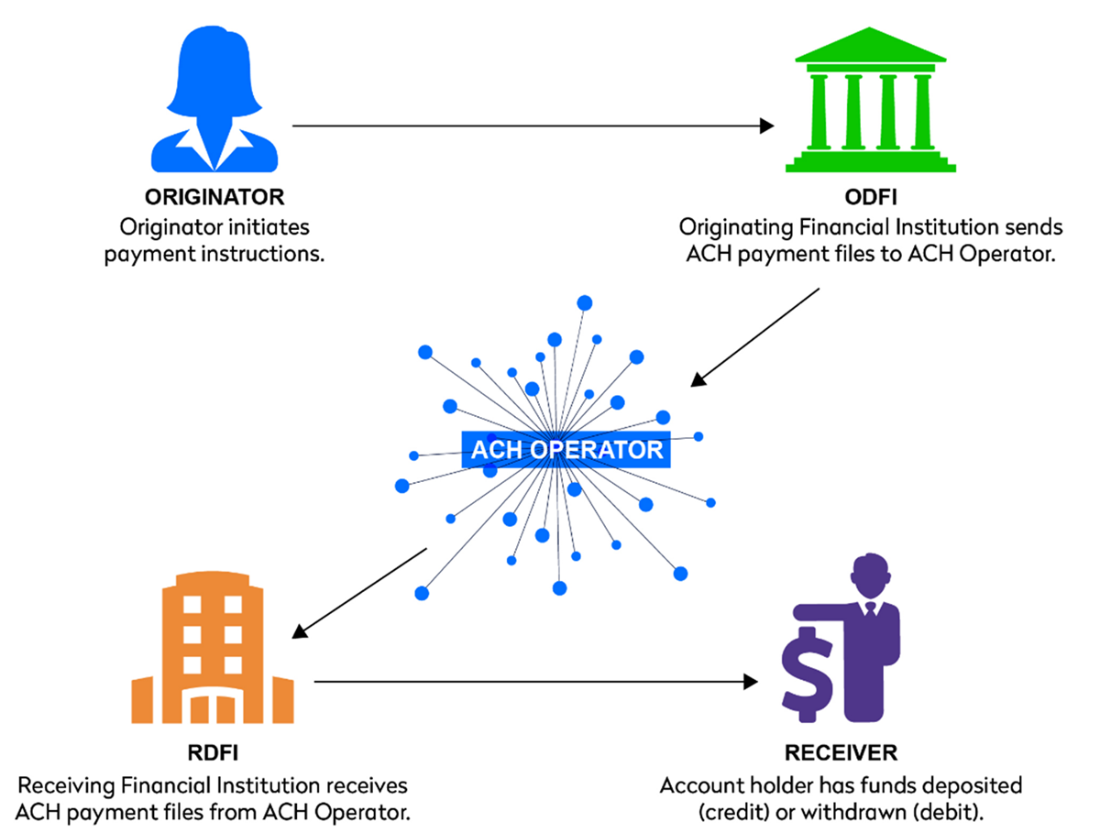
ACH Processing Flow
ACH File Layout
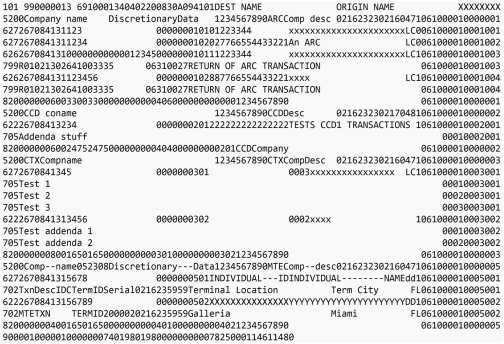
Example ACH File
ACH Processing Flow
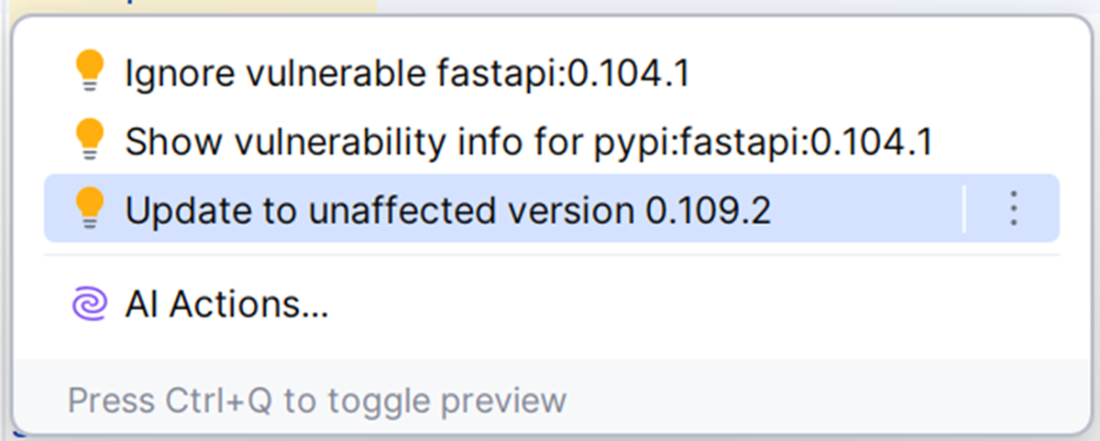
An example dependency
Options to handle the vulnerability
Summary
We explored how to incorporate Generative AI into our development workflow. Better understanding what we should ask (Prompt Engineering) and how we can clarify our intent (Problem Formulation) which harken back to Chapter 2.
Focus on modernizing an ACH system running on legacy mainframe architecture, leveraging metrics like release cadence and defect backlog.
Utilize Generative AI tools such as ChatGPT and GitHub Copilot to assist in understanding ACH file layouts, while ensuring no confidential data is exposed.
ACH network facilitates seamless money transfers between banks, commonly used for transactions like payroll and bill payments.
ACH files are fixed-width ASCII files with specific record types, requiring careful parsing of file header, batch header, entry details, addenda, batch control, and file control records.
Validate ACH parsing with unit tests, adopting Test-Driven Development (TDD) for reliable and high-quality software.
Employ linters and formatters like SonarLint and black to enforce coding standards and reduce cognitive load.
Handle scenarios where ACH files may have errors, using robust code that accounts for unexpected inputs and edge cases.
Implement type hints in Python for enhanced code clarity and maintainability, supporting easier collaboration and onboarding.
Address security concerns by using static analysis tools to identify coding vulnerabilities and ensure compliance with security standards.
We reiterated the importance of robust testing practices, iterative development, and early detection of potential issues using IDE plugins.
FAQ
What is an ACH file and why is it fixed-width?An ACH file is a Nacha-standardized, fixed-width ASCII file used to exchange electronic payments across the U.S. banking system. Each line (record) is exactly 94 characters and fields are at fixed positions. Order matters: files contain batches, batches contain entries and addenda, and both batches and the file have control (trailer) records.Which ACH record types do I need to parse?The six common record types are: 1 File Header (file-level metadata), 5 Batch Header (batch-level metadata), 6 Entry Detail (individual transactions), 7 Addenda (optional additional info tied to an entry), 8 Batch Control (batch totals and counts), and 9 File Control (file totals and counts).How can Generative AI help with parsing, and what are the pitfalls?Tools like ChatGPT and GitHub Copilot can quickly generate parser templates, split logic into functions, and suggest tests. Pitfalls include mislabeling record types, wrong field offsets, missing record types, and non-deterministic outputs. Always sanitize inputs (no confidential code), “trust but verify,” and back everything with tests.How should I structure a Python ACH parser for testability?Create a separate function per record type (e.g., parse_file_header, parse_batch_header, parse_entry_detail, etc.). Use a small dispatcher (dictionary mapping or Python’s match in 3.10+) to route each line by its first character. Keep functions pure, return dicts, and avoid side effects so they’re easy to unit test.How do I get started with unit testing using pytest?Begin with simple tests: can I read the file, and does the line count match? Then add tests that pass sample lines to each parse function and assert parsed fields. Use pytest.raises to validate error handling (e.g., bad lengths). Iterate in short cycles: write a failing test, implement just enough code to pass.What is BDD and how does it apply here?Behavior-Driven Development defines tests in business-readable Given/When/Then scenarios that stakeholders can review. For ACH, you might define scenarios that parse a specific line and assert key outcomes (e.g., record type is 5, totals match). You can run these alongside pytest-based unit tests.What common validation and rejection scenarios should I handle?Typical issues include: records not 94 characters; out-of-order or non-ascending trace numbers in a batch; entry addenda flag mismatching the presence/absence of a following addenda record; incorrect totals/counts in control records. Collect and report errors consistently so tests can assert expected failures.What coding practices improve quality and maintainability?Use defensive coding (validate inputs, fail safely, log errors), consistent formatting (black), and linters (SonarLint). Add type hints for clarity and optional static checking (mypy/Pyright). Prefer small, composable functions, clear constants for offsets when useful, and keep parsing logic isolated for easier troubleshooting.Any tips for parsing addenda, batch control, and file control records?Get field positions exactly right: addenda has type code, payment-related info, and sequence fields at fixed offsets; batch control contains entry counts, hashes, and debit/credit totals; file control summarizes counts and totals and may include reserved fields. Cast numeric fields appropriately and use these totals to validate integrity.What security, compliance, and licensing concerns should I consider?Do not paste proprietary or NDA-protected code/data into public AI tools; sanitize and generalize examples. Scan dependencies and code with tools like Snyk or Veracode and follow company policies. If starting from open-source ACH libraries, verify licenses (e.g., MIT) and maintenance status, and still test thoroughly.
pro $24.99 per month
access to all Manning books, MEAPs, liveVideos, liveProjects, and audiobooks!


 Build Financial Software with Generative AI (From Scratch) ebook for free
