12 Where to go from here
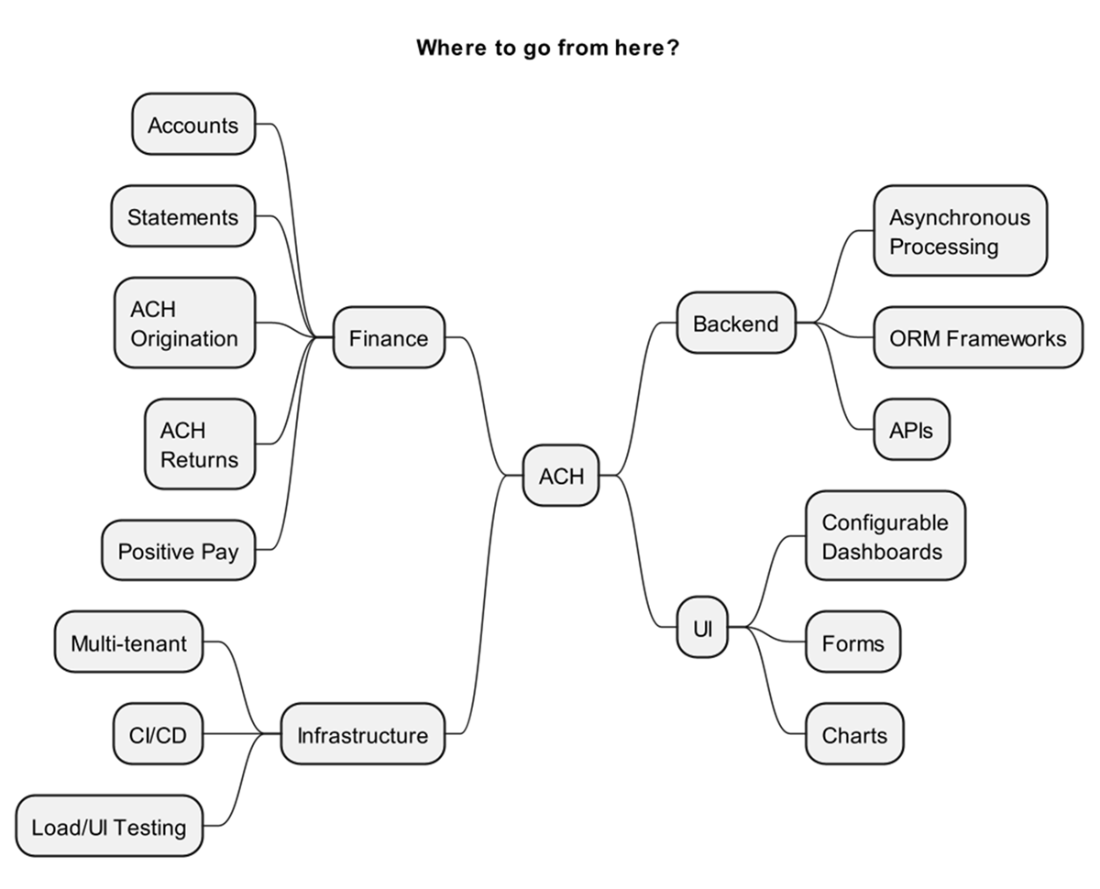
After guiding you through a full agile cycle—from research spikes to an MVP and iterative improvements—this chapter positions the ACH Dashboard as a springboard for deeper learning and broader capability. You built APIs with Python and FastAPI, a UI with Next.js and Material UI, and persisted data in Postgres while strengthening your understanding of FinTech and ACH processing. The focus now shifts to how you can expand the system technically and functionally, encouraging continued curiosity and growth across backend engineering, infrastructure, user experience, and core banking workflows.
On the backend, the chapter advocates moving heavy operations like file ingestion, OFAC scanning, and account posting to asynchronous, staged workflows with file statuses and user notifications to improve reliability and UX. It suggests experimenting with ORMs such as SQLAlchemy, expanding REST endpoints for full CRUD and file lifecycle management, and considering GraphQL where it fits. Infrastructure paths include leveraging Docker for rapid sandboxing, designing for multi-tenancy (isolated instances vs. shared databases with tenant safeguards), automating builds and deployments via CI/CD tools, and elevating test depth and coverage (unit, BDD, load, and UI tests). The data layer can be made more portable by supporting multiple RDBMSs or selectively exploring NoSQL (for example, migrating simpler tables first) to gain flexibility and product appeal.
On the UI, you can enrich charts and interactions, improve forms with validation and alternative components, and evolve toward configurable dashboards—ranging from drag-and-drop widgets to user-defined components and even a plugin ecosystem. With clean APIs, a mobile channel becomes straightforward, enabling on-the-go monitoring or even ACH batch creation. Financial features to deepen include modeling customers and accounts, posting transactions, handling NSF and overdrafts (including transfers and fees), managing returns and unposted items, producing statements, and supporting safe reversals. Rounding out a fuller ACH platform, the chapter highlights ACH origination, systematic returns processing, Positive Pay for fraud mitigation, and service-charge frameworks—closing with encouragement to continue exploring whichever path most excites you.
What can we do with our project now?
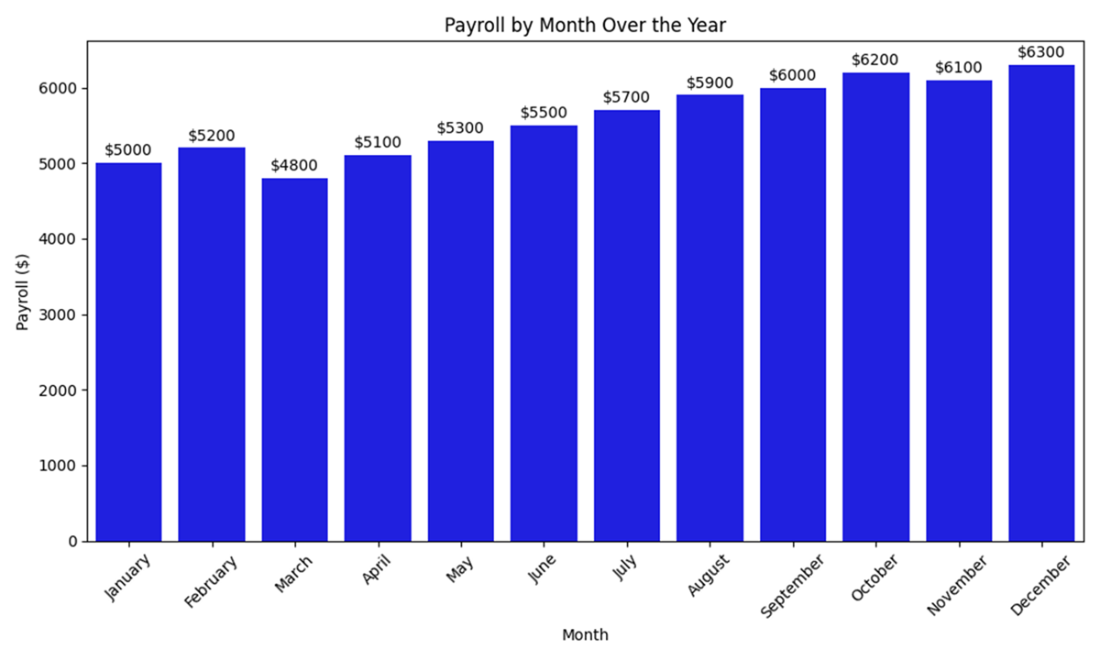
Payroll by Month Over the Year
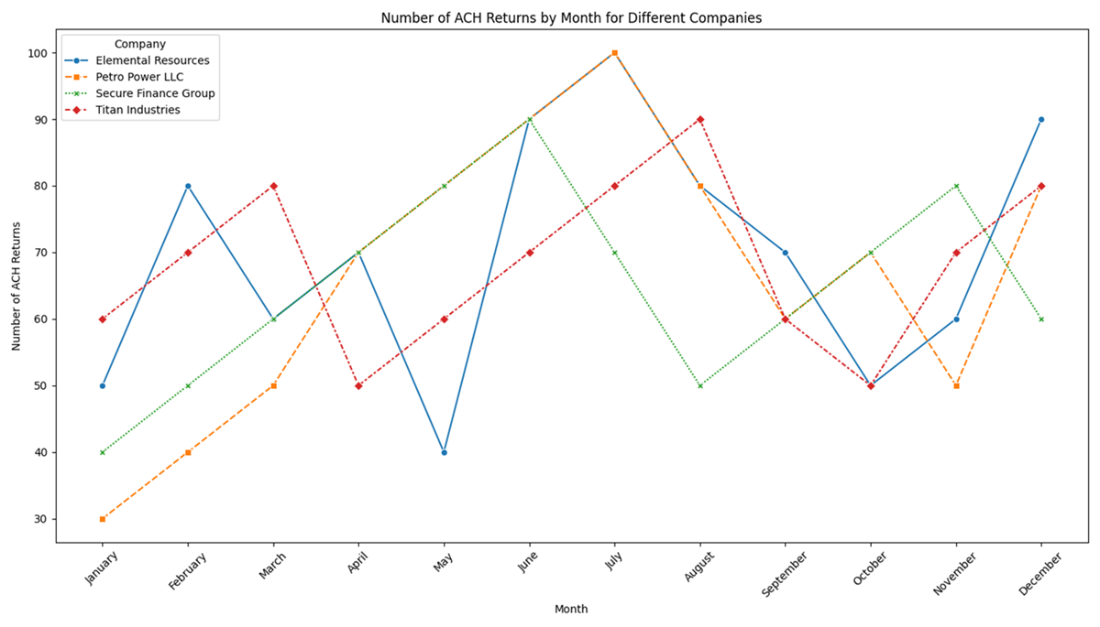
ACH Returns by Company
Summary
- Whether it be expanding the existing code, swapping out the FastAPI framework, or moving away from Python entirely there are a plethora of things that can be done to continue to expand the backend processing of our project. Often rewriting functionality from one language into another is a great learning experience and can be illuminating when we are able to leverage language or framework features that were not available in the original language.
- Sometimes pieces of code or entire applications need to be rewritten because of resource constraints. We have seen applications be rewritten into a new language because they were legacy software written in a non-standard language and the team simply did not have the bandwidth or resources to devote to learning it just to maintain that piece of software.
- Often well-established products have plenty of infrastructure around them. Their infrastructure is often homegrown especially if we are dealing with legacy software that may have existed before commercial tools were available to fill some of the niches.
- Knowing tools that are out there and available can be helpful as homegrown tools eventually need to be replaced. Often as team members mature, there is a need to replace the existing home-grown tools with a standard product so that new team members have a (hopefully) reduced learning curve.
- ACH is widely used in the US and as we saw has international capabilities as well. Processing ACH transactions provides some real-world exposure to what happens billions of times a year without much fanfare. Creating a simple system to begin to process ACH transactions and see just what goes into the process gives us a great base to expand from.

 Build Financial Software with Generative AI (From Scratch) ebook for free
