2 An in-depth look into the soul of the Transformer Architecture
This chapter demystifies the Transformer architecture that powers modern large language models, contrasting it with earlier approaches such as n-grams, Markov models, and recurrent networks (RNNs/LSTMs). It explains why Transformers outperform RNNs and GRUs on sequential tasks: they capture long-range dependencies, train stably without vanishing/exploding gradients, and exploit full parallelism for efficiency. The narrative focuses on three pillars—self-attention, encoder models, and decoder models—highlighting how they unlock state-of-the-art performance across translation, summarization, question answering, and more, while intentionally avoiding heavy mathematics.
The chapter walks through the Transformer's mechanics: tokens become dense vector embeddings (contrasted with sparse one-hot vectors), positional encodings inject word order, and scaled dot-product self-attention—amplified via multi-head attention—models global relationships. Stacked encoder layers combine self-attention with position-wise feed-forward networks; the decoder mirrors this with masked self-attention plus encoder–decoder attention to guide generation, followed by a linear layer and softmax for outputs. It then surveys model families: encoder-only models like BERT trained with masked language modeling for rich bidirectional context; SBERT, which uses siamese/triplet training to produce high-quality sentence embeddings; and decoder-only models like GPT trained autoregressively for fluent text generation and versatile transfer learning.
Finally, the chapter shows how encoders and decoders can be composed for powerful sequence-to-sequence systems and Retrieval-Augmented Generation. Encoders turn large corpora and queries into semantic vectors for retrieval, while decoders synthesize context-aware, coherent outputs—illustrated by a hotel search case study where semantic search and generation deliver tailored recommendations. Beyond core advantages over RNNs, the text notes active frontiers—model compression, interpretability, multimodal learning, and domain adaptation—and positions this architectural understanding as the bedrock for building advanced, real-world LLM applications, especially robust RAG systems.
The strength of the transformer model is in its ability to understand the significance and context of every word in a sentence, unlike RNNs which primarily assess the connection of a word with its immediate neighbor.
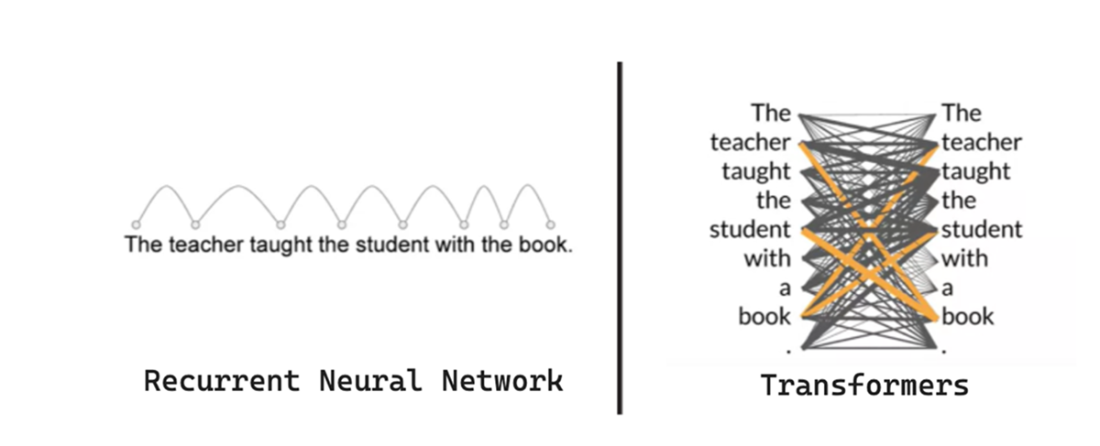
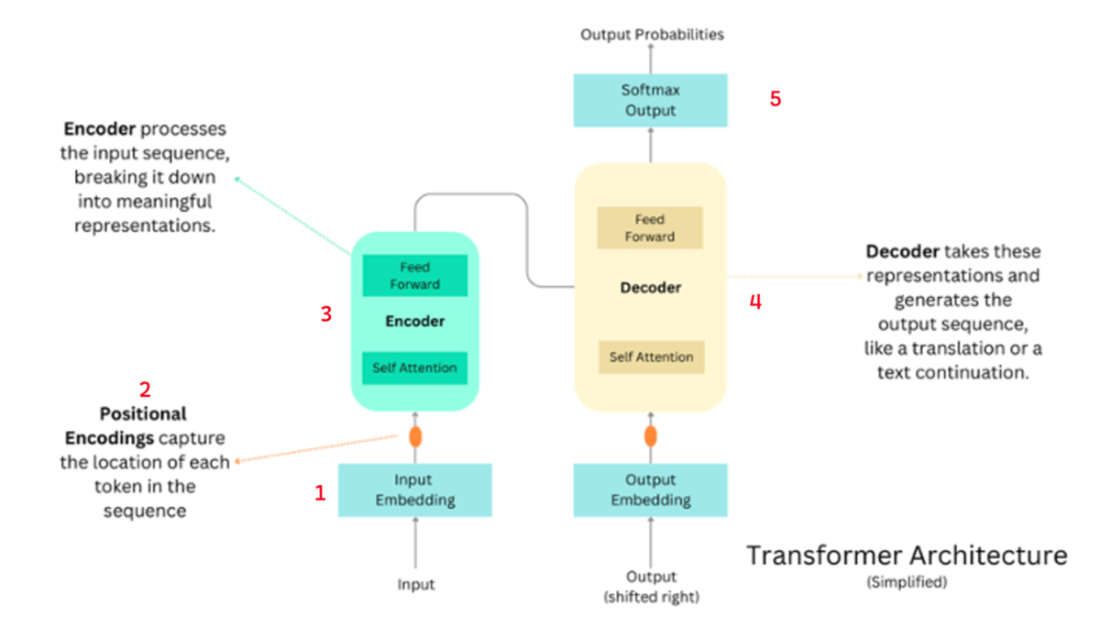
The interplay of the Transformer Architecture lies in two towers, the Encoder and Decoder layers which are made up of numerous layers.
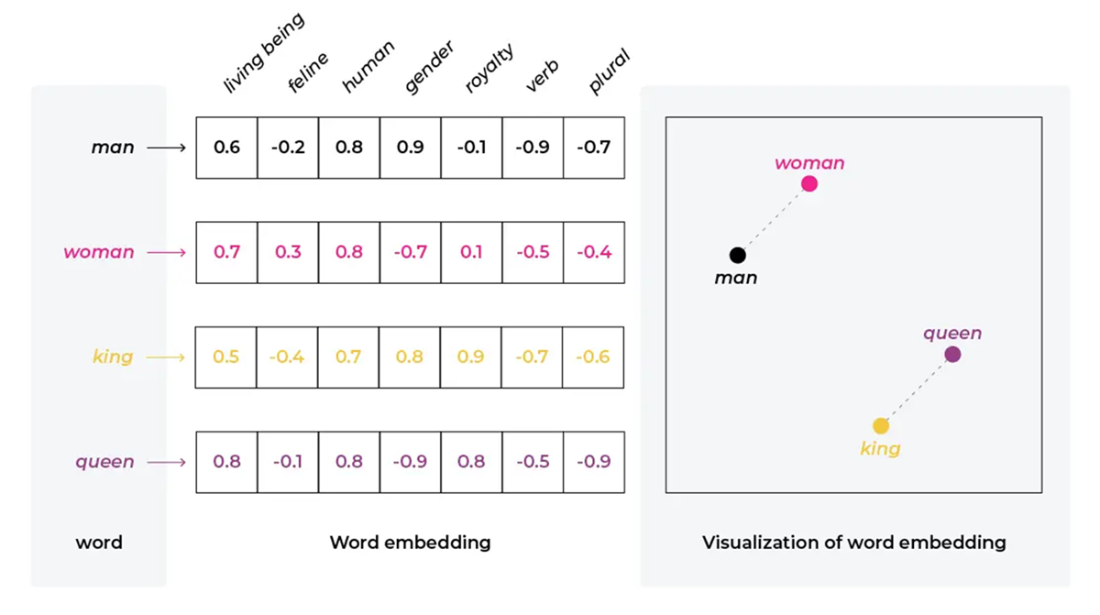
illustrates the vector representation of words. Although the numerical values may not be immediately interpretable, the visualization effectively showcases the proximity of words in their numeric representation, highlighting their close association based on contextual meaning.
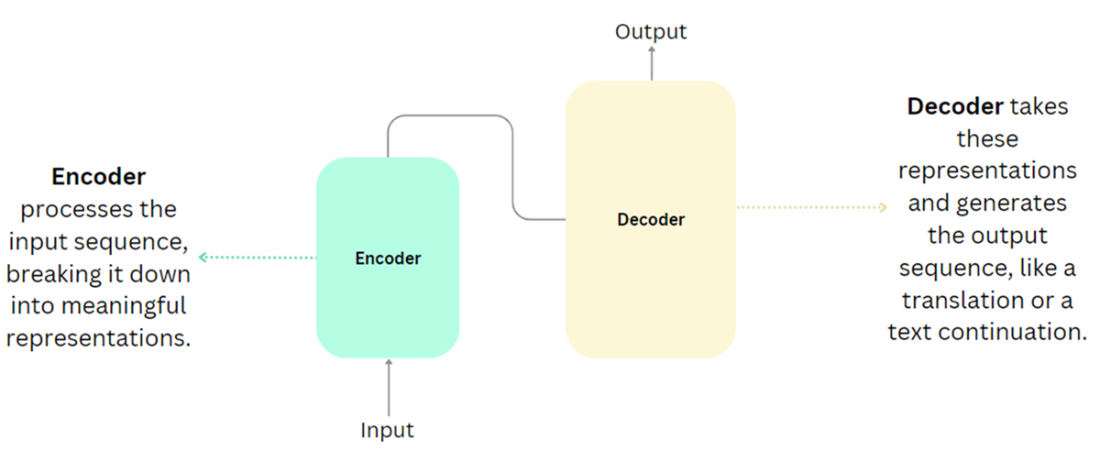
A simplified illustration of the Transformer architecture focusing on the two major layers.
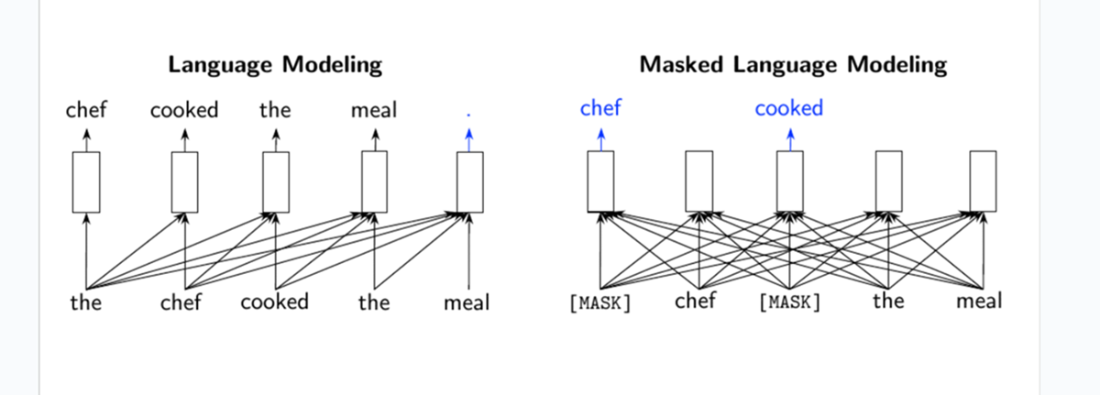
The two images depict the difference between language modeling and masked language modeling which gives BERT an advantage over traditional left-to-right sequences.
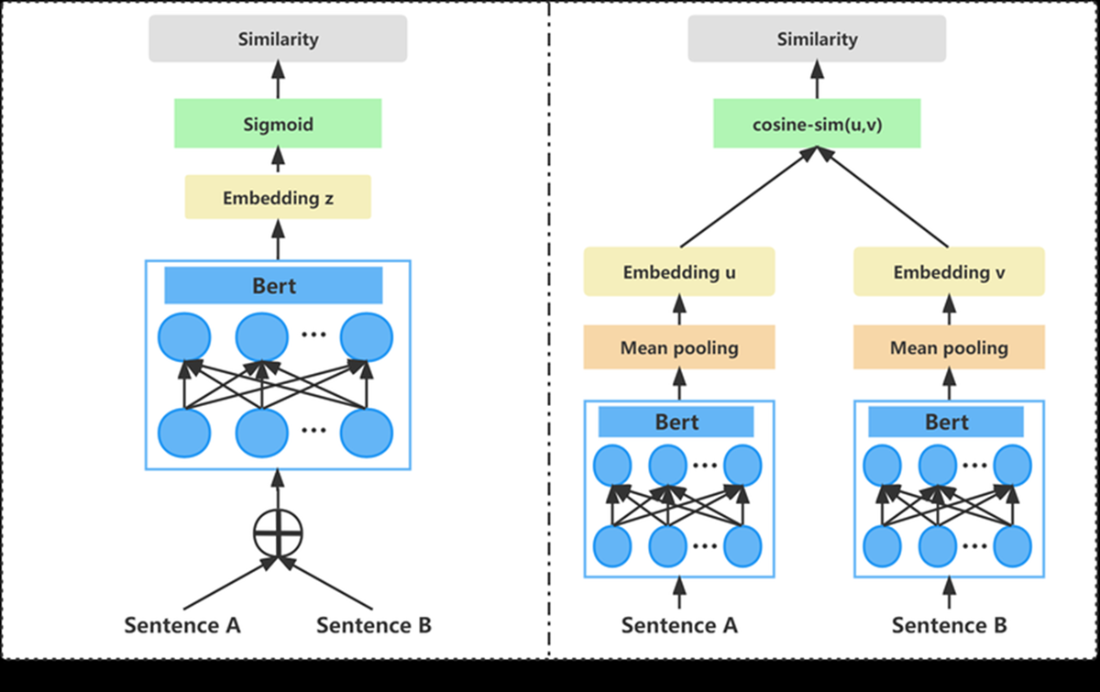
A distinction between Bert (on the left) and Sentence-Bert (on the right) lies in their approach to semantic textual similarity. In BERT, the two sentences are initially concatenated and then fed into the network. Subsequently, the similarity is computed using the activation function. Conversely, in Sentence-Bert, the two sentences are independently input into Bert, and their cosine similarity is then calculated.
The landing page of the actual website Travelle, currently it provides recommendations for hotels in Paris. You can visit this site at https://travelle.traversaal.ai

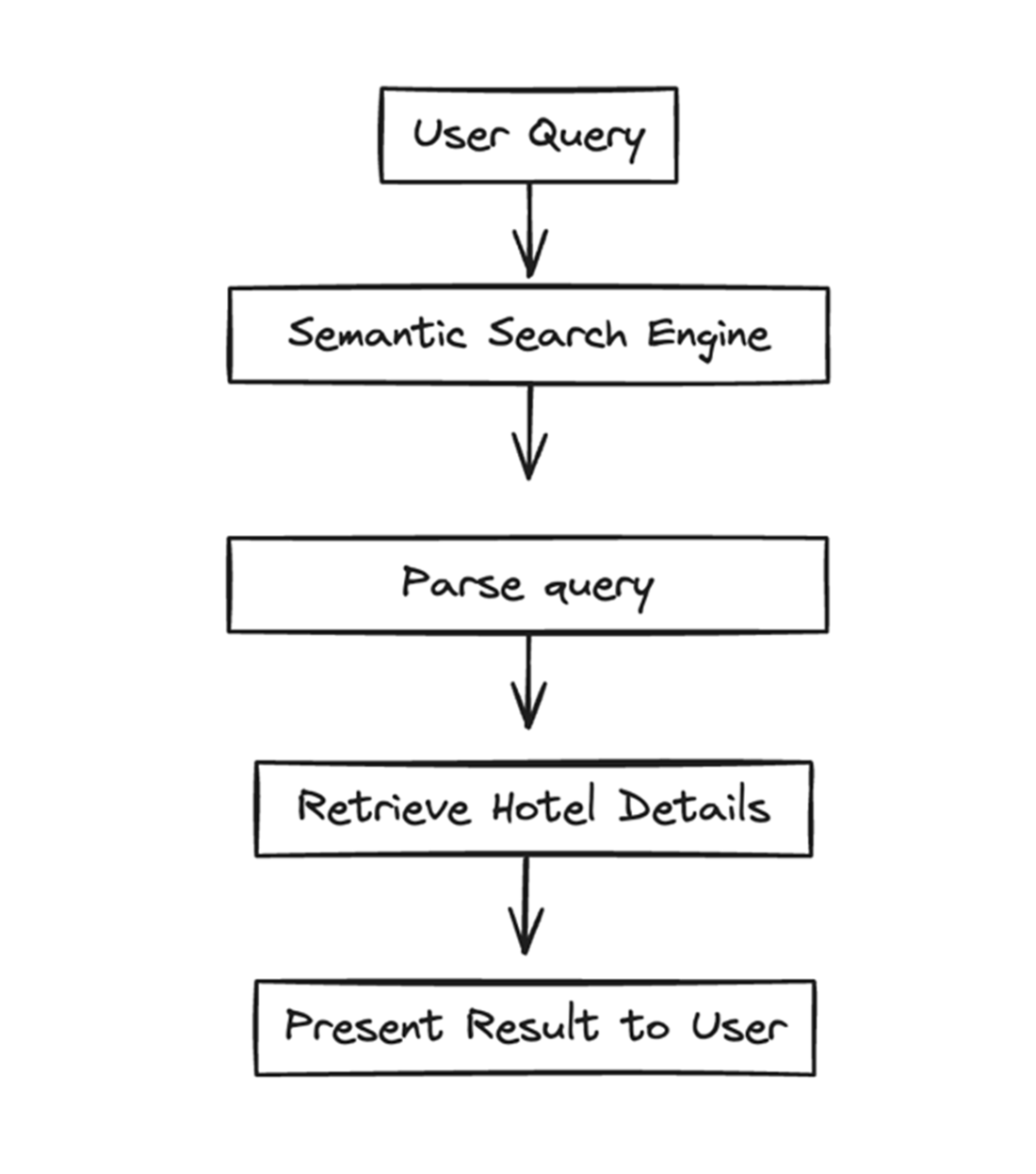
A simplified overview of the functionality of Travelle’s Semantic Search Engine
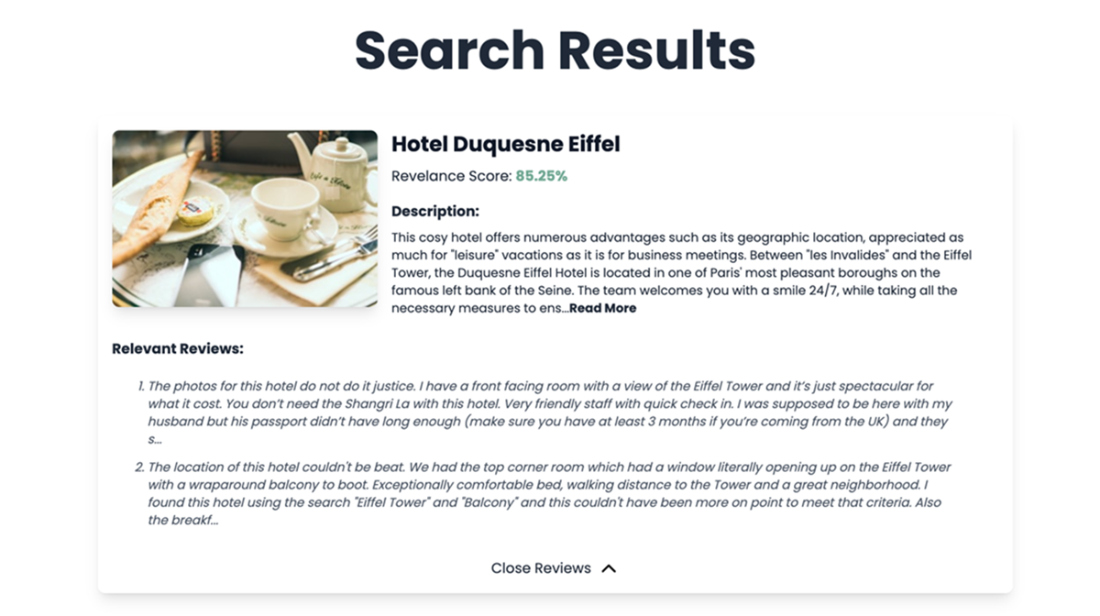
Search result from the query about finding a hotel with a room that has view of the Eiffel Tower
Summary
- The Transformer architecture is an outcome of various iterations and evolution of language models, starting from rule and probability-based models to neural models to finally their current state.
- Neural models such as Recurrent Neural Nets and Gated Recurrent Nets, while extremely revolutionary struggled with computational inefficiencies and the inability to parallelize processing effectively.
- These limitations led to the search for a more efficient and scalable architecture, culminating in the development of the transformative Transformer model.
- At the heart of it, the Transformer architecture has a “Self-Attention Mechanism” which provides comprehensive context consideration, capturing long-range dependencies.
- Self-attention allows words to understand each other, positional encoding helps keep track of their order, and multi-head attention provides a more comprehensive view of their relationships, making transformers powerful in understanding and generating language.
- The original Transformer architecture manifested as a dual-functional entity, housing both an encoder and a decoder. Yet, within the expansive realm of Natural Language Processing, practitioners discovered utility in employing either or both of these components, contingent upon the specific task at hand.
- Encoder Model extracts meaningful representations, crucial for capturing semantic and syntactic features with application span text summarization and sentiment analysis.
- A significant breakthrough in natural language processing came with the advent of models like BERT (Bidirectional Encoder Representations from Transformers) and SBERT (Sentence-BERT), each representing a distinct phase in the evolution of encoder models.
- Decoder Model, on the other hand, generates output sequences leveraging self-attention, cross-attention, and feed-forward networks. Applied in language translation and text generation. These models have become center stage in the recent past and have shown meteoric growth in a very small passage of time.
- Combining the power of the Encoder and Decoder models allows us to create phenomenal products such as Search Engines that can truly understand user preferences and create a new sense of personalization.

 Build an Advanced RAG Application (From Scratch) ebook for free
