13 Multimodal AI Systems for End-to-End Drug Discovery
This chapter introduces integrated multimodal AI systems as the next stage in drug discovery, moving beyond isolated predictive or generative tools toward coordinated workflows that span target identification, molecule design, docking, experimental testing, and clinical translation. It explains that “multimodal” can mean shared data fusion, orchestration of separate single-modality models, or full end-to-end workflow integration, with most current systems fitting the orchestration pattern. The central idea is to use diverse biological and chemical data together, then continuously improve models through experimental feedback so that human experts can focus scarce lab effort on the most promising hypotheses.
A major focus is architecture: production platforms such as BioNeMo provide modular layers for foundation models, inference services, and blueprint workflows that can be combined into pipelines for proteins, small molecules, genomics, and cellular imaging. The chapter describes how protein models like ESM-2, AlphaFold2, RFdiffusion, and ProteinMPNN support sequence analysis, structure prediction, and protein design, while chemistry models such as MegaMolBART, DiffDock, and MolMIM generate, dock, and refine drug-like compounds. It also covers genomic and phenotypic models for target discovery and validation, along with integration patterns such as sequential pipelines, parallel ensembles, knowledge graphs, and closed-loop active learning, emphasizing the importance of standardized interfaces, performance tuning, and error management.
Real-world examples show both the promise and limits of these systems. The rentosertib program illustrates how AI-guided target discovery and molecule design can compress early discovery timelines and reduce the number of synthesized compounds, yet still depend on traditional preclinical and clinical validation. A billion-compound screening campaign demonstrates how staged filtering and GPU-accelerated models make ultra-large virtual screening feasible, while a protein therapeutic workflow shows how structure prediction, diffusion-based design, and sequence optimization can be combined for protein engineering. The chapter concludes that AI has clearly improved discovery speed, data efficiency, and exploration of chemical space, but it has not solved target validation, clinical translation, protein dynamics, manufacturing, or the need for rigorous experimental confirmation; in practice, these platforms are powerful co-pilots rather than autonomous drug-discovery engines.
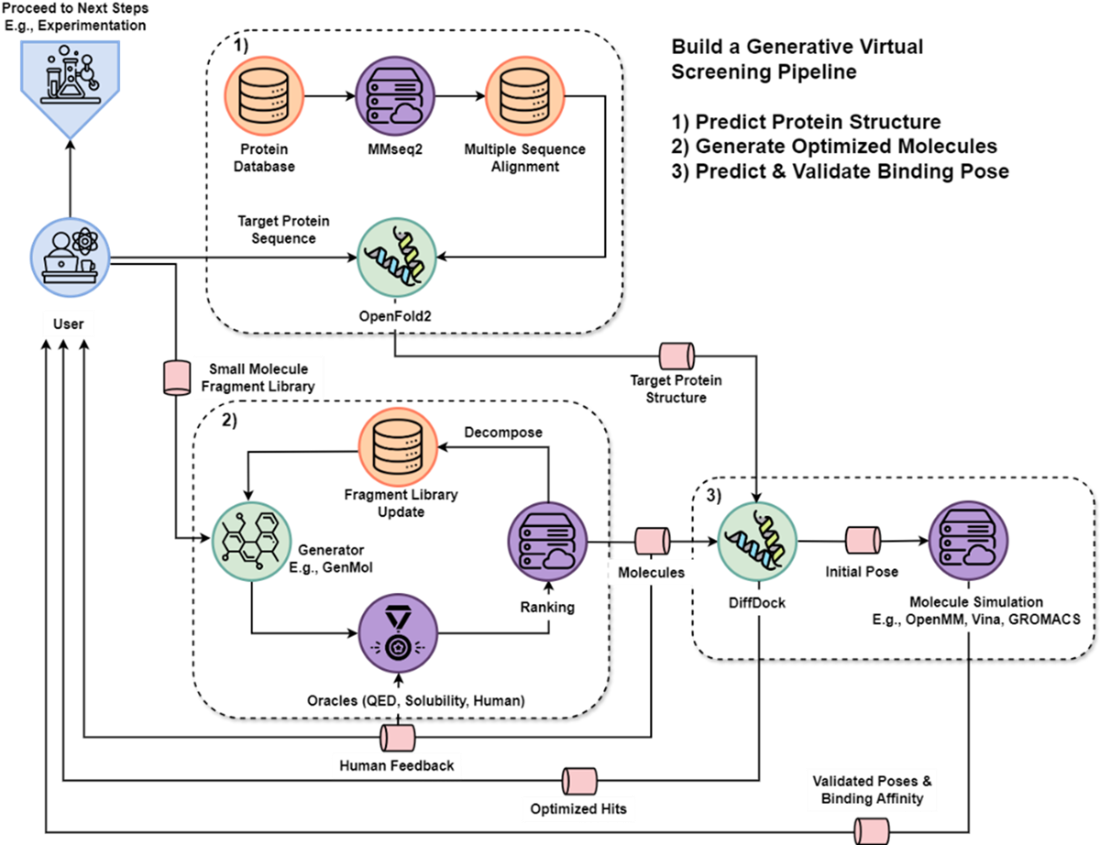
A virtual screening blueprint that incorporates microservices for protein folding, molecular generation, docking, and molecular simulation (green circles) to speed up development cycles and produce optimized molecules. A user starts by inputting the sequence of the protein target that they want to design against OpenFold2, which leverages additional databases and computational tools, such as MMseq2 to align the target protein sequence to other known proteins, to determine the target protein’s structure. The user also provides an initial library of chemical fragments to GenMol to seed its generative chemical design. For any given microservice, the user has multiple configuration settings to choose from and, in the case of molecular generation, they could define the oracles that dictate what properties to optimize for (e.g., quantitative estimate of drug-likeness, solubility, human feedback), the number of molecules to generate, and other constraints. The generated molecules are scored and passed back to GenMol for further optimization for multiple cycles depending on the number of iterations the user selects. These molecular structures and the structure of the protein target are passed to the DiffDock NIM, which generates the number of binding poses that the user indicates, along with other constraints. These poses can be further validated and refined using molecular simulation tools or other high-fidelity, computational oracles before being passed to the user for determination of next steps, such as wet-lab experimentation.
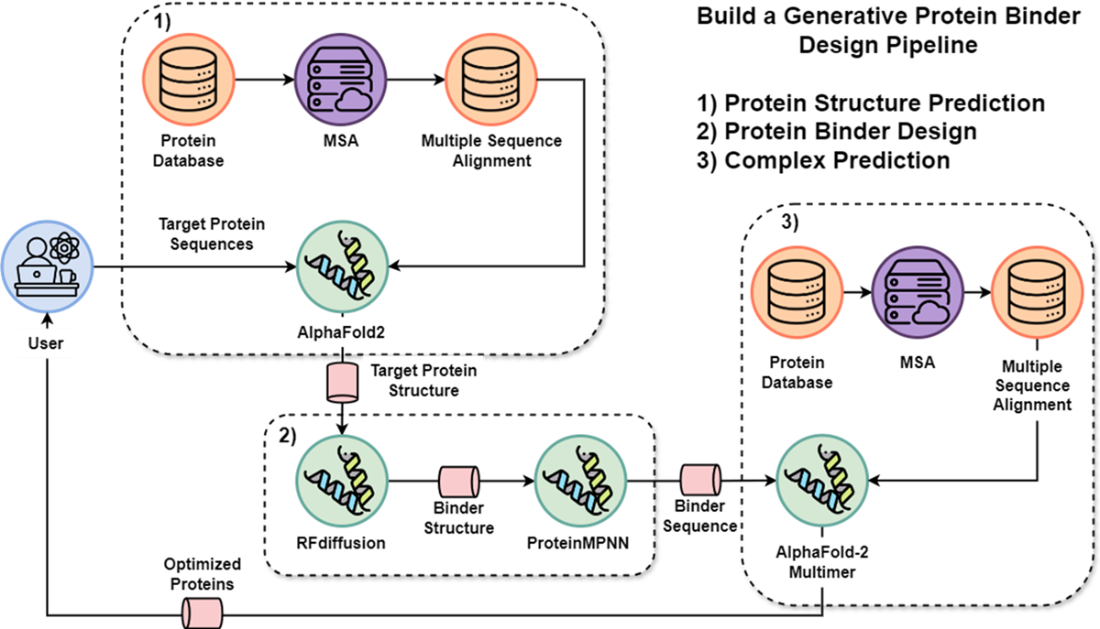
The user provides an amino acid sequence to AlphaFold2, which predicts the target protein structure using multi-sequence alignment as we saw in figure 13.1. RFdiffusion uses the target protein structure to design a protein binder, though it only generates the backbone of the protein binder. RFdiffusion can be steered by the user to explore specific binding interfaces, or hot spot regions of the target protein and identify the most favorable binding configurations according to desired design constraints. Next, ProteinMPNN generates and optimizes amino acid sequences that fit into the RFdiffusion-generated protein backbone, ensuring they exhibit target biochemical properties for effective binding. Finally, AlphaFold2-Multimer is used to validate the interactions and stability of the resulting protein complexes. This integrated approach enables precise and efficient design of protein binders, facilitating advancements in therapeutic protein development and other protein engineering applications.
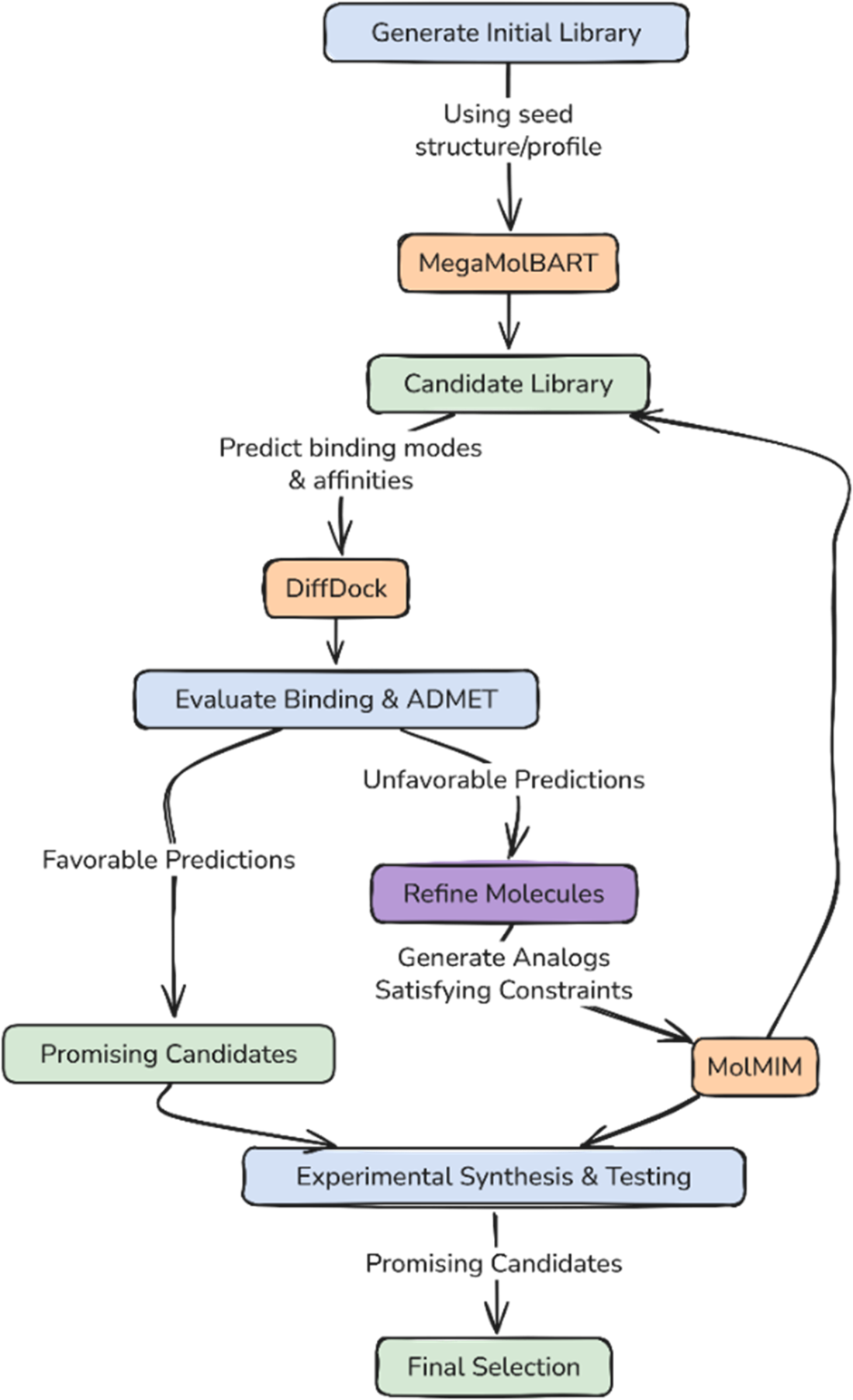
A modular AI-driven drug discovery pipeline with dual feedback loops for candidate optimization. The workflow architecture features two iterative refinement paths: unfavorable predictions trigger molecular redesign through MolMIM before reevaluation, while favorable predictions advance to a candidate pool that feeds back for further optimization. Rather than static processes, think of blueprints from the framing of a “whiteboard” design where, as simply as one erases and redraws on a whiteboard, researchers can swap components (e.g., alternative docking tools or generative models) and adjust decision thresholds, enabling rapid experimentation with different AI tool combinations before committing computational resources to full-scale screening or wet-lab validation.
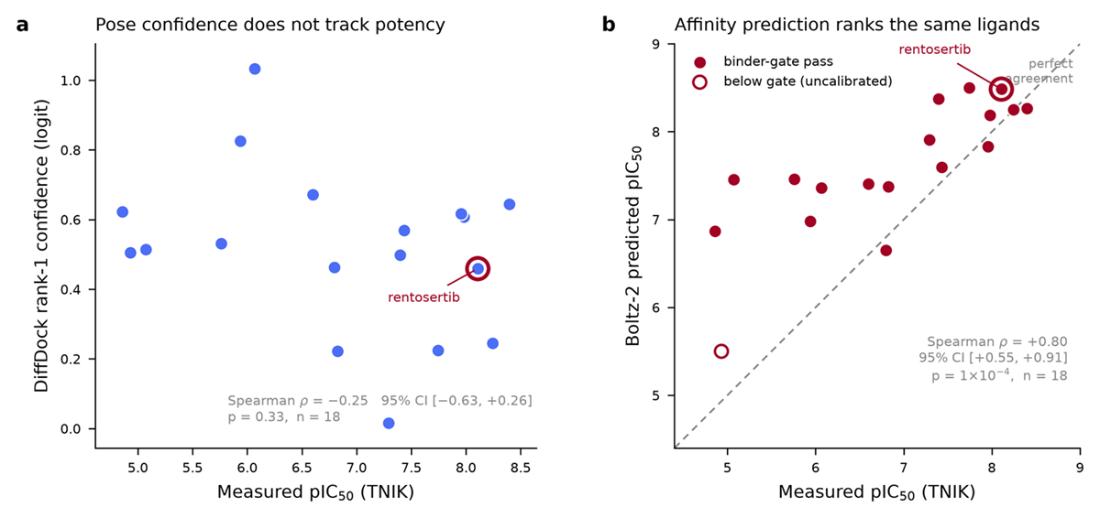
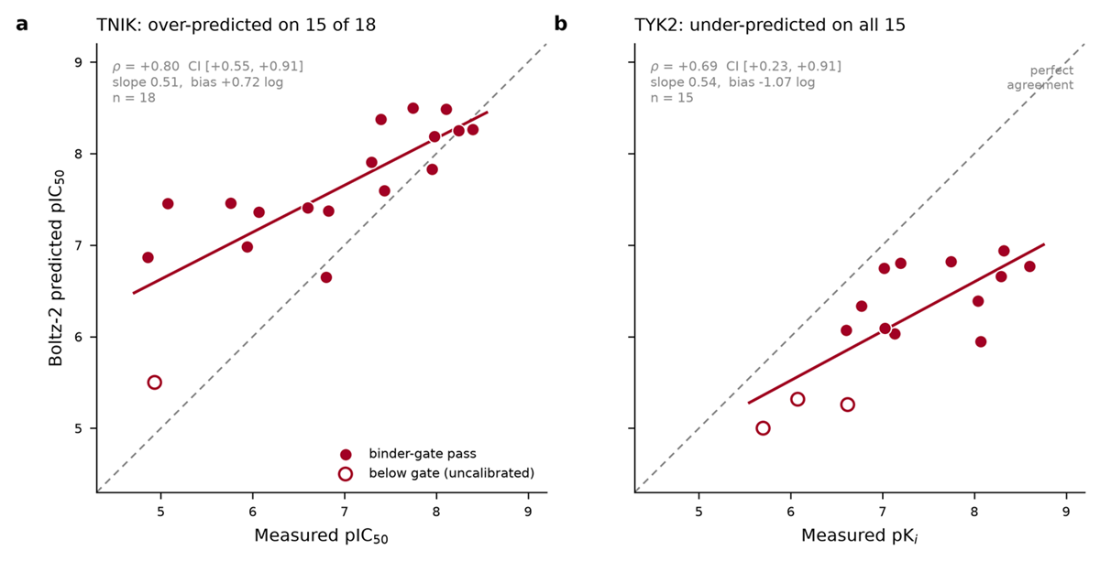
Two scoring signals from the same 18-ligand TNIK series, measured against experimental potency. Panel (a) plots DiffDock rank-1 pose confidence against measured pIC50, and the points form no trend (Spearman rho = -0.245, 95% CI -0.63 to +0.26, p = 0.33), with the highest-confidence ligand among the weaker compounds in the set: a confident pose is a geometric statement, not a potency estimate. Panel (b) plots Boltz-2 predicted pIC50 against measured pIC50 for the TNIK and TYK2 series separately, with the identity line for reference. Within each series the ordering is largely recovered, but the two clouds sit on opposite sides of that line, too potent for TNIK and too weak for TYK2 (see figure 13.6).
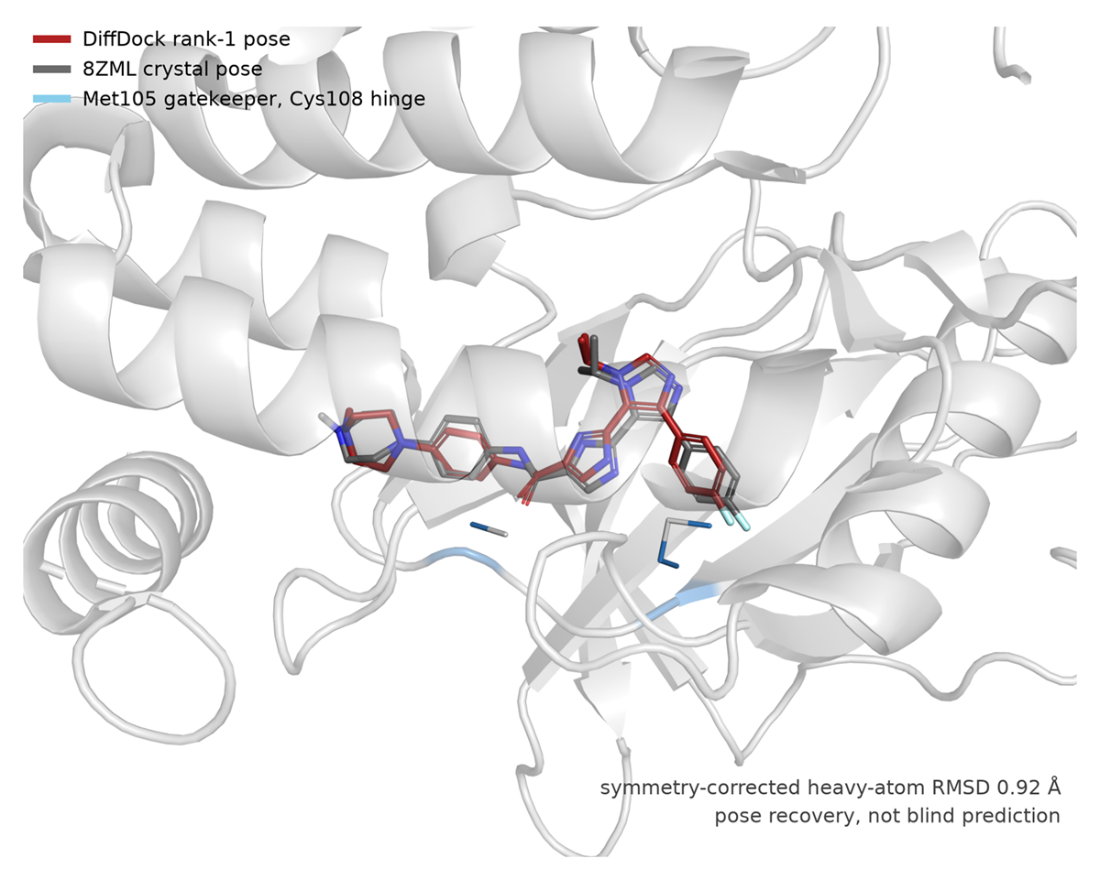
The rank-1 DiffDock pose of rentosertib overlaid on its crystallographic pose in the TNIK ATP site (PDB 8ZML), at 0.92 Ångströms symmetry-corrected heavy-atom RMSD. The hinge contacts that define the binding mode, the Met105 gatekeeper and the Cys108 hinge residue, are reproduced, and the rank-1 pose is also the best of the 20 sampled, so the confidence ranking selected the right one rather than merely including it. Four independent runs returned 0.92, 0.81, 0.85, and 0.70 Å. Note this is pose recovery rather than blind prediction, as 8ZML is a rentosertib co-crystal in the PDB and the served weights are trained on PDB-derived data, so the complex may sit inside the model's training distribution.
The same affinity model against two targets, showing why a predicted potency does not transfer. Each panel plots Boltz-2 predicted pIC50 against the experimental value for one ligand series. Ranking works within each series, but predictions sit above the diagonal for TNIK and below it for TYK2. Open markers are ligands below the binder-probability gate, whose predicted affinities are uncalibrated. One censored TYK2 ligand (reported only as greater than 3.5 micromolar) is excluded, so n = 15 there.
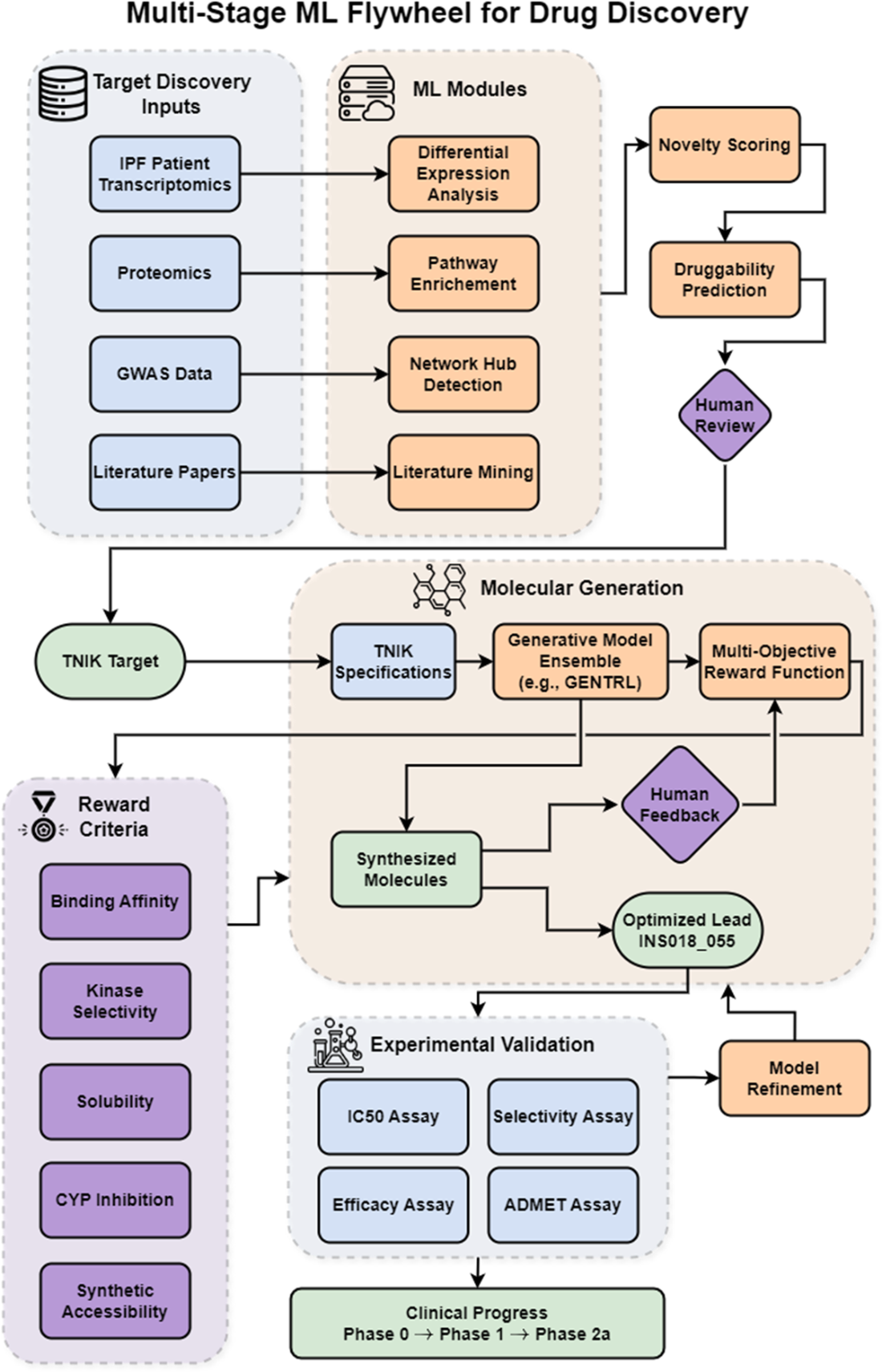
The four stages of the rentosertib program. Multi-omics data and literature flow through PandaOmics to a scored target list; Chemistry42 generates and optimizes candidates against a multi-objective reward; experimental readouts feed back to refine the models; clinical development follows. Sections 13.3.1 through 13.3.4 walk through each stage.
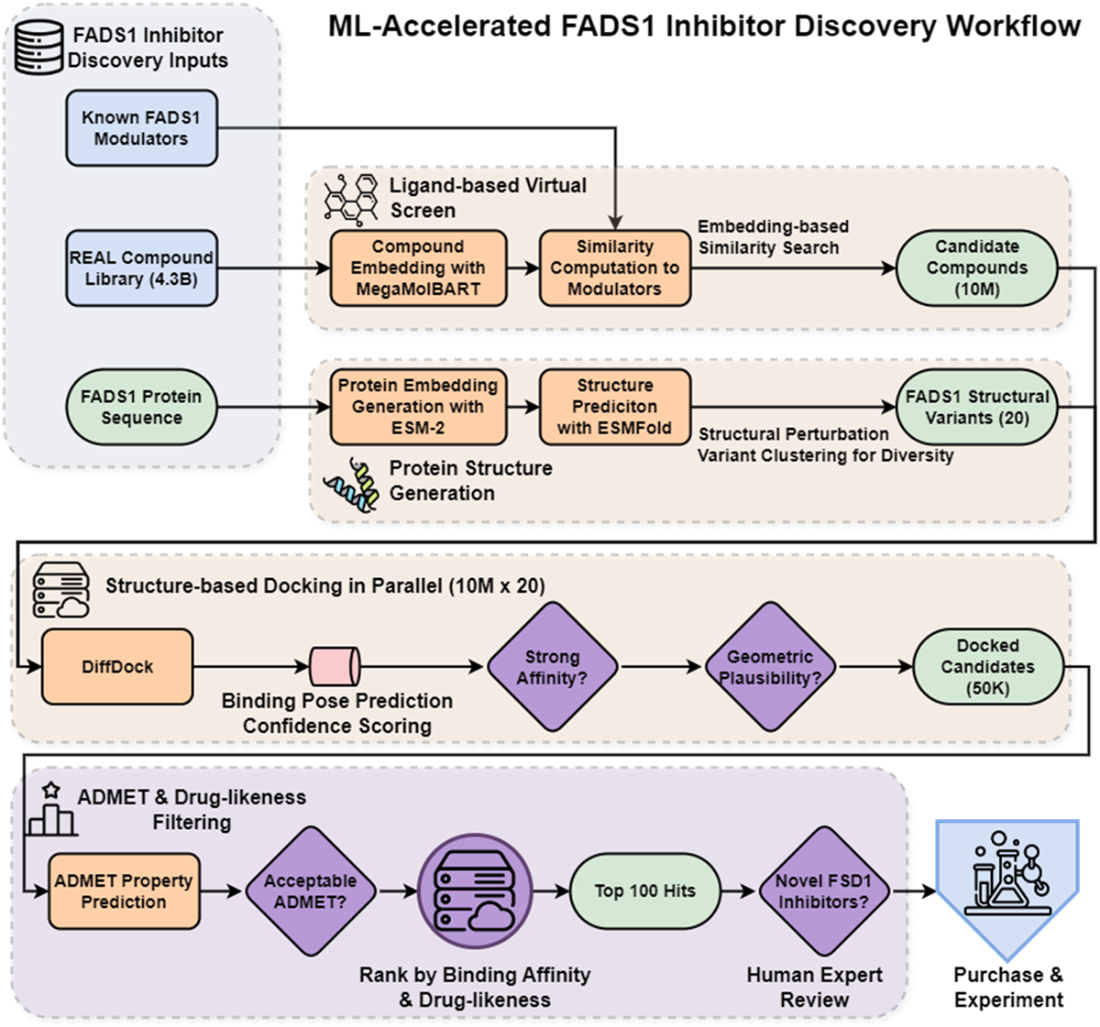
Computational funnel architecture for billion-scale virtual screening with progressive accuracy-cost tradeoffs. Receptor.AI's FADS1 inhibitor discovery workflow reduces 4.3 billion candidates through four cascading filters with increasingly stringent evaluation: embedding-based screening (430:1 reduction ratio), parallel structure-based docking across 20 protein conformers (200:1 reduction), and ADMET profiling (500:1 reduction). The parallel docking layer exemplifies the workflow's computational pragmatism, screening 10M compounds against 20 structural variants (200M total predictions) remains tractable with DiffDock's 11.3× speedup over traditional methods, while attempting this scale with slower docking algorithms would be prohibitive. This staged architecture demonstrates how the modular AI components sketched in Figure 13.3 materialize into production pipelines that navigate the accuracy-throughput frontier at billion-compound scale.
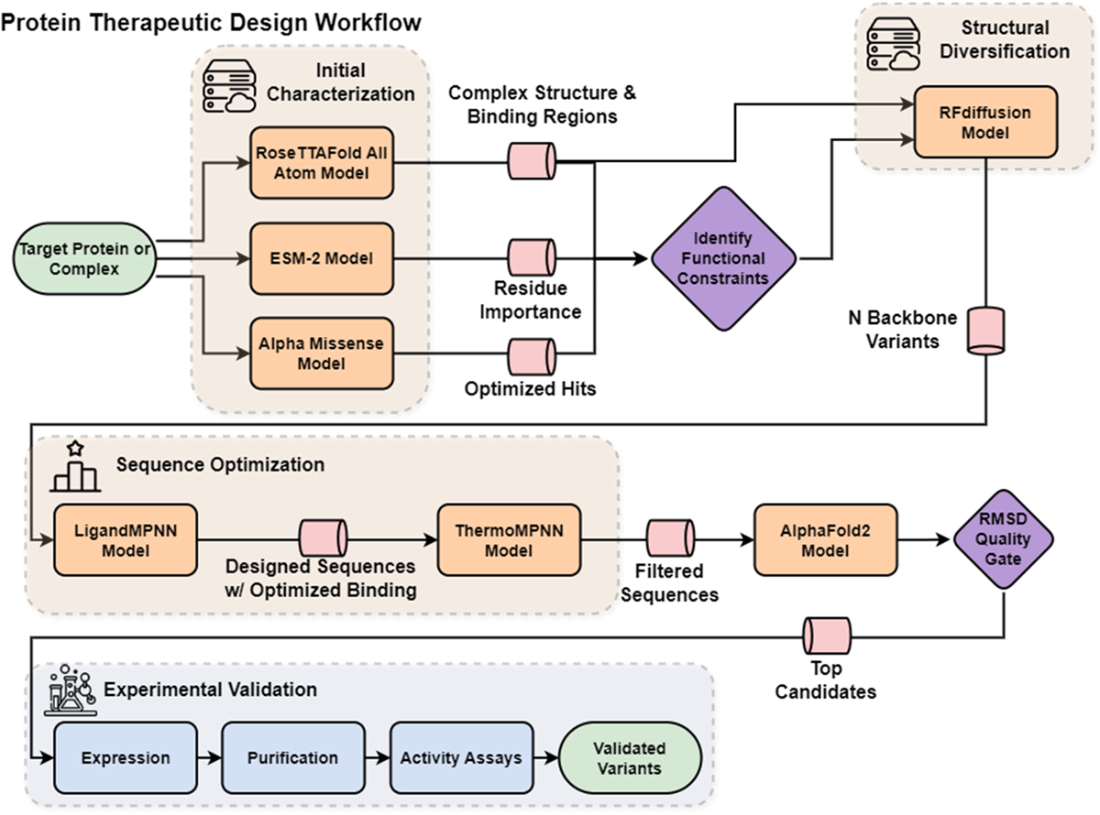
Constraint-aware protein engineering pipeline integrating geometric and evolutionary design principles. Unlike the earlier workflows that filter from large libraries, this protein therapeutic workflow generates novel candidates through iterative backbone-sequence co-optimization with explicit preservation of functional constraints. The initial characterization phase establishes "no-go zones" (catalytic residues, binding interfaces) that propagate as hard constraints through downstream stages, while RFDiffusion's structural diversification and LigandMPNN's sequence design explore complementary degrees of freedom, e.g., backbone geometry and amino acid identity, respectively. The feedback loop from AlphaFold2 validation enables rejection and regeneration of structurally implausible designs before experimental commitment, demonstrating how structure prediction models transition from discovery tools (workflow input) to validation oracles (quality gates).
Summary
- Individual techniques covered in Chapters 1-12 combine into multimodal AI platforms that are transforming drug discovery. We examined NVIDIA's BioNeMo framework as an exemplar of modern platform architecture, showing how foundation models for proteins (ESM-2, AlphaFold2), small molecules (MegaMolBART, MolMIM), and cellular systems (Phenom, Geneformer) integrate through containerized microservices to enable workflows spanning target identification through lead optimization.
- Through detailed case studies, we traced the development of rentosertib from AI-discovered target to positive Phase 2a results in 18 months of preclinical work, and explored how Receptor.AI screened 4.3B compounds through integrated structure prediction, embedding-based filtering, molecular docking, and ADMET prediction. These examples illustrated both the power of multimodal integration and its limitations, with clinical development proceeding at traditional timelines.
- Looking forward, the field is moving toward biological foundation models that unify understanding across molecular, cellular, and phenotypic scales, AI virtual cells that could enable in silico experiments, and closed-loop autonomous discovery systems. However, achieving these visions will require addressing current limitations in data quality, model interpretability, and biological complexity.
- Modern drug discovery platforms are best understood as "co-pilots" augmenting human expertise rather than replacing it. Success requires not just deploying individual AI models but orchestrating them into workflows that balance computational predictions with experimental validation, maintain human oversight at critical decision points, and integrate insights across biological scales. The techniques you've learned throughout this book provide the foundation for understanding, evaluating, and contributing to this rapidly evolving field.
- We also called two of these services and measured them. DiffDock recovered the rentosertib binding pose to 0.92 Ångströms and placed all 18 ligands in the correct site, yet its confidence score was uncorrelated with measured potency, while Boltz-2's co-folded affinity estimate ranked ligands within a single target (Spearman rho = +0.80) but collapsed to +0.17 across two pooled targets, because the bias is target-specific and the predicted dynamic range is compressed.
FAQ
What is a multimodal AI system in drug discovery?
A multimodal AI system is a platform that combines diverse data types, covers multiple stages of the discovery workflow, learns from experimental feedback, and integrates both generative and predictive models.
How are multimodal AI systems different from traditional computational drug discovery tools?
Traditional tools usually solve isolated problems, like QSAR prediction or docking, while multimodal systems orchestrate multiple models into an end-to-end workflow that can span target discovery, molecule design, validation, and refinement.
What are the main architectural layers used in platforms like BioNeMo?
BioNeMo is organized into three layers: foundation models for proteins, molecules, and genomics; NIM microservices for production inference; and blueprint workflows that connect multiple models into complete drug discovery pipelines.
Why is integration between models such a major challenge in end-to-end drug discovery?
Each model often uses different inputs and outputs, such as sequences, structures, graphs, or SMILES strings. Connecting them requires standardized interfaces, format conversion, and careful handling of errors across the pipeline.
What role does closed-loop active learning play in multimodal drug discovery?
Closed-loop active learning uses experimental results to improve the models over time. The system proposes candidates, experiments test them, and the new data feeds back into the next design cycle to make predictions more accurate.
How does the rentosertib case study show the value of multimodal AI?
The rentosertib program used AI to identify TNIK as a target, generate and optimize molecules, and support preclinical validation, compressing early discovery into about 18 months and reducing the number of synthesized compounds.
What is the difference between target discovery and molecular generation in platforms like Pharma.AI?
Target discovery identifies and prioritizes disease-relevant biological targets from omics and literature data, while molecular generation designs compounds predicted to modulate those targets and meet drug-like property constraints.
How do multimodal platforms support protein therapeutic design?
They can combine structure prediction, diffusion-based backbone generation, sequence design, and complex validation to create protein binders or optimize therapeutic proteins while preserving key functional motifs.
What are the main limitations of current multimodal AI systems?
They still face data quality problems, bias and underrepresentation in training data, limited interpretability, error propagation across model chains, and the fact that they cannot replace wet-lab and clinical validation.
Has AI fully solved drug discovery and clinical translation?
No. AI has accelerated early discovery and improved compound prioritization, but it has not solved target validation, clinical trial success, manufacturing scale-up, or regulatory approval. It is best viewed as a co-pilot, not an autopilot.

 Build AI Drug Discovery Pipelines ebook for free
