Overview

Appendix D. Technical Deep Dive into Protein Structure Prediction

This appendix gives a technical foundation for protein structure prediction by first grounding the problem in protein chemistry, folding physics, and the geometric constraints that any model must respect. It explains how amino acid properties drive folding, why hydrogen bonds stabilize helices and sheets, how torsion angles and Ramachandran-allowed regions define valid backbone conformations, and why folding is shaped by hydrophobic collapse, entropy, and kinetic traps. It also connects misfolding to disease and reviews older approaches such as molecular dynamics, Rosetta-style sampling, homology modeling, and threading, setting up the case for modern deep learning methods.

The text then walks through SimpleFold in detail, from protein representations and tokenization to transformer components, training, and inference. It describes how sequences and structures are encoded, how flow matching turns random noise into coordinates through iterative denoising, and how the model uses ESM-2 embeddings, timestep conditioning, rotary position embeddings, QK normalization, and DiT blocks to combine sequence and geometric information. A hierarchical encoder-trunk-decoder design processes atoms locally, residues globally, and atoms again for velocity prediction, while training combines flow-matching loss with a smooth LDDT objective, plus timestep resampling, gradient clipping, EMA weights, and stochastic sampling for ensemble generation and confidence estimation.

Finally, the appendix situates SimpleFold within the broader structure-prediction landscape. It contrasts AlphaFold2’s MSA-driven, highly engineered geometric inductive biases with SimpleFold’s simpler, more general generative approach, and explains when confidence metrics such as pLDDT, PAE, RMSD, TM-score, GDT-TS, and LDDT should be trusted or treated cautiously. It closes by showing how the field is moving toward diffusion-based all-atom models such as AlphaFold3, Boltz-1, Boltz-2, and RFdiffusion, which extend prediction from single proteins to complexes, ligands, affinities, and de novo design, making structure prediction one component in a larger drug-discovery pipeline rather than the end goal itself.

Figure D.1 Illustrates the rotational elements of the backbone alongside a Ramachandran plot specific to glycine. These allowed regions correspond precisely to the secondary structures we discussed earlier. There is a prominent region in Ramachandran space centered around Φ ≈ -60° and Ψ ≈ -45° that corresponds to right-handed alpha-helices. Another large region, centered around Φ ≈ -120° and Ψ ≈ +120°, corresponds to beta-sheets. A smaller region corresponds to left-handed helices, which are rare due to steric clashes with most sidechains but accessible to glycine. Note that the R-group for Glycine consists of just one H atom attached to the alpha Carbon. Other AAs have different R-groups.
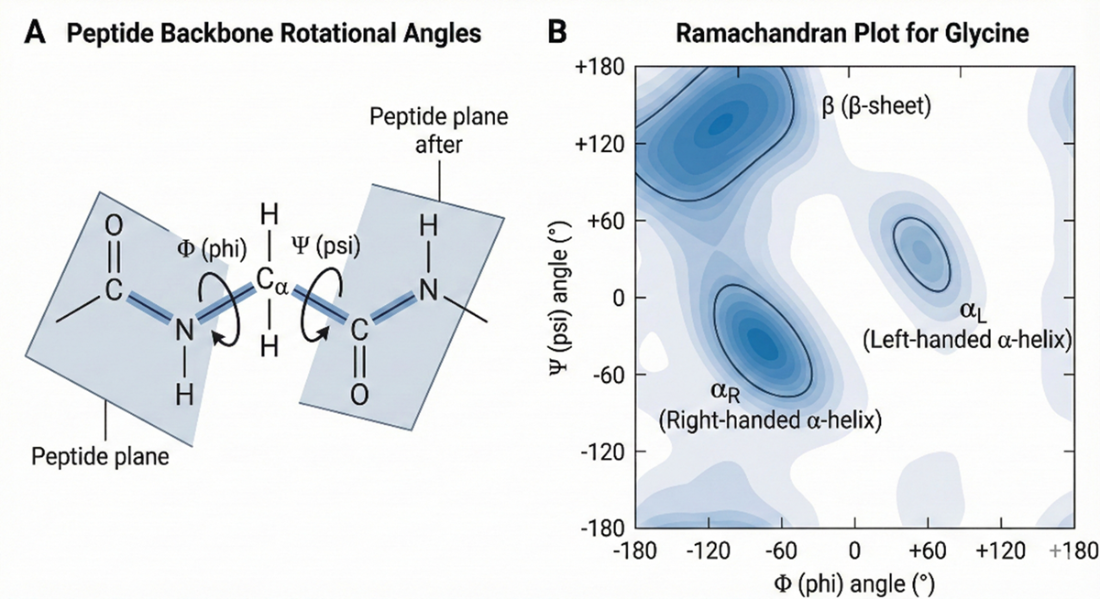
Figure D.2 Overview of SimpleFold’s architecture from “SimpleFold: Folding Proteins is Simpler than You Think”. [9]
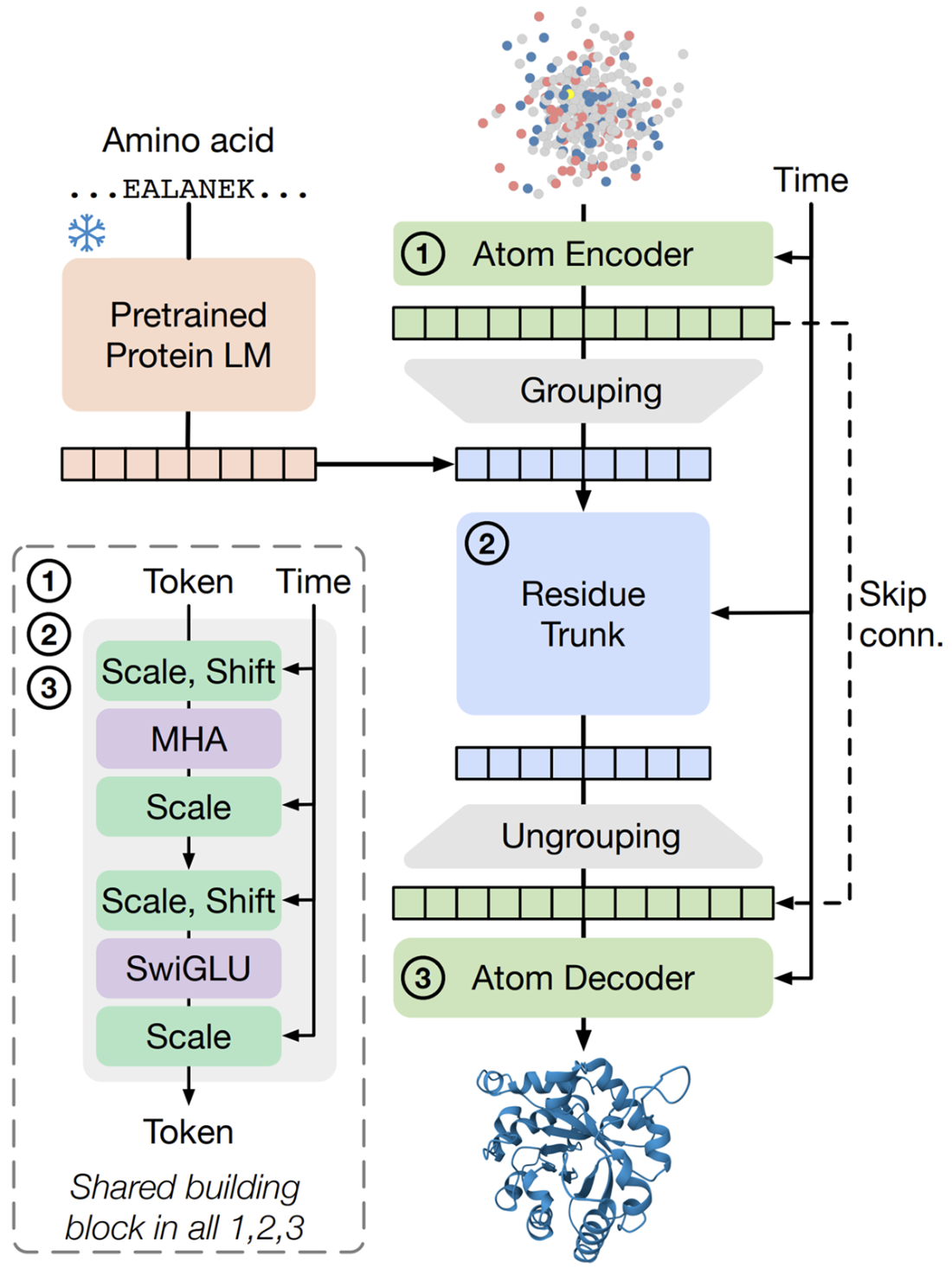
Figure D.3 AlphaFold2 model architecture from “Highly accurate structure prediction with AlphaFold.”
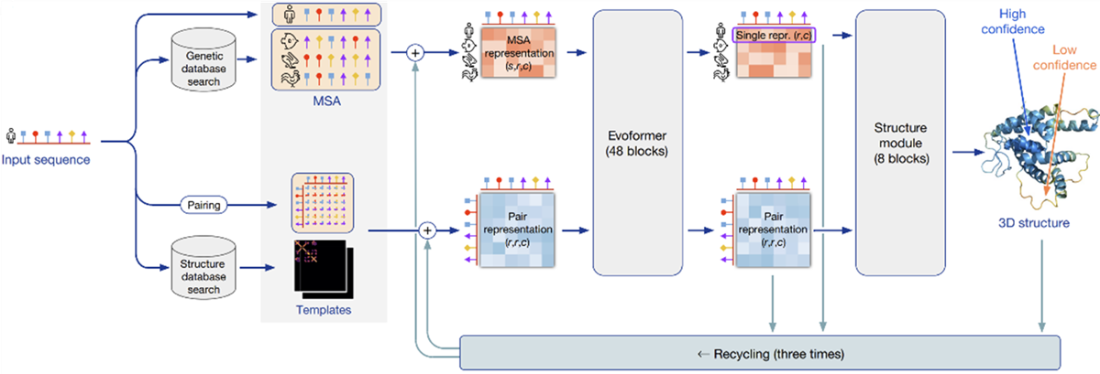
Figure D.4 Flow matching visualized in the protein structure prediction setting. (A) The biological folding process transforms an unfolded chain (t=0) into a folded structure (t=1). (B) The computational flow matching process mimics this by learning a velocity field that guides a distribution of random noise (source) to match the distribution of real protein structures (target) over a virtual timeline.
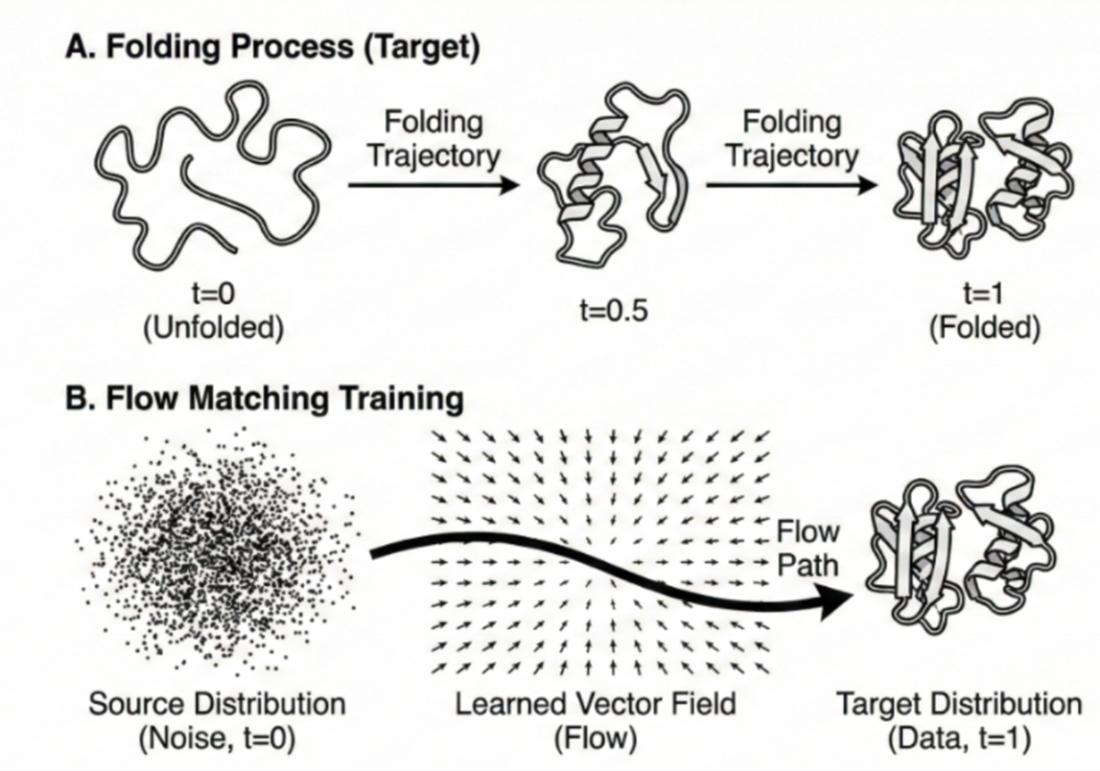
Figure D.5 Illustration of grouping operations in SimpleFold from “SimpleFold: Folding Proteins is Simpler than You Think.”
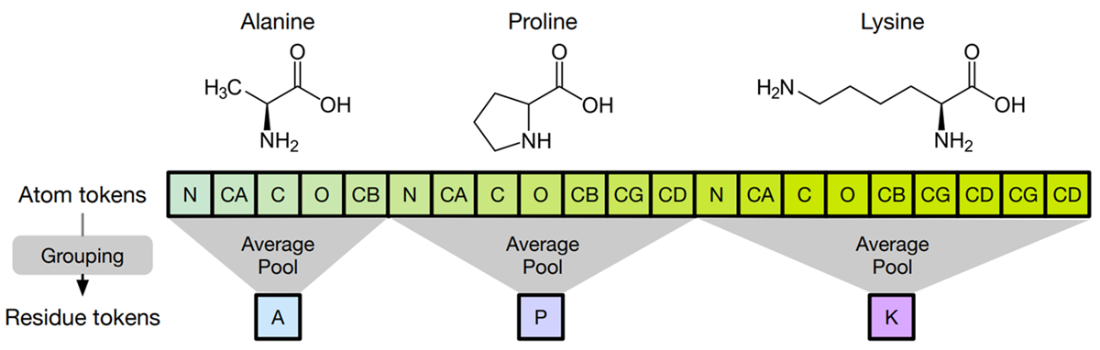
Figure D.6 Illustration of ungrouping operations in SimpleFold from “SimpleFold: Folding Proteins is Simpler than You Think.”

Figure D.7 Distribution of resampled timestep compared to uniform distribution from “SimpleFold: Folding Proteins is Simpler than You Think.”
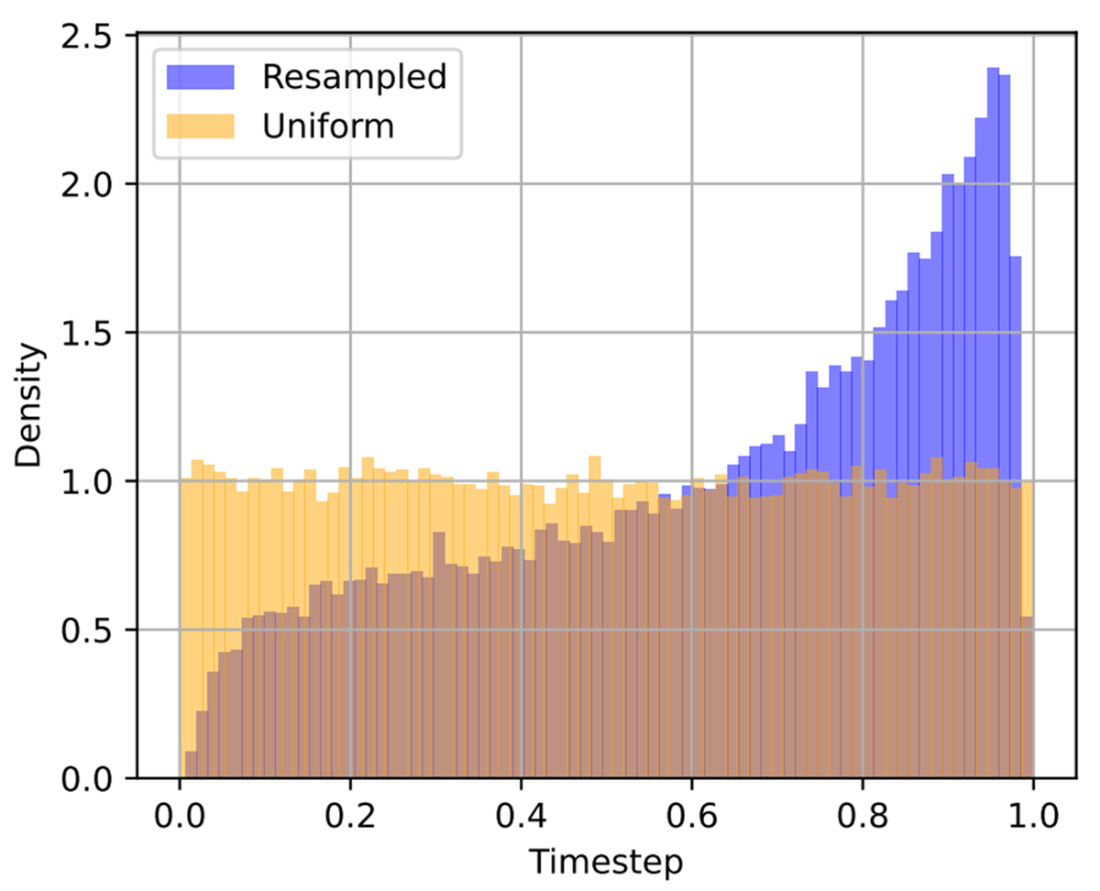
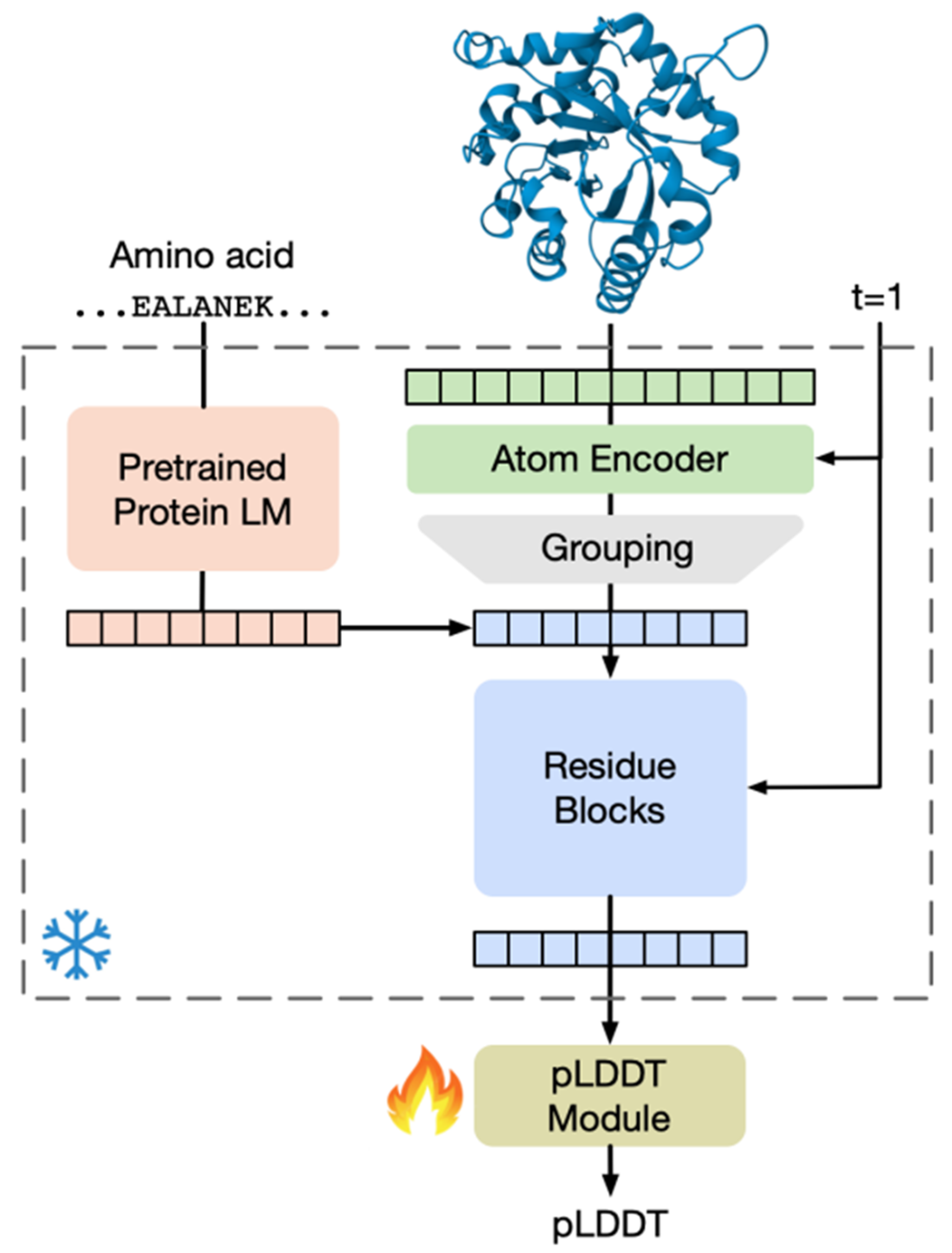
Figure D.8 Illustration of pLDDT module training from “SimpleFold: Folding Proteins is Simpler than You Think.”
FAQ

What is the main goal of protein structure prediction in this appendix?The goal is to infer the 3D structure that a protein sequence should adopt so downstream drug-discovery tasks like docking, binding-site analysis, and hit triage can use it. The appendix also emphasizes judging how much to trust each prediction.
Why are amino acid sidechains so important for folding?Sidechains determine most of a residue’s chemical behavior. Hydrophobic sidechains tend to bury in the protein interior, charged sidechains usually remain on the surface, and polar sidechains often form favorable interactions with water. These properties strongly influence how the protein folds.
What roles do glycine, proline, and cysteine play in protein structure?Glycine is very flexible and often appears in tight turns. Proline is rigid and can introduce kinks or break helices because of its ring structure. Cysteine can form disulfide bridges, which covalently lock distant parts of a protein together and stabilize the fold.
How do hydrogen bonds stabilize alpha-helices and beta-sheets?Hydrogen bonds form between backbone N–H donors and C=O acceptors. In alpha-helices, the typical pattern is i to i+4 bonding. In beta-sheets, hydrogen bonds form between adjacent strands, either parallel or antiparallel.
What does the Ramachandran plot tell us?It shows which phi and psi backbone torsion angle combinations are sterically allowed. Allowed regions correspond to common secondary structures such as alpha-helices and beta-sheets, while disallowed regions often indicate clashes or likely prediction errors.
Why do proteins fold into compact structures in water?The hydrophobic effect drives hydrophobic residues inward to reduce contact with water. This is balanced by backbone hydrogen bonding, van der Waals packing, salt bridges, and sometimes disulfide bonds. Folding also competes with entropy, which favors unfolded states.
How does SimpleFold differ from AlphaFold2?SimpleFold replaces AlphaFold2’s MSA-based evolutionary pipeline and specialized geometric modules with ESM-2 embeddings, standard transformer blocks, and flow matching. It relies more on scale, data augmentation, and learned representations rather than hand-crafted geometric inductive biases.
What are the key steps in the SimpleFold inference pipeline?The sequence is tokenized, ESM-2 embeddings are computed, the folding model loads pretrained weights, and iterative sampling starts from random Gaussian noise. The sampler repeatedly denoises coordinates with Euler-Maruyama steps, optionally computes pLDDT confidence, and saves the result in mmCIF format.
Why does SimpleFold use flow matching instead of direct coordinate regression?Flow matching learns a velocity field that transforms noise into structure over time, which makes it naturally generative and useful for ensembles. It can capture multiple plausible conformations, support stochastic sampling, and integrate physical constraints more flexibly than a single deterministic regression output.
What new directions in structure prediction are highlighted at the end of the appendix?The appendix points to diffusion-based and all-atom systems such as AlphaFold3, Boltz-1, Boltz-2, and RFdiffusion. These methods extend prediction from single protein chains to complexes, ligands, nucleic acids, affinity prediction, and even de novo design.

pro $24.99 per month

  • access to all Manning books, MEAPs, liveVideos, liveProjects, and audiobooks!
  • choose one free eBook per month to keep
  • exclusive 50% discount on all purchases
  • renews monthly, pause or cancel renewal anytime

lite $19.99 per month

  • access to all Manning books, including MEAPs!

team

5, 10 or 20 seats+ for your team - learn more


choose your plan

team

monthly
annual
$49.99
$499.99
only $41.67 per month
  • five seats for your team
  • access to all Manning books, MEAPs, liveVideos, liveProjects, and audiobooks!
  • choose another free product every time you renew
  • choose twelve free products per year
  • exclusive 50% discount on all purchases
  • renews monthly, pause or cancel renewal anytime
  • renews annually, pause or cancel renewal anytime
  • Build AI Drug Discovery Pipelines ebook for free

choose your plan

team

monthly
annual
$49.99
$499.99
only $41.67 per month
  • five seats for your team
  • access to all Manning books, MEAPs, liveVideos, liveProjects, and audiobooks!
  • choose another free product every time you renew
  • choose twelve free products per year
  • exclusive 50% discount on all purchases
  • renews monthly, pause or cancel renewal anytime
  • renews annually, pause or cancel renewal anytime
  • Build AI Drug Discovery Pipelines ebook for free