2 Assessing your organization’s readiness
This chapter explains that a successful bug bash depends less on the event format itself and more on understanding the organization where it will happen. Before proposing one, organizers should assess the company’s testing culture, decision-making style, politics, processes, and readiness for collaboration. The goal is to shape the bug bash so it fits the company’s current reality while also helping it grow toward stronger shared ownership of quality.
A major theme is testing maturity. In low-maturity organizations, testing may be dismissed, siloed, or treated as only a tester’s job, so organizers need stronger persuasion, leadership support, and clear guidance for participants. Medium-maturity organizations usually understand testing but may have uneven practices across teams, requiring tailored communication, allies, and extra coordination. High-maturity organizations already treat quality as everyone’s responsibility, so a bug bash is easier to justify, though organizers may still need to explain its value as a source of diverse feedback, knowledge sharing, and team bonding. The chapter also emphasizes defining the purpose and timing of the bug bash: choosing what to test, aligning it with releases or company goals, drafting an initial timeline, leaving time to fix findings, and deciding whether to run a small team-level event or a broader company-wide one.
The chapter then focuses on gaining approval by identifying and influencing stakeholders. Organizers should review the organizational structure, map stakeholders by influence and interest, and decide who needs close involvement, who needs updates, and who can help promote the event. Rather than simply asking for permission, they should establish common ground by learning what each stakeholder cares about, connecting the bug bash to those goals, and preparing clear arguments, benefits, and a timeline. Strong support from influential leaders—especially department heads, respected colleagues, or even the CEO—can increase participation and signal that quality matters. The chapter’s central message is that organizing a bug bash is both a testing initiative and a change-management effort: start where you have influence, build trust, communicate in stakeholders’ language, and scale the effort as support grows.
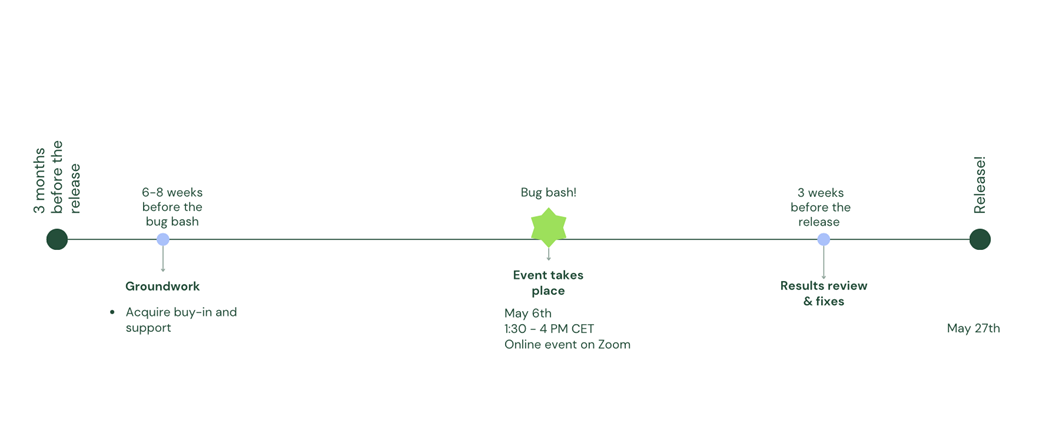
Bash IT’s initial timeline: the bug bash is scheduled for May 6th, three weeks before the tentative release date of May 27th.
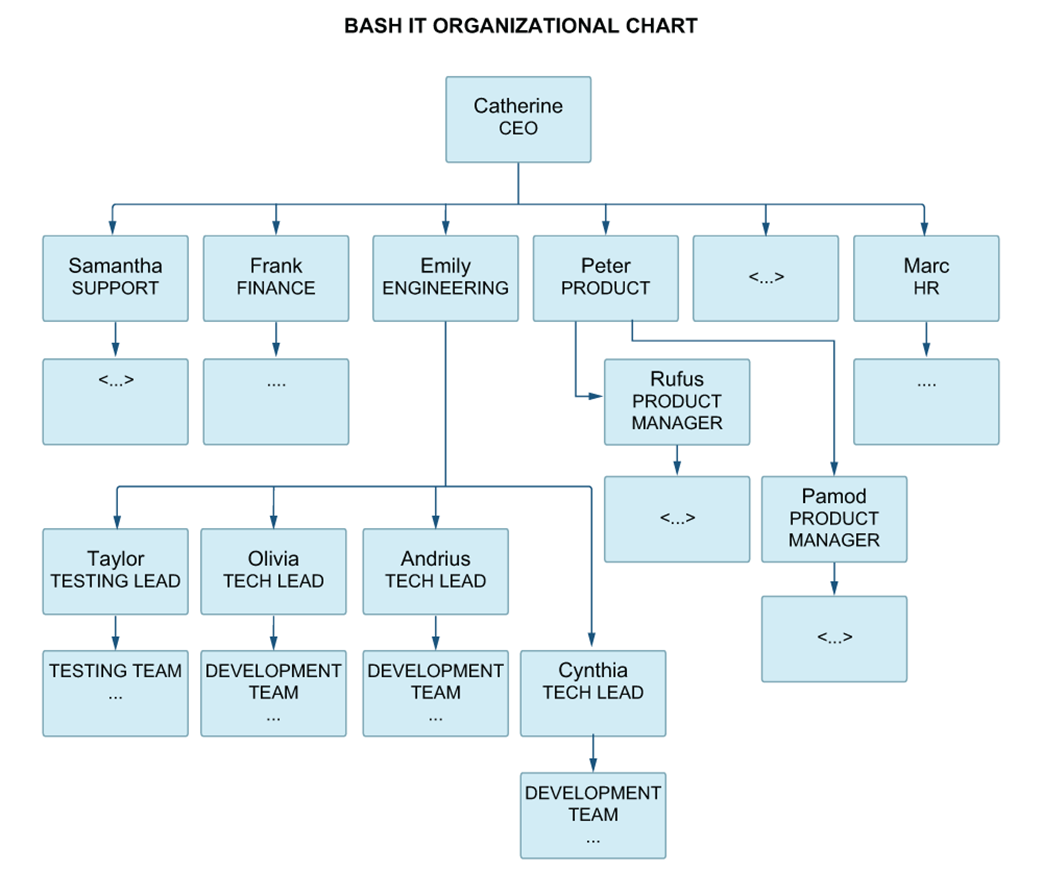
A bird’s eye view of the Bash IT org chart: at the top is C-level, then heads of different departments. Each also has multiple people reporting to them.
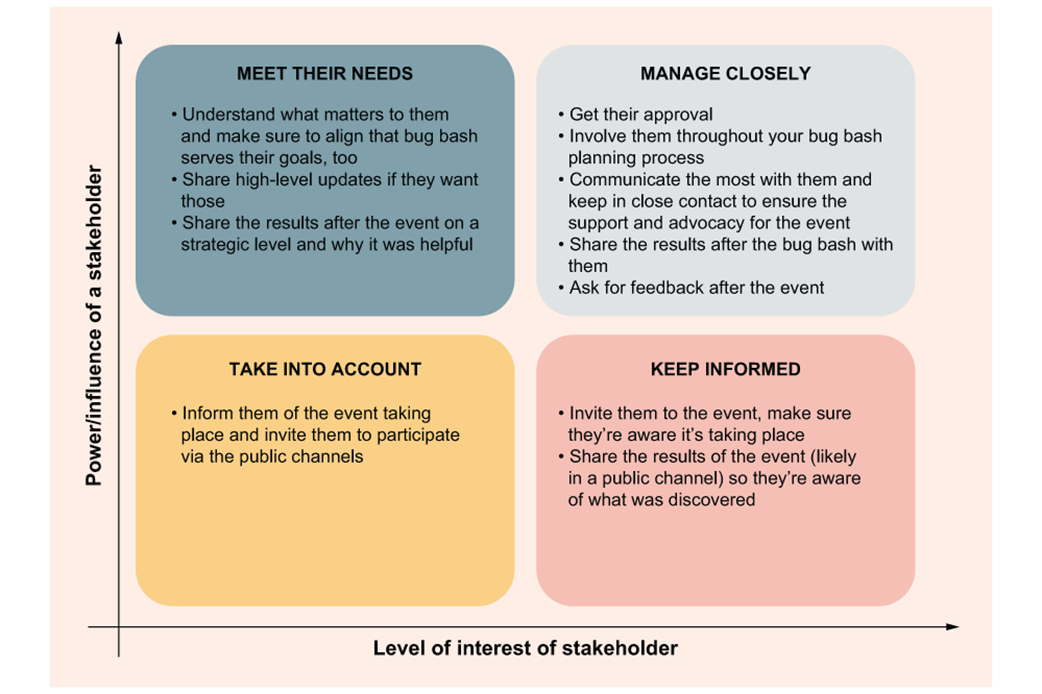
How to interpret the stakeholder map for a bug bash: the list of activities you should consider for a different placement of stakeholders in the stakeholder map. The more influential and interested they are in the event, the more of their involvement you will need to consider throughout the planning and execution.
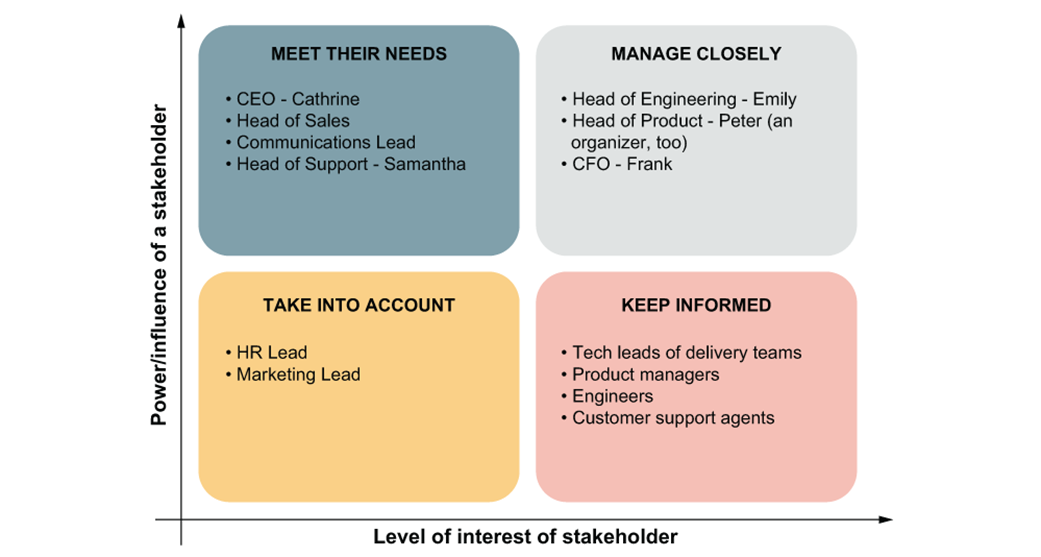
Bash IT’s stakeholder map: the most interested and powerful are on the top right, the less interested, yet powerful are on the top left, meanwhile not as powerful yet interested are on the bottom right, and not that important for this initiative, and not that interested are on the bottom left.
Summary
- No matter your role: take on the role of a bug bash driver—prepare for a fun and very valuable journey.
- Bug bash may look different in companies of varying testing maturity levels and sizes. You can start small and scale up by sharing your experience with others.
- Gain your stakeholders' approval by finding common ground and ensuring the bug bash supports their goals.
- Keep stakeholders involved and leverage their support to increase participation in the bug bash.
FAQ
How do I assess whether my organization is ready for a bug bash?
Start by understanding your company’s landscape: its size, decision-making process, organizational politics, testing culture, and existing processes. Then assess the organization’s testing maturity, define what you want to test and when, decide the scale of the bug bash, and identify the stakeholders whose support you need.
What are the signs of low testing maturity?
Low testing maturity often shows up in statements such as “We don’t need testing,” “Testing is for testers only,” or “The tester is our gatekeeper.” In these organizations, testing is either undervalued or treated as a siloed activity owned by one role rather than a shared responsibility.
How can I persuade a low-maturity organization to try a bug bash?
You will likely need leadership support and strong persuasion. Remind people of past bugs, production incidents, or embarrassing issues that could have been caught earlier. If your company lacks examples, use external stories. Emphasize that many people testing together can reveal cases one person or one team would miss. Start small if processes are rigid, and use early results to build confidence.
What does medium testing maturity look like?
In a medium-maturity organization, most people understand that testing is part of development, and some people may test their own work. However, testing bottlenecks still happen, teams may blame testers when bugs escape, and different teams may have different views of testing. Bug bashes can help align teams and improve collaboration.
Are bug bashes still useful in high testing maturity organizations?
Yes. Even when teams already test well, a bug bash can bring diverse perspectives, uncover unexpected usage patterns, and provide knowledge sharing and team bonding. In high-maturity organizations, a bug bash is often easier to approve because quality is already seen as everyone’s responsibility.
How should I decide what to test during a bug bash?
Choose a scope that is meaningful for your organization at that moment. It could be an upcoming release, a specific feature, accessibility requirements, or an area where the team needs more product understanding. The goal should not be “because bug bashes sound cool,” but because the event supports a current business, product, quality, or learning need.
Should a bug bash cover a whole release or just one feature?
It can do either. A whole-release bug bash may provide broad feedback, but it requires more coordination. A feature-level bug bash is usually easier to plan, especially if only one team is involved. Starting with a smaller feature can help the organization learn how bug bashes work before scaling to larger events.
When should I start planning a bug bash?
Begin as early as possible, especially if the bug bash is connected to a release or milestone. The chapter suggests starting conversations and approvals anywhere from three months before the milestone to at least one month before it. You should also allow time after the bug bash to triage and fix findings.
How does company size affect bug bash planning?
In a small company or team, you may know most people and need fewer approvals, so organizing a bug bash can be informal and fast. In medium-sized organizations, you usually need to coordinate across teams and identify key stakeholders. In large organizations, decision-making can be complex, so it is often best to start small, build allies, prove value, and scale gradually.
Why is stakeholder mapping important for getting bug bash approval?
Stakeholder mapping helps you identify who has influence, who is interested, who must approve the initiative, and who simply needs to be informed. Highly influential and interested stakeholders should be managed closely, while powerful but less involved stakeholders need their needs met. Understanding their goals lets you explain the bug bash in terms that matter to them.

 Bug Bash ebook for free
