2 Leaning into APIOps: Problem-solving and leading improvements
This chapter frames APIOps as more than just automation: it is a disciplined way to improve API delivery so customers receive higher-quality APIs faster, while the organization lowers cost and gains better alignment across teams. Using a fictional company scenario, it shows how a well-intended governance process can solve quality issues but also create delays, frustration, and new bottlenecks. The chapter emphasizes that before choosing tools or implementing automation, you should understand the real problem, measure how work flows today, and consider the human and cultural impact of change.
To structure improvement work, the chapter introduces lean thinking and the A3 problem-solving method as the main framework for APIOps transformation. An A3 report helps you define the theme, explain the business background, describe current conditions, set a measurable goal, analyze root causes, propose countermeasures, and confirm whether the changes worked. The chapter also recommends gathering facts at the place where work happens, mapping the process visually, and using metrics such as lead time, task time, complete-and-accurate rate, and work-in-process to make waste visible and to distinguish value-adding work from delay and rework.
The chapter concludes by showing how to translate analysis into action and sustain improvement over time. It explains how root-cause analysis can reveal systemic issues such as poor tooling or centralized review structures, and how countermeasures should be tested on a small scale before wider rollout. It then connects APIOps improvement to broader change leadership by outlining practical ways to build urgency, form a coalition, communicate a vision, remove barriers, create quick wins, and institutionalize the new way of working. Overall, the chapter presents APIOps transformation as a continuous, collaborative, data-driven effort focused on flow, learning, and lasting organizational change.
Sections of an A3 template showing the order in which the report should be filled
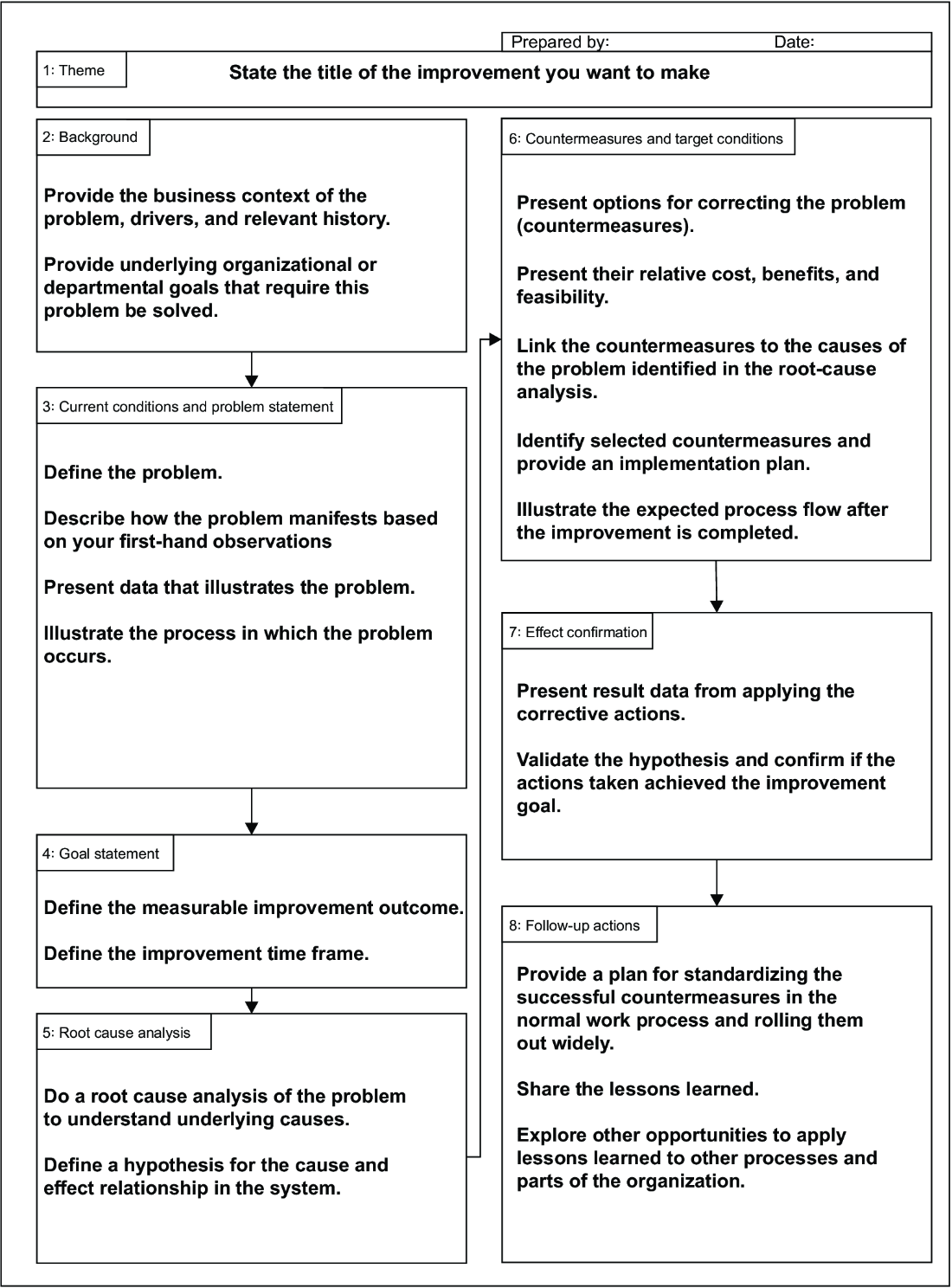
The theme of an A3 report shows the title of the improvement you want to make.

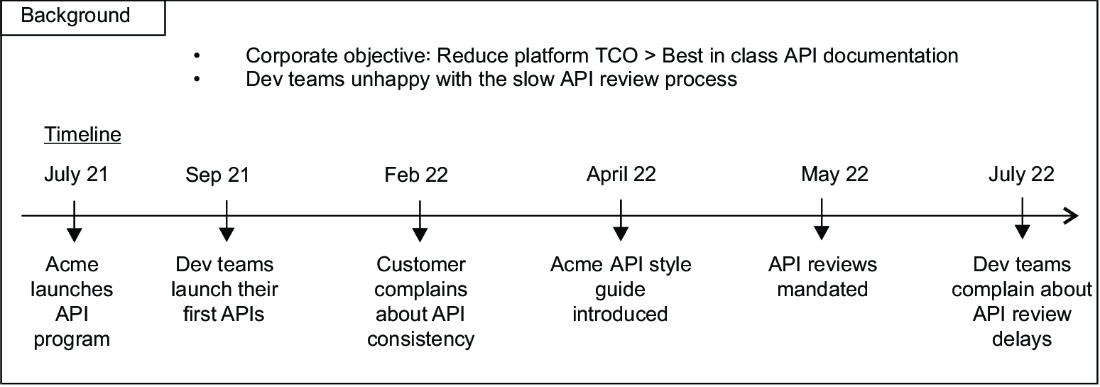
The Background section of the A3 report provides the context of the problem for the reader.
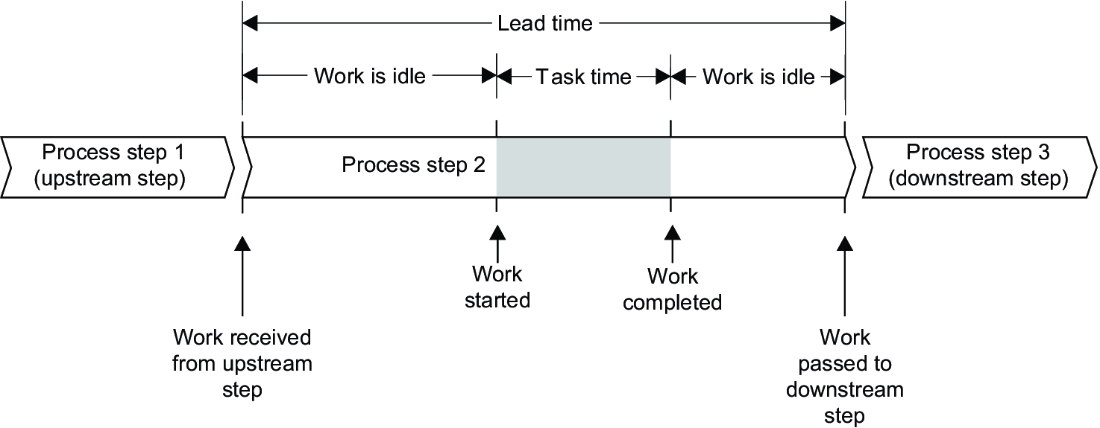
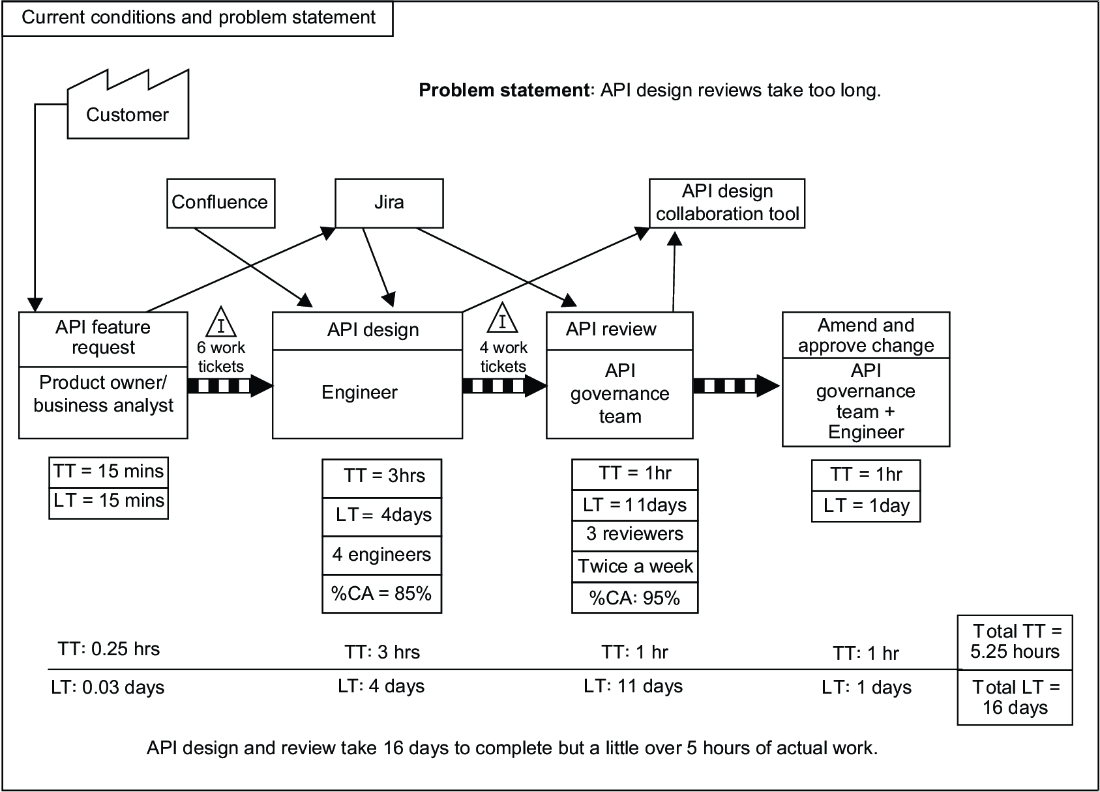
TT and LT for a step in the process
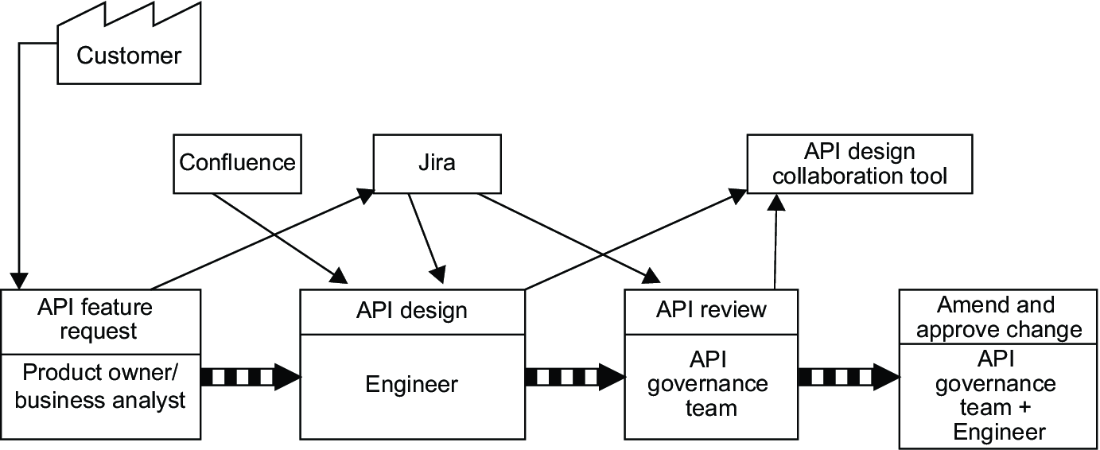
Draw the customer, and outline the main process steps.
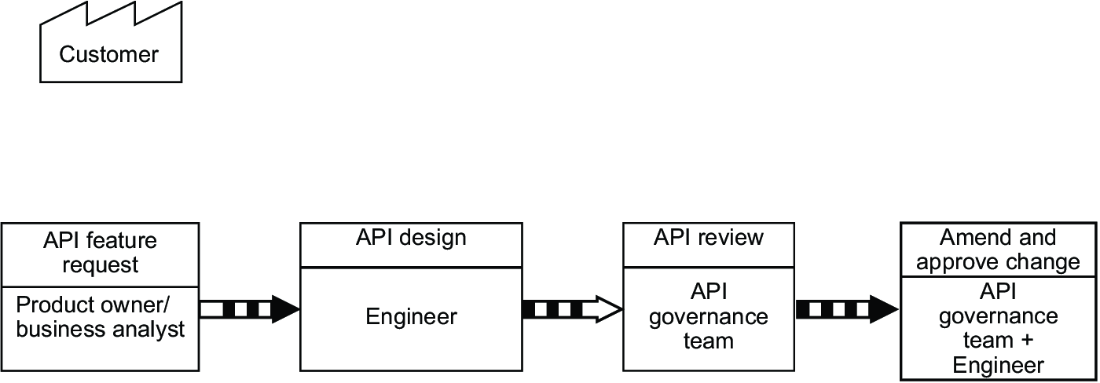
Add information flows.
Completed Current Conditions and Problem Statement section, showing the process map with metrics
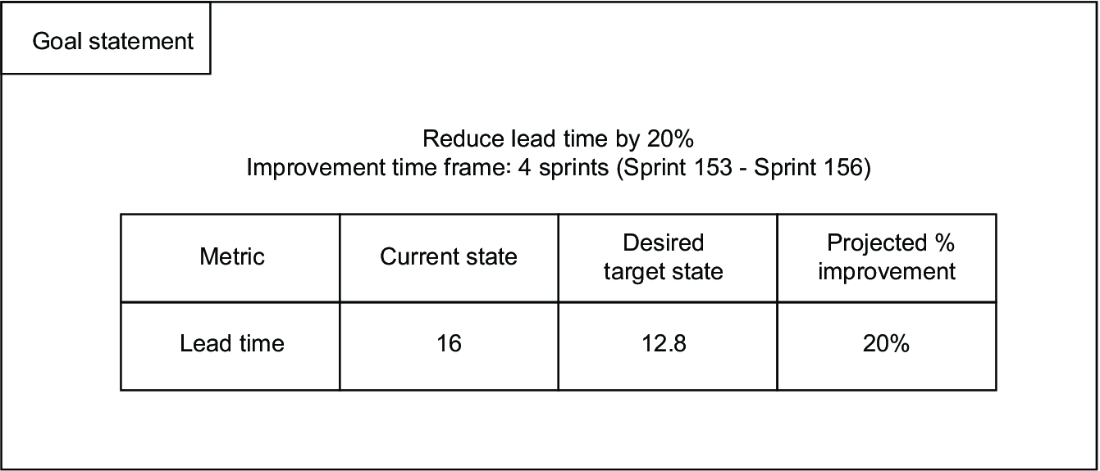
Example goal statement showing improvement target table
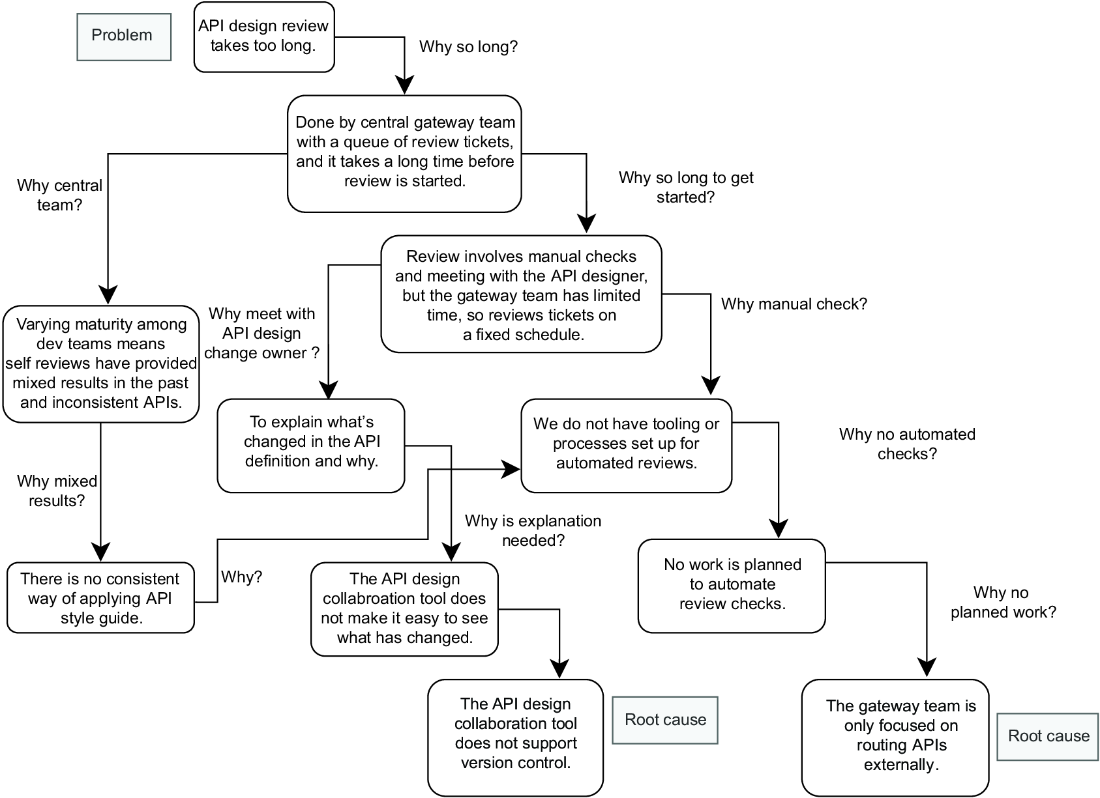
Root-cause analysis of Acme’s API design change LT problem
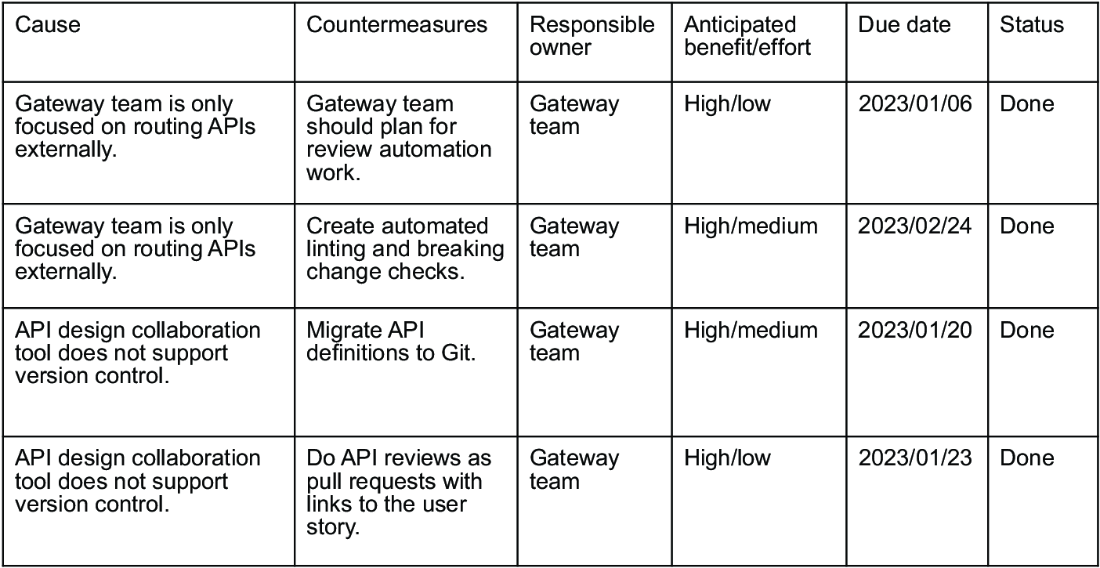
Countermeasures are the actions taken to address the root cause of the problem. A countermeasures table shows the plan for who will do what and when.
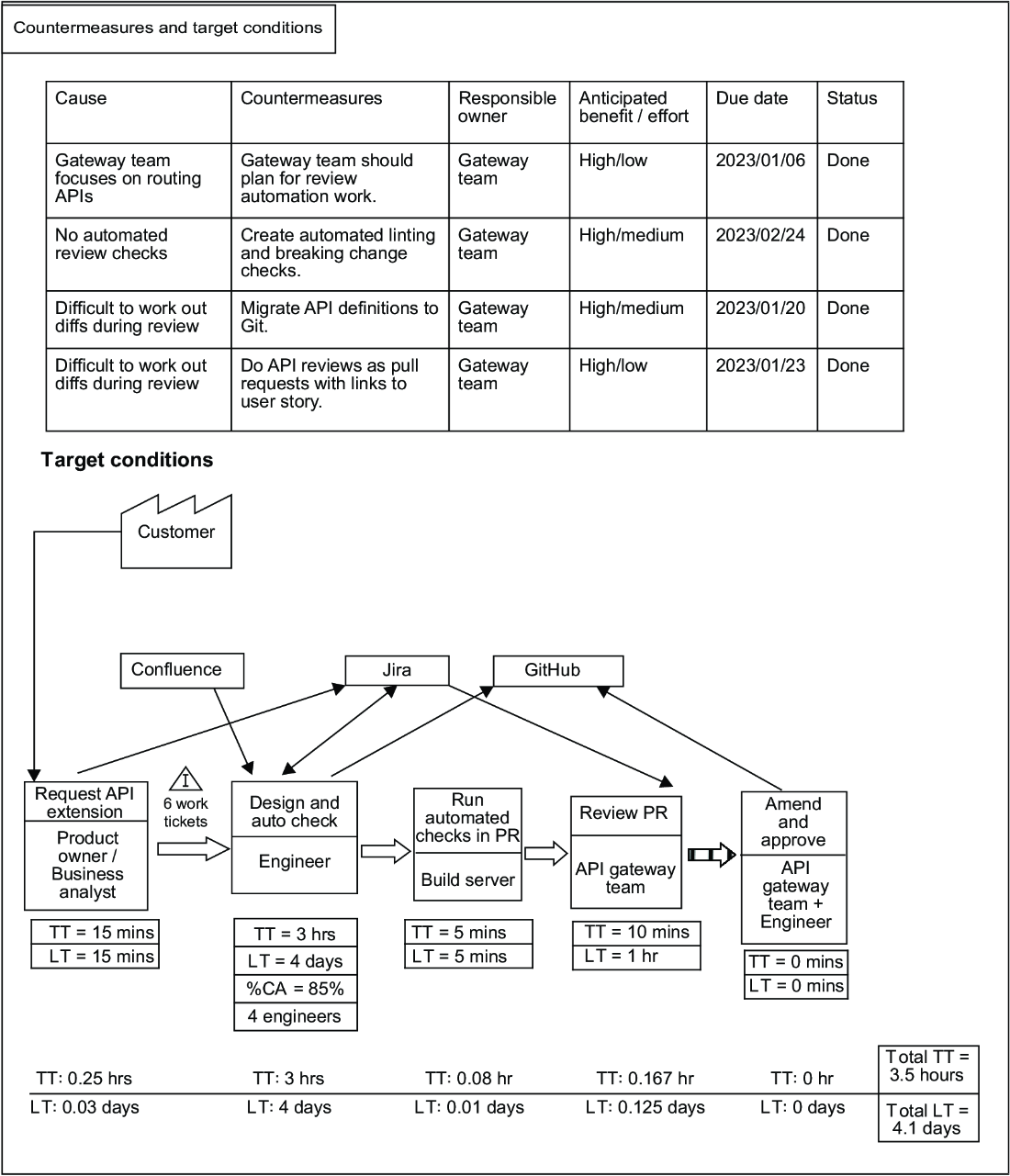
Future state value stream map
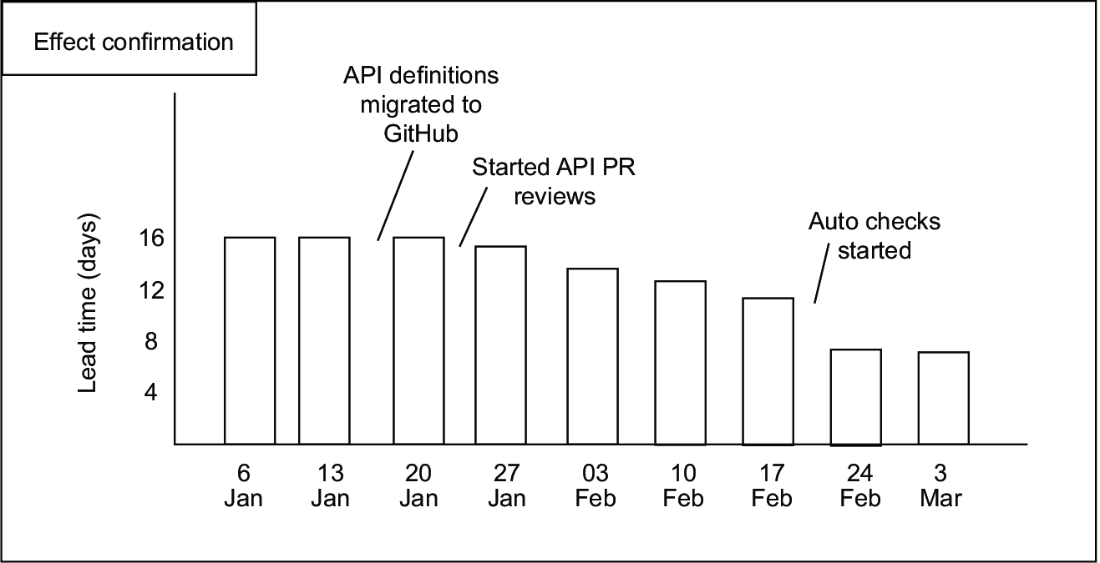
An example Effect Confirmation section
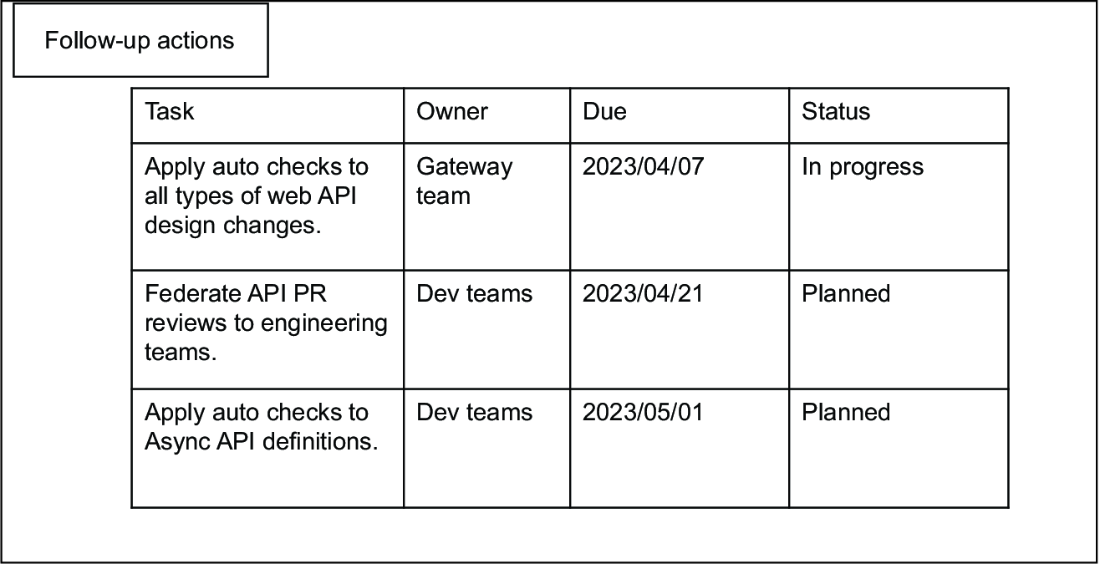
Example A3 follow-up actions for Acme
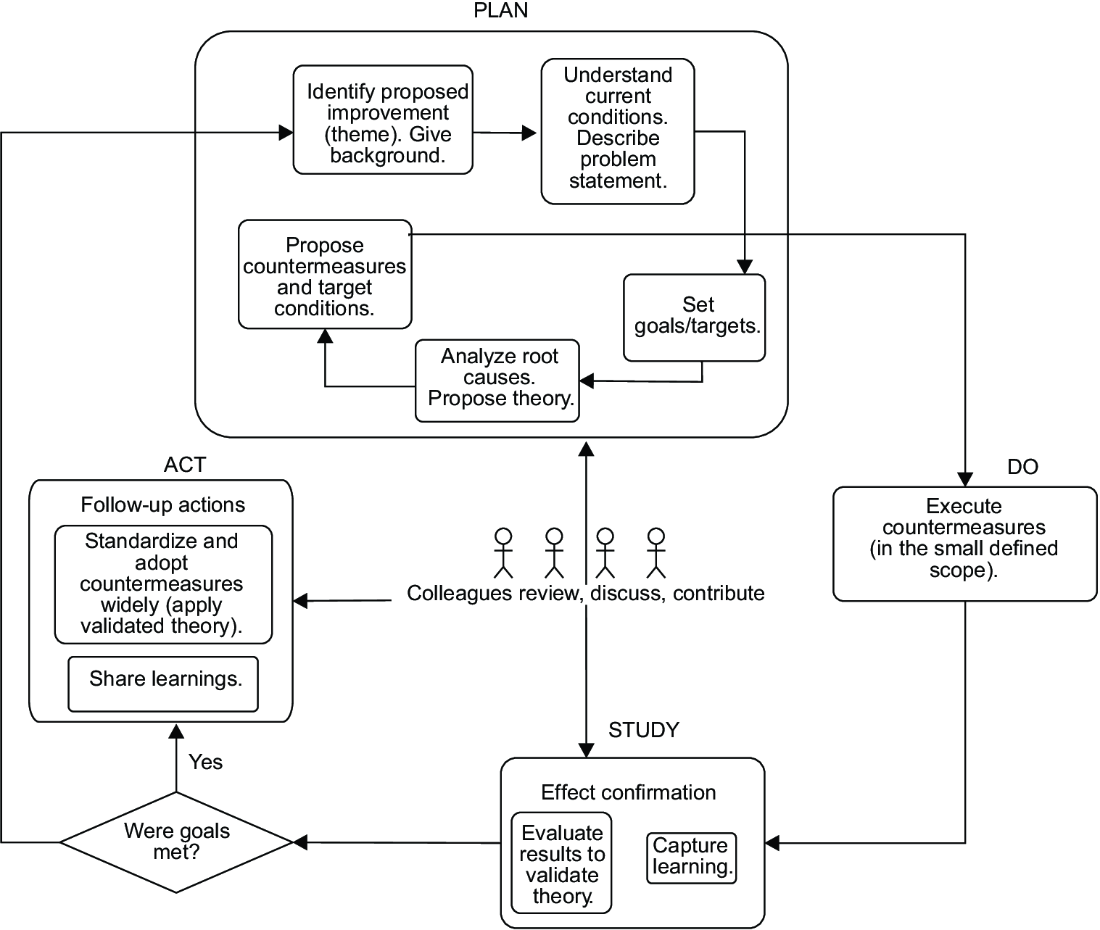
The PDSA cycle in the A3
Summary
- As organizations adopt DevOps and build many API products, they encounter the problem of scaling their API design, documentation, and deployment processes to match their increased tempo of software delivery.
- These problems are exhibited in long API design LT, API documentation problems, and API consistency problems. A good time to introduce APIOps improvements is when organizations make it an objective to fix these problems.
- A3 problem-solving is a thinking and reporting tool you can use to apply a scientific approach to your APIOps improvements. You can use it to think through the improvement effort, get alignment with your colleagues, validate that your improvements will achieve the expected outcomes, and communicate your progress.
- Process mapping using VSM techniques is a useful way to visualize the process you want to improve with APIOps automation. It helps you identify wasteful activities that can be eliminated and VA activities that can be improved.
- Start your APIOps transformation by creating a sense of urgency, forming a guiding coalition of people who can effect change, and creating and communicating your APIOps vision.

 Automating API Delivery ebook for free
