Overview

1 What is APIOps?

APIOps is presented as a way to close the gap between API governance ideals and what organizations actually deliver in practice. Many teams start with standards, design-first methods, and centralized oversight, yet still end up with inconsistent, poorly documented, insecure, or unreliable APIs and slow delivery cycles. The chapter frames APIOps as an end-to-end automation approach that uses DevOps and GitOps ideas to make API design, testing, deployment, and governance faster, more reliable, and more collaborative.

To explain the problem, the chapter uses a scaling example in which a company’s API becomes harder to manage as more teams contribute changes. A centralized platform team improves consistency, but manual reviews, ticket-based handoffs, and queued approvals create bottlenecks, longer lead times, and frustration. Some teams even bypass the intended design-first process because waiting for feedback slows them down, which leads to rework and higher cognitive load for developers. The chapter argues that APIOps addresses this by automating quality gates and enabling self-service workflows without sacrificing control.

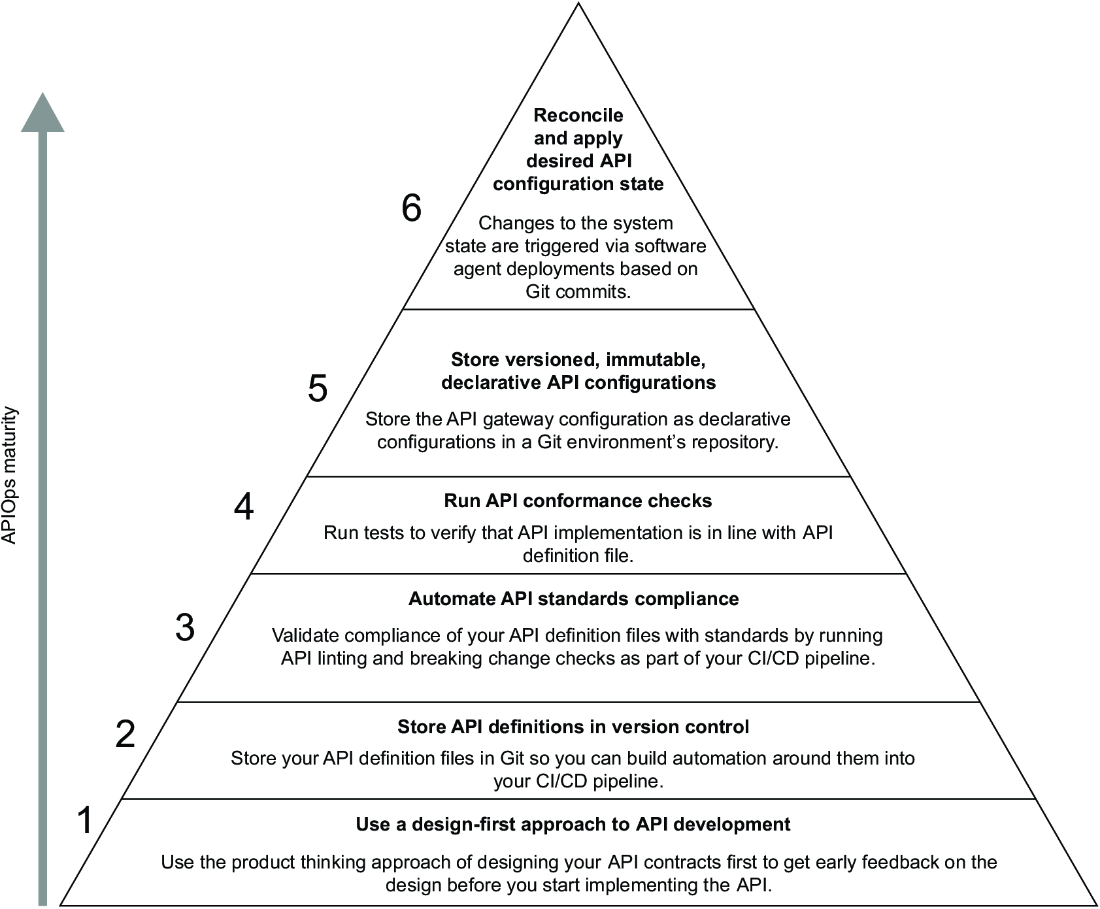
The core APIOps model in the chapter combines product thinking with technical automation. APIs are treated as products with a lifecycle, and OpenAPI is used as the main contract for defining them. The key principles are to design first, store definitions in version control, automate standards checks, verify implementations with conformance tests, manage gateway configuration declaratively in Git, and continuously reconcile desired versus actual state. These practices improve auditability, compliance, collaboration, rollback ability, and speed, while helping developers, operations teams, and product managers work with less friction and deliver better API products.

APIOps is about the end-to-end management of the API life cycle to achieve a fast flow of value while maintaining governance and quality standards.
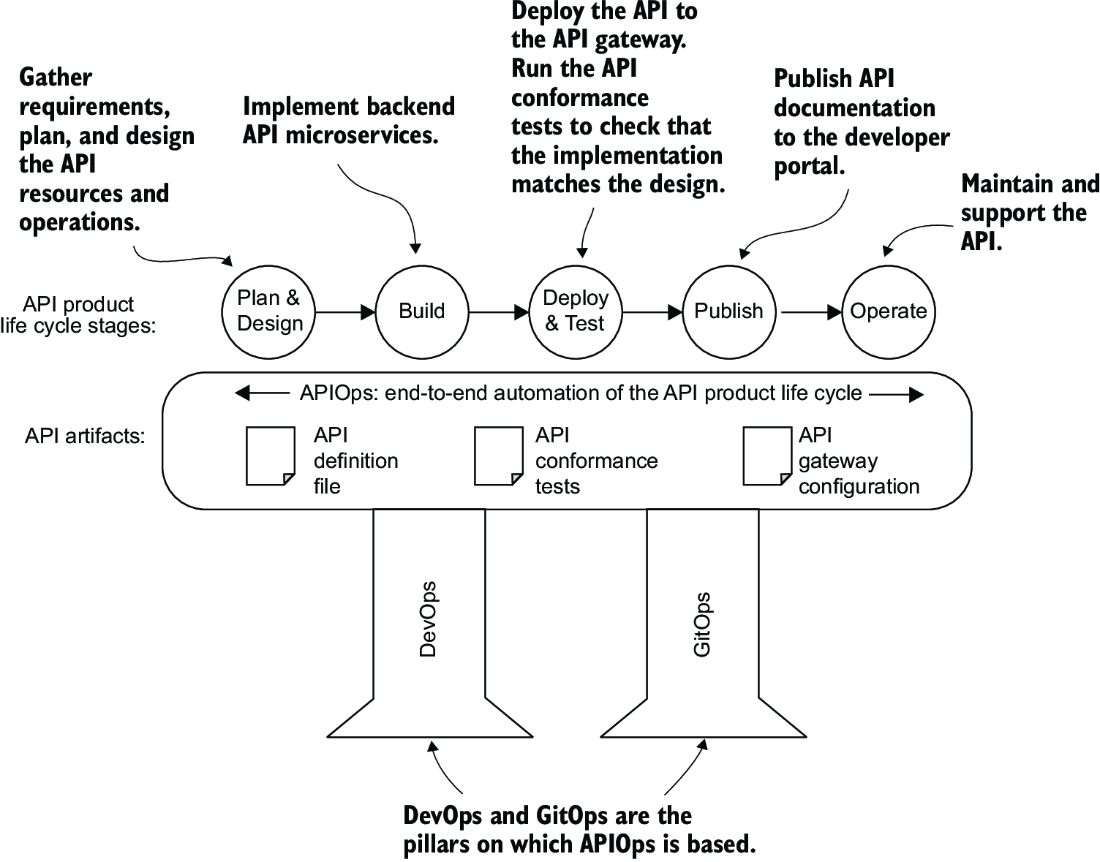
figure
An API product is a packaged API solution that provides a core problem-solving benefit to an API consumer. It has nine components, including good documentation and support channels, and an API team that oversees its life cycle.
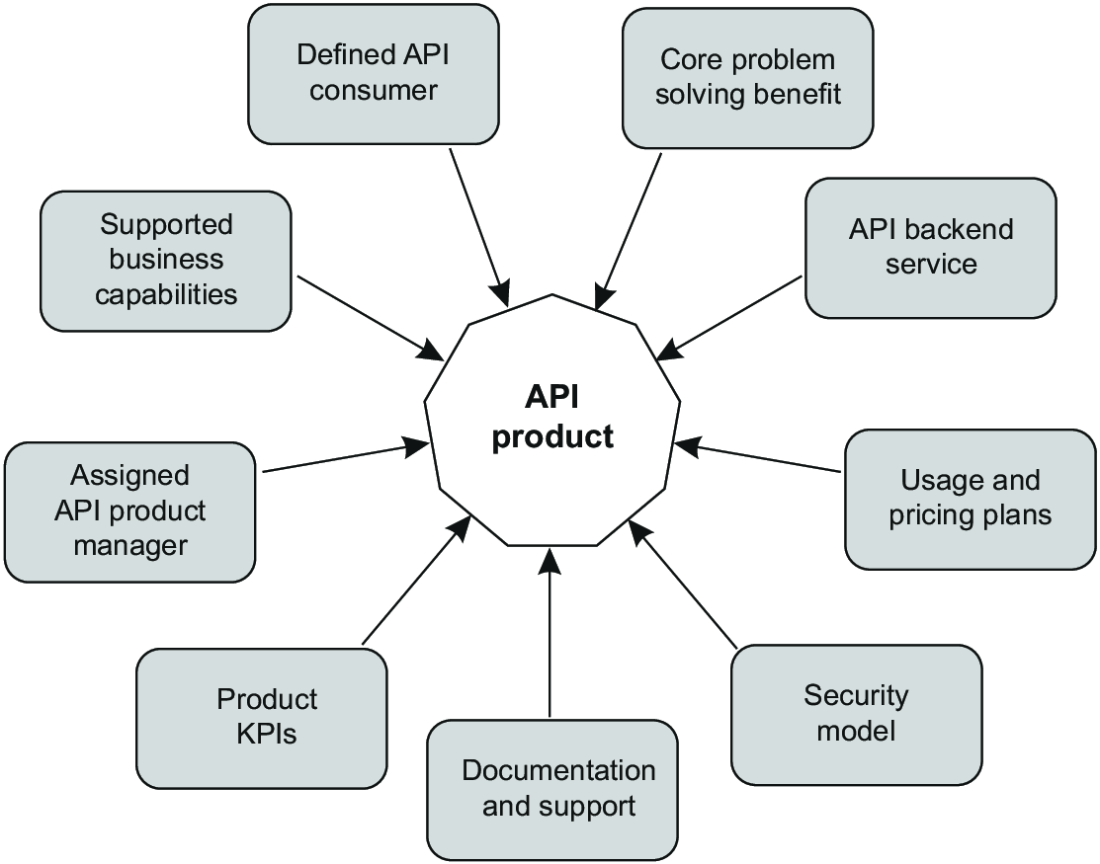
figure
In a microservices architecture, API gateways define API products and route requests to backend microservices that implement the business capabilities.
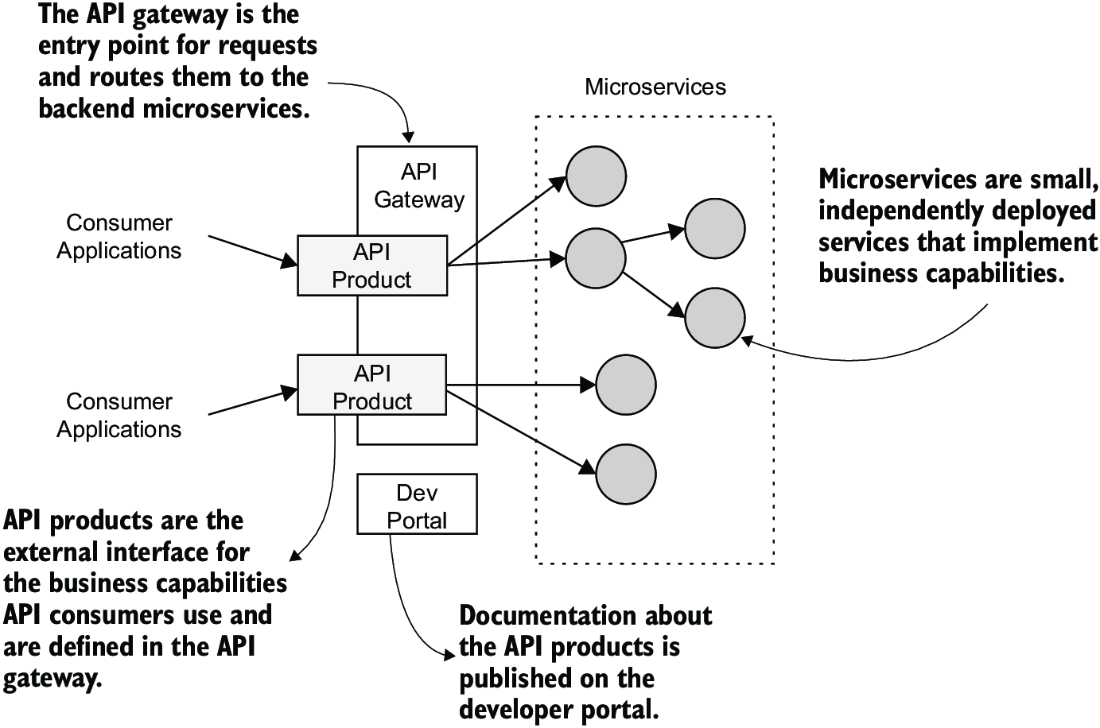
figure
APIOps is based on the GitOps approach of having the desired configuration state of the API gateway, and services are defined declaratively in an environment repository in Git. Dev teams make all changes to the desired system state via Git, and operations teams can review and approve. Software agents automatically detect any difference between the deployed state and the desired state (as defined in the environment repository). If the agent detects a drift, it automatically deploys the desired state to the specified environment so the actual state matches.
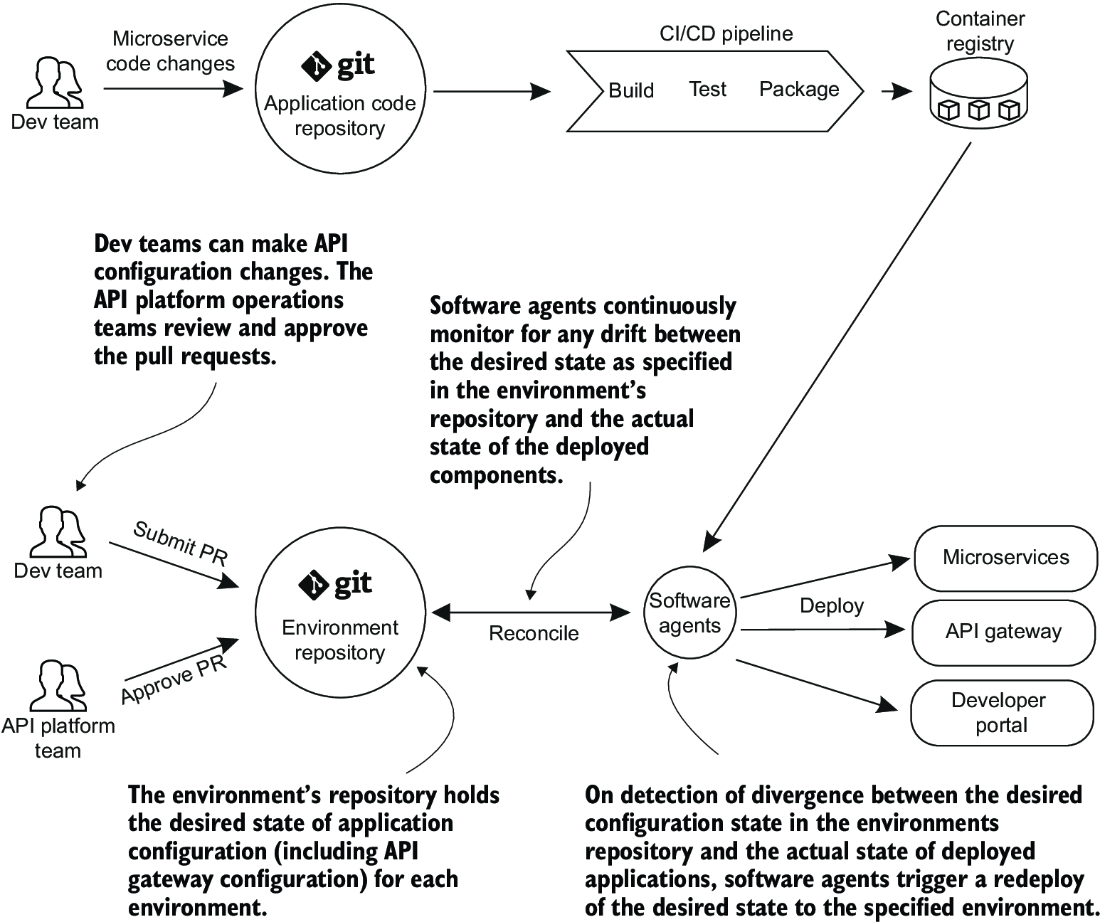
figure
The APIOps maturity pyramid illustrates the six APIOps principles. Organizations can use this to assess their APIOps adoption.
figure
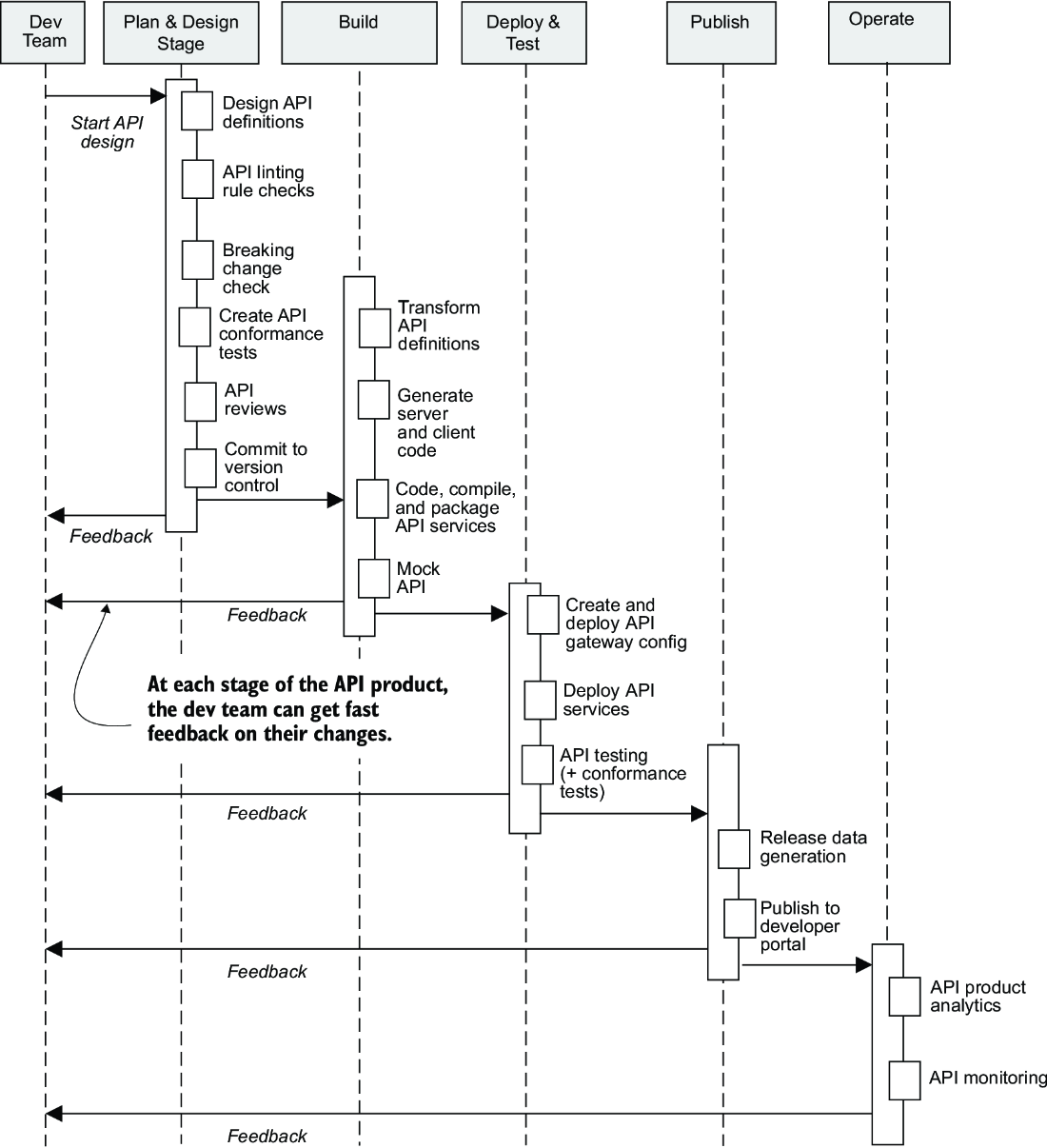
APIOps practices and how they fit alongside other activities at each stage of the API life cycle
figure
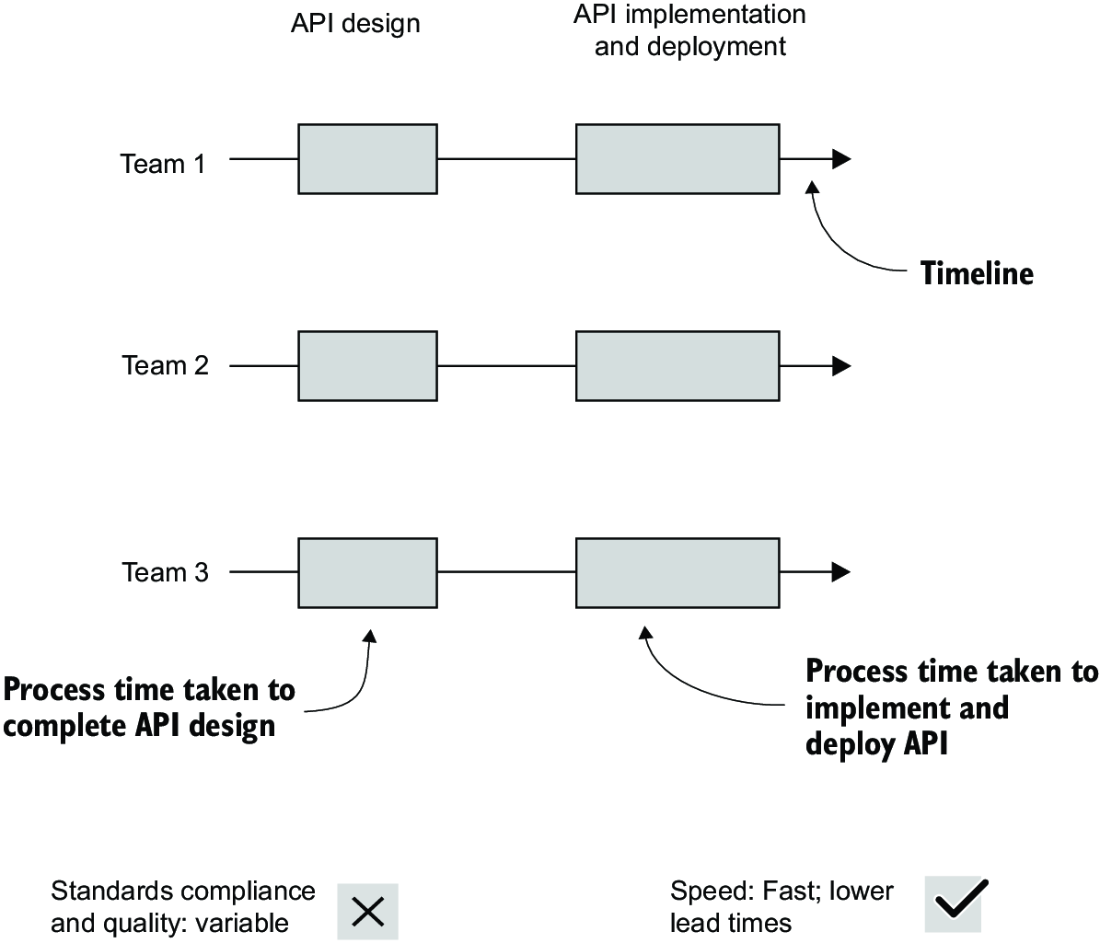
With no centralized API standards and no centralized compliance checks, teams can deliver APIs quickly. But the organization can end up with little consistency across its APIs and poor reuse of API components and patterns.
figure
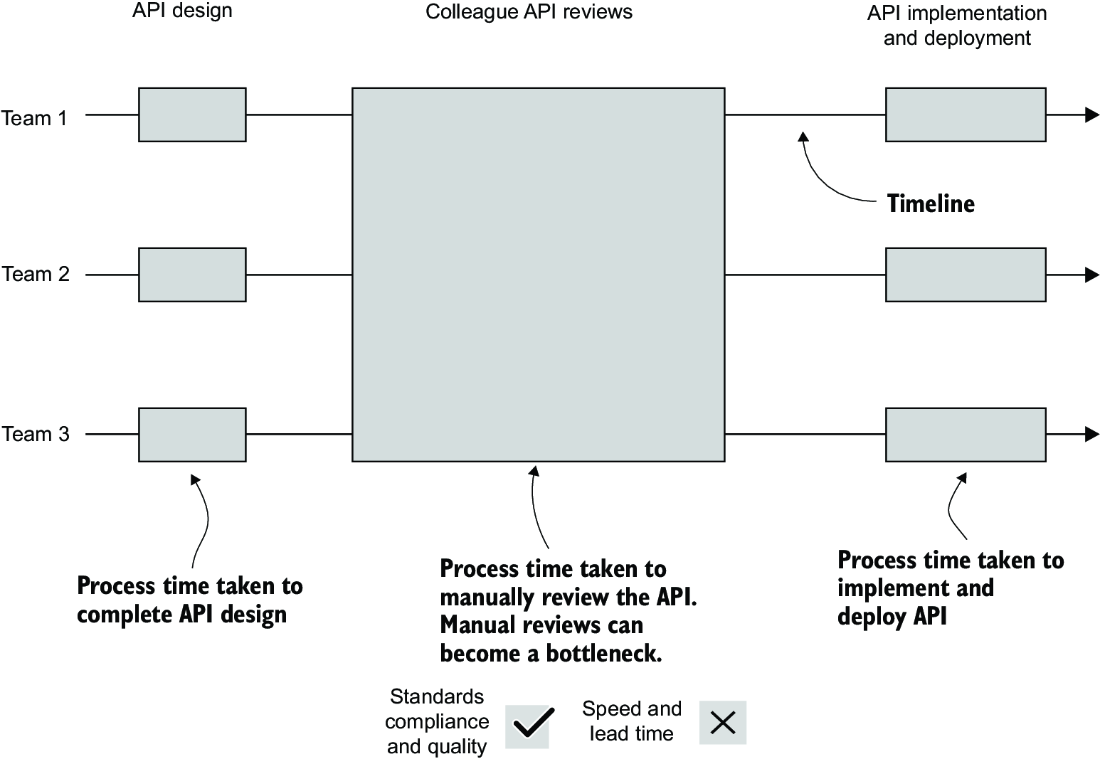
Centralized manual governance leads to better standards compliance but is slower.
figure
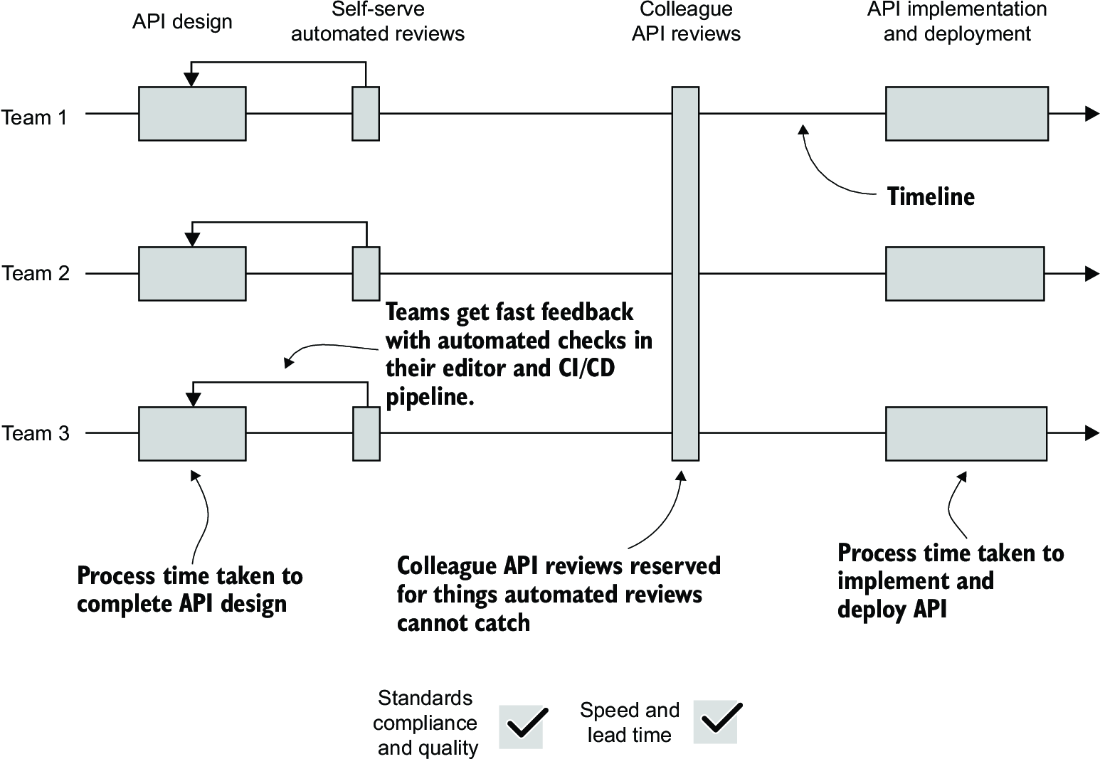
In APIOps, you automate API governance as much as possible to deliver better compliance and reduced lead times.
figure

Summary

  • An API product is a packaged API solution, overseen by an API team, that provides a core problem-solving benefit for a customer.
  • APIOps is the end-to-end automation of the API life cycle based on DevOps and GitOps practices. It enables organizations to achieve shorter lead times, as well as higher API standards compliance, quality, and reliability.
  • APIOps with OpenAPI is based on storing your API definitions and API configuration in a version control system such as Git and building automation to validate and deploy those artifacts using Git workflows.

FAQ

What is APIOps?APIOps is the end-to-end automation of the API life cycle. It combines DevOps and GitOps principles to help teams design, build, test, deploy, and govern APIs more efficiently.
Why do organizations need APIOps?Organizations need APIOps to close the gap between API governance standards and what actually gets delivered. It helps reduce manual work, improve consistency and quality, and shorten the time it takes to deliver APIs.
What problem does APIOps solve in API delivery?APIOps addresses the common tradeoff between speed and quality in API delivery. By automating governance, deployment, and validation steps, it helps teams deliver APIs faster without sacrificing compliance or reliability.
How is APIOps related to DevOps?APIOps applies DevOps principles to API products. Like DevOps, it focuses on fast flow of work, rapid feedback, and continuous learning, but specifically in the context of API design, delivery, and operations.
How is APIOps related to GitOps?APIOps uses GitOps to manage API definitions and API gateway configuration as versioned, declarative files in Git. Changes are made through pull requests and automatically reconciled into the target environments.
What are the main benefits of APIOps?Key benefits include faster API delivery, improved consistency, better auditability, stronger compliance, easier collaboration, and reduced mean time to restore service when configuration problems occur.
What is the role of OpenAPI in APIOps?OpenAPI is the main API definition language used in the chapter’s APIOps approach. It is used to design APIs first, automate standards checks, generate tests, publish documentation, and support conformance validation.
Why is a design-first approach important in APIOps?A design-first approach helps teams define the API contract before implementation begins. This enables early feedback, parallel development, better usability, and more consistent API behavior across teams.
What is the difference between an API and an API product?An API is the interface that lets software systems communicate. An API product is a packaged, managed offering that includes documentation, support, security, lifecycle management, and a focus on user value.
What are the core APIOps principles covered in this chapter?The chapter highlights six principles: use a design-first approach, store API definitions in version control, automate standards compliance, run conformance checks, store gateway configurations in version control, and continuously reconcile desired and actual gateway state.

pro $24.99 per month

  • access to all Manning books, MEAPs, liveVideos, liveProjects, and audiobooks!
  • choose one free eBook per month to keep
  • exclusive 50% discount on all purchases
  • renews monthly, pause or cancel renewal anytime

lite $19.99 per month

  • access to all Manning books, including MEAPs!

team

5, 10 or 20 seats+ for your team - learn more


Close
choose your plan

team

monthly
annual
$49.99
$499.99
only $41.67 per month
  • five seats for your team
  • access to all Manning books, MEAPs, liveVideos, liveProjects, and audiobooks!
  • choose another free product every time you renew
  • choose twelve free products per year
  • exclusive 50% discount on all purchases
  • renews monthly, pause or cancel renewal anytime
  • renews annually, pause or cancel renewal anytime
  • Automating API Delivery Automating API Delivery ebook for free

Close
choose your plan

team

monthly
annual
$49.99
$499.99
only $41.67 per month
  • five seats for your team
  • access to all Manning books, MEAPs, liveVideos, liveProjects, and audiobooks!
  • choose another free product every time you renew
  • choose twelve free products per year
  • exclusive 50% discount on all purchases
  • renews monthly, pause or cancel renewal anytime
  • renews annually, pause or cancel renewal anytime
  • Automating API Delivery Automating API Delivery ebook for free