7 Designing the federation layer
As an Apache Iceberg lakehouse matures, the text emphasizes that not all valuable data will or should be moved into Iceberg tables. A federation layer extends the lakehouse by allowing teams to query data where it already lives, including SaaS platforms, legacy systems, operational databases, cloud storage, and other external sources. This approach supports a hub-and-spoke architecture in which Iceberg remains the governed analytical core while federation provides just-in-time access to distributed data for enrichment, exploration, and hybrid or multi-cloud use cases.
The chapter frames a strong federation layer around three core requirements: broad connectivity without unnecessary duplication, consistent semantics and business logic, and seamless access through familiar tools. It explains that federation improves agility by reducing ETL delays, enabling analysts and data scientists to explore new sources quickly, and supporting BI, notebooks, applications, and AI agents through interfaces such as JDBC, ODBC, REST, Arrow Flight, ADBC, and MCP. At the same time, it warns that federation introduces challenges around performance, governance, schema consistency, freshness, source-system load, and operational complexity, making semantic modeling, access control, pushdown optimization, caching, and workload management important design concerns.
The text compares Dremio and Trino as leading federation platforms with different strengths. Dremio is presented as an Iceberg-centric lakehouse query platform with built-in semantic capabilities, native Iceberg catalog support, reflections, caching, workload isolation, and strong self-service and governance features, making it well suited for organizations standardizing on Iceberg or empowering business users. Trino is presented as a highly flexible, open-source distributed SQL engine with broad connector coverage, modular extensibility, and strong suitability for fragmented or heterogeneous environments, though it often requires additional tools for semantic layers, governance, and enterprise usability. The chapter also discusses self-managed and cloud-managed deployment options, decision scenarios for choosing between platforms, and alternatives such as shortcut-based virtualization and AI-oriented data virtualization for specialized workloads.
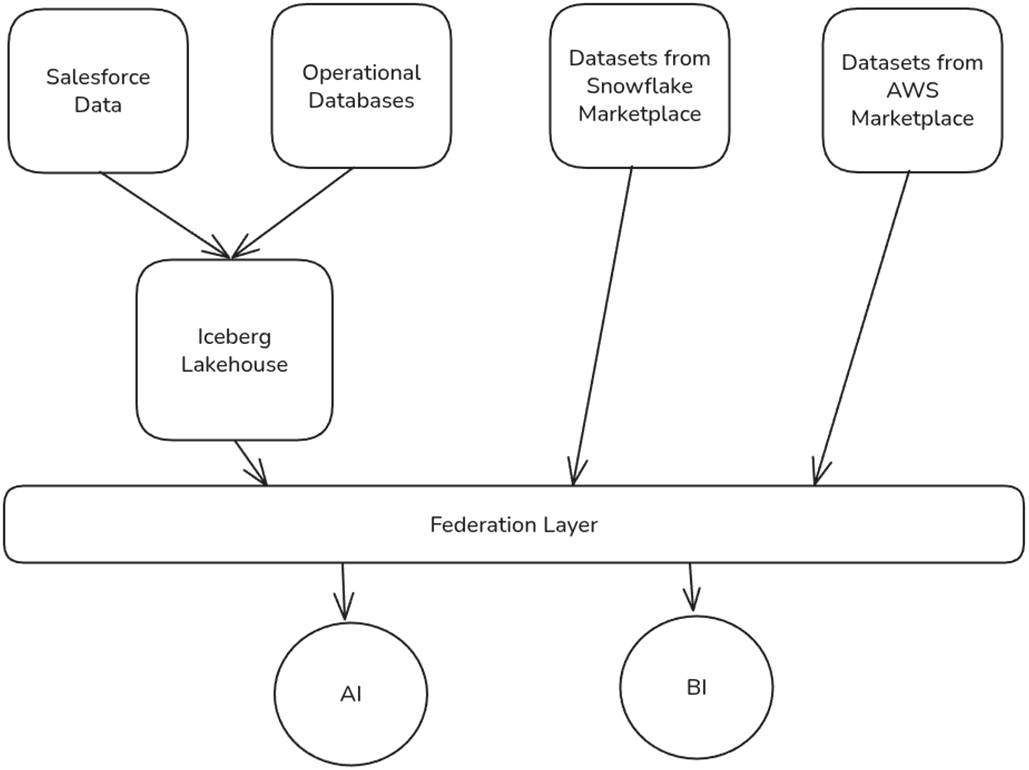
When you have third-party data, a federation layer can help you make use of those datasets without having to replicate them into your lakehouse so they can play the role of Lakehouse enrichment by sending your data to your favorite AI or BI tool.
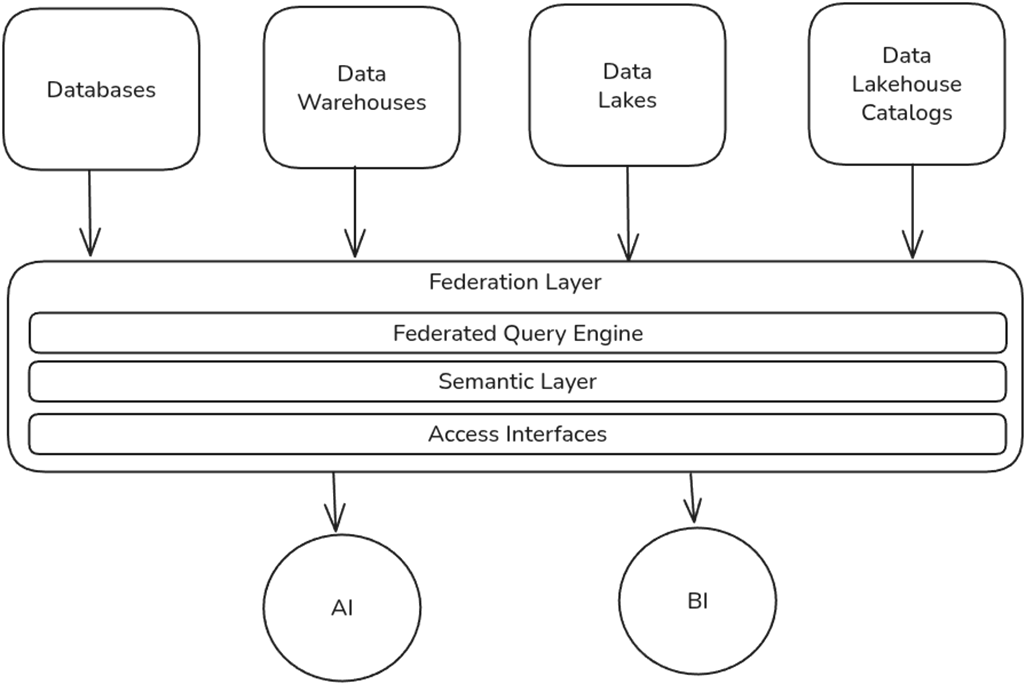
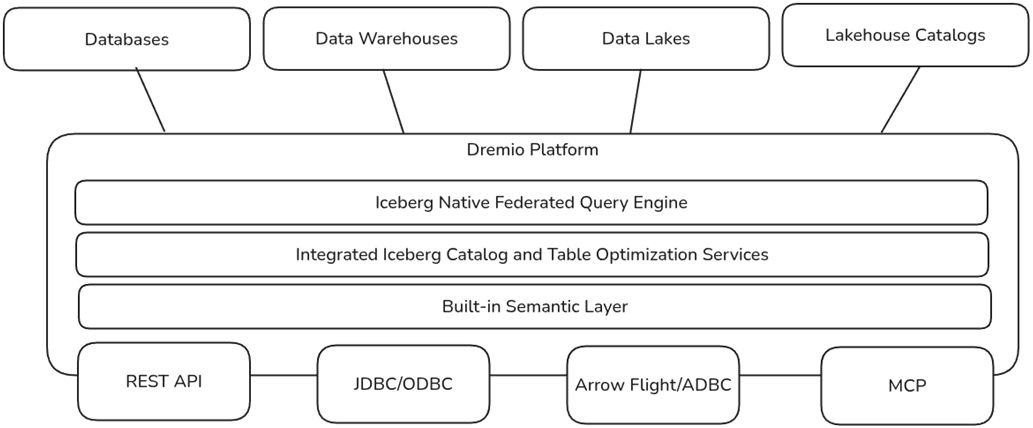
The federation layer should be able to directly connect to your data ecosystem, including databases, data warehouses, data lakes, and data lakehouse catalogs, to be the primary access point for AI and BI.
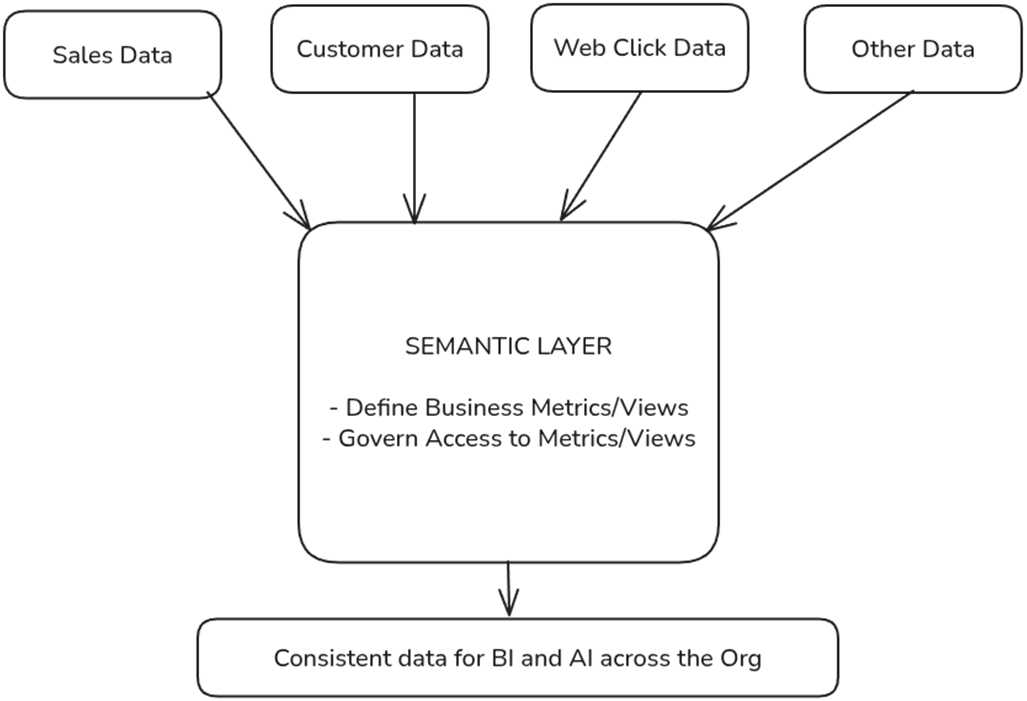
By taking the data from across the organization and creating universally defined metrics and views, you can enable consistent use of the data for AI and BI.
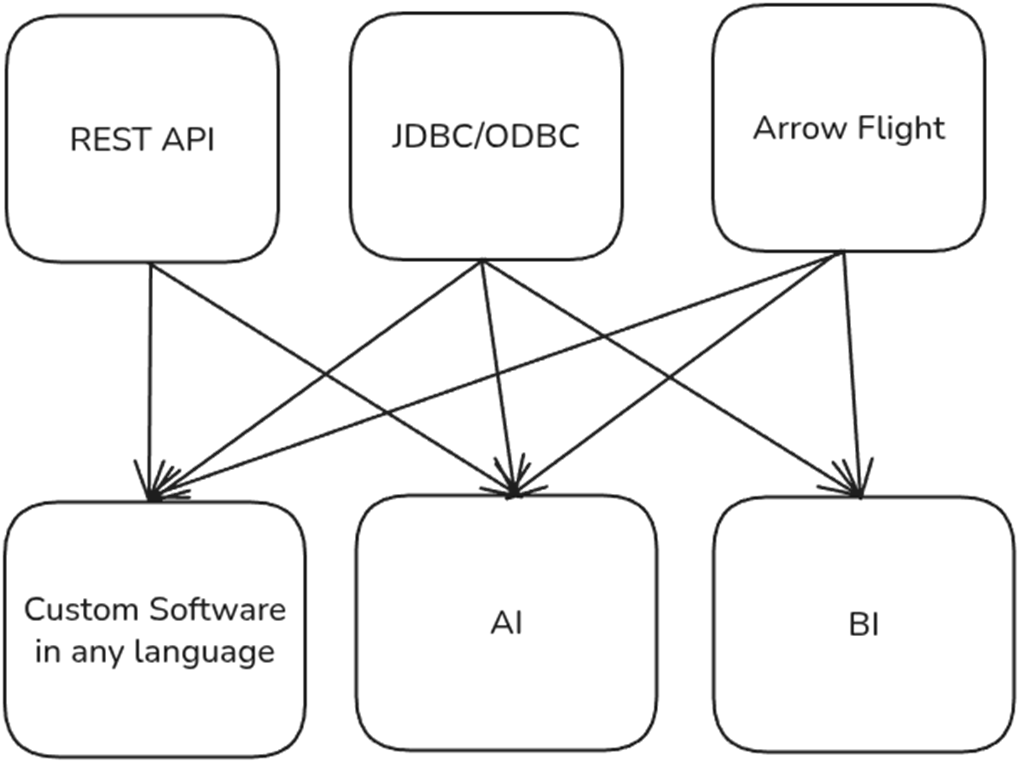
By using industry-standard interfaces like JDBC/ODBC/Arrow Flight and Platform Specific REST APIs, customer software, AI, and BI can communicate with all the data accessible in your federation layer.
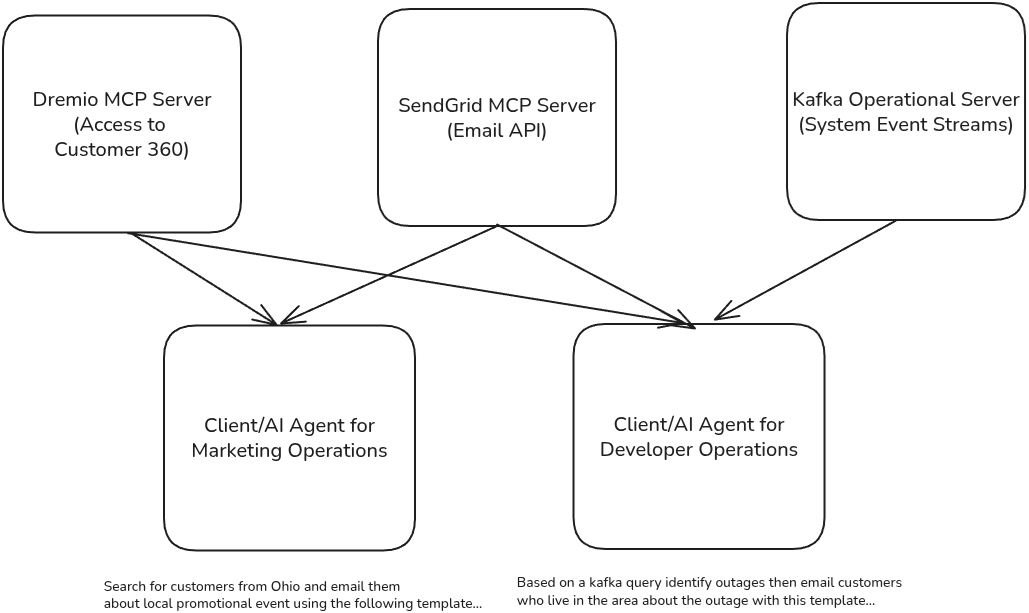
With MCP, you can give different Agentic AI clients access to different platforms without rebuilding the integration, making it easier to design AI agents for a specific workflow. In this case, using an MCP layer to discover federated customer 360 data.
Dremio can connect to databases, data warehouses, data lakes, and lakehouse catalogs so you can model your data in its semantic layer and manage Iceberg tables in its built-in catalog, then use common interfaces to connect it to your favorite tooling.
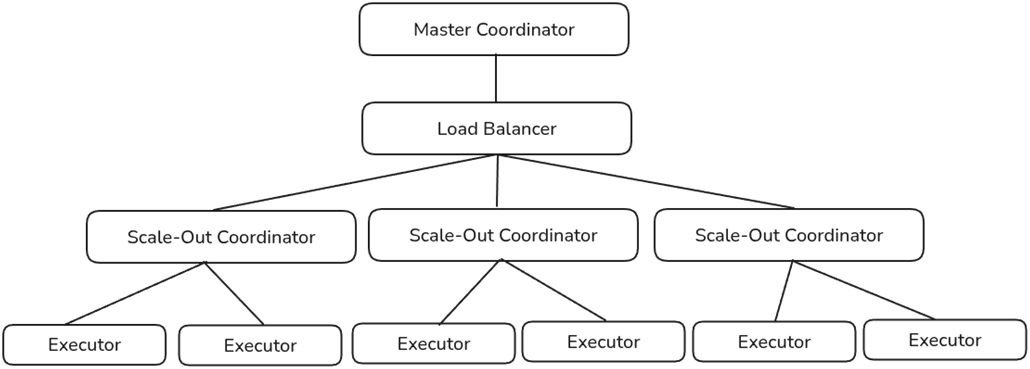
Dremio can manage multiple coordinators to parse and plan query execution, then distribute the execution among multiple executors available to those coordinators, enabling scalability of workloads and availability.
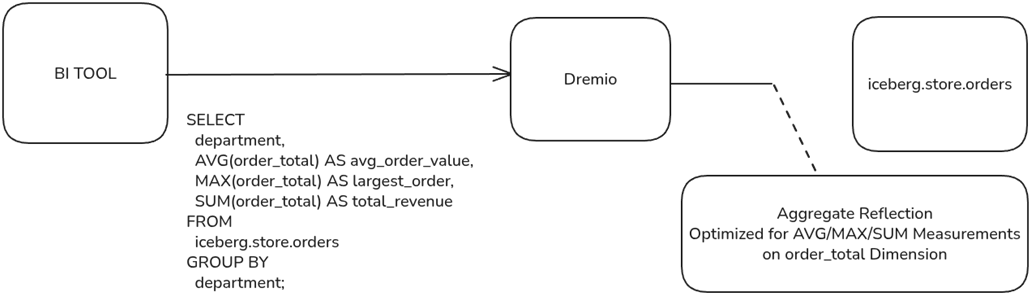
When an aggregate query gets sent to Dremio, it will see if any existing reflections would optimize the query and transparently substitute them in the query. In this case, Dremio detects an aggregate reflection that contains the exact measurements/dimensions that this query needs and diverts the query to the optimized data structure.
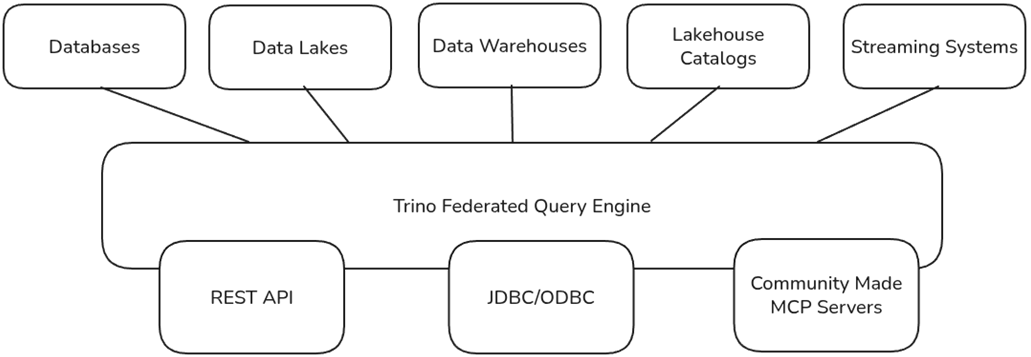
Trino can connect to databases, data lakes, data warehouses, lakehouse catalogs, and streaming systems, making the results of federated queries accessible via REST API, JDBC, ODBC, and a variety of community-developed MCP servers.
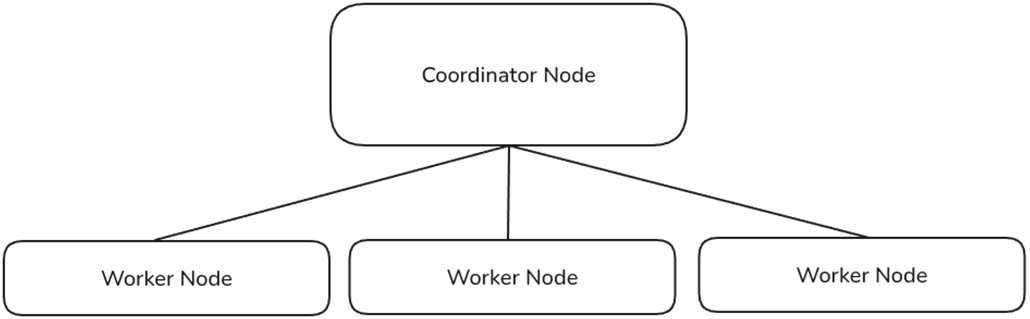
Trino clusters are made up of a coordinator node that distributes work among worker nodes, which can be horizontally scaled, adding more workers to handle more queries.
Summary
- Not all data belongs in the lakehouse; federation allows selective, real-time access to external systems while keeping Iceberg at the architectural core.
- Effective federation strategies prioritize minimizing data movement, managing performance variability, and maintaining semantic consistency across sources.
- A robust federation layer integrates three critical components: a distributed query engine, a semantic layer for standardizing logic, and accessible interfaces for both humans and AI agents.
- Dremio and Trino illustrate two distinct approaches to federation—Dremio emphasizing built-in acceleration and semantic control, and Trino offering flexible, modular federation with wide connector support.
- Trino's hierarchical query execution and Dremio's runtime filtering are optimized for parallelizing workloads and reducing latency in federated environments.
- Deployment choices—including self-managed or cloud-native models—impact cost, scalability, and operational complexity; selecting the right platform depends on your team's capabilities and data landscape.
- Real-world federation success hinges on aligning tool capabilities with business needs—balancing access, governance, and performance in an increasingly distributed data ecosystem.
FAQ
What is the purpose of a federation layer in an Apache Iceberg lakehouse?
A federation layer lets users query data across multiple systems without physically moving all of it into Apache Iceberg tables. It acts as a bridge between the lakehouse and external systems such as SaaS platforms, legacy databases, operational systems, cloud warehouses, object storage, and third-party data sources. This allows teams to enrich Iceberg-based analytics with just-in-time access to data wherever it lives, while optionally providing a semantic layer for consistent business logic and governance.
Why not just ingest all data into Iceberg instead of using federation?
Not all data is worth ingesting into the lakehouse. Some datasets are short-lived, rarely accessed, expensive to replicate, governed by external systems, or too operationally complex to move. Federation avoids unnecessary duplication, storage cost, ETL overhead, and latency by allowing data to be queried in place. It is especially useful for exploratory analysis, SaaS data, operational systems, hybrid environments, and gradual cloud migrations.
What are common use cases for data federation?
Common use cases include joining historical Iceberg data with live operational data, querying SaaS or third-party systems directly, supporting exploratory analysis before building ETL pipelines, enabling hybrid or multi-cloud analytics, and reducing duplication of infrequently used or high-volume datasets. For example, a fraud detection team might join user behavior logs stored in Iceberg with real-time payment activity from an OLTP database.
What are the main challenges of federated querying?
Federation can introduce performance, governance, and operational challenges. Remote systems may have different latency profiles, limited concurrency, inconsistent schemas, or data freshness differences. Federated queries can also place unexpected analytical workloads on systems not designed for them, potentially causing degradation or outages. To address these risks, federation platforms need pushdown optimization, workload management, access controls, semantic modeling, and careful source-system governance.
What are the key requirements for designing a federation layer?
A strong federation layer should meet three major requirements. First, it must connect securely to diverse external data sources without requiring duplication. Second, it should support a semantic layer for reusable metrics, governed definitions, and consistent business logic. Third, it should provide seamless connectivity to analytics tools through interfaces such as JDBC, ODBC, REST APIs, Arrow Flight, ADBC, and emerging AI-oriented protocols such as MCP.
What role does a semantic layer play in federation?
A semantic layer standardizes business definitions across federated and lakehouse data. It allows teams to define metrics, dimensions, calculations, joins, and governed views once, then reuse them across BI tools, notebooks, applications, and AI agents. This prevents different departments from calculating important measures, such as revenue or churn, in conflicting ways. In a federated architecture, the semantic layer also hides source-system complexity and gives users a stable, trusted interface.
How do Dremio and Trino differ as federation platforms?
Dremio is an Iceberg-focused lakehouse query platform with a built-in semantic layer, native Iceberg catalog capabilities, reflections for query acceleration, caching, governance features, and user-friendly self-service experiences. Trino is a general-purpose distributed SQL engine known for broad connector support, a modular plugin architecture, and strong federated query flexibility. Dremio is often a strong fit for governed Iceberg lakehouses and business-user enablement, while Trino is often favored in highly fragmented environments where connector breadth and customization are top priorities.
What performance features does Dremio provide for federated analytics?
Dremio uses Apache Arrow for columnar in-memory execution, Data Reflections for transparent query acceleration, Cloud Columnar Cache for reducing object-storage reads, runtime filtering to minimize data movement, and isolated execution engines for workload management. These features help reduce latency and improve responsiveness when querying Iceberg tables, raw files, databases, and other federated sources.
What makes Trino well suited for complex federated environments?
Trino is highly modular and connector-rich. It supports many data lake formats, databases, warehouses, NoSQL stores, streaming systems, cloud platforms, and analytical systems. Its coordinator-worker architecture breaks queries into stages, tasks, and splits that run in parallel across workers. Trino also supports pushdown, dynamic filtering, broadcast joins, partitioned joins, custom connectors through its SPI, and integration with external security systems. This makes it useful for large, heterogeneous, multi-cloud, or on-premises environments.
How should an organization choose between Dremio, Trino, and federation alternatives?
The choice depends on use case, data landscape, team skills, governance needs, and deployment preferences. Dremio is a strong fit when Apache Iceberg is central, when a built-in semantic layer and governed self-service are important, or when hybrid Iceberg lakehouse modernization is the goal. Trino is a strong fit when broad connector coverage, mixed table formats such as Hudi or Delta Lake, and deep customization are priorities. Alternatives such as OneLake shortcuts may suit storage virtualization and predictable access patterns, while Spice.ai may fit AI-native applications requiring cached views, SQL access, vector search, and model orchestration.

 Architecting an Apache Iceberg Lakehouse ebook for free
