Overview

6 Implementing the catalog layer

Apache Iceberg’s catalog layer is presented as the metadata backbone of a lakehouse: it registers and discovers tables, organizes namespaces, points engines to the current table metadata, and coordinates transactional commits. Because every query, schema change, write, rollback, and time-travel operation depends on accurate metadata resolution, the catalog is a strategic architectural component rather than a simple lookup service. It enables Iceberg’s separation of storage, compute, and metadata management, allowing engines such as Spark, Flink, Trino, Dremio, and others to share consistent table state while supporting ACID behavior through snapshot-based updates and optimistic concurrency control.

The chapter emphasizes that catalog selection should begin with organizational requirements gathered during platform audits. Key evaluation dimensions include performance, availability, scalability, governance, security, compliance, deployment flexibility, ecosystem compatibility, cost, operational overhead, and federation needs. Strong catalogs should support low-latency metadata access, high availability, fine-grained authorization, integration with enterprise identity systems, audit logging, lineage, encryption, credential vending, and automation-friendly APIs. For distributed enterprises, catalog federation and mesh-style architectures become important because they allow multiple catalogs to operate across regions, clouds, and business units while preserving local autonomy, regulatory compliance, and global discoverability.

The chapter also explains how the Apache Iceberg REST Catalog specification improves interoperability by replacing fragmented, language-specific catalog clients with a common HTTP-based interface for operations such as listing namespaces, loading table metadata, registering tables, and committing changes. It then surveys major catalog options and their trade-offs: simple built-in options like Hadoop, Hive, and JDBC; open source service-based catalogs such as Apache Polaris, Nessie, Gravitino, and Lakekeeper; and managed or platform-integrated offerings such as AWS Glue Data Catalog, Dremio Catalog, Snowflake Open Catalog, and Databricks Unity Catalog. The closing scenarios show that there is no universally best catalog: teams migrating from Hive may start with Hive Catalog, AWS-focused teams may prefer Glue, governance-heavy enterprises may choose Gravitino, branch-based testing workloads may benefit from Nessie, Dremio-centered migrations may use Dremio Catalog, and lightweight Python-first teams may begin with Hadoop Catalog before evolving toward REST-based or enterprise-grade solutions.

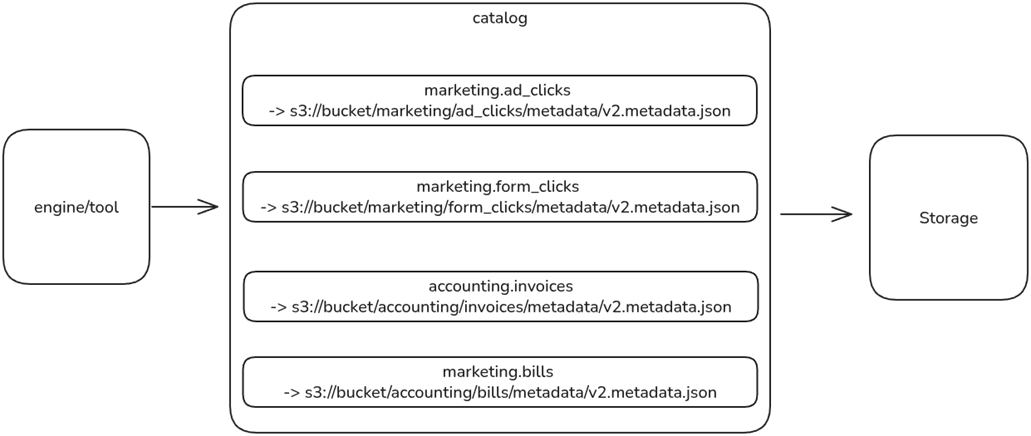
The catalog enables tools that access lakehouse tables to verify permissions and locate the corresponding data within the lake.
An Apache Iceberg catalog maps each table name to the location of its latest metadata file, which serves as the entry point for tools to begin scanning and interacting with the table.
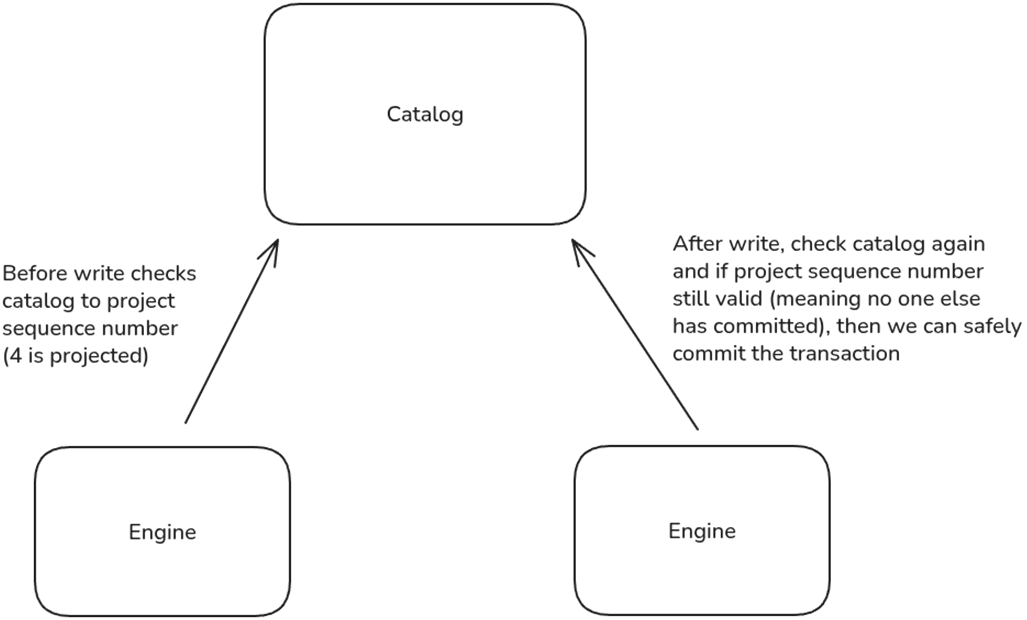
Optimistic commits allow engines to write data and metadata and determine if the commit is successful by checking its place in the commit sequence before and after writing files and then committing.
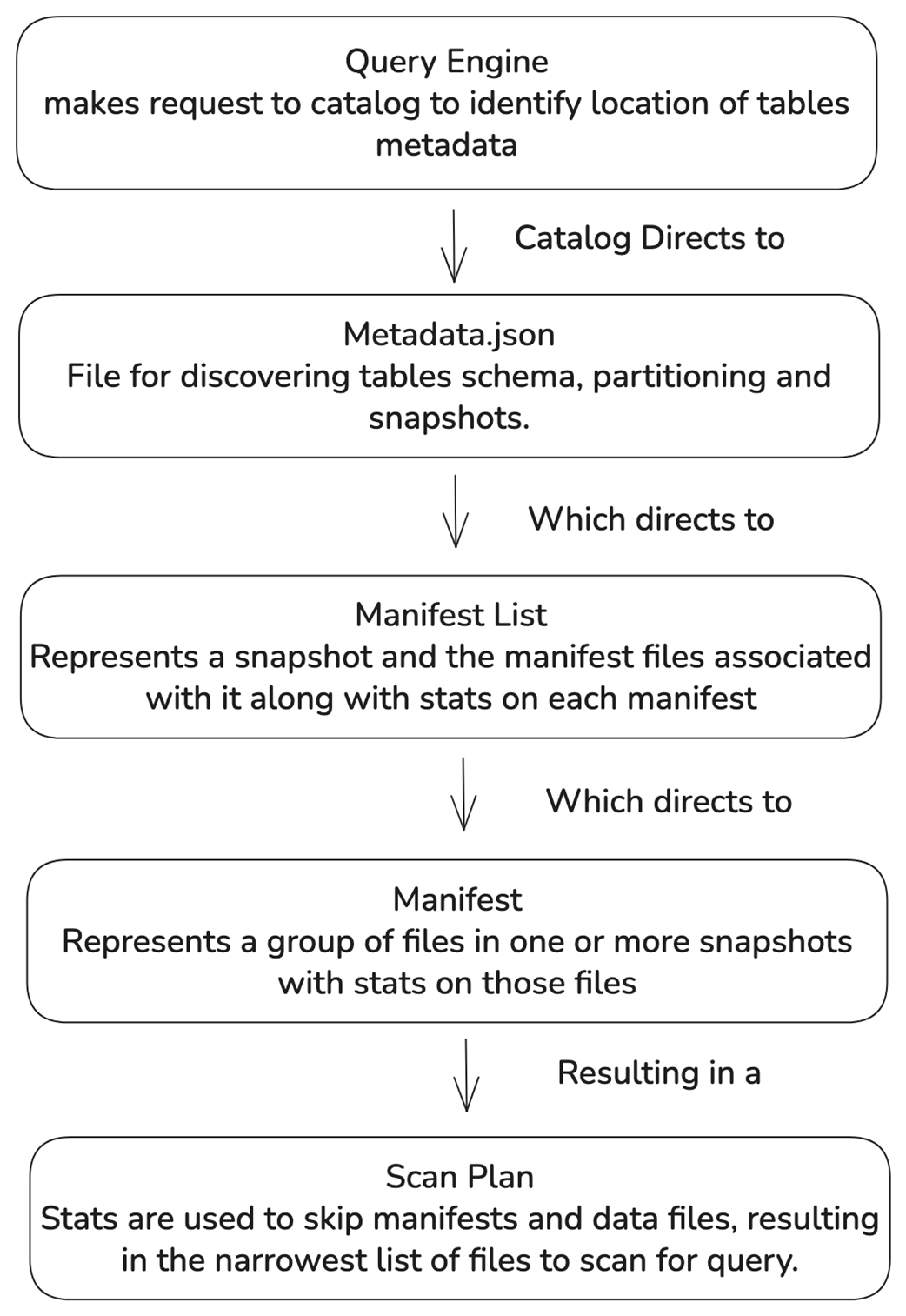
Engines require tables from catalogs and return their metadata location.

The metadata provides different levels of data for an engine to identify a snapshot and determine which data files in that snapshot should be scanned.
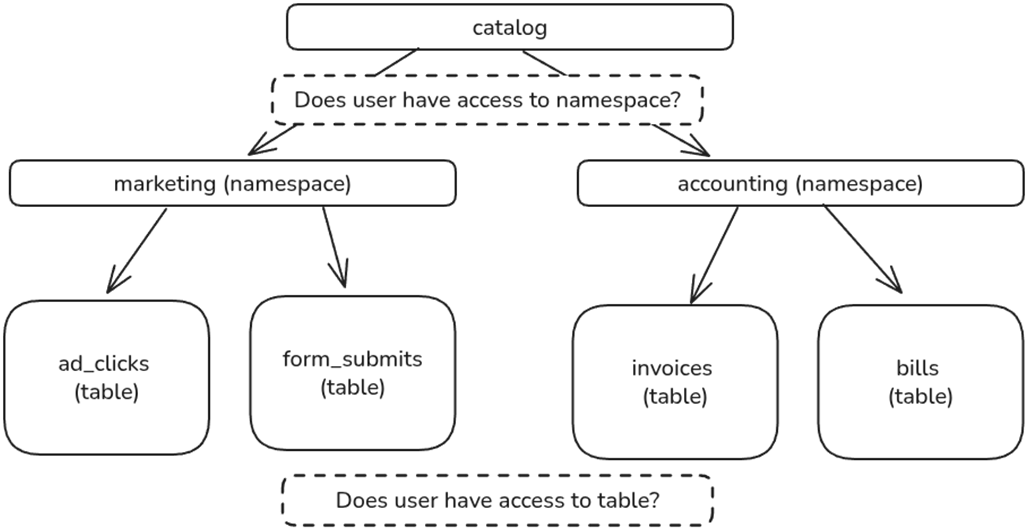
Catalogs can have different levels of access controls, allowing you to control who has access to what namespaces or tables.
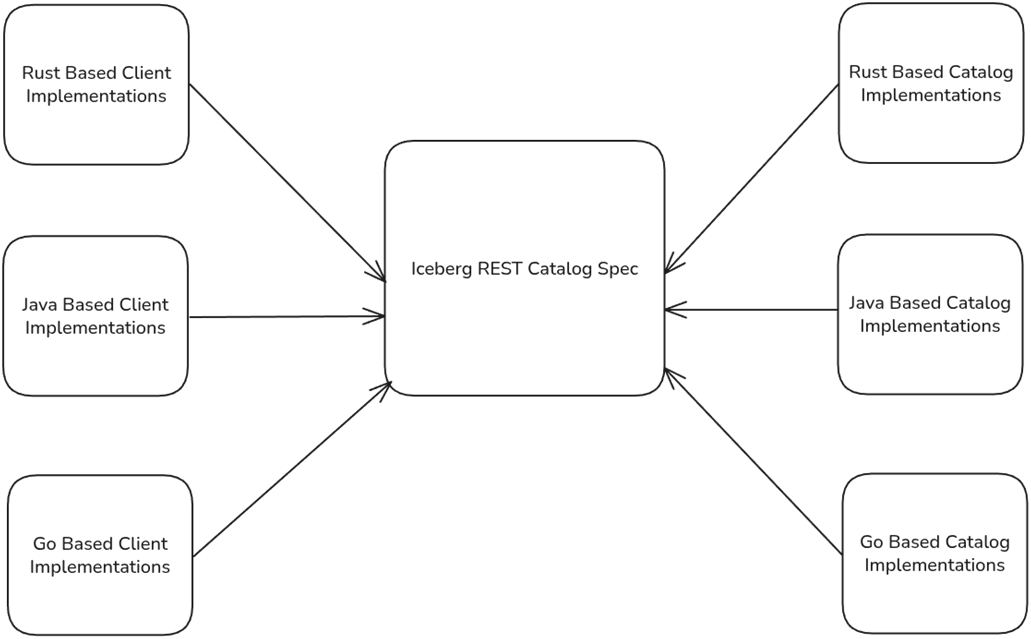
Using the REST Catalog spec, a client written in any language can talk to all catalogs regardless of what language the catalog server is written in, improving interoperability.
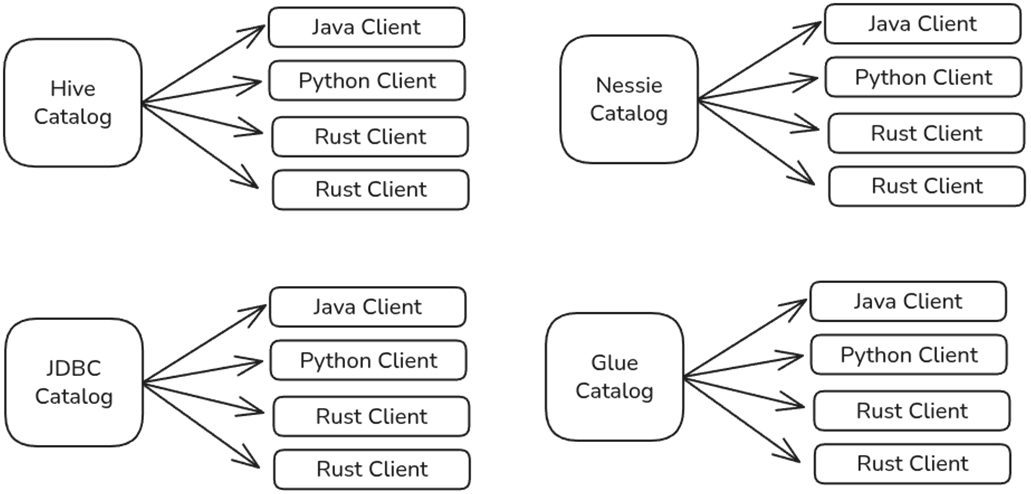
Before the REST catalog spec, each catalog service would have to maintain its own client libraries in each language, causing a hard-to-maintain and fragmented environment.
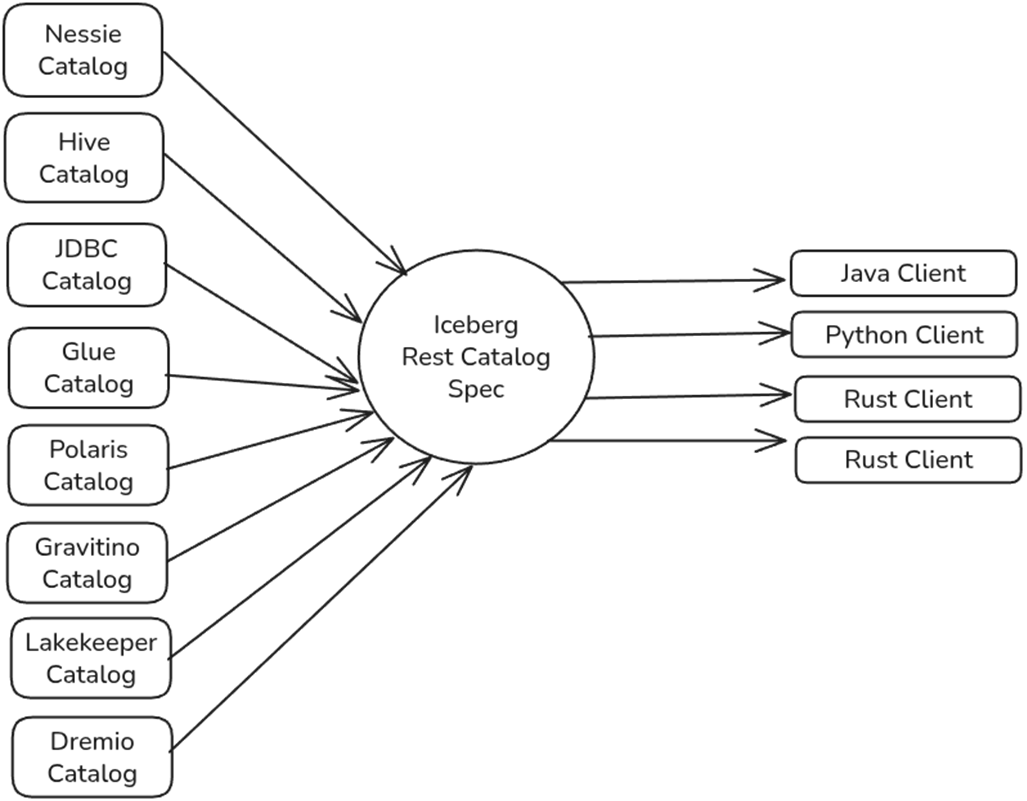
With the REST Catalog Spec, the same client library can be used for all catalogs, reducing the fragmentation and improving interoperability between iceberg catalogs.
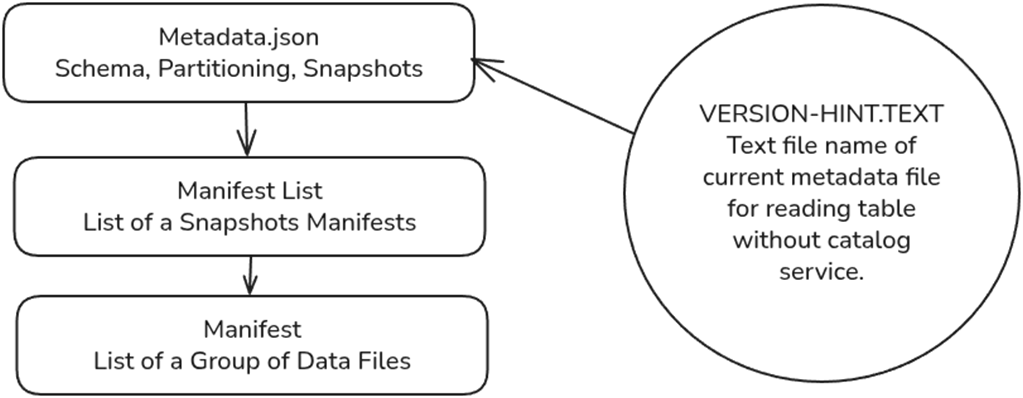
With Hadoop catalog, a file called VERSION-HINT.TEXT is used to discover the metadata file instead of a catalog service, which you would send a request to.
Summary

  • The catalog layer serves as the metadata backbone of an Apache Iceberg lakehouse, enabling reliable data discovery, governance, and interoperability.
  • Built-in catalogs like Hadoop and JDBC offer simplicity but limited flexibility for scaling or integration.
  • Open-source and self-managed catalogs such as Polaris, Gravitino, Nessie, and Lakekeeper provide customization and advanced features for complex deployments.
  • Vendor-managed catalogs like AWS Glue Data Catalog, Dremio Catalog, and Snowflake Open Catalog deliver turnkey infrastructure with integrated security and enterprise support.
  • The Apache Iceberg REST Catalog specification enables standardized communication between compute engines and catalogs, improving multi-engine compatibility.
  • Catalog selection should align with your platform’s operational model, compliance requirements, cloud strategy, and future growth plans.
  • Cloud-agnostic catalogs are increasingly important for organizations planning multi-cloud or hybrid deployments.
  • Catalog technologies and integrations are evolving rapidly, so revisiting decisions as your architecture matures is essential.s

FAQ

What is the role of the catalog layer in an Apache Iceberg lakehouse?The catalog layer is the metadata backbone of an Iceberg lakehouse. It registers and organizes Iceberg tables, tracks namespaces, points engines to the current metadata file for each table, and coordinates transactional updates. While storage holds the data files and compute engines run queries, the catalog enables consistent discovery, access, and updates across tools such as Spark, Flink, Trino, and Dremio.
What are the core responsibilities of an Apache Iceberg catalog?An Iceberg catalog has four core responsibilities: table registration and discovery, metadata location management, namespace organization, and transaction coordination. It resolves table names to metadata locations, maintains the pointer to the current metadata root, groups tables into logical namespaces, and supports optimistic commits so concurrent writers do not corrupt table state.
How does a catalog support Iceberg’s snapshot-based ACID behavior?Iceberg creates immutable, versioned snapshots whenever table data or metadata changes. The catalog maintains the current pointer to the latest metadata file for a table. During a write, an engine creates new metadata and attempts to atomically update that pointer. If another writer has already changed the pointer, the commit fails and must be retried. This optimistic commit process enables snapshot isolation, rollback, time travel, and safe concurrent writes.
How do query engines interact with an Iceberg catalog?When an engine starts working with an Iceberg table, it first contacts the catalog to resolve the table name. The catalog returns the latest metadata location. The engine then uses the metadata to understand schema, partitioning, snapshots, manifests, and file-level statistics. For reads, this helps plan efficient scans with predicate pushdown and data skipping. For writes, the engine creates new metadata and commits it by atomically updating the catalog pointer.
What requirements should organizations evaluate before choosing a catalog?Organizations should evaluate performance, availability, scalability, governance, security, deployment flexibility, ecosystem compatibility, cost, operational overhead, and federation needs. Key questions include whether the catalog can handle high request rates, integrate with IAM or SSO, support fine-grained access controls, provide audit logs and lineage, work across required engines, and fit the organization’s cloud, on-premises, or hybrid deployment model.
Why are governance, lineage, and security important in the catalog layer?The catalog often becomes the system of record for where data resides, how it is structured, and who can access it. Strong catalogs integrate with identity providers, support RBAC or ABAC, provide audit logs, and may offer credential vending for short-lived, scoped storage access. Lineage and auditability are especially important for regulated environments subject to requirements such as GDPR, HIPAA, or SOC 2.
What is the Apache Iceberg REST Catalog specification?The Apache Iceberg REST Catalog specification defines a consistent HTTP-based API for catalog operations such as listing namespaces, registering tables, retrieving metadata, and committing changes. It decouples clients from specific catalog implementations, allowing engines and tools written in different languages to communicate with any REST-compliant catalog. This improves interoperability and reduces the need for catalog-specific client libraries.
What problems existed before the Iceberg REST Catalog specification?Before the REST Catalog specification, catalog integrations were fragmented. Each catalog provider often had to maintain language-specific client libraries for Java, Python, Go, Rust, and other ecosystems. Feature support varied across languages, and users could encounter dependency conflicts, classpath issues, or inconsistent behavior. This made multi-engine lakehouse architectures harder to build and maintain.
How do common Iceberg catalog options differ?Hadoop Catalog is simple and service-free but limited for production multi-user environments. Hive Catalog works well for teams already using Hive Metastore but lacks REST support. JDBC Catalog uses a relational database for stronger coordination. Apache Polaris provides REST-based centralized governance with RBAC and credential vending. Nessie adds Git-like branching and versioning. Gravitino focuses on federated, geo-distributed metadata. Lakekeeper is a lightweight Rust-based REST catalog. Managed options such as AWS Glue, Dremio Catalog, Snowflake Open Catalog, and Databricks Unity Catalog reduce operational overhead but may be more tied to vendor ecosystems.
How should an organization choose the right Iceberg catalog?There is no single best catalog for every organization. A team migrating from Hive may start with Hive Catalog to minimize disruption. An AWS-native startup may prefer AWS Glue Data Catalog for managed operations and AWS integration. A multinational enterprise with federated governance needs may evaluate Apache Gravitino. A team needing branch-based testing and reproducibility may choose Nessie. The right choice depends on interoperability, governance, operational overhead, performance, scale, deployment model, cost, and long-term platform strategy.

pro $24.99 per month

  • access to all Manning books, MEAPs, liveVideos, liveProjects, and audiobooks!
  • choose one free eBook per month to keep
  • exclusive 50% discount on all purchases
  • renews monthly, pause or cancel renewal anytime

lite $19.99 per month

  • access to all Manning books, including MEAPs!

team

5, 10 or 20 seats+ for your team - learn more


choose your plan

team

monthly
annual
$49.99
$499.99
only $41.67 per month
  • five seats for your team
  • access to all Manning books, MEAPs, liveVideos, liveProjects, and audiobooks!
  • choose another free product every time you renew
  • choose twelve free products per year
  • exclusive 50% discount on all purchases
  • renews monthly, pause or cancel renewal anytime
  • renews annually, pause or cancel renewal anytime
  • Architecting an Apache Iceberg Lakehouse ebook for free

choose your plan

team

monthly
annual
$49.99
$499.99
only $41.67 per month
  • five seats for your team
  • access to all Manning books, MEAPs, liveVideos, liveProjects, and audiobooks!
  • choose another free product every time you renew
  • choose twelve free products per year
  • exclusive 50% discount on all purchases
  • renews monthly, pause or cancel renewal anytime
  • renews annually, pause or cancel renewal anytime
  • Architecting an Apache Iceberg Lakehouse ebook for free