5 Architecting the ingestion layer
The chapter explains that the ingestion layer is where an Apache Iceberg lakehouse becomes operational: it controls how raw data enters the platform, how quickly it becomes queryable, how reliably it is delivered, and how well it adapts to change. Effective ingestion design starts with clear requirements around throughput, latency, reliability, schema evolution, observability, and operational maintainability. Different workloads demand different trade-offs: fraud detection or monitoring may require second-level freshness, while historical loads or regulatory exports may prioritize throughput, validation, and repeatable recovery over speed.
The chapter compares batch, micro-batch, and streaming ingestion as complementary architectural models. Batch ingestion is simple, reliable, and well suited to bulk loads, backfills, and scheduled analytics workflows, especially when paired with Iceberg’s atomic commits and snapshots. Micro-batch ingestion provides fresher data at short intervals while avoiding some of the complexity of full streaming, but it requires careful tuning to avoid excessive commits and small-file problems. Streaming ingestion offers the lowest latency and supports stateful processing, event-time handling, deduplication, and change data capture, but it introduces greater operational complexity around checkpointing, backpressure, late events, error handling, and metadata growth.
The chapter also describes how Iceberg’s write and commit model supports reliable ingestion across these approaches. Iceberg creates a new snapshot for each write, supports appends, overwrites, merges, updates, and deletes, and uses atomic commits with optimistic concurrency control to preserve consistency without distributed locks. The chapter then surveys ingestion tools such as Spark, Flink, NiFi, Fivetran, Qlik, Airbyte, Confluent, Redpanda, and cloud-native services, emphasizing that tool choice should depend on latency needs, transformation complexity, catalog integration, schema evolution support, operational maturity, and cloud environment. The overall message is that successful ingestion architecture is context-driven: teams should choose patterns and tools by balancing performance, correctness, maintainability, governance, and existing organizational constraints.
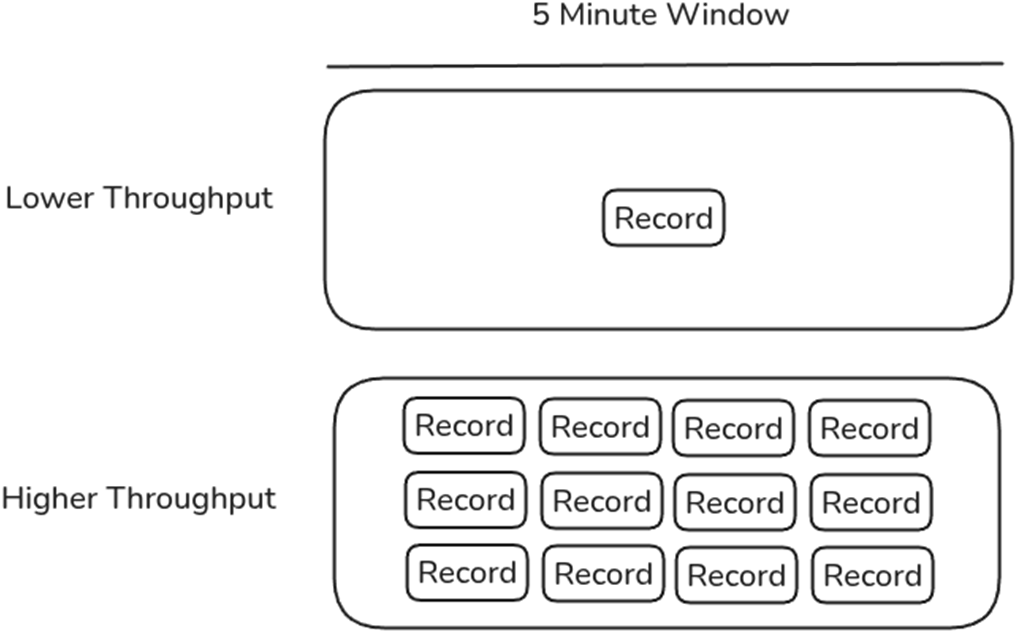
The more records a system can process in the same time window, the higher the throughput it can handle.
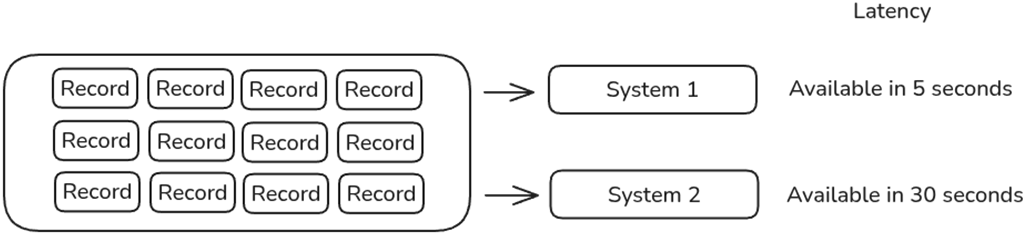
If two systems process the same data, the one that can deliver it in less time has lower latency.
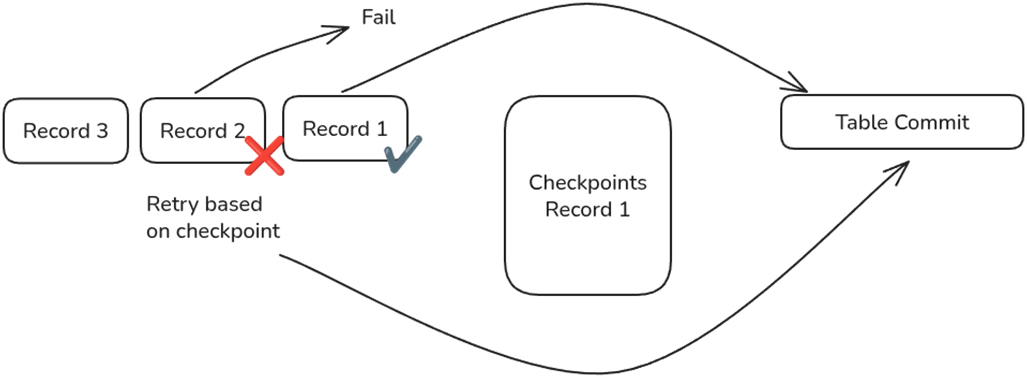
By using checkpointing to track which incoming records have been committed successfully, the system knows which records to retry when failure occurs.
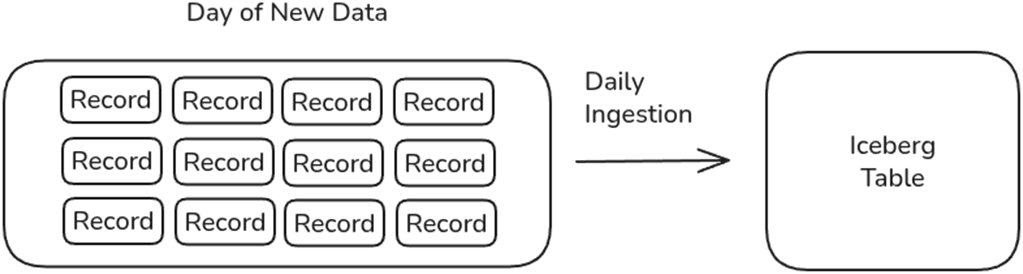
Ingesting Data for the day once a day in a batch job.
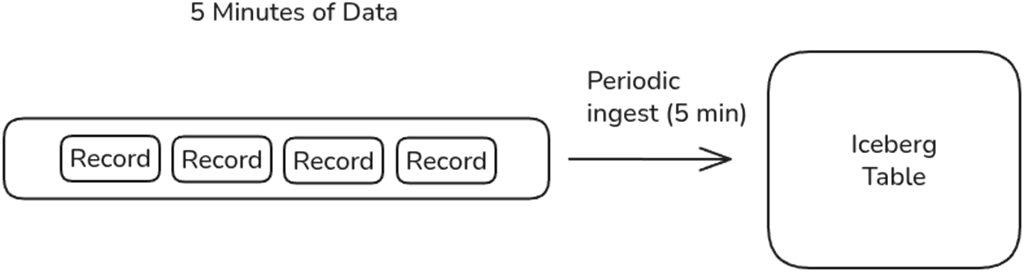
Micro-batching data in an interval where an ingest job triggers to ingest all new data from the last 5 minutes.
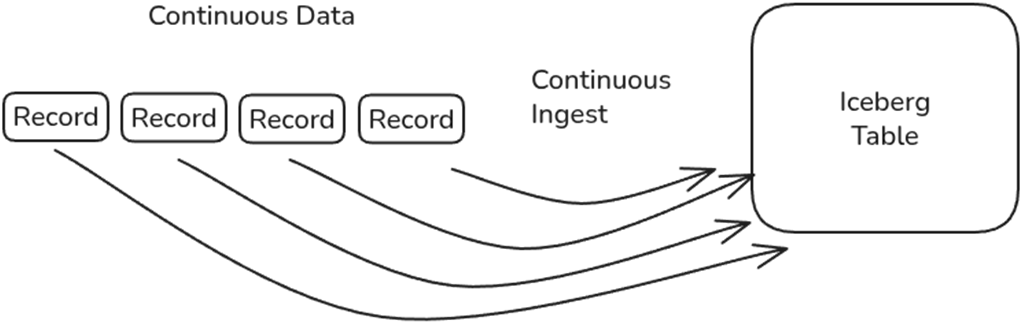
Streaming data is continuously ingested as it arrives at its destination.
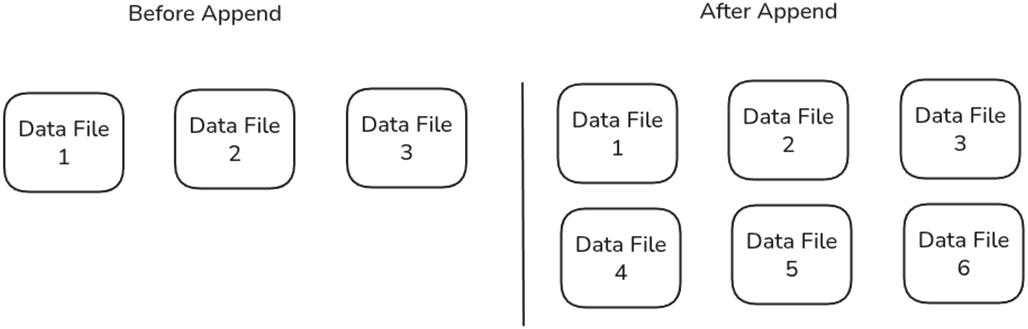
After an append, the new snapshot includes all the previous datafiles and the new datafiles.
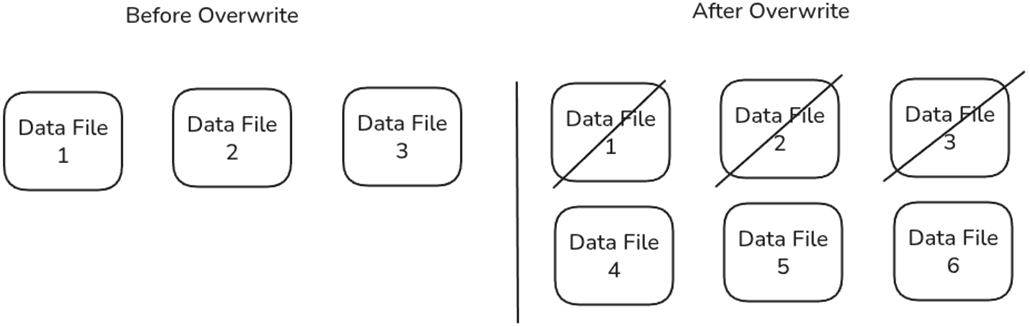
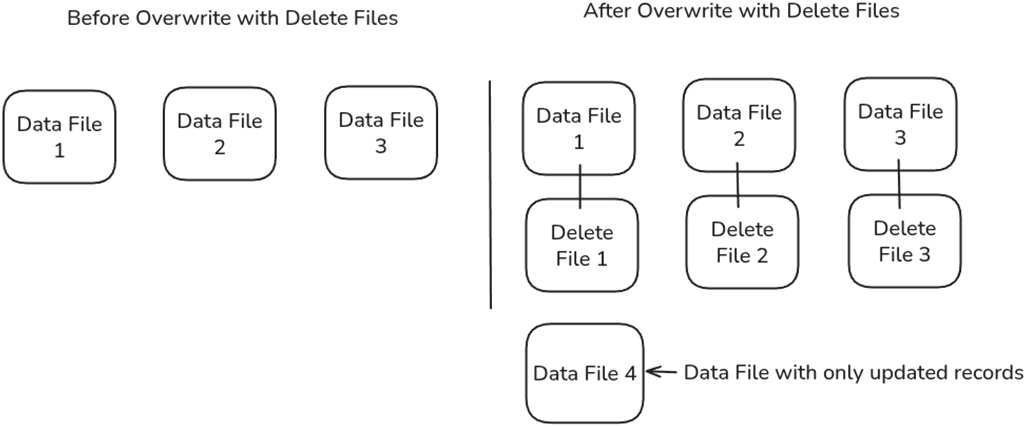
In an overwrite, files with deleted or updated records are replaced with new data files.
When using delete files, updated/deleted records to ignore in existing data files tracked by delete files, while new data files with only the updated records are written.
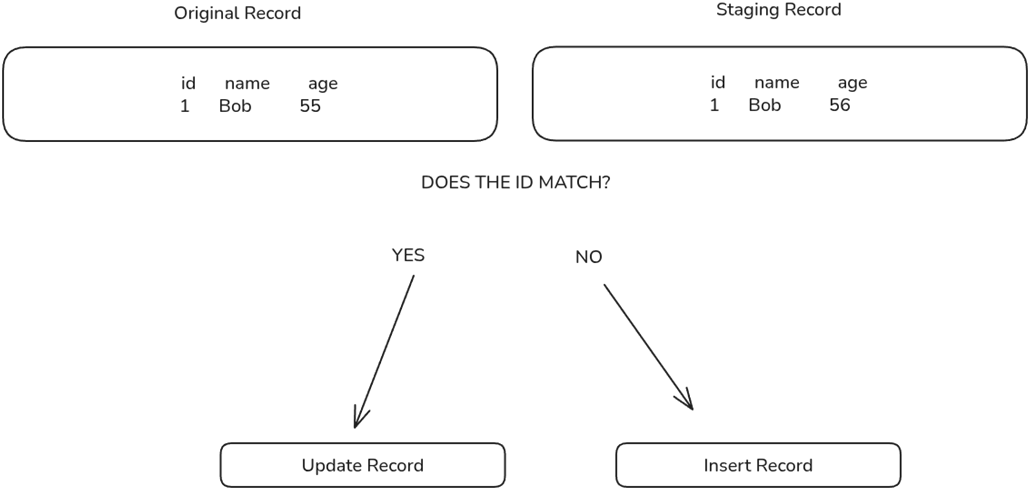
Merge transactions allow you to compare records to a staging dataset to conditionally insert, update, and delete records.
Summary
- Ingestion into an Iceberg lakehouse can follow batch, streaming, micro-batch, or hybrid models, each suited to different data latency and transformation needs.
- Apache Spark and Flink offer flexible and scalable ingestion pipelines with deep integration into Iceberg, making them ideal for complex or high-volume workflows.
- Tools like Fivetran, Airbyte, and Qlik (Upsolver) provide managed ingestion options that reduce operational overhead and support schema mapping and maintenance.
- Kafka-native platforms such as Confluent and Redpanda enable direct materialization of topic data into Iceberg tables, supporting low-latency ingestion and schema evolution.
- Cloud-native services (e.g., AWS Glue, Microsoft Fabric) offer ingestion capabilities aligned with their storage and catalog ecosystems, often simplifying governance and deployment.
- Each ingestion tool and approach should be evaluated against functional requirements such as latency tolerance, throughput demands, schema variability, and team capacity.
- Real-world ingestion architectures often involve trade-offs and require balancing priorities across multiple requirements and existing cloud or infrastructure constraints.
- Designing ingestion pipelines around Iceberg’s strengths—such as schema evolution, snapshot isolation, and support for open formats—ensures long-term flexibility and maintainability.
FAQ
What is the role of the ingestion layer in an Apache Iceberg lakehouse?
The ingestion layer is where raw data first enters the lakehouse from sources such as operational databases, message queues, SaaS tools, APIs, cloud services, or external vendors. It determines how quickly, cleanly, and reliably data arrives in Iceberg tables. A good ingestion layer must account for latency, throughput, schema evolution, reliability, fault recovery, and operational maintainability.
What are the main ingestion requirements to evaluate before choosing tools?
The main requirements are throughput, latency, reliability, fault tolerance, schema management, and operational complexity. Throughput measures how much data can be ingested over time, while latency measures how quickly new data becomes queryable. Reliability includes retry behavior, exactly-once or at-least-once guarantees, resumability, and observability. Schema management ensures source changes do not break pipelines, and operational complexity determines how easy the system is to deploy, monitor, tune, and maintain.
How do batch, micro-batch, and streaming ingestion differ?
Batch ingestion processes data in large scheduled chunks, such as hourly or daily jobs. It is simple, reliable, and well suited for historical loads, backfills, and workloads where latency is less important. Micro-batch ingestion processes smaller chunks at frequent intervals, often every few minutes, providing fresher data while preserving many batch-like operational benefits. Streaming ingestion continuously processes data as it arrives and is best for low-latency use cases such as fraud detection, operational monitoring, recommendations, and real-time dashboards.
When should batch ingestion be used with Iceberg?
Batch ingestion is a strong choice when data freshness requirements are relaxed and the priority is throughput, predictability, reliability, and cost control. It works well for nightly reports, historical archives, bulk imports, backfills, slowly changing dimensions, and deterministic reprocessing. Iceberg supports batch ingestion through append, overwrite, and upsert patterns, with each write creating a new snapshot. Atomic commits ensure that a batch job either succeeds fully or leaves no partial results visible to readers.
What are the benefits and challenges of micro-batch ingestion?
Micro-batch ingestion provides a middle ground between batch and streaming. It delivers data more frequently than traditional batch jobs, often every few minutes, without requiring a fully continuous streaming architecture. It is useful for SaaS platforms, APIs, periodic file uploads, and near-real-time analytics. The main challenge is tuning the interval: very short intervals can create excessive job overhead, small files, and metadata commits, while long intervals delay data availability. Iceberg maintenance tasks such as compaction help manage file fragmentation caused by frequent small writes.
Why is streaming ingestion more complex than batch ingestion?
Streaming ingestion is more complex because jobs are long-running, stateful, and must handle failures while continuously processing new data. Streaming pipelines must manage checkpointing, backpressure, late or out-of-order events, deduplication, commit frequency, and error handling without stopping the flow of data. When paired with engines such as Apache Flink or Spark Structured Streaming, Iceberg can support exactly-once semantics through coordinated checkpoints and atomic snapshot commits, but the system requires careful tuning and observability.
How does Apache Iceberg manage writes and commits?
Iceberg treats every write as a transactional operation that creates a new table snapshot. Writers create new data files and metadata files, then use an atomic compare-and-swap operation to update the table’s metadata pointer. If no other writer has changed the table, the commit succeeds and the new snapshot becomes visible. If another writer committed first, the operation fails and must be retried. This optimistic concurrency model supports consistency, isolation, time travel, and concurrent ingestion without requiring distributed locks.
What write operations does Iceberg support for ingestion pipelines?
Iceberg supports append, overwrite, deletes, and MERGE operations. Append adds new data without modifying existing files and is common in streaming and micro-batch ingestion. Overwrite replaces a subset of table data, often by partition, and is useful for corrections or periodic rebuilds. Deletes can be implemented using equality deletes, position deletes, or newer deletion vectors depending on the Iceberg version and engine support. MERGE enables conditional inserts, updates, and deletes, making it useful for upserts, CDC pipelines, slowly changing dimensions, and reconciliation workflows.
How should ingestion pipelines handle schema evolution?
Iceberg supports schema evolution by using stable field IDs rather than relying only on column names. This allows columns to be added, renamed, reordered, or dropped without rewriting existing data files. However, ingestion pipelines still need to detect incoming schemas, validate compatibility, and apply safe mappings or transformations. Common strategies include fail-fast validation for critical fields, controlled casting for acceptable type changes, and dead-letter queues for malformed or incompatible records. Tools that integrate with schema registries or metadata catalogs are usually better equipped to handle schema drift automatically.
How should teams choose ingestion tools for an Iceberg lakehouse?
Tool selection should be based on ingestion model, latency needs, catalog integration, schema evolution support, transformation requirements, operational maturity, and cloud environment. Apache Spark is strong for batch, micro-batch, transformations, overwrites, compaction, and MERGE operations. Apache Flink is well suited for low-latency, stateful streaming with exactly-once semantics. NiFi is useful for visual flow orchestration and edge ingestion. Fivetran and Airbyte reduce operational overhead for connector-based ELT. Confluent Tableflow and Redpanda help materialize streaming topics into Iceberg tables. Cloud-native services such as AWS Glue, Azure Data Factory, Google Dataflow, and Amazon Data Firehose can simplify integration within specific cloud ecosystems.

 Architecting an Apache Iceberg Lakehouse ebook for free
