Overview

4 Selecting the storage layer

The chapter explains that the storage layer is the foundation of an Apache Iceberg lakehouse because it directly affects reliability, scalability, performance, security, cost, and long-term flexibility. Rather than choosing a technology based on vendor preference, teams should begin with requirements gathered from a platform audit: how quickly data must be read and written, how many users and engines will access it concurrently, how sensitive the data is, how recoverable it must be, and what operational model the organization can sustain. The chapter emphasizes that performance should be evaluated through real workload testing, including latency, throughput, concurrency, and access patterns, while security must include access control, encryption, auditability, identity integration, and data residency. Integrity requirements include durability, replication, snapshots, versioning, checksums, recovery, and high availability, while cost planning must account for capacity, egress, requests, replication, scaling, maintenance, and staffing.

A major theme is the contrast between block storage and object storage. Block storage, used historically with systems like HDFS, offers low latency and strong performance when compute and storage are closely coupled, making it useful for legacy Hadoop environments and certain high-performance on-premises workloads. However, it is harder to scale independently, requires more operational management, and lacks many cloud-native features. Object storage, by contrast, stores data as metadata-rich objects accessed through APIs, most commonly the S3 API. It supports separation of compute and storage, elastic scaling, strong durability, lifecycle management, encryption, and broad compatibility, which makes it the dominant model for modern Iceberg deployments. The chapter also highlights two key standards: Apache Parquet, whose columnar layout, compression, statistics, and schema awareness make it ideal for Iceberg analytics, and the S3 API, whose widespread adoption enables tools and engines to interact consistently with object storage across cloud, on-premises, and hybrid environments.

The chapter surveys storage options including HDFS, Amazon S3, Google Cloud Storage, Azure Blob Storage and ADLS, MinIO, Ceph, NetApp StorageGRID, Pure Storage, Dell ECS, and Wasabi, showing that each fits different organizational priorities. Cloud-native stores such as Amazon S3, Google Cloud Storage, and Azure services offer managed scalability, strong ecosystem integration, and enterprise security features, while on-premises and hybrid options such as MinIO, Ceph, StorageGRID, Pure Storage, and Dell ECS provide more control over residency, compliance, performance, or infrastructure. Wasabi is presented as a simpler, cost-predictable S3-compatible option, while HDFS remains useful mainly for organizations modernizing existing Hadoop investments. The chapter concludes that storage selection should be driven by requirements rather than a universal best choice: high-concurrency dashboards, batch ETL, machine learning pipelines, regulated archives, healthcare data, geo-distributed recovery, edge deployments, startups, enterprises, research institutions, and government agencies may all prioritize different trade-offs. Iceberg’s modular design supports this flexibility, but the chosen storage layer must align with workload needs, governance obligations, operational maturity, and long-term strategy.

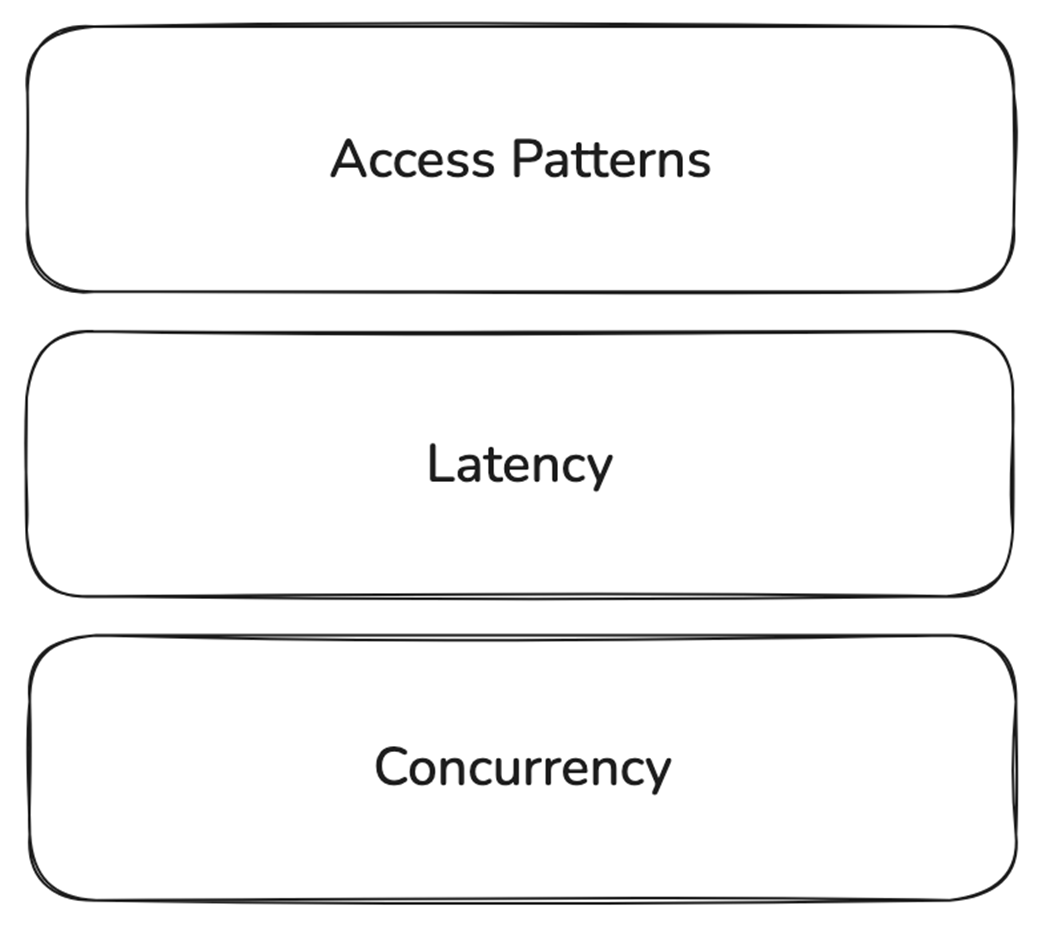
The factors to consider when understanding a storage layers performance.
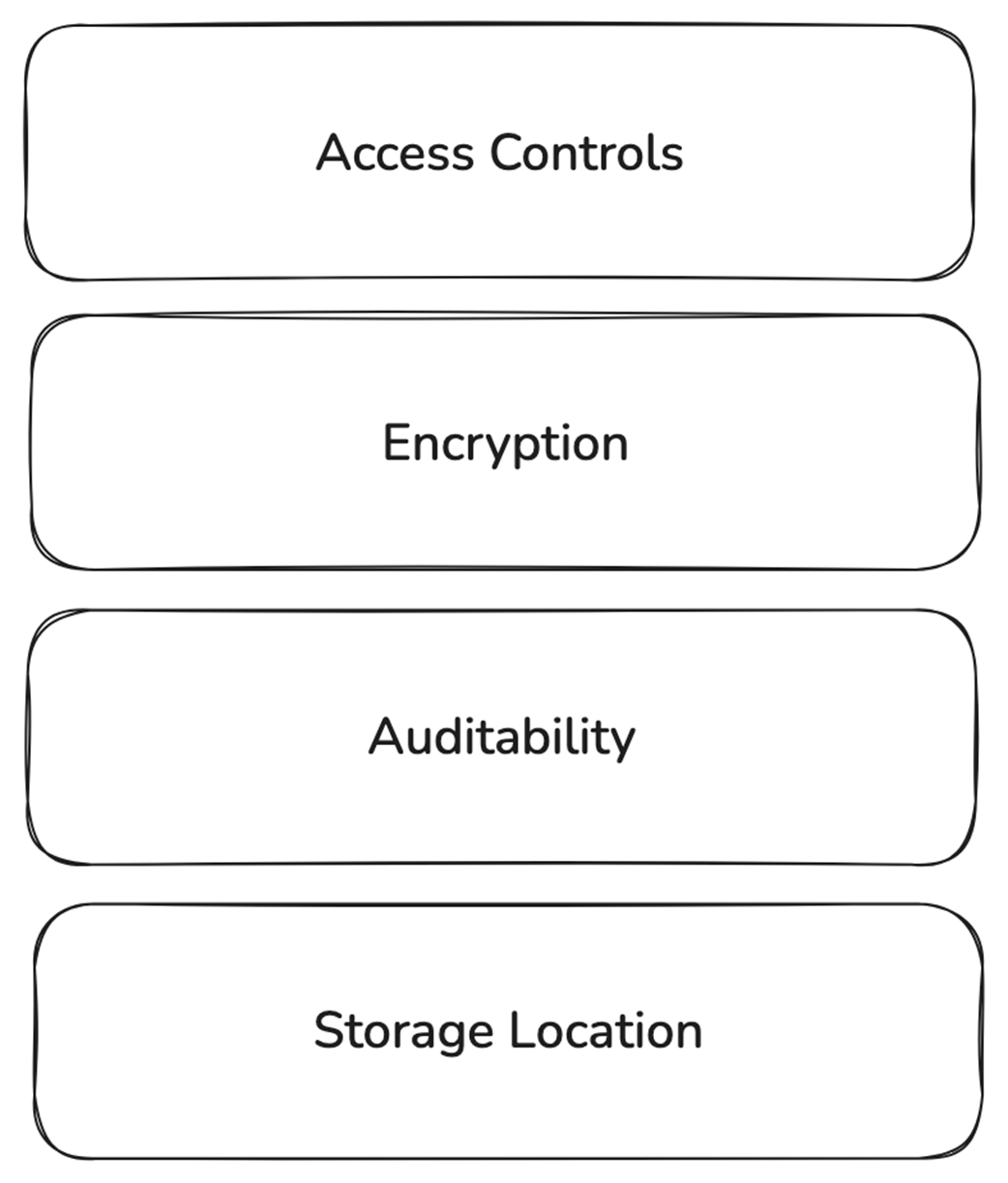
The factors to consider when analyzing a storage layers security.
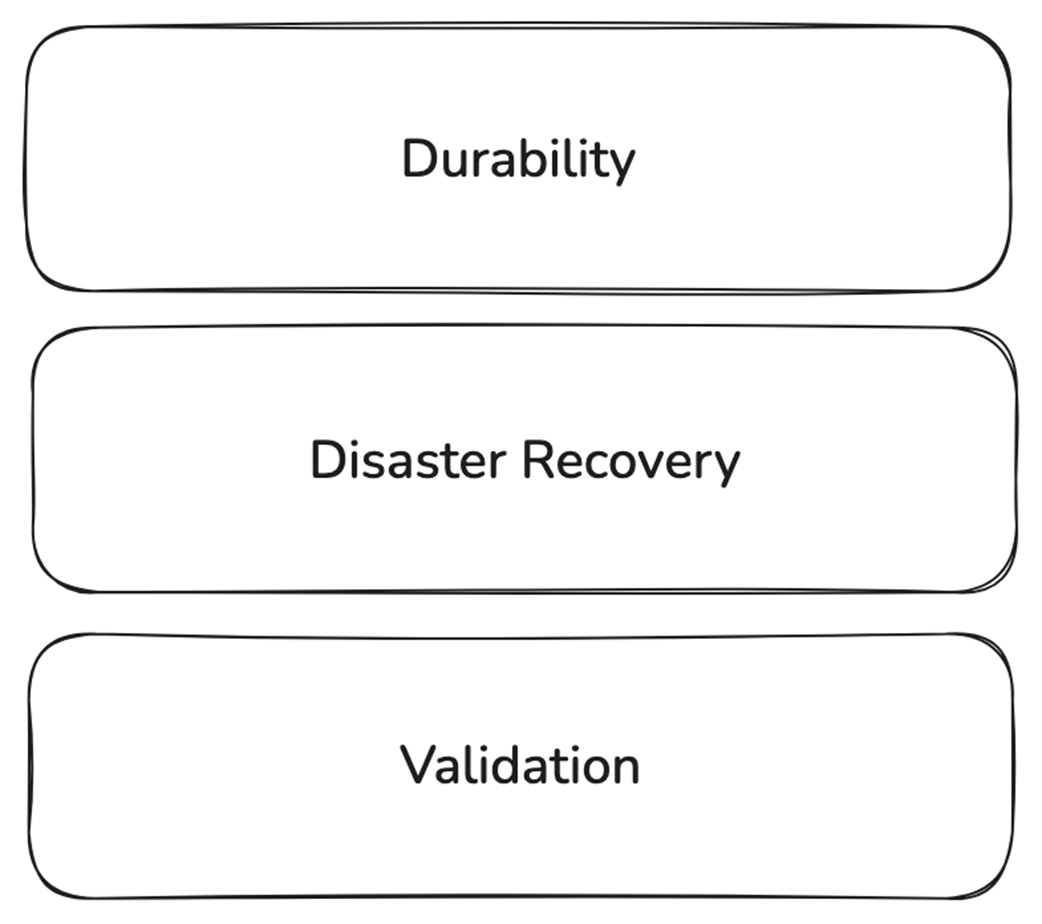
The integrity factors to consider when assessing a storage system.
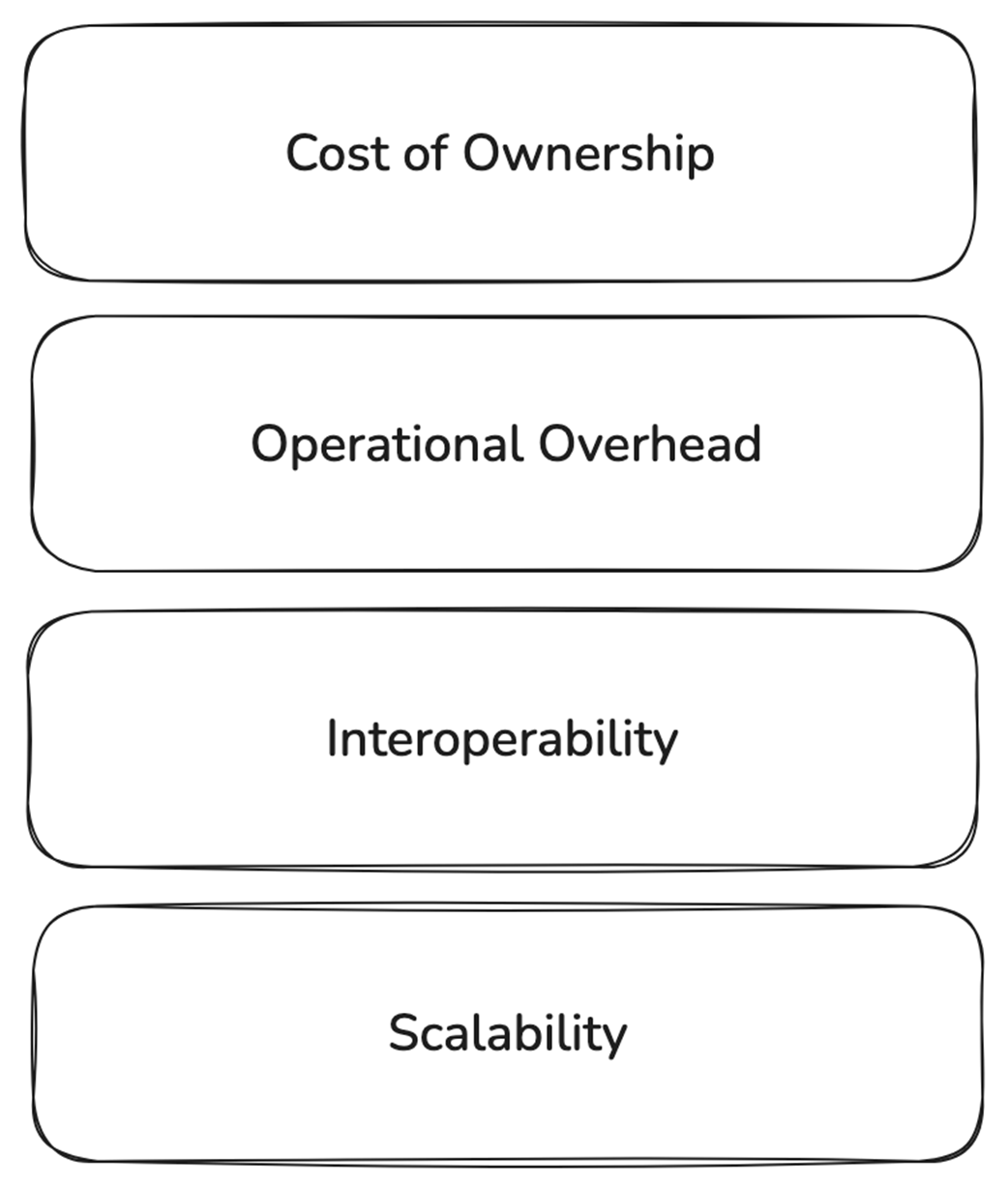
Factors when considering the cost of a storage system.
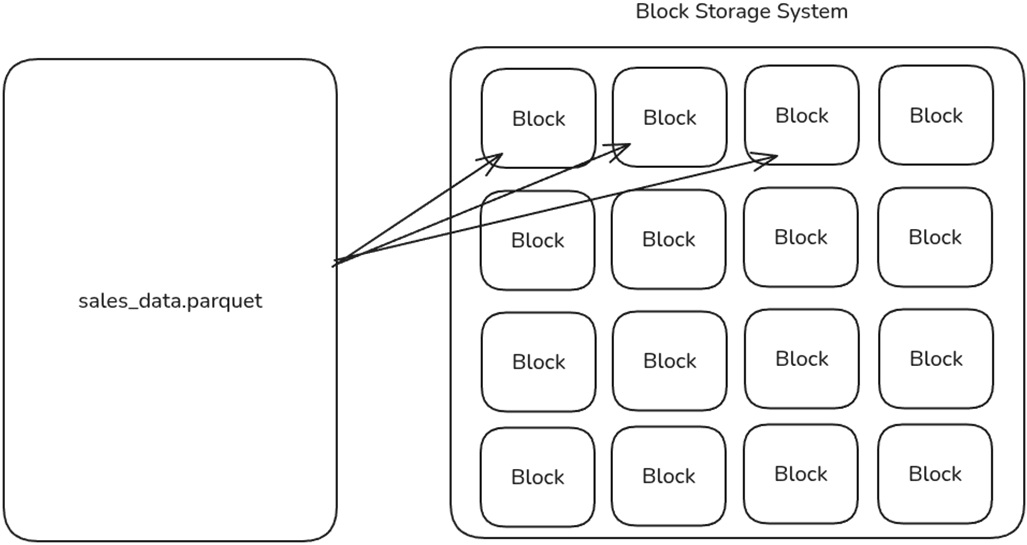
Illustrating how a single file is stored across multiple blocks in a block storage system.
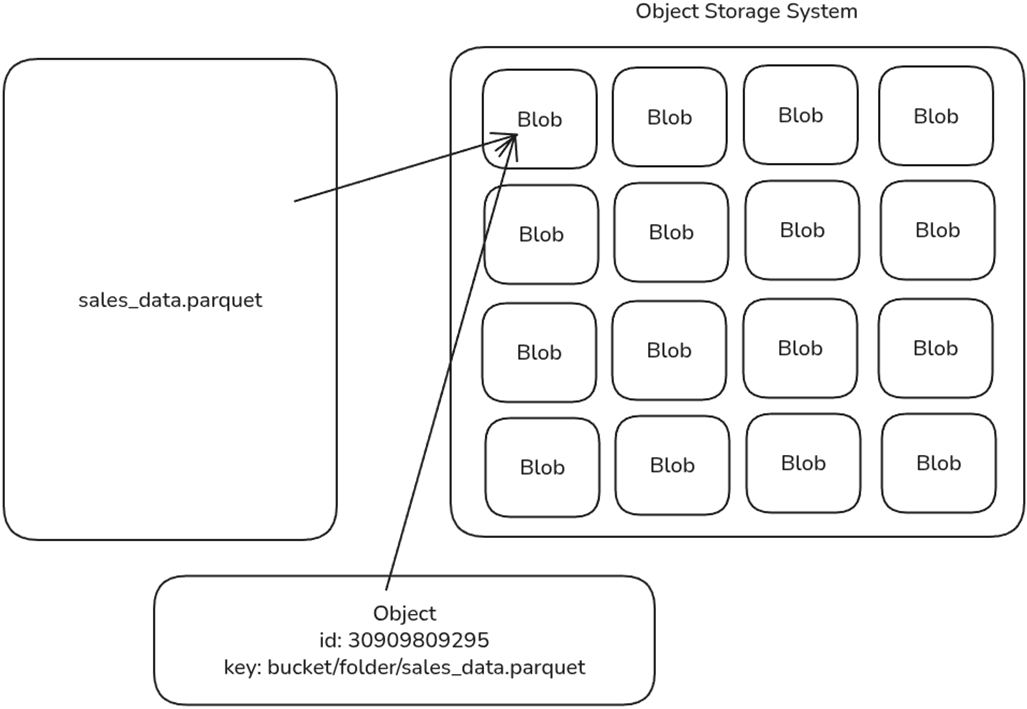
A file is stored as a blob (binary large object) with an Object with metadata and id used to access it, user requests the file by key and the system then uses the metadata to locate and retrieve the file.
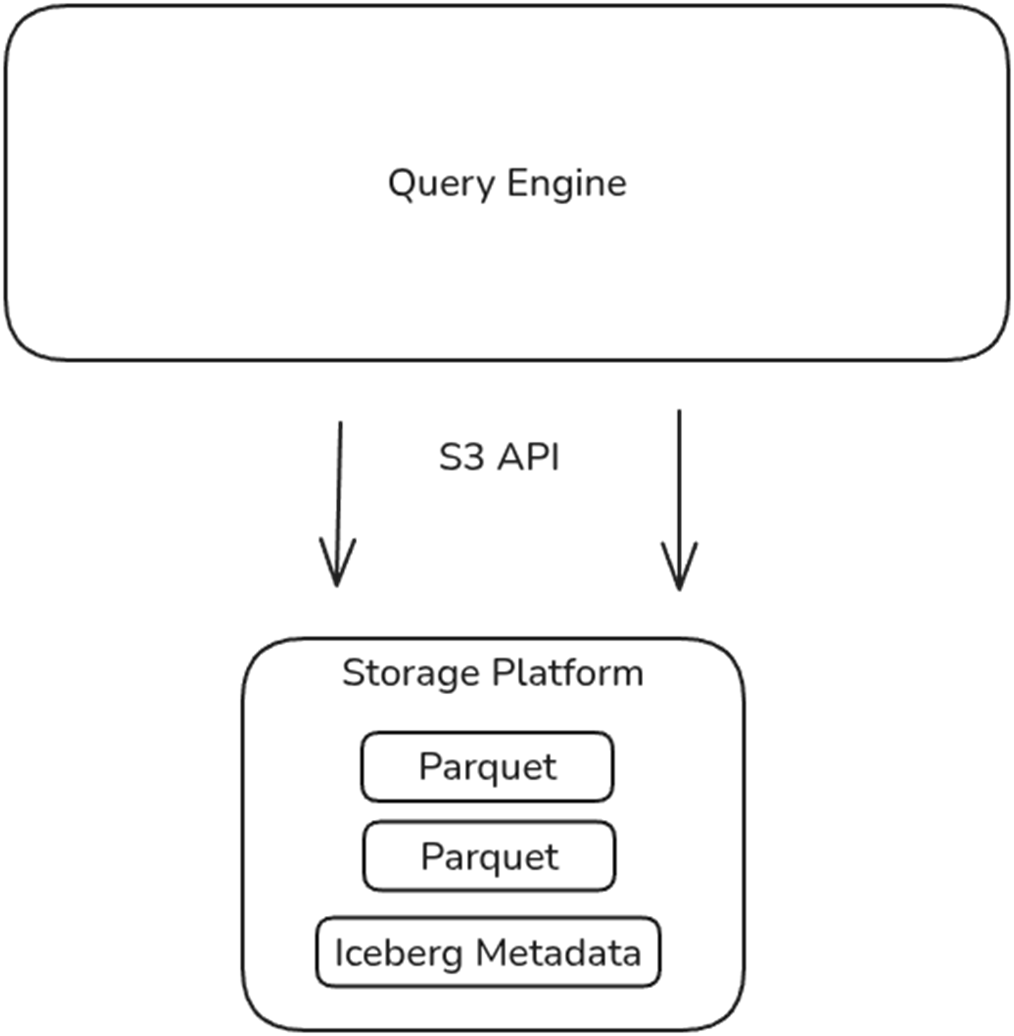
The engine doing an Iceberg transaction will use the S3 API to talk to an object storage platform where it will store data as a parquet file along with the Iceberg metadata.
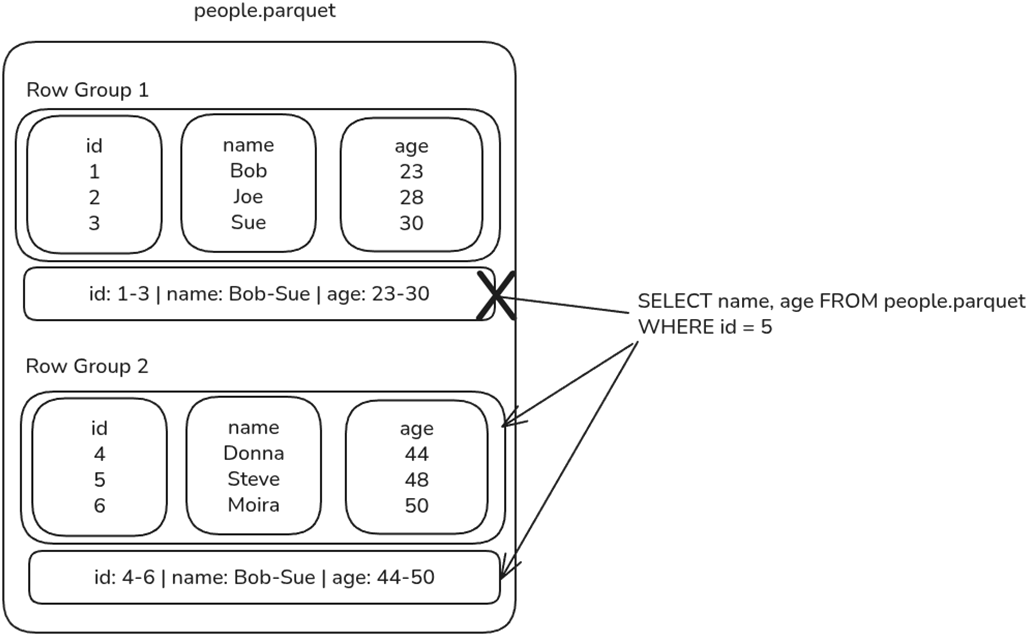
Based on the metadata in a parquet row group footers, we can determine whether a particular row group needs to be scanned or can be skipped for faster reading.
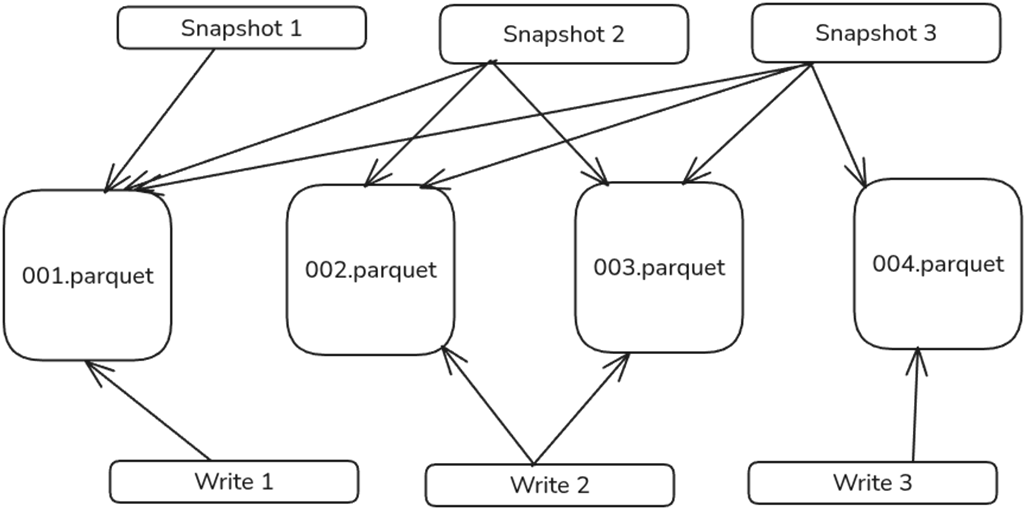
Each write to the table introduces new files, while the metadata of each snapshot tracks the files in that table at that time.
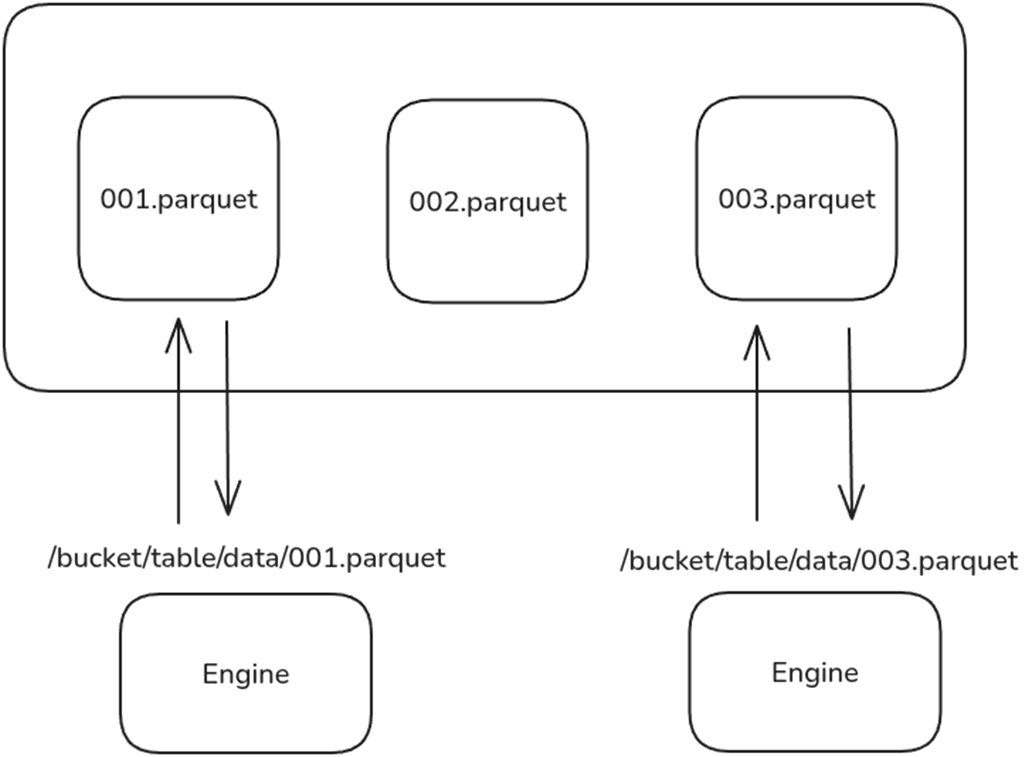
Different engines working with the same Iceberg table can individually request files concurrently from the object storage system.
Summary

  • The storage layer is a foundational component of any Apache Iceberg lakehouse, influencing performance, scalability, cost, and compliance.
  • Before selecting a storage solution, it’s critical to define requirements based on file retrieval performance, security, data integrity, and operational costs, ideally as part of a structured audit.
  • Storage systems generally fall into two categories: block storage, which offers low-latency performance but higher operational complexity, and object storage, which is more scalable and cloud-native.
  • Apache Parquet is the default file format for Iceberg due to its columnar design and rich metadata support, enabling efficient pruning and high-performance queries.
  • The S3 API has become the industry standard for object storage access, enabling broad interoperability across cloud and on-premises systems.
  • A wide range of storage solutions support Iceberg deployments, including cloud services like Amazon S3, Google Cloud Storage, and Azure Blob/ADLS, as well as on-premises options such as MinIO, Ceph, NetApp StorageGRID, Dell ECS, Pure Storage, and Wasabi.
  • Each storage platform offers trade-offs across cost, complexity, performance, and governance. No single solution fits all use cases.
  • Real-world requirements, like interactive latency, legal compliance, disaster recovery, or budget constraints, should guide final selection. Hypothetical examples illustrate how different needs might map to different technologies.
  • By aligning your storage layer to the specific requirements uncovered during your audit, you ensure that your Iceberg lakehouse is not only technically sound, but also operationally sustainable and aligned with business goals.

FAQ

Why is the storage layer so important in an Apache Iceberg lakehouse?The storage layer is the foundation of an Apache Iceberg lakehouse because it determines reliability, scalability, performance, security, and long-term cost efficiency. While ingestion tools, catalogs, and query engines shape the user experience, poor storage choices can create bottlenecks, security gaps, data integrity risks, and operational complexity. A well-chosen storage layer enables flexible integrations, predictable performance, and sustainable growth.
What requirements should be defined before selecting a storage solution?Before choosing a storage technology, organizations should define requirements across four major areas: performance, security, integrity, and cost or operational overhead. Performance includes throughput, latency, concurrency, and access patterns. Security includes access control, encryption, auditability, and data residency. Integrity includes durability, backups, versioning, high availability, and recovery. Cost and operational requirements include total cost of ownership, scalability, interoperability, maintenance effort, and staffing needs.
How do block storage and object storage differ for Iceberg workloads?Block storage divides data into fixed-size chunks managed by an operating system or distributed filesystem, such as HDFS. It can offer low latency and high throughput when compute and storage are co-located, but it is often harder to scale and operate. Object storage stores data as independent objects with metadata and unique keys, usually accessed through APIs such as S3. It supports separation of compute and storage, elastic scaling, high durability, and lower operational overhead, making it the default choice for most modern Iceberg lakehouses.
When might HDFS still be a good storage choice for Apache Iceberg?HDFS can still be useful for organizations with mature Hadoop environments that want to adopt Iceberg without immediately replacing existing infrastructure. Iceberg can manage Parquet files stored in HDFS and provide benefits such as ACID guarantees, schema evolution, and time travel. However, HDFS is generally better viewed as a transitional option for legacy environments because it lacks cloud-native elasticity, S3-compatible access, object-level metadata, and modern managed-service simplicity.
Why is object storage commonly preferred for modern Iceberg lakehouses?Object storage is commonly preferred because it decouples compute from storage, scales horizontally, supports high durability, and is widely compatible with cloud-native analytics tools. It usually provides features such as lifecycle policies, versioning, replication, server-side encryption, IAM-based access control, and audit logging. Apache Iceberg works well with object storage because Iceberg tables consist of immutable data and metadata files that can be independently read, written, and versioned.
What role does Apache Parquet play in the Iceberg storage layer?Apache Parquet is the dominant columnar file format used with Iceberg tables. Its column-oriented structure allows query engines to read only the columns needed for a query, reducing I/O and improving performance. Parquet also supports compression, row groups, embedded statistics, schema information, and nested data. Iceberg uses Parquet metadata together with its own manifests to prune files and row groups, skip irrelevant data, and support efficient analytics at scale.
Why is the S3 API considered foundational for Iceberg lakehouse storage?The S3 API has become the de facto standard interface for object storage. It allows engines and tools to create, retrieve, and manage objects through a consistent HTTP-based model. Iceberg can run on any mature S3-compatible object store, including Amazon S3, MinIO, Ceph, NetApp StorageGRID, Dell ECS, Pure Storage, and Wasabi. However, not all S3-compatible systems behave identically, so consistency, performance, API completeness, and production maturity should be evaluated carefully.
What storage security features should an Iceberg lakehouse require?An Iceberg lakehouse storage layer should support fine-grained access control, encryption at rest and in transit, integration with identity systems, key management support, audit logging, and data residency controls. Object stores often use bucket-level and prefix-level permissions with IAM policies, while block storage typically relies on filesystem permissions or host-level isolation. Regulated environments may also require WORM, object locking, BYOK or KMS integration, and detailed access logs for compliance.
How should data integrity be evaluated when choosing storage for Iceberg?Data integrity should be evaluated by looking at durability, replication, backup and recovery, versioning, checksumming, consistency behavior, and high availability. Iceberg depends on data files and metadata files remaining synchronized and recoverable. Storage systems should provide mechanisms such as point-in-time snapshots, object versioning, geo-replication, erasure coding, self-healing, and corruption detection. Without strong storage-level integrity, Iceberg tables may face query failures, data loss, or inconsistent reads.
How should organizations choose between storage vendors such as Amazon S3, GCS, ADLS, MinIO, Ceph, StorageGRID, Pure Storage, Dell ECS, and Wasabi?Organizations should choose based on their requirements, existing ecosystem, operational maturity, and constraints. Amazon S3 is a natural fit for AWS-centric deployments. Google Cloud Storage is strong for GCP analytics and strong consistency. Azure Blob Storage and ADLS fit Azure environments, with ADLS adding hierarchical namespace and fine-grained ACLs. MinIO is useful for lightweight, S3-compatible on-prem or hybrid deployments. Ceph suits teams needing open-source, unified storage with strong operational expertise. StorageGRID and Dell ECS fit enterprise governance, compliance, and geo-distributed needs. Pure Storage is a premium option for high-performance, low-latency workloads. Wasabi is attractive for cost-predictable, S3-compatible cloud storage.

pro $24.99 per month

  • access to all Manning books, MEAPs, liveVideos, liveProjects, and audiobooks!
  • choose one free eBook per month to keep
  • exclusive 50% discount on all purchases
  • renews monthly, pause or cancel renewal anytime

lite $19.99 per month

  • access to all Manning books, including MEAPs!

team

5, 10 or 20 seats+ for your team - learn more


choose your plan

team

monthly
annual
$49.99
$499.99
only $41.67 per month
  • five seats for your team
  • access to all Manning books, MEAPs, liveVideos, liveProjects, and audiobooks!
  • choose another free product every time you renew
  • choose twelve free products per year
  • exclusive 50% discount on all purchases
  • renews monthly, pause or cancel renewal anytime
  • renews annually, pause or cancel renewal anytime
  • Architecting an Apache Iceberg Lakehouse ebook for free

choose your plan

team

monthly
annual
$49.99
$499.99
only $41.67 per month
  • five seats for your team
  • access to all Manning books, MEAPs, liveVideos, liveProjects, and audiobooks!
  • choose another free product every time you renew
  • choose twelve free products per year
  • exclusive 50% discount on all purchases
  • renews monthly, pause or cancel renewal anytime
  • renews annually, pause or cancel renewal anytime
  • Architecting an Apache Iceberg Lakehouse ebook for free