Overview
3 Preparing for your move to Apache Iceberg
Preparing for Apache Iceberg is presented as an organizational and architectural planning effort, not just a technical upgrade. The text emphasizes that teams should begin with a structured audit of their current data environment before choosing tools, catalogs, query engines, or deployment models. This audit should clarify existing systems, pain points, compliance constraints, and business goals so that future Iceberg decisions are based on real requirements rather than vendor claims or generic best practices.
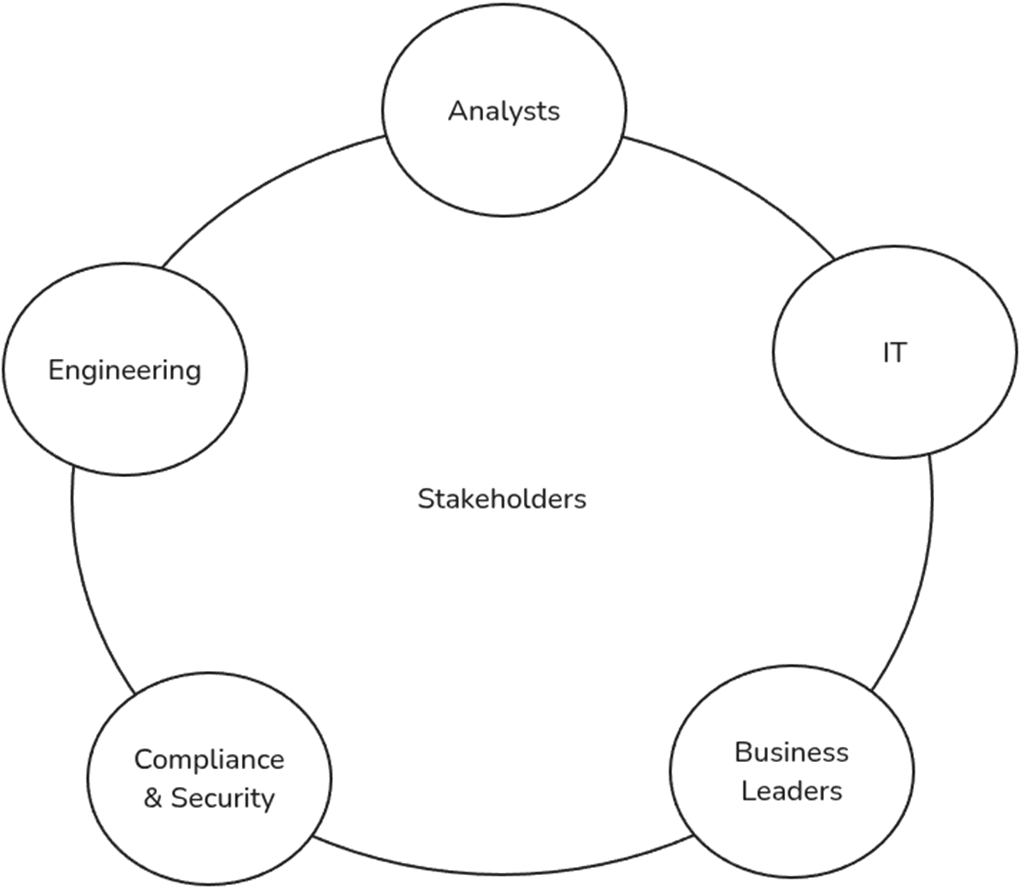
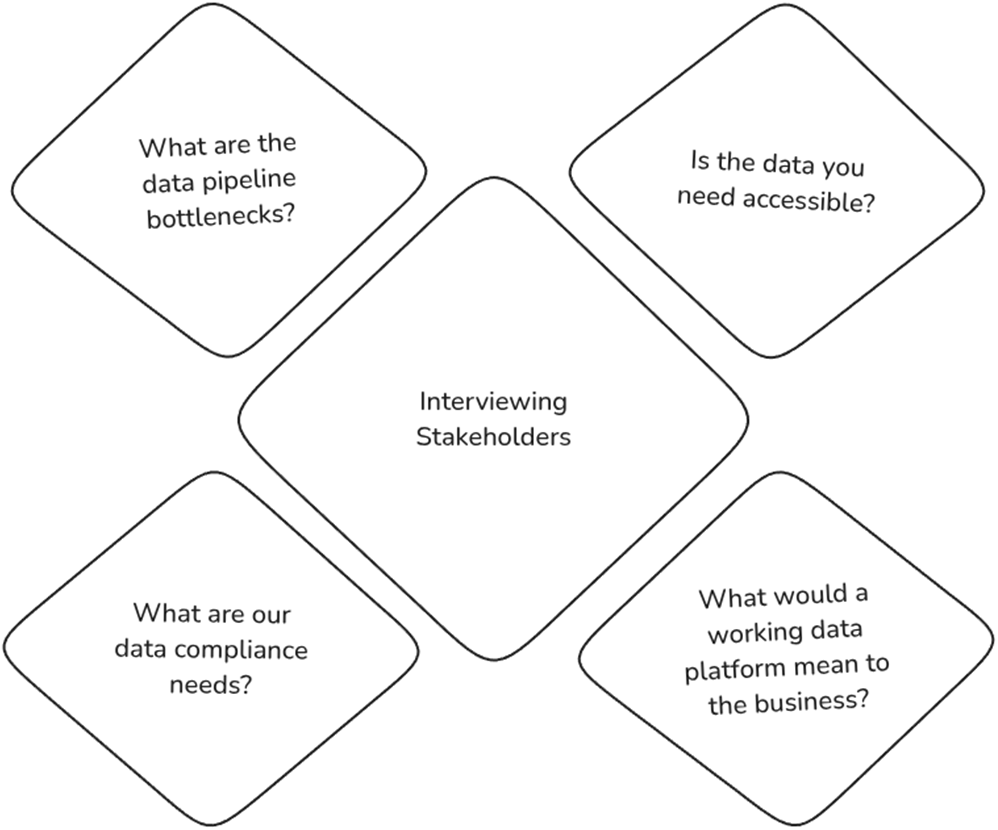
A major focus is stakeholder discovery and technical assessment. Data engineers, analysts, data scientists, compliance teams, business leaders, and IT infrastructure teams each reveal different needs: brittle pipelines, slow or untrusted data access, regulatory obligations, cost pressures, scalability limits, and inconsistent governance. The technical audit then documents storage systems, file formats, ingestion frameworks, metadata catalogs, query engines, and BI tools to identify fragmentation, duplication, manual processes, and compatibility gaps. The Hamerliva Bank example illustrates how these interviews and audits expose issues across storage, processing, governance, and data consumption.
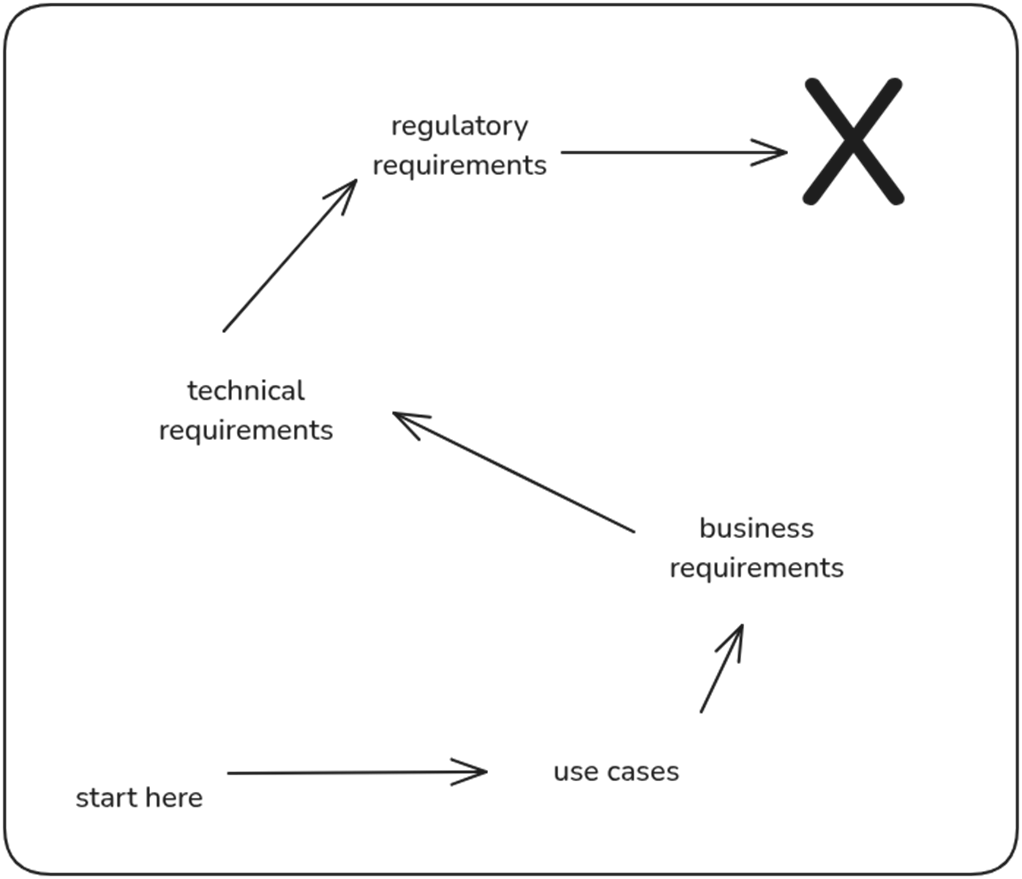
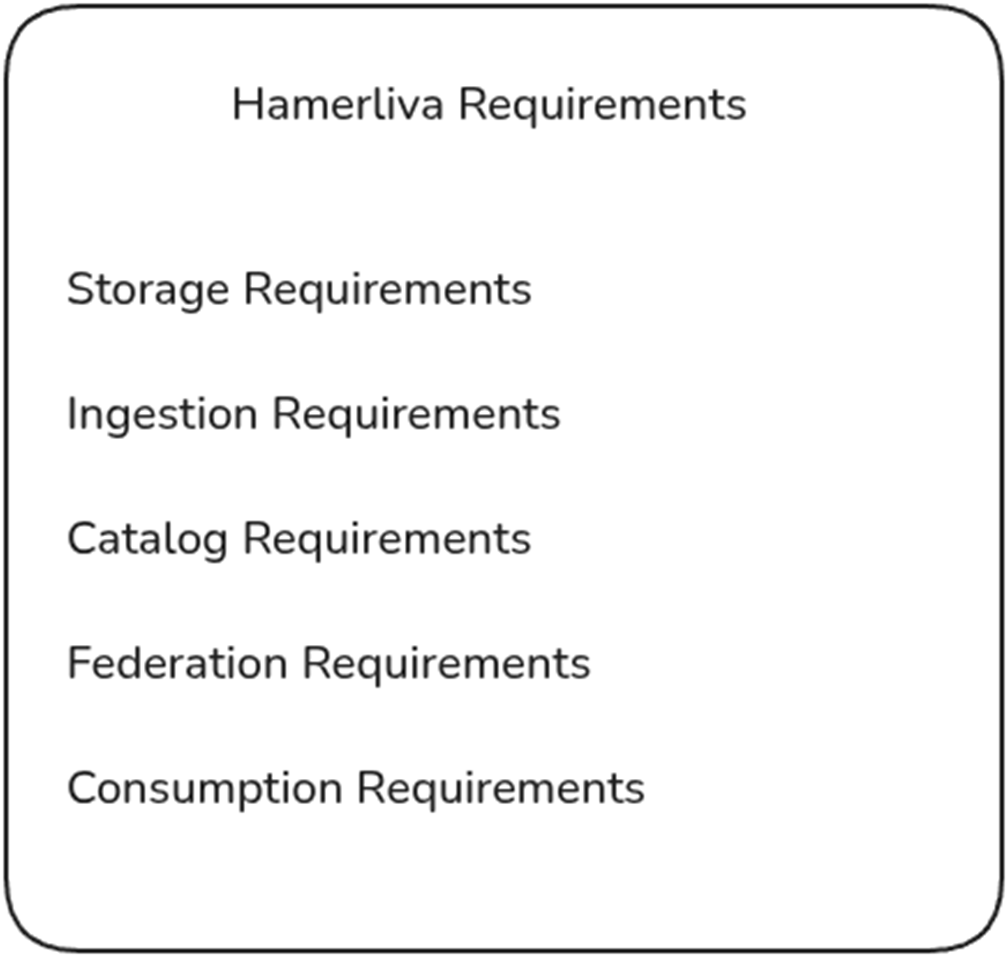
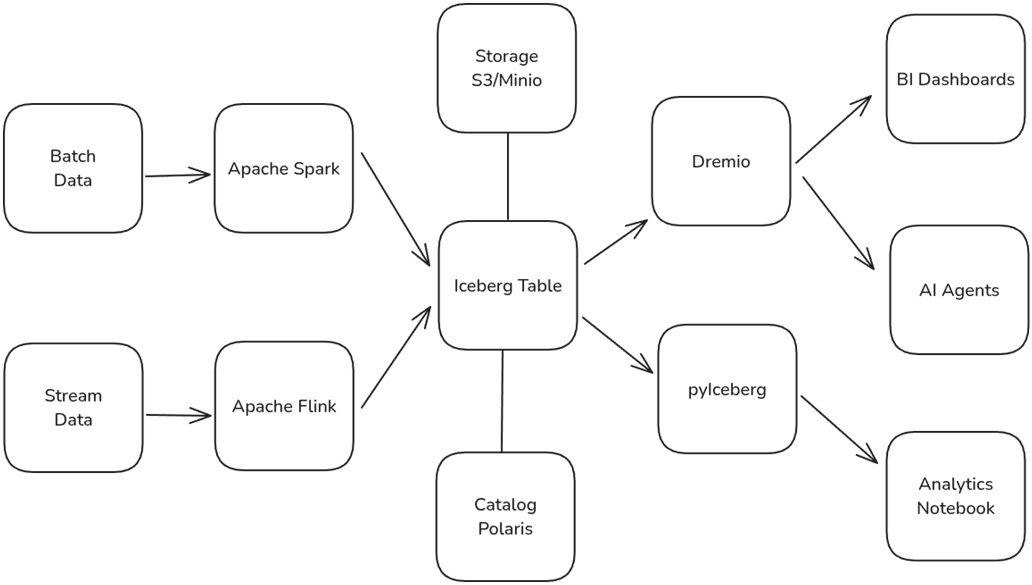
The text then shows how audit findings become prioritized requirements across five lakehouse components: storage, ingestion, catalog, federation, and consumption. Requirements should be specific, testable, and outcome-focused, such as enforcing regional data residency, supporting schema evolution, enabling REST-compatible catalogs, providing federated access, and delivering consistent governed access through BI and data science tools. Finally, the text stresses that an architectural plan must be communicated through a stakeholder road show, where teams validate assumptions, refine the design, build trust, and create shared ownership before implementation begins.
Summary
- Transitioning to an Apache Iceberg-based lakehouse involves making informed, strategic decisions that are grounded in your organization’s real-world needs.
- Conduct a structured audit of your current data architecture, translate those insights into actionable requirements, and build a stakeholder-aligned architectural plan.
- Engage stakeholders across roles and functions to surface technical and organizational needs.
- Document and categorize your current tooling, storage systems, and governance practices.
- Before moving forward with implementation, it’s crucial to gain consensus and clarity across all departments.
- The roadshow process helps create shared understanding and feedback loops which can transform a proposed architecture into a cross-functional initiative, reducing friction and fostering long-term support.
FAQ
Why should an organization conduct an audit before moving to Apache Iceberg?
An audit helps the organization understand its current data environment, technical constraints, governance obligations, stakeholder needs, and business goals before making architectural decisions. Without this step, an Iceberg implementation may duplicate existing problems, introduce unexpected costs, or fail to meet compliance and usability requirements.Which stakeholders should be involved in preparing for an Apache Iceberg lakehouse?
The chapter recommends involving data engineers, analysts, data scientists, compliance and security teams, business leaders, product owners, and IT/infrastructure teams. Each group brings a different perspective: engineers understand pipeline fragility, analysts understand data access and trust issues, compliance teams define non-negotiable controls, business leaders clarify outcomes, and infrastructure teams identify operational constraints.What kinds of questions should be asked during stakeholder interviews?
Stakeholder interviews should uncover both current pain points and future goals. Data engineers should be asked about brittle pipelines, schema issues, and scaling bottlenecks. Analysts and data scientists should be asked about data freshness, accessibility, and trust. Compliance teams should be asked about auditability, encryption, residency, lineage, and access controls. Business leaders should be asked which use cases are blocked and what value the new platform must deliver. IT teams should be asked about storage, compute, networking, deployment models, and supportability.What should a technological audit include?
A technological audit should document the current system landscape and operational context. This includes storage systems such as HDFS, S3, NAS, Snowflake, or BigQuery; file formats such as CSV, JSON, Avro, and Parquet; ETL and ELT frameworks such as Spark, Flink, NiFi, Informatica, or Kafka; metadata and catalog systems such as Hive Metastore or AWS Glue; and query or BI tools such as Dremio, Trino, Presto, Tableau, and Power BI.How do audit findings become actionable requirements?
Audit findings are translated into plain-language, outcome-focused requirements organized around the five foundational lakehouse components: storage, ingestion, catalog, federation, and consumption. These requirements should be specific, testable, and prioritized by business impact and implementation complexity. For example, a finding about EU regulatory constraints might become: “All PII data collected in the EU must remain physically stored within EU data centers.”What are the five foundational components used to structure Iceberg lakehouse requirements?
The chapter organizes requirements around five components: storage, ingestion, catalog, federation, and consumption. Storage defines where and how data is stored and governed. Ingestion defines how data enters the lakehouse. The catalog manages Iceberg table metadata and governance integration. Federation enables access to distributed data sources without unnecessary duplication. Consumption defines how users, BI tools, notebooks, and applications access and analyze data.What storage requirements should be considered before implementing Apache Iceberg?
Storage requirements should reflect compliance obligations, performance expectations, cost constraints, and operational realities. Organizations should consider whether they need cloud, on-premises, or hybrid storage; whether data residency rules apply; whether storage must support encryption, auditability, WORM policies, archival tiering, or S3-compatible APIs; and how cold data, regulatory data, and high-performance workloads will be handled.Why are catalog requirements especially important in an Iceberg lakehouse?
The catalog is central to an Iceberg lakehouse because every read and write operation depends on it to discover, access, and modify Iceberg tables. Catalog requirements should address interoperability with compute engines, support for the Iceberg REST Catalog specification, governance capabilities such as RBAC or ABAC, metadata traceability, time travel, rollback, audit logging, and whether the catalog will be self-managed or provided as a managed service.What is federation, and why might it matter in an Iceberg architecture?
Federation allows query engines to access and join data across multiple systems without physically moving or duplicating all data into one location. This is important when data remains distributed across cloud warehouses, operational databases, object stores, Hadoop environments, or SaaS systems. Federation requirements should address source connectivity, semantic consistency, query performance, acceleration, standard interfaces such as JDBC/ODBC or Arrow Flight, and governance across sources.What is the purpose of an architectural road show after requirements are defined?
An architectural road show is used to socialize the proposed Iceberg lakehouse design with stakeholder groups before implementation begins. It helps validate assumptions, gather feedback, uncover blind spots, build trust, and create internal champions. The road show turns the architecture from a technical proposal into a shared organizational commitment by showing each team how the design addresses their specific pain points and goals.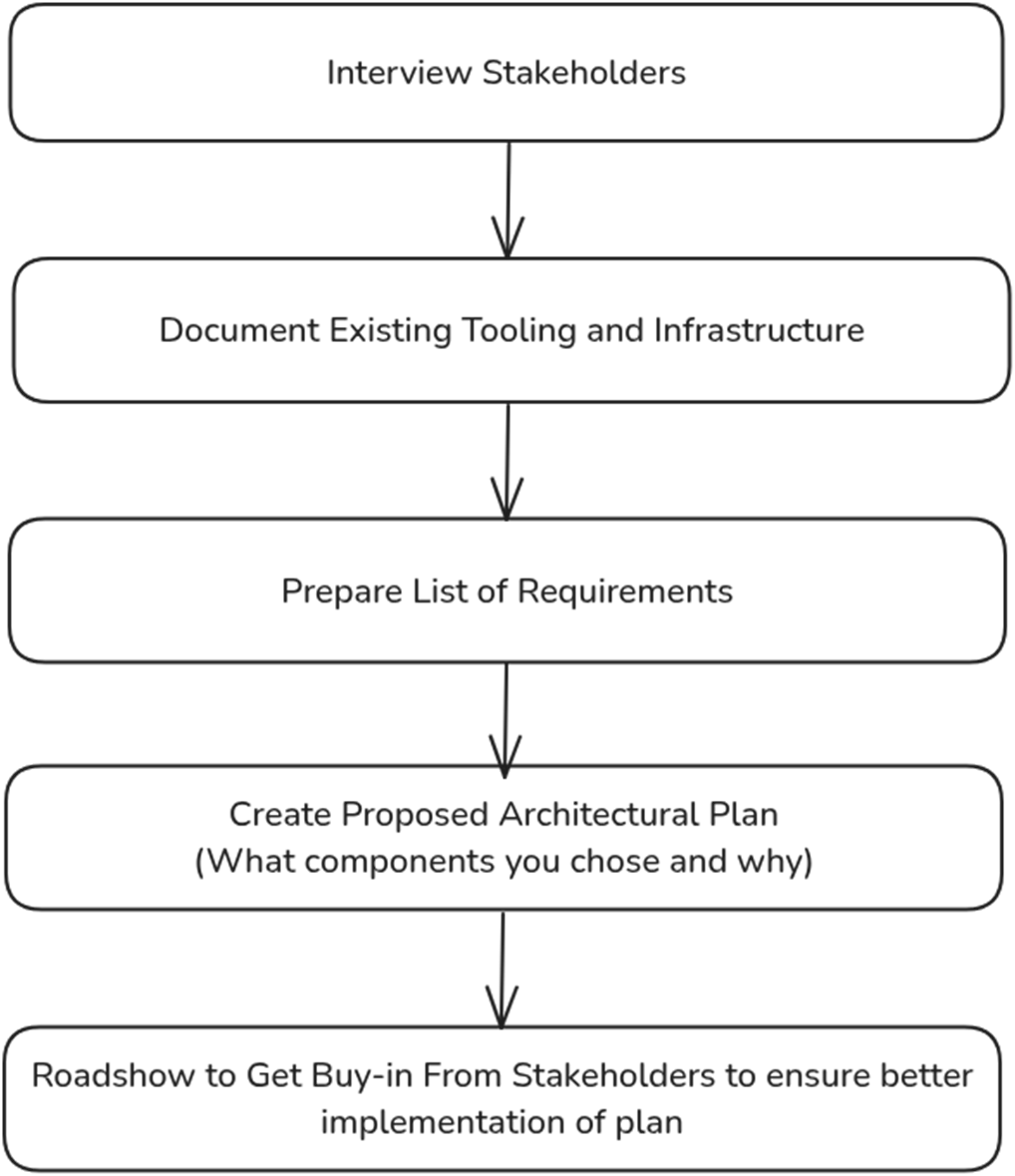

 Architecting an Apache Iceberg Lakehouse ebook for free
