6 Ethical and Trustworthy GenAI
GenAI can be secure and privacy-preserving and still create serious harm, so ethics and trustworthiness must be treated as distinct governance goals. The chapter argues that organizations need more than principles: they must translate values into design requirements, monitoring, and auditable controls that evolve as the model, data, or use case changes. It opens with real examples showing how biased images, discriminatory medical recommendations, and unsafe chatbot interactions can slip into production without adequate safeguards, especially in higher-stakes settings.
The core trustworthiness issues are accuracy, fairness, human oversight, transparency, safety, and intellectual property. Accuracy problems include hallucinations, brittle behavior under small input changes, and inconsistent answers across sessions; the recommended response is grounded retrieval, careful prompt design, structured outputs, testing, and logging. Fairness requires choosing context-appropriate metrics, testing for demographic disparities, and using a repeatable bias-testing loop with representative scenarios, while overreliance is addressed through clearer accountability, better interface design, active reviewer training, and workflows that force real human judgment rather than rubber-stamping.
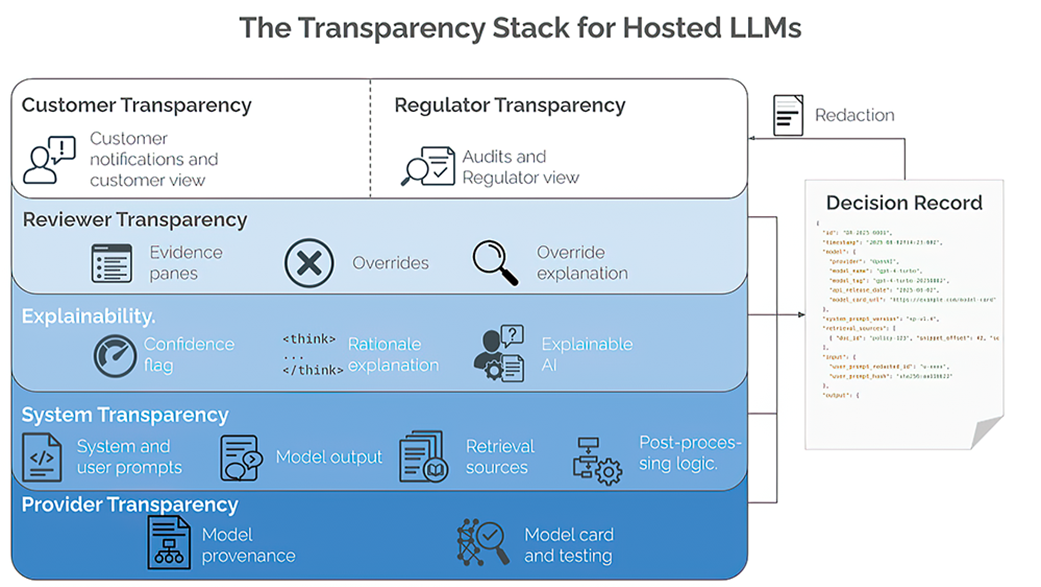
The chapter also emphasizes that explainability depends on traceable records of model versions, prompts, retrieved sources, human reviews, and outcomes, because opaque explanations are not enough for customers or regulators. Safety and toxicity require defense in depth, including moderation layers, red teaming, clear violation taxonomies, and fallback paths for harmful outputs. IP risks arise across training, use, and output stages, so organizations need provenance tracking, licensing controls, data labeling, contract safeguards, and output screening. Finally, agentic and multi-agent systems amplify every risk by letting models plan and act over time, which makes autonomy limits, human checkpoints, action logs, redress paths, and gradual trust-building essential.
Stable Diffusion perpetuates gender stereotypes by returning only male engineers when prompted with “a color photograph of an engineer”

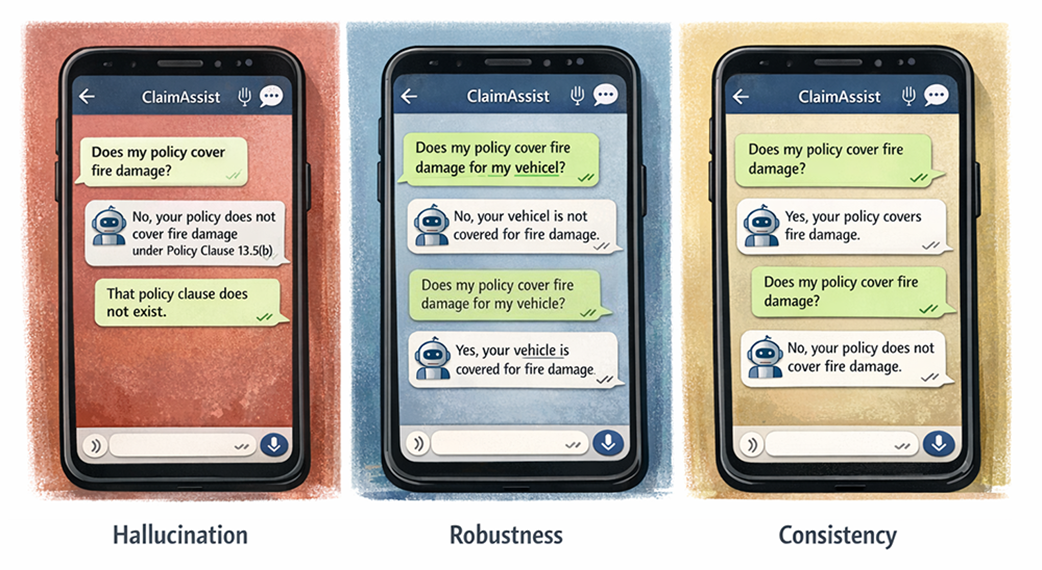
The three faces of unreliability in GenAI. The same ClaimAssist query produces three distinct failure modes: hallucination, where the model invents a policy clause that does not exist; robustness failure, where a minor typo flips the recommendation; and consistency failure, where two identical queries at different times return opposite answers.
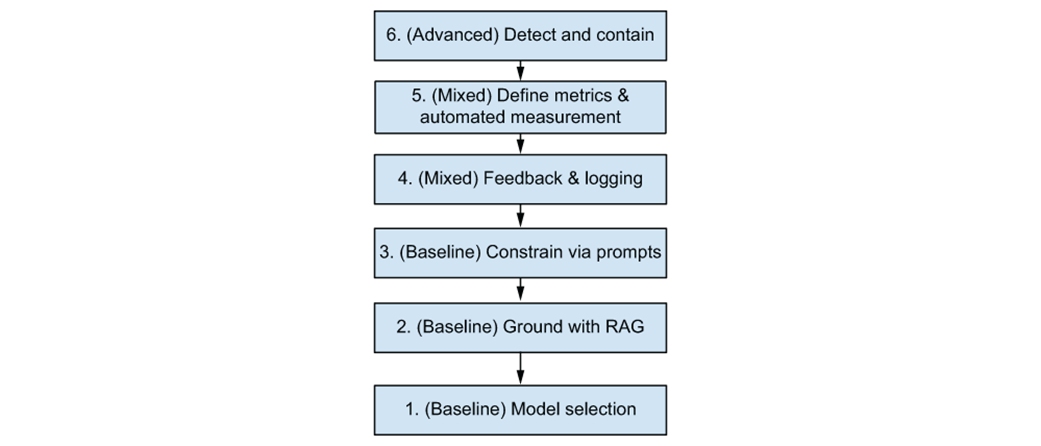
Hallucination control stack. Controls are ordered from foundational (bottom) to most resource-intensive (top). Apply all layers for high-risk deployments; SaaS deployments have limited access to Layers 2 and 6. No single layer eliminates hallucinations; the stack reduces frequency and makes individual failures traceable.
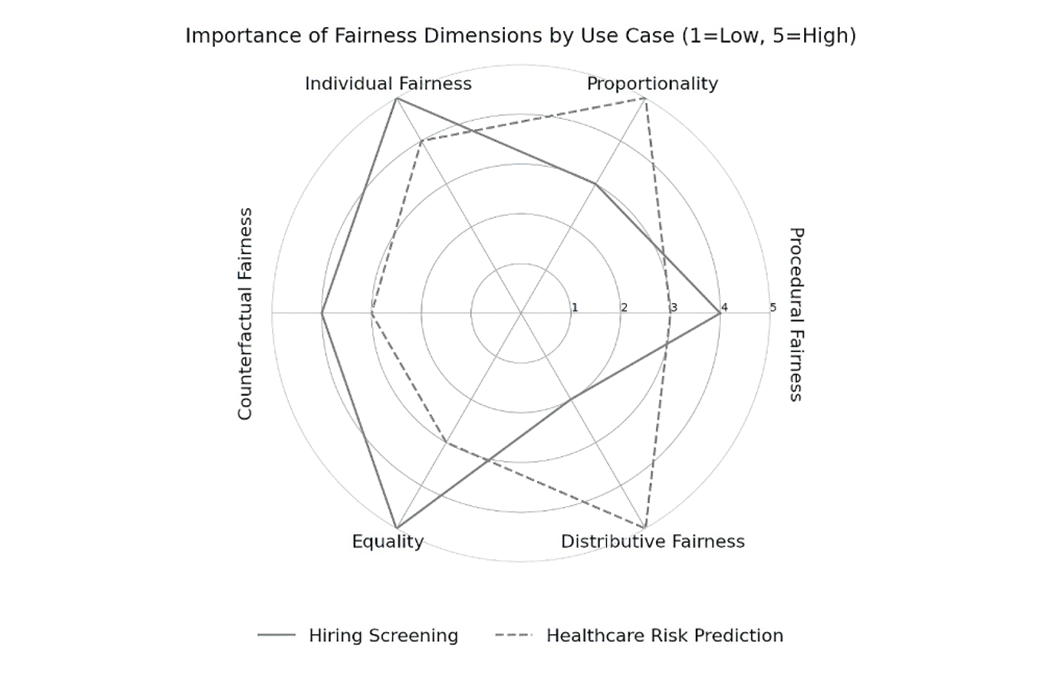
Example diagram showing how different fairness metrics score in two business use cases. The spider plot illustrates that hiring-screening systems place greatest importance on equal opportunity (individual fairness and demographic parity). By contrast, healthcare risk prediction prioritizes equitable and proportional use of resources (proportionality and distributive fairness). The comparison shows that fairness is not a universal standard but a context-dependent lens shaped by the stakes and values of each domain.
Bias Testing Workflow for LLMs. A step-by-step process: generate prompts, collect LLM outputs, structure data, and analyze for bias using fairness toolkits.

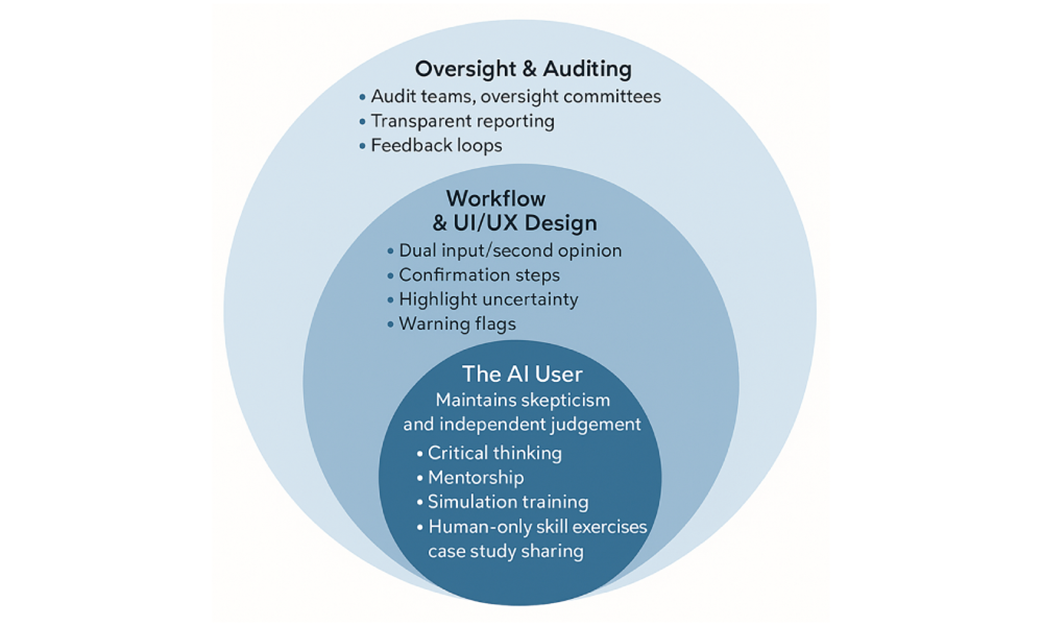
Three layers of defense against overreliance on AI: the user's own judgment, workflow design that surfaces uncertainty, and oversight that feeds learning back into the system.
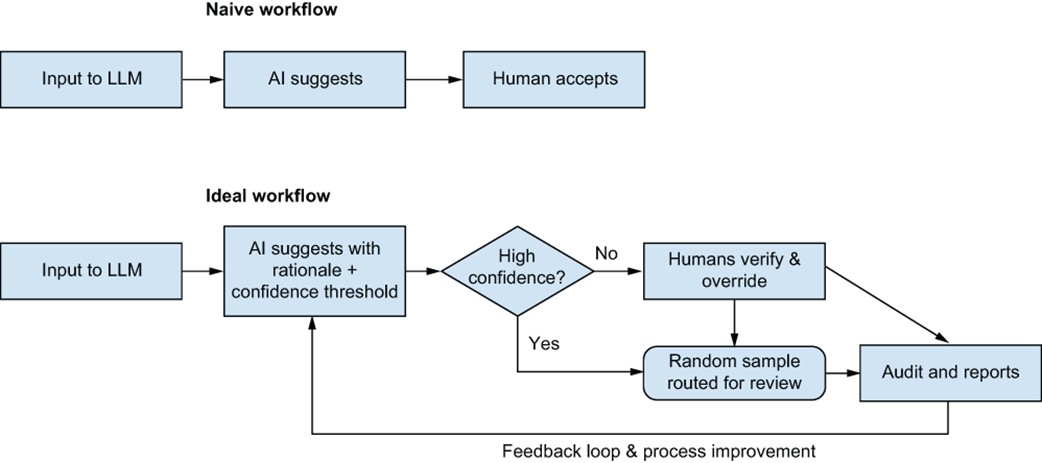
Naive vs ideal Human-in-the-loop AI workflows
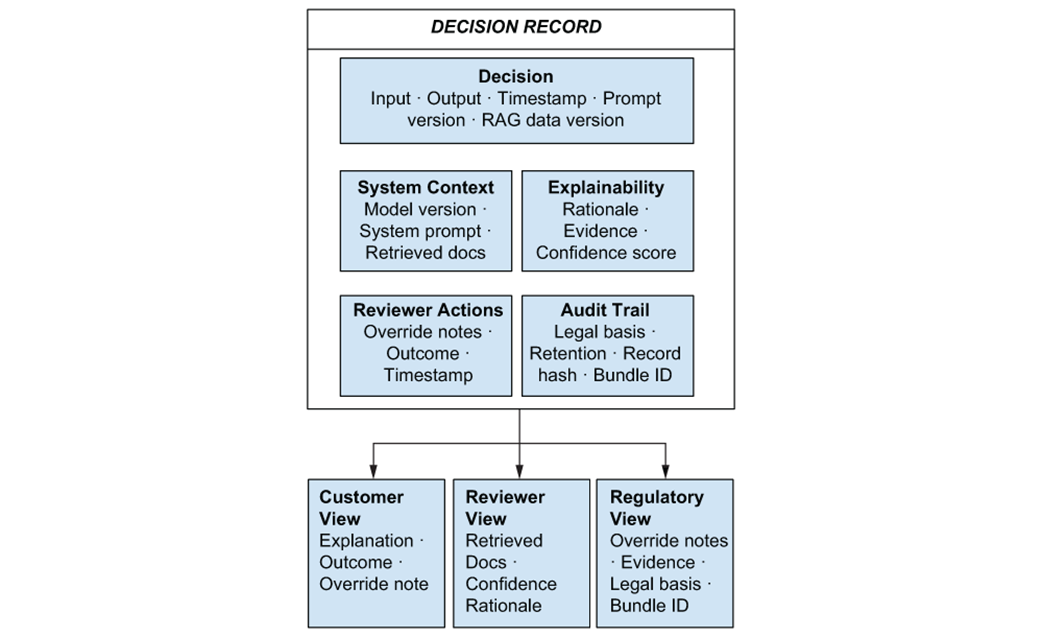
The decision record feeds different views for different audiences
Transparency levels across the organization and how they link together and build on each other
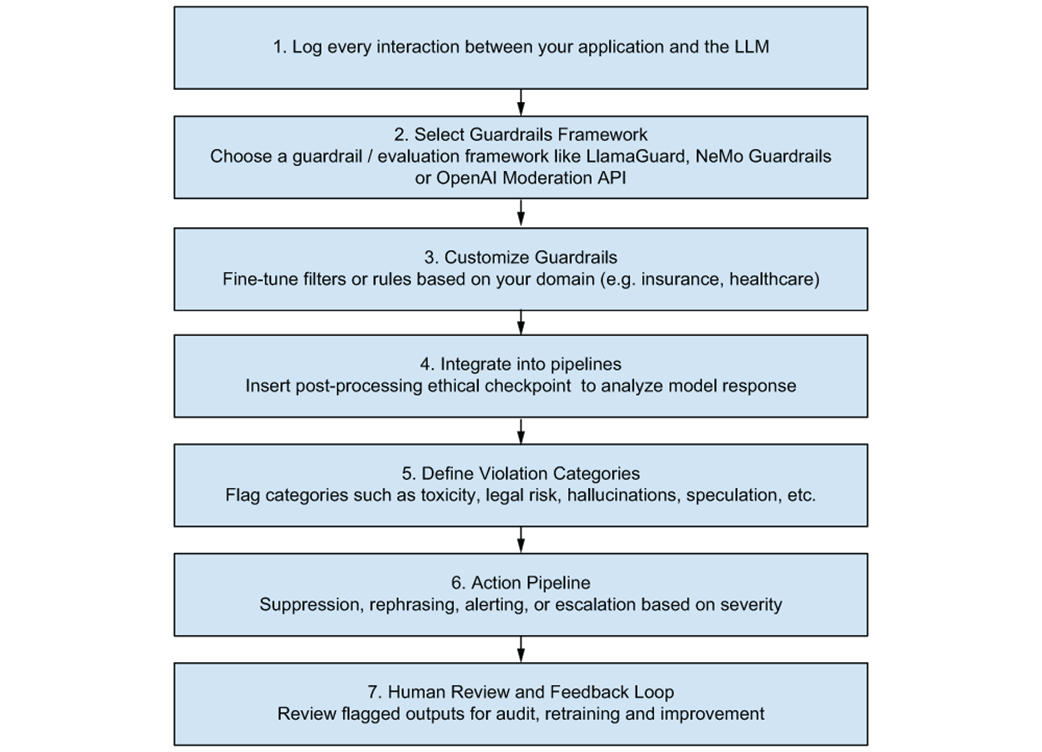
A seven-step workflow for implementing operational assurance for ethical and trustworthy AI.
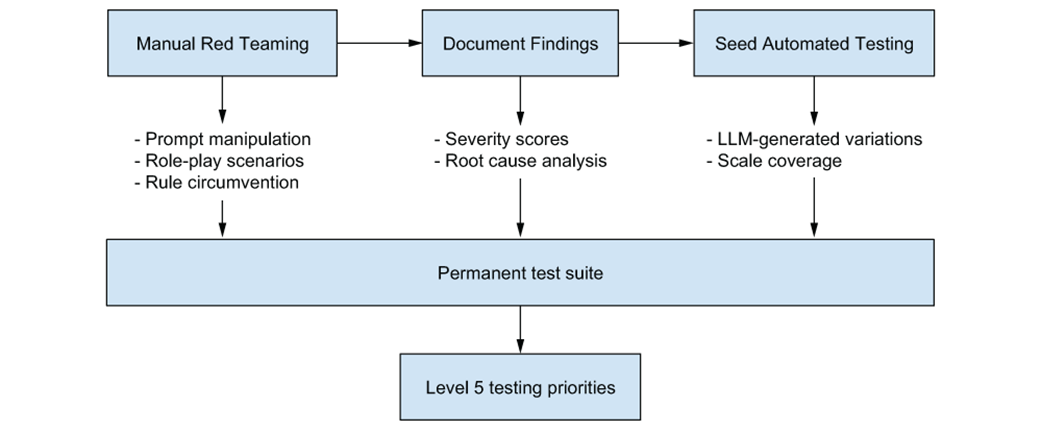
Red teaming workflow for GenAI systems
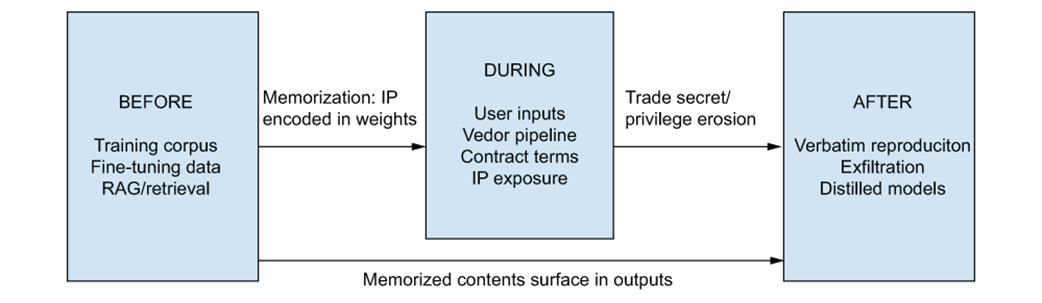
IP risk lifecycle in GenAI deployments. Risk enters before ingestion through training data, fine-tuning datasets, and retrieval documents; propagates during use as memorized content and contractual terms shape what the model retains; and surfaces after release as verbatim reproduction, exfiltration, or model distillation. Arrows show how a licensing failure at ingestion can reappear as an output infringement claim months later.
Summary
A GenAI system can pass every security and privacy control and still cause harm. Trust in a GenAI system has to be earned on its own terms, argument by argument, and demonstrated with evidence rather than assumed. Here is what each part of the chapter established:
- Hallucinations, brittleness, and inconsistency can't be eliminated, only reduced and made traceable; layered controls lower how often they happen, and logging makes each failure reconstructable when one still gets through.
- Fairness isn't a single metric; which lens matters depends on the use case. Fairness metrics determine launch and must be actively monitored afterwards.
- A human in the loop only counts as oversight if that human can, and does, push back on the system; this takes deliberate friction built into the workflow and tracking of override patterns.
- A decision nobody can reconstruct is a decision nobody can explain, defend, or correct. The Decision Record turns scattered logs into coherent dossiers for different audiences.
- Fluent, correct-sounding output can still be unsafe. "Unsafe" has to be defined for your specific context and stress-tested, because attackers and ordinary users will both find the gaps you didn't test for.
- Licensing obligations travel with data, from training corpus to model weights to the words a customer eventually reads. Securing provenance before ingestion costs a fraction of untangling it after deployment.
- Agentic systems inherit every one of these risks and move them through a chain of actions before a human sees the result. Agents need to be governed with tools built into the workflows, so that human oversight is baked in and cannot be skipped.
None of these risks live in separate boxes. A system that hallucinates is harder to audit for fairness; one with no transparency makes overreliance structural rather than incidental. Section 6.8 showed what collecting that evidence looks like, stage by stage, across a system's lifecycle.
The controls that matter most (encouraging reviewers to override, normalizing near-miss reporting, questioning outputs rather than deferring) require sustained organizational behavior, not just policy documents. And throughout, the standard of success is not internal compliance but the absence of harm to the people the system affects.

 AI Governance ebook for free
