Let’s review individual sections of my chapter. I will show you what I wrote. Before accepting it as correct, think about the concept being outlined and then compare your information to what I am saying. If anything is not correct, please tell me. If there’s anything really useful that is missing, make a suggestion. Try to mimic the style in which I have written the content.
This paragraph feels redundant with some of the prior. Can you remove some of the redundancy while preserving the essential message?
The next section is a comparison of Free vs Premium Accounts. This will be the first time we discuss paying for access to AI services. I expect the reader will not yet understand why they should pay for access to AI. Let’s start with a brief introduction to the section.
Mimicking my writing style, incorporate some of your suggestions into the provided text. Specify your additions by using """ as a delineator.
I want to compare the use of API tokens to coins at an arcade, but I don’t want to date myself. What’s another good analogy?
FAQ
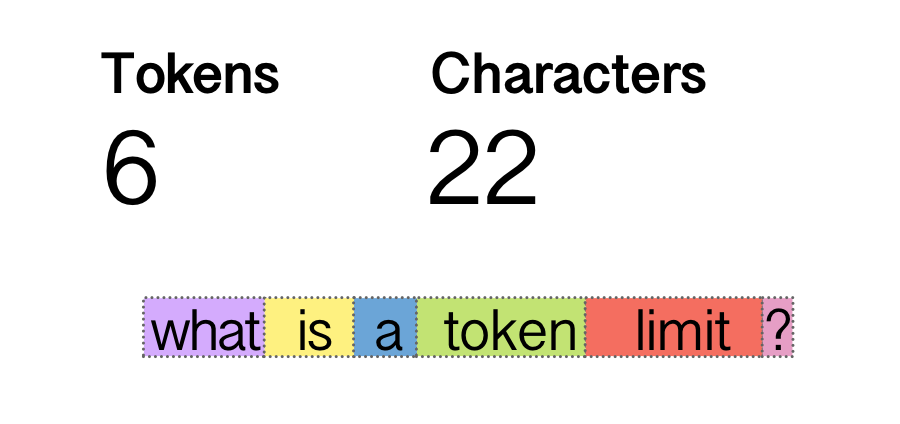
What is a prompt, and why does the way I phrase it matter?A prompt is any input you give an AI model to elicit a specific output—typically text, but it can also include images, files, or links. The wording, specificity, tone, and structure of your prompt strongly influence the response. Crafting effective prompts (“prompt engineering”) helps you get accurate, relevant, and creative results.What does statefulness mean in AI conversations?Statefulness is the AI’s ability to remember previous turns in a conversation and use that information in subsequent responses. It helps maintain continuity and coherence, unlike stateless systems (like traditional search) that treat every query independently. Many APIs are stateless by default, though tools like OpenAI’s Assistants enable stateful programmatic sessions.How is context retention different from statefulness, and what is coherence?Statefulness enables carrying context across turns; context retention is about how much and how long that context is kept within a session. Coherence is the model’s ability to use that retained context to produce relevant, consistent answers. Conversations are isolated per chat; if coherence slips, restate key points or briefly summarize to refocus the model.What are tokens, and how do they relate to words?Tokens are the chunks of text AI models read and generate. A rule of thumb is ~4 characters per token (about 3/4 of an English word), so 100 tokens ≈ 75 words. Token size varies by language and word length. You can inspect tokenization with OpenAI’s tokenizer tool or libraries like tiktoken.What is a token limit (context window), and what counts toward it?A token limit is the maximum number of tokens a model can consider at once. Everything in the session counts: your inputs and the AI’s outputs. Some platforms also impose separate limits for input and output. Exceeding the limit constrains how much text the model can process or generate in one go.Why does a chatbot sometimes “forget” details I provided earlier?Think of the conversation as a bucket of tokens. When it fills up, older tokens are removed to make room for new ones. Information that falls out of the bucket is no longer in context, so responses can become less relevant—like forgetting your stated favorite color later in the chat.What happens when a conversation exceeds the token limit? Will I be warned?In chat UIs, you typically won’t get an explicit warning. The model may skip earlier details or produce incomplete answers while sounding confident. In APIs, you might see errors or truncated responses. Mitigate by breaking big tasks into smaller steps, summarizing key points periodically, presenting one task at a time, and restating critical info.How do token limits impact API development and cost?Stateless API patterns often require repeating context, consuming more tokens and increasing cost. Large inputs can hit limits or cause truncation. Use features like OpenAI’s Assistants (stateful sessions) or Claude’s Prompt Caching to avoid resending the same context, improve coherence, and reduce token spend.Does a larger context window guarantee better-quality answers?No. Bigger windows allow more text but also increase complexity. Quality primarily depends on the model’s training data and architecture. “Needle in a Haystack” tests show retrieval accuracy can drop as context grows. Newer models do better, but high limits alone don’t ensure accuracy or coherence.Should I upgrade to a premium AI account, and do subscriptions include API tokens?Premium accounts are generally less frustrating: better models, higher limits, fewer throttles, and features like browsing, file uploads, image generation, voice/vision, and advanced data analysis. Free tiers can be great to start but are often rate-limited or feature-limited. Subscription fees do not cover API token usage—API calls are billed separately on a per-token basis.
pro $24.99 per month
access to all Manning books, MEAPs, liveVideos, liveProjects, and audiobooks!


 AI for Everyday IT ebook for free
