3 JavaScript and TypeScript deep dive
This chapter pivots from HTML/CSS to the twin pillars of modern front-end work: JavaScript and TypeScript. It frames interview readiness as a progression from fundamentals to applied skills to advanced judgment, emphasizing clear mental models, precise debugging, and the ability to reason about real code. Alongside high-level guidance, the material weaves in practical exercises and probing follow-ups to reinforce core concepts, reflecting the expectations placed on candidates for both frontend and full‑stack roles. The overarching message: strong JavaScript foundations plus growing TypeScript fluency are now baseline requirements for building scalable, maintainable applications—and for excelling in technical interviews.
On the JavaScript side, the chapter deepens mastery of execution and scope (hoisting, the temporal dead zone, closures, and this), type coercion and equality, and robust error handling. It connects closures to real-world patterns and pitfalls, including memory retention in long-lived callbacks, then shows how to prevent leaks with disciplined cleanup and design. Functional programming receives thorough treatment—pure functions, immutability, map/filter/reduce, currying, higher‑order functions, iterators/generators, and meta‑programming with symbols, Proxy, and Reflect—culminating in composable pipelines that can interoperate cleanly with class-based modules. Asynchronous behavior is demystified through the event loop, microtasks versus macrotasks, promises and async/await, and patterns like event delegation with their trade-offs. Finally, the chapter ties performance and maintainability to memory management and modular architecture, highlighting modern ES module practices, tree‑shaking, and code splitting, and illustrates applied skills with a timer UI that showcases closures, immutable state updates, and thoughtful cleanup.
The TypeScript sections explain why adoption has surged—compile‑time safety, powerful tooling, and self‑documenting code—and then dive into the type system: annotations and inference, structural typing, unions and intersections, literal and enum types, generics with constraints and keyof, utility types, and disciplined narrowing with never. It contrasts any and unknown to balance flexibility with safety, and shows how declaration files and ecosystem typings bridge JavaScript libraries into typed projects, reinforced by an exercise augmenting the global window object for a third‑party API and an alternative using community‑maintained types. Tooling and configuration guidance covers strictness, interop, and build workflows at scale, while the trends section spotlights emerging native TypeScript execution in runtimes and a proposal for erasable type syntax in JavaScript. The takeaway is clear: pairing deep JavaScript expertise with TypeScript‑driven design and an awareness of the evolving platform equips candidates to solve practical problems and communicate senior‑level trade‑offs in interviews.
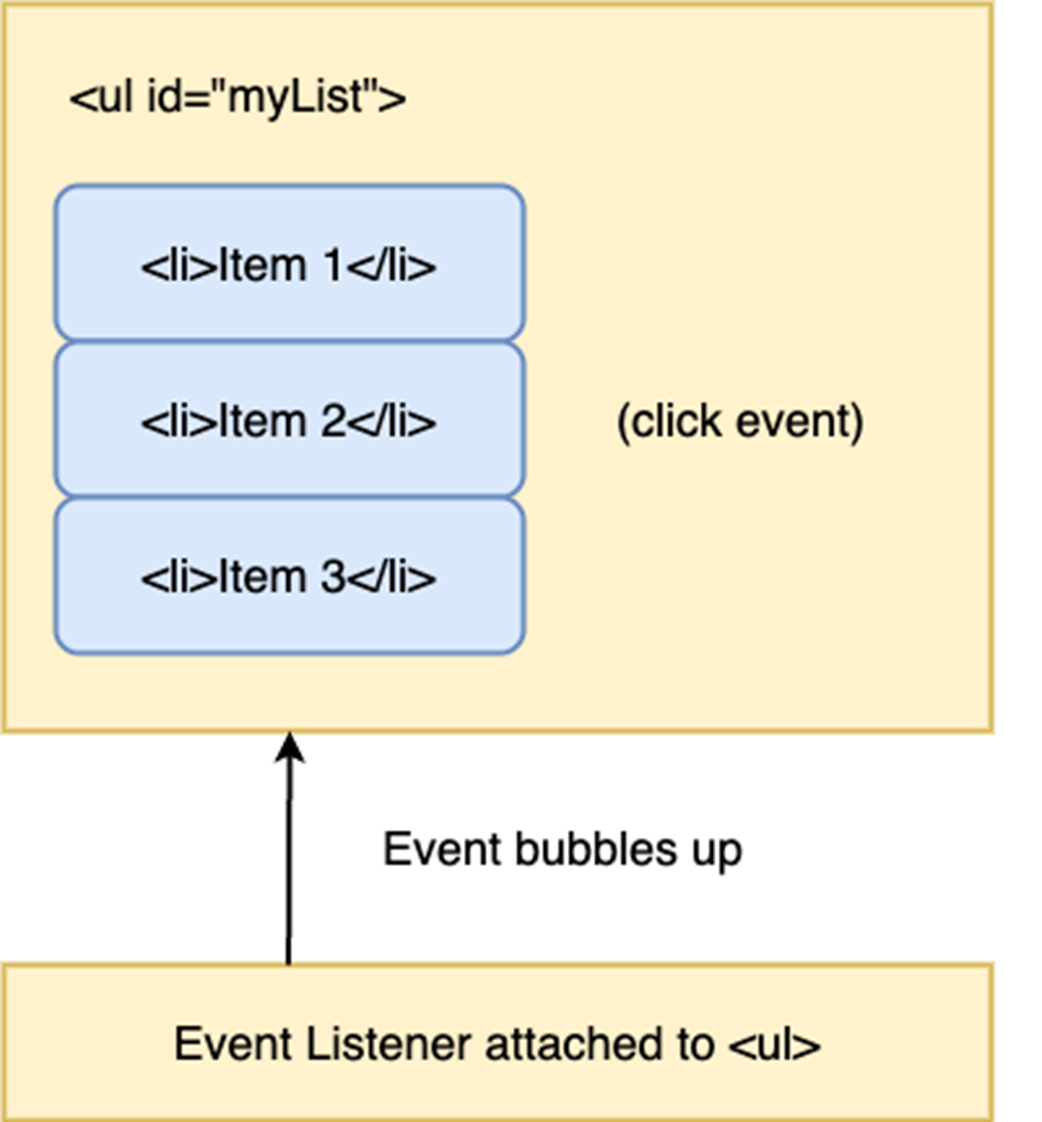
Event delegation pattern illustrated
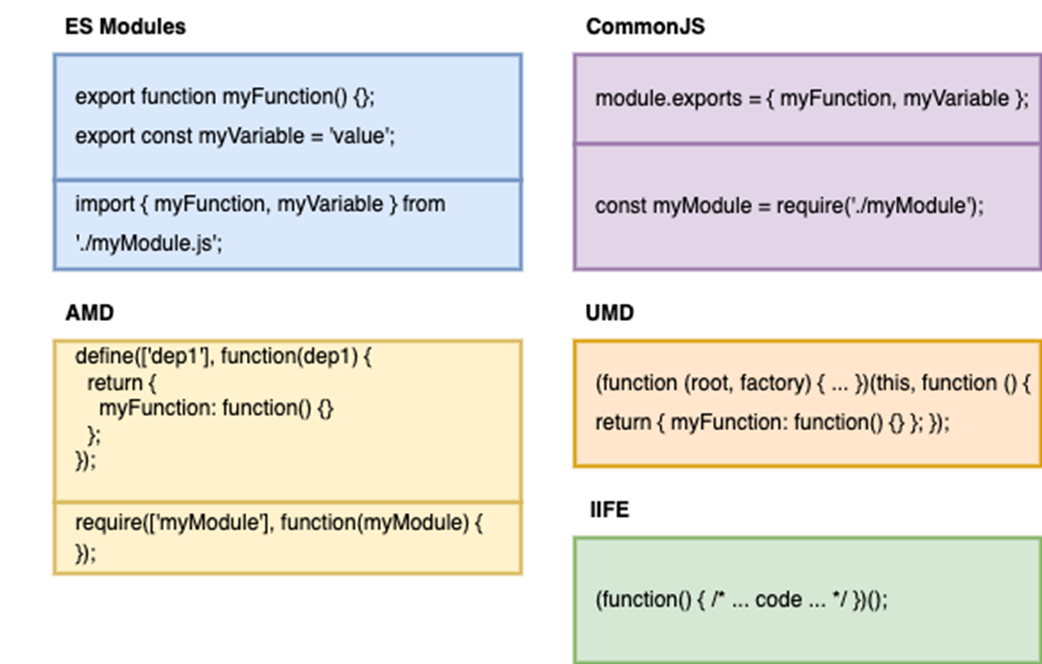
Code syntax for ES Modules, CommonJS, AMD, UMD, and IIFE
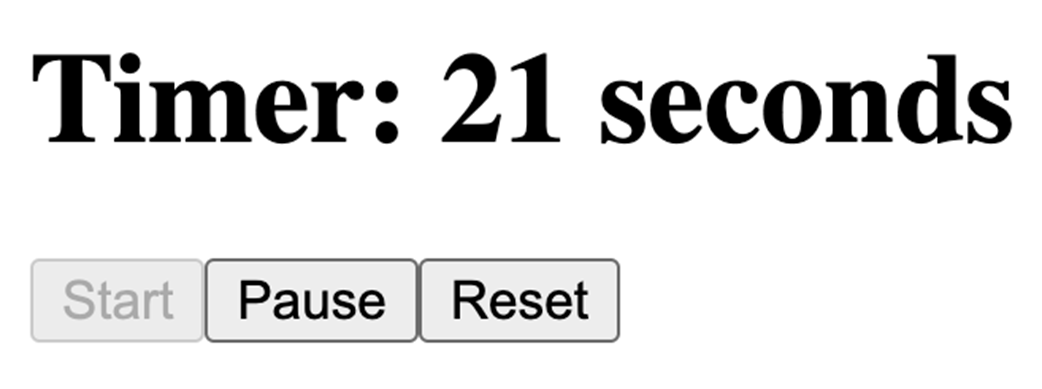
Timer user interface after starting a 21-second countdown
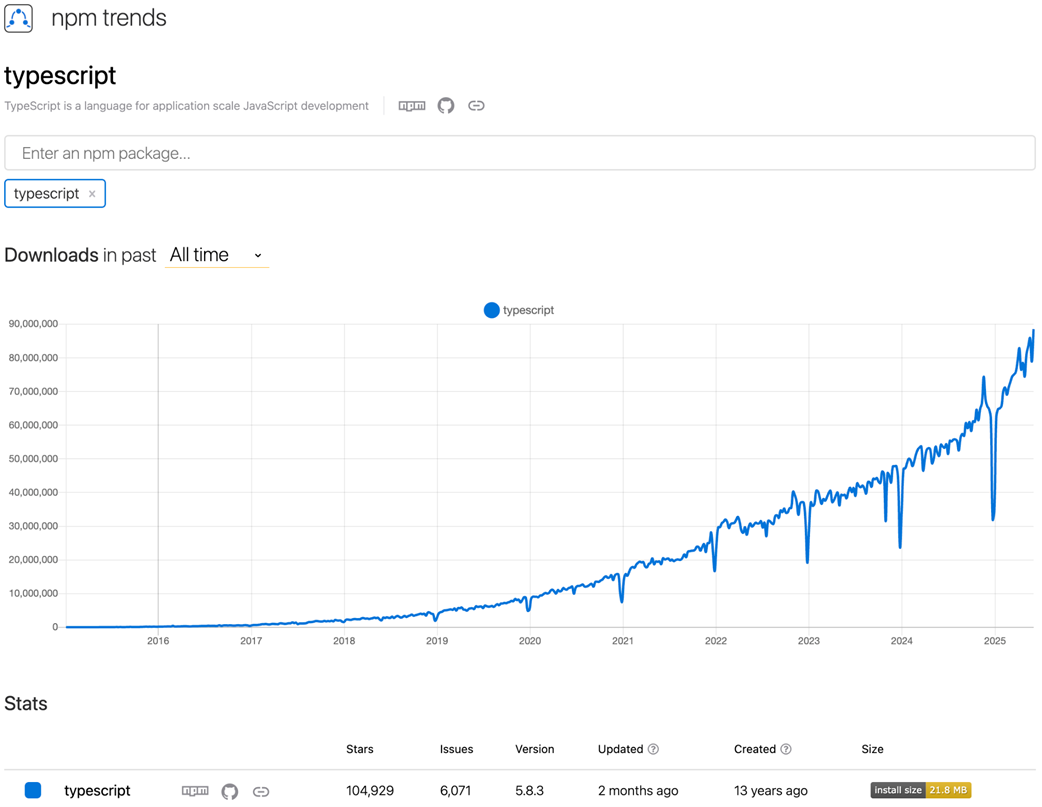
Weekly npm downloads of TypeScript as of June 1, 2025: 88.5 million
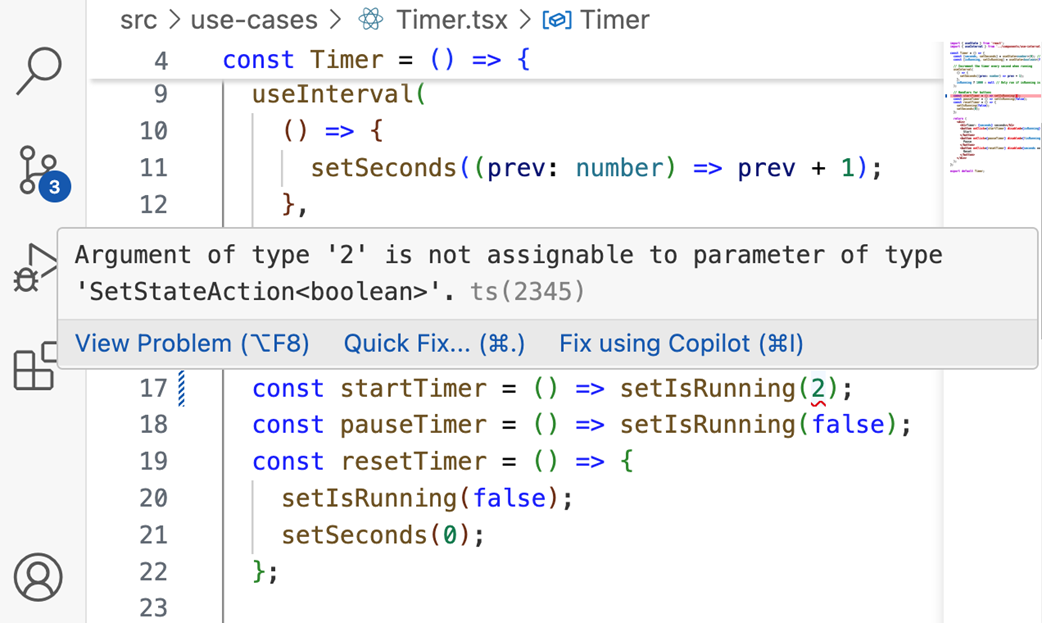
TypeScript type error when assigning an incorrect value type to setIsRunning.
Summary
- Be prepared to explain how JavaScript manages execution contexts and scope (global, function, block), and how the scope chain controls variable access.
- Demonstrate a solid grasp of functional programming concepts such as pure functions, immutability, and higher-order functions to write cleaner, more maintainable code.
- Clearly articulate how the event loop, promises, and async/await enable non-blocking, event-driven programming in JavaScript.
- Show understanding of garbage collection, memory leak prevention, and best practices for organizing modular code.
- Highlight the advantages of TypeScript’s static typing, early error detection, and enhanced developer experience, which drive its widespread adoption.
- Discuss advanced TypeScript features—including interfaces, generics, and type guards—and how they contribute to safer, more maintainable code.
- Stay updated on TypeScript’s evolving ecosystem, growing native runtime support, and upcoming proposals such as optional type annotations for JavaScript.

 Acing the Frontend Interview ebook for free
