Chapter 4. Security and the private cloud
In this chapter, the discussion centers on why security concerns remain the biggest barrier to enterprise cloud adoption and how those concerns are addressed through a combination of public-cloud safeguards, private clouds, and virtual private clouds. It explains that cloud security is shaped by shared infrastructure, rapid elasticity, and multi-tenant usage, but argues that with strong controls such as encryption, access management, auditability, and isolation, cloud environments can be as secure as or more secure than many traditional data centers. The chapter also notes that privacy, regulatory, and jurisdictional issues can influence where organizations choose to place sensitive workloads.
The chapter then evaluates the rationale for private clouds, emphasizing that they are most compelling when organizations need tighter control, predictable availability, and stronger assurances around compliance or data custody. It defines private clouds as environments that use virtualization, automation, and elastic capacity for a specific organization rather than a broad public pool, while acknowledging that they often lack the scale and cost advantages of public cloud providers. The text weighs benefits against limitations such as smaller scale, difficulty adapting legacy applications, and the fact that on-premises infrastructure is not automatically more secure than cloud-hosted systems.
Finally, the chapter explores practical deployment paths, from open-source and proprietary private cloud platforms to hosted dedicated offerings and hybrid approaches such as virtual private clouds. It shows how organizations can use these models to extend existing security controls, support burst traffic, and improve disaster recovery without fully abandoning internal infrastructure. Real-world examples from telecommunications, engineering, and government illustrate that private-cloud strategies can reduce costs and improve flexibility, but the chapter concludes that their long-term role is likely to be transitional as public clouds continue to mature and enterprise security practices evolve.
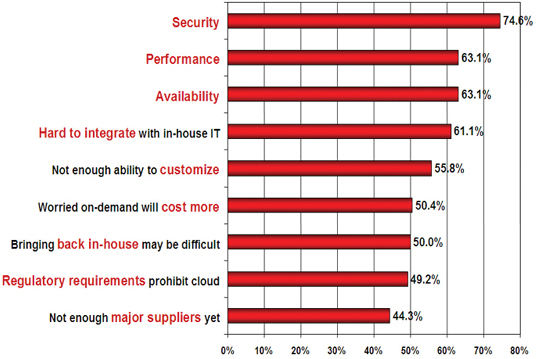
Results of IDC’s 2009 annual survey of enterprise IT executives regarding concerns about adopting cloud computing for their core applications. Security has remained the top concern for the past three years.
Physical security at state-of-the-art data centers includes perimeter security (razor wire), biometric authentication (palm reader), and access control (man trap).

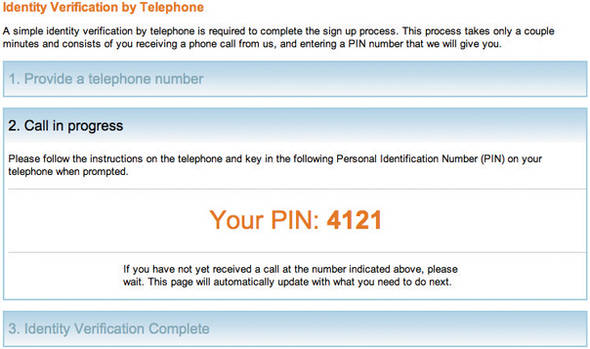
The AWS screen during the identity verification out-of-band phone call asking the user to enter a PIN. This mechanism verifies that the user of the browser doing sign-up and the user receiving the phone call are one and the same individual whose billing validation has already been completed.
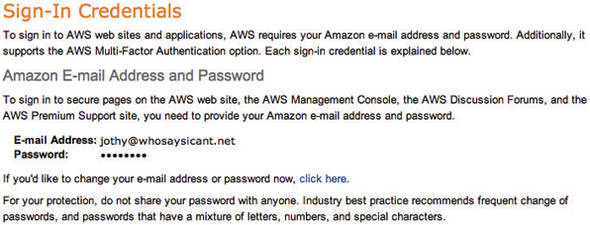
The AWS step of providing sign-in credentials. In this case, it’s single-factor, password-based. But multifactor authentication is highly recommended, such as using a time-based hardware token (something you have) in addition to a password (something you know).
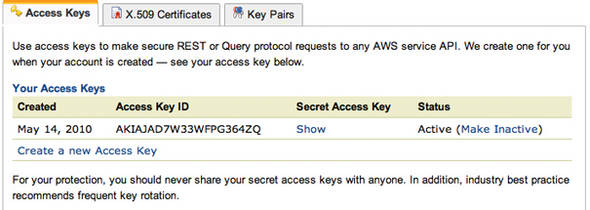
A secret key is generated by the service for your use in all API calls. Each call requires that this key be included so the service can validate that the call is from a legitimate user.
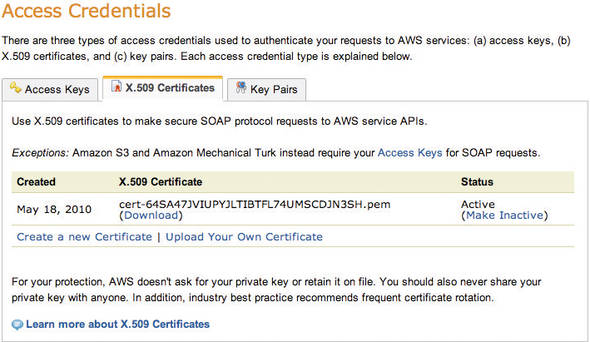
The results of having the provider generate the X.509 certificate. A private key file was downloaded, and then the certificate file was as well. The provider doesn’t retain the private key. But the provider does have it for a moment, and it’s downloaded over the public internet to the browser, making this an insecure process. It’s better to get a certificate from a Certificate Authority and upload the private key back to the cloud provider while retaining complete control over the private key.
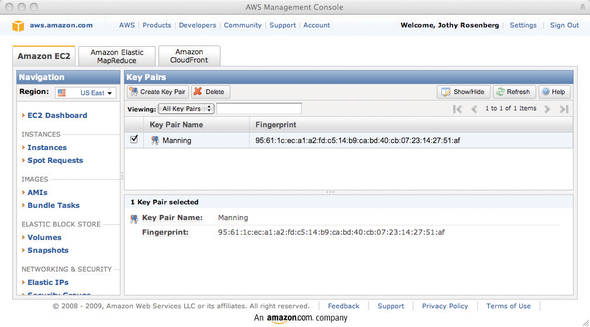
The ways key pairs are generated and managed through AWS’s Management Console. The public key is retained at AWS, whereas the private key isn’t. You can download it to your machine for secret storage.
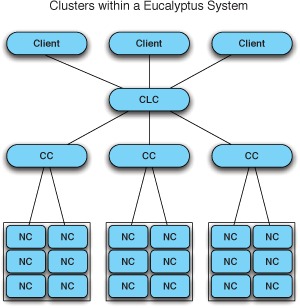
Architectural model for a Eucalyptus private cloud implementation. The Node Controllers (NCs) manage virtual instances on each physical server. These are controlled up in the hierarchy by Cluster Controllers (CCs) that manage an availability zone. At the top level, the Cloud Controller (CLC) manages the entire private cloud system and takes commands from both administrator and user client systems.
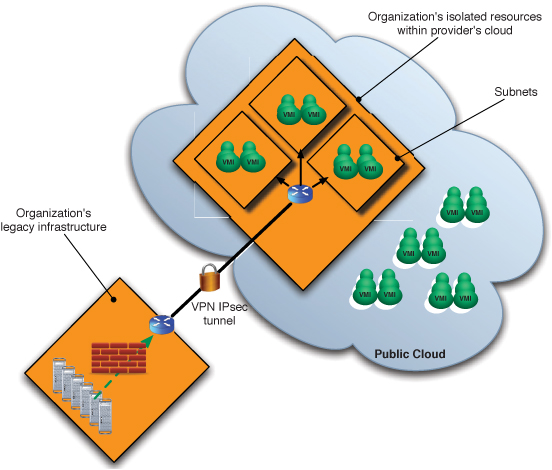
A high-level architectural view of a virtual private network. A secure VPN connection connects an organization’s existing infrastructure—including all its security components, such as firewalls and intrusion-detection systems—to a portion of the public cloud isolated for the organization.
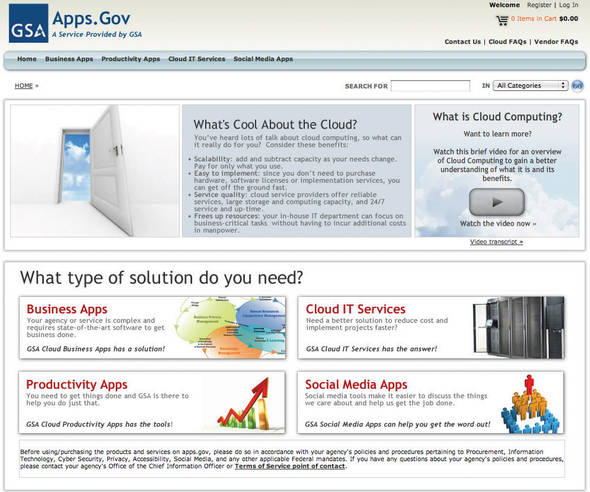
The federal government is proceeding headlong into using public cloud services as a means of reducing costs. On the Apps.gov website, SaaS and cloud-based offerings can be purchased with a government credit card and the appropriate approvals.

 The Cloud at Your Service ebook for free
